

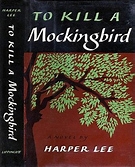
10 lessons from the book To Kill a Mockingbird
1.Stand up for what is right, even when it is difficult. Atticus Finch teaches his children that it is important to stand up for what is right, even when it is difficult. He does this by defending Tom Robinson in court, even though he knows that it will be unpopular.
2.Be kind and compassionate to others, even those who are different from you. Scout Finch learns to be kind and compassionate to others, even those who are different from her. She learns this when she meets Boo Radley, a mysterious neighbor who is shunned by the community.
3.Don’t judge others too quickly. It is important to avoid judging others too quickly, because we don’t know their full story. Scout Finch learns this lesson when she realizes that Mayella Ewell is not the innocent victim she thought she was.
4.Everyone deserves to be treated with respect. Everyone deserves to be treated with respect, regardless of their race, social class, or background. Atticus Finch teaches his children to treat everyone with respect, even those who are different from them.
5.The world is not always fair. The world is not always fair, and sometimes good people suffer while bad people get away with things. This is a difficult lesson to learn, but it is an important one.
6.It is important to have courage. Courage is not the absence of fear, but the ability to act in spite of fear. Atticus Finch shows courage by defending Tom Robinson in court, even though he knows it will be dangerous for him and his family.
7.It is important to fight for justice. Even though the world is not always fair, it is important to fight for justice. Atticus Finch teaches his children to fight for justice, even when it is difficult.
8.It is important to be compassionate and understanding. It is important to be compassionate and understanding towards others, even those who have made mistakes. Scout Finch learns this lesson when she realizes that Mayella Ewell is a victim of abuse.
9.It is important to have hope. Even in the darkest of times, it is important to have hope. Atticus Finch teaches his children to have hope, even when things seem hopeless.
10.Everyone has something to teach us. We can learn from everyone, even those who are different from us. Scout Finch learns this lesson when she meets Boo Radley, a mysterious neighbor who teaches her about the world.
These are just a few of the many lessons that can be learned from To Kill a Mockingbird. It is a timeless novel that has something to teach readers of all ages. Thank you for reading
To Kill a Mockingbird is a novel by the American author Harper Lee. It was published in 1960 and was instantly successful. In the United States, it is widely read in high schools and middle schools. To Kill a Mockingbird has become a classic of modern American literature; a year after its release, it won the Pulitzer Prize. The plot and characters are loosely based on Lee’s observations of her family, her neighbors and an event that occurred near her hometown of Monroeville, Alabama, in 1936, when she was ten.
Despite dealing with the serious issues of rape and racial inequality, the novel is renowned for its warmth and humor. Atticus Finch, the narrator’s father, has served as a moral hero for many readers and as a model of integrity for lawyers. The historian Joseph Crespino explains, “In the twentieth century, To Kill a Mockingbird is probably the most widely read book dealing with race in America, and its main character, Atticus Finch, the most enduring fictional image of racial heroism.”[1] As a Southern Gothic novel and Bildungsroman, the primary themes of To Kill a Mockingbird involve racial injustice and the destruction of innocence. Scholars have noted that Lee also addresses issues of class, courage, compassion, and gender roles in the Deep South. Lessons from the book emphasize tolerance and decry prejudice.[2] Despite its themes, To Kill a Mockingbird has been subject to campaigns for removal from public classrooms, often challenged for its use of racial epithets. In 2006, British librarians ranked the book ahead of the Bible as one “every adult should read before they die”.[3]
 Knock nock
Leave a comment