

BY MARIA POPOVA

The Greek polymath Pythagoras (c. 570–c. 495 BC) ignited the golden age of mathematics with the development of numerical logic and the discovery of his namesake theorem of geometry, which furnished the world’s first foothold toward the notion of scientific proof and has been etched into the mind of every schoolchild in the millennia since. His ideas went on to influence Plato, Copernicus, Descartes, Kepler, Newton, and Einstein, and the school he founded made the then-radical decision to welcome women as members, one of whom was Hypatia of Alexandria — the world’s first known woman astronomer.
Alongside his revolutionary science, Pythagoras coined the word philosopher to describe himself as a “lover of wisdom” — a love the subject of which he encapsulated in a short, insightful meditation on the uses of philosophy in human life. According to the anecdote, recounted by Cicero four centuries later, Pythagoras attended the Olympic Games of 518 BC with Prince Leon, the esteemed ruler of Phlius. The Prince, impressed with his guest’s wide and cross-disciplinary range of knowledge, asked Pythagoras why he lived as a “philosopher” rather than an expert in any one of the classical arts.

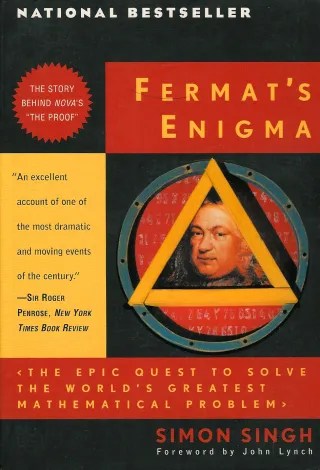
Pythagoras, quoted in Simon Singh’s altogether fascinating Fermat’s Enigma: The Epic Quest to Solve the World’s Greatest Mathematical Problem (public library), replies:
Life… may well be compared with these public Games for in the vast crowd assembled here some are attracted by the acquisition of gain, others are led on by the hopes and ambitions of fame and glory. But among them there are a few who have come to observe and to understand all that passes here.
It is the same with life. Some are influenced by the love of wealth while others are blindly led on by the mad fever for power and domination, but the finest type of man gives himself up to discovering the meaning and purpose of life itself. He seeks to uncover the secrets of nature. This is the man I call a philosopher for although no man is completely wise in all respects, he can love wisdom as the key to nature’s secrets.
Complement with Alain de Botton on how philosophy undoes our unwisdom, then revisit other abiding mediations on the meaning and purpose of life from Epictetus, Toni Morrison, Walt Whitman, Richard Feynman, Rosa Parks, Fyodor Dostoyevsky, and Martha Nussbaum.
donating = loving
Each month, I spend hundreds of hours and thousands of dollars keeping The Marginalian going. For seventeen years, it has remained free and ad-free and alive thanks to patronage from readers. I have no staff, no interns, not even an assistant — a thoroughly one-woman labor of love that is also my life and my livelihood. If this labor has made your own life more livable in the past year (or the past decade), please consider aiding its sustenance with a one-time or loyal donation. Your support makes all the difference.
MONTHLY DONATION
♥ $3 / month
♥ $5 / month
♥ $7 / month
♥ $10 / month
♥ $25 / month
START NOW
ONE-TIME DONATION
You can also become a spontaneous supporter with a one-time donation in any amount:
GIVE NOW
BITCOIN DONATION
Partial to Bitcoin? You can beam some bit-love my way: 197usDS6AsL9wDKxtGM6xaWjmR5ejgqem7
CANCEL MONTHLY SUPPORT
Need to cancel an existing donation? (It’s okay — life changes course. I treasure your kindness and appreciate your support for as long as it lasted.) You can do so on this page.
 Knock nock
Leave a comment