


Antonio Negri
An archive of texts and documents by and about Antonio Negri on libcom.org. Antonio “Toni” Negri (1 August 1933 – 16 December 2023) was an Italian political philosopher known as one of the most prominent theorists of autonomism, as well as for his co-authorship of Empire and his work on Spinoza. Born in Padua, he became a political philosophy professor in his hometown university. Negri founded the Potere Operaio (Worker Power) group in 1969 and was a leading member of Autonomia Operaia.

7. Toni Negri and the Operaio Sociale
A chapter in “Storming Heaven” by Steve Wright on Antonio Negri and Operaio Sociale (“social worker”).

“Do You Remember Revolution?” w/ Emergency Intro – 1983 (Negri et al)
1983 publication of “Do You Remember Revolution?” with an introduction by the Emergency editorial…
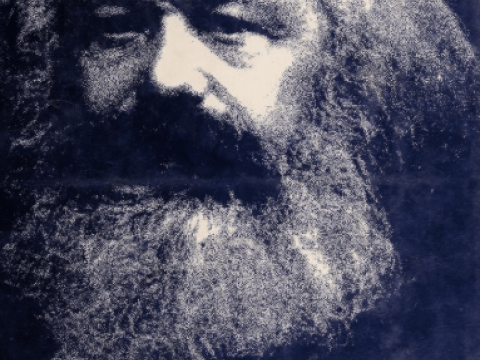
Two reviews of Antonio Negri’s Marx Beyond Marx
Midnight Notes review Antonio Negri’s book “Marx beyond Marx”, which concerns Karl Marx’s Grundrisse.
These two reviews are wittily (and dialectically?) interspersed in the original journal (see PDF). We have taken the liberty of presenting them here one after the other.
A further comment “End to Negri” from another Midnight Notes member that appears at the end of the journal has been included here for completeness.
Submitted by Fozzie on April 24, 2020
Marx beyond Marx, by Antonio Negri, 1984, Bergin & Garvey, Massachusetts
Negri Beyond Marx by Guido Baldi
Salutations-abuse, farewells-welcomes: inverses that mingle. This review of Marx Beyond Marx is a pair that touches as well. The book has a history of production. It is a transcription of lectures on the Grundrisse given by Negri in France in the Ecole Normale Superiore in 1978: 1978, a year after the Italian spring of 1977 and a year before April 7, 1979. Is it an end or a beginning? Toni spent 1968-78 Italy and, unlike in France, the class struggle had been far from dull. His flight to the Ecole Normale Superiore (a few steps ahead of the Italian police) was also a challenge, but a different one from the decade of the true Italian “miracle.” For in France in 1978 he had to face Marx-and—defeat. Not that Marx himself did not mix well with exile, fear, poverty, humiliation and despair, for think: 1848-1858. A decade after a defeated revolution in Paris, Marx feverishly writes the Grundrisse in London. It is the book of minds still scheming at the bottom of the world.
No wonder the Grundrisse is so compressed, so convoluted, so much the Finnegan’s Wake of Marxism. For the prime requirement of Marx’s task was: DON’T PANIC. And the best antidote to panic is “talk”…incantation even.
First: tell yourself there’s no easy way out.
Second: remind yourself of how you got there.
Third: look around and study everything from the bottom up.
Fourth: do something or do nothing.
The main problem with Negri qua Marx is this: Negri was in a tight spot in 1978 but he treats defeat the way he had handled any other turn in the movement’s course. He does not recognize it and so displays all the virtues of consistency, and its vice.
I am not interested in comparing Negri’s Marx with any other Marx. If there is any comparison, it is between Negri’s Marx and our present project. (Though I still read the Marx of 1858, and not only as an incantation: after all, the Grundrisse is Marx’s Midnight Notes.)
What good is Negri’s Marx for us? That is my question.
Perhaps Marx Beyond Marx is a labor-saving device: 190 pages of Negri (the lectures themselves) for 900 pages of Marx. Perhaps not less nor more difficult – but a short version can come in handy.
Perhaps it is a mnemonic device for those who have read the Grundrisse but whose memory is failing. Negri has all the good quotes cut out and he himself is quite clever at coming up with summarizing phrases:
- “socialism is as impossible as the functioning of the law of value”;
- “the law of the falling rate of profit derives from the fact that necessary labor is a rigid quantity”;
- “The theory of surplus value is reversed. Where, in capital’s project, labor is commanded by surplus value, in the proletariat’s revolutionary project reappropriated surplus labor is commanded by necessary labor.”
There are dozens of these. If you can string 20 or so together, one can easily come up with a nice abstract of the Grundrisse.
But it is too good a mnemotechnic, for in helping our memory it also helps us to forget what Marx “forgot”. Marx in 1858 “forgets” 3/4 of the proletariat: the slaves and the women. Negri remembers on pages 65 and 183 that Marx forgot something, but he can’t quite remember what and who he forgot. It would have been quite simple for Negri to mention these two sectors of the working class by name, if he had remembered. But he forgets to remember what Marx forgot so on page 65 we have Negri-esque gibberish while on page 183 we have gibberish and exasperated intellectual curses:
In fact, the Marxist definition of productive labor is a reductive definition, which is linked to the socialist axiology of manual labor.
Just why Negri chooses to get cross with Marx would not be clear to most readers. I’m not sure whether Negri is clear about it either, but he is worried about something though he does not want to say what it is. Why?
Slaves and women. Those who are most separated from the locations of the highest and most intense syntheses of capital, science and class struggle. Those for whom the “explosion of the value form” appears as distant as a supernova in another galaxy. What do they have to do with the proletarian revolution if this revolution arises from capital hitting its productivity limits? Slaves and women were being exploited with neolithic technology at best, controlled with the social tools of primitive accumulation: fists, whips, chains and rape. What revolution could possibly lay in this? If, as Negri claims, revolutionary logic fissures capital’s dialectic at the points of highest social productivity then these others are best forgotten for communist visions and revisions after the explosion. So one would presume from Negri’s Marx. (Marx himself tells us he was inspired to write the Grundrisse by “the discovery of gold in California and Australia.” Perhaps he should have paid more attention to Frederick Douglass and Sojourner Truth and John Brown.)
For all of Negri’s talk of fissures, cracks, breaks, gaps, splits and crevices, there is barely a word about working class division. Why not? The breakdown of the Italian movement, as with most proletarian movements, came from its inability to overcome its divisions: “guaranteed” vs. “precarious” workers, women vs. men, North vs. South, hi-tech workers vs. “rural idiots”, etc. Negri qua Marx seems to assume, wrongly, a high level of working class homogeneity, while the famous “multiplicity” and “multilaterality” of the ever-more-powerful working class that he posits can in actuality be a sign of overwork. Thus many part-time workers, especially women, might in a 24-hour cycle pass through six or seven metamorphoses in the hierarchy of labor and end up more tired than before.
Negri has his uses. His Marx can be used against cold-war nerds: Negri bristles with quotes to prove that Marx was not a “totalitarian.” And he is useful against our “comrades” on the left who have often given so much pain. Try these Negri definition of socialism:
Socialism is the highest form, the superior form of the economic rationality of capital, of the rationality of profit. It still thrives on the law of value… socialism keeps alive and generalizes the law of value. The abolition of work is the inverse mark of the law of value.
They are quite neat, quite Marxist, and use Marxism against average Marxism. If you pull out these definitions and are accused of being anti-socialist, you can reply, “Of course, I’m a communist,” and cite Negri’s clever lines:
Communism is in no case a product of capitalist development, it is its radical inversion… Communism is the destruction of capital in every sense of the term. It is non-work, it is the subjective, collective and proletarian planning of the suppression of exploitation. It is the positivity of a free constitution of subjectivity. All utopias become impossible.
So goes Negri’s use in the linguistic guerrilla war on the left…but:
There is a “thinness” about all these formulae. They seem to want to give a verbal solution to a historical problem. Marx’ idea of communism might be “excusably” schematic (it’s almost purely logical), but should Negri’s be? Negri is writing a century after the Paris Commune and with two decades of “communist practice” behind him. Is his wisdom expressed only by equations like “the theme of communism has melted into the theme of transition”? Not that they are wrong, but can they even begin to approach the simple observation of Che Gueverra’s, when he pointed out that a good criterion for telling whether nations were having “communist relations” is that the prices they exchange at are radically different from those of the capitalist world market?
Finally, perhaps Marx Beyond Marx is useful because it introduces a new and effective Marxian concept: self-valorization. But what is “self-valorization” and why should it be included in the “arsenal of revolutionary concepts” (sic)?
Capital valorizes workers by paying them a wage for their labor power, but workers can’t pay themselves a wage (unless one accepts the silly metaphysics of neo-classical economics). In the Marxian typology, value is a matter of exchange value or use-value. Therefore, self-valorization must arise as a use-value. Translating literally from the categories, it would be something like “using yourself to satisfy your need, want or desire” or “consuming yourself.” But is “self-valorization” then just word-play? Not completely, since it is obviously trying to discuss the great moving forces of class struggle: the hatred of being bossed, the need to enjoy your life, the desire for palpable wealth now, etc. (Freedom, Pleasure,. Wealth Now): these are absolutely crucial matters for any revolutionary theory, for with them you touch on the raw powers that “make people move”. And Negri does well by us in 1985 to remind us that even in the darkest period of working class defeat they are, if anything, more vital.
But Negri’s own discussion of the concept is simultaneously obscure, reified and elitist, or, as the leftists would say,”vanguardist”. From his account, it arises from ”consumption” (135), it involves “auto-determination” (165) and becomes a “phase”, perhaps the “final stage”, of the class struggle.
But who is self-valorizing? Those with the “variety, the multilaterality, the dynamism, the wealth” to counter capital’s plan. What of those without these qualifications? They appear to be outside the “real” struggle, far from where the action is. Question: how do you acquire these qualities? Negri’s answer: by being in touch with the most highly developed form of capital. It is with these self-valorizers that “the productive violence of the highest level of cooperation” is present and they take us to a point “beyond Marx”.
As a political hypothesis, this was disastrously wrong in 1978, perhaps it was an illusion of the Carter years’. The “rigidity of self-valorization” which Negri claimed would block “all operations that would make cuts or impose recessions” simply collapsed in 1979. Indeed, many Italian thinkers of “self-valorization” proved less than rigid before the state. This is understandable to us, but from Negri’s pages it is “impossible behavior.” This was not a singular lapse. In 1985 when we look at the world-wide class struggle and the proletarian rigidity to capital’s plans, we don’t see much of it in the domain of the highest socialization of capital. On the contrary, a brief, crude list would include South Africa, El Salvador, Chile, the Philippines, etc. This list is not in the spirit of a contest for militant laurels where the “damned of the earth” win, or to suggest that struggle will only now proceed there. It is merely to remind the reader that either “self-valorization” must have a wider and more concrete meaning, or it is a suspect concept.
Marx Beyond Midnight by Bartleby the Scrivener
“How can there be calm when the storm is yet to come?”
– Linton Kwesi Johnson
“Let the people everywhere take heart and hope, for the cross is bending, the midnight is passing, and joy cometh with the morning.”
-Eugene Dabs, on his way to prison.
I want to make clear that I agree with Guido Baldi’s criticism of Negri for not emphasizing women and “third world” people in his “updating” of Marx. I too was amazed at p. 65 where Negri seems to be saying that he’s learned something about unwaged reproduction work, but remains abstract.
But Guido’s discussion of Negri’s concept of “self-valorization” reads the same way to me. It is from reading Midnight Notes that I came to understand that the class’ motion consists of complementary poles, one of which is the actions of those who, lacking the wage as their lever of power, create new relations “appropriate to the working class on its way out of the capitalist era” (Computer State Notes). We know today that these relations can lead to more unwaged work – but whether this in fact occurs is a focus of the struggle!
When women at Medgar Evers College create their own student-run bookstore and day care center and then use these new relations as bases of power to win state funding, is there am reason that we should not understand this process as Negri’s self-valorization in action? In reading Marx Beyond Marx, I do not find evidence that such struggles are “beyond” Negri’s vision. To me, these sorts of struggles are the only possible meaning (with an almost infinite variety of forms) of self-valorization: valorizing ourselves by putting use-value needs and desires, before exchange value in lived experience.
Guido claims that since Negri’s emphasis is on the most “productive or highly developed forms of capital” he must somehow be ignoring unwaged people. But here, as in Negri himself, the problem is not addressed as a specific one of strategy. Isn’t it a necessary solution for the wageless to get their hands on the automated wealth they’ve helped produce? For example, many U.S. women of my generation have shattered housework as their main occupation and are now a “rigid” presence in the waged workforce. Yes, often more work. But is not this women’s activity also motion toward obtaining some wealth and using it for some autonomy and so escape the fists and rapes of neolithic capitalist accumulation? Can we not find in this some coherent strategy, not just point out the defeat?
And what of Asian women of this same generation who have refused to do all the shit work of the patriarchal family and have moved to the cities and work in the garment and electronics industry–where the third world left attacks them for their “bourgeois” interest in, for instance, fashion, and of whom the ‘first world’ left can only protest their (quite real) exploitation at the hands of the multinationals. Cannot we see here some “self-valorization” by these women?
Guido knows full well that he has never been limited by Marx’ verson of surplus value production, and we need not be limited by Negri’s own musings on this “new and effective marxist concept.” Can we not just acknowledge the concept and move on, and perhaps encourage others to meanwhile read Negri?
A word should be said here on’ old Karl. Marx said a great deal on slavery elsewhere besides the Grundrisse, and the Grundrisse itself contains quite a profound analysis of slavery and colonialism. For example, Marx speaks with glee of capital’s helpless fury at the Jamaican free Blacks who only work as hard as they feel like. Yes, I agree the work would be enriched by more attention to John Brown, Sojourner Truth, Frederick Douglass, etc….tut so does Negri! Granted, he is frustrating in his abstract presentation and hampered by the fact that European theorists cannot write a sentence. But Negri a hundred times states his regret for that missing chapter on the wage and working class subjectivity which Marx meant to write. Further, Negri goes a long way towards constructing this section.
As for Marx and women, while again I agree with Guido basically, he has forgotten the parts of Capital on domestic workers and women factory hands. As for housework, Silvia Federici and Nicole Cox of Wages for Housework pointed out a decade ago that Marx’ oversight is not simply his sexism but the reality that women and children worked 14 hour days or more in both Manchester and Mississippi. The “nuclear” family did not exist and housework was not the defining activity of working class women1 .
All this said, my main concern is “defeat”. Defeat, defeat, despair, humiliation – is Guido speaking of Marx and particularly Negri’s perceptions of the situation, or his own? For some time now I’ve been uncomfortable with Midnight Notes‘ recent dwelling on the idea of our defeat. Would it not be more precise to speak of having suffered some defeats but not an overall defeat? Guido seems so sure that Negri (in particular) refuses to acknowledge how bad things are and that is why he is writing on the potential for liberation and on working class strength. The very best part of Marx Beyond Marx, perhaps the only thing that makes it (as I think it is) worthwhile to struggle through its density and obscurity and actually read the damn thing cover to cover, is precisely that in its pages our power and capacity to transform the world, the idea of capital always in crisis, the imminence of communism – all these concepts and a sense of our power are deeply Imbedded in every sentence.
For Negri, our political recomposition on a higher, more powerful level is an organic part of every defeat. This was why he turned to the Grundrisse in that alleged season of despair in Paris in 1978. For capital to defeat us in a limited way, it must also raise the stakes higher, whether by increasing the organic composition of capital or by developing the world market, that is by extending the contact with and the struggles against the highest levels of capital further around the globe. For Negri, this process is summarized as: struggle-communism-crisis-world market-communism. Negri’s book is an exciting and powerful intervention.
But is Negri (or, for that matter, my friends and I) deluded as Guido suggests? Remember the “Work/Energy Crisis and the Apocalypse”? (Notes, Vol.2, #1) – it did not sound very defeated in 1980 either. Its last line read that the only way to confront the missiles is to demand bigger and juicier sausages.
1978, eh? In 1980 the Black working class of Miami revolted. A year later the young Black, White and Asian marginal sectors in the cities of England exploded. Then, in July, 1980, Gdansk. Not so long later, the British miners shouted “Zulu” as their flying pickets charged police lines – did some of the “rigidity” of South African miners rub off on them? Recall when we used to speak of the “circulation of struggles”- is the language of defeat and despair so much preferable now?
1980-81 was anything but a period of defeat unless you define defeat as anything except winning the world revolution. Federici wrote that just entering a factory is a defeat. True. But since billions of people do daily, and do in the heights of our struggles and the troughs, should we be overly concerned with our defeats? The 1950’s in the U.S. was a bad time for the working class in many ways – the turning back of victories from the 1930’s and 40’s, the destruction, imprisonment, exile or marginalization of most every radical current. CLR James was part of that defeat – I think his Midnight Notes, Mariners, Renegades and Castaways, is a good antidote-to despair2 . Poor James, defeated and exiled. But one will search Facing Reality, Modern Politics3 or any of the other works of James and his comrades or any sign that they thought defeats were to be taken so seriously. They seem to have been under the impression that the working class’ leaps and offensives occur at the same time as our defeats. Poor CLR also “treats defeat the same way he handled any other turn in the movement’s course” – that’s precisely his best point. Can we not plan on a sunrise breakfast at midnight?
Let me end with a bit more from Linton Kwesi Johnson. Before Brixton he wrote, “Fascists on the attack, nobody worried ’bout that.” As Midnight Notes in its last issue warned that we, but not necessarily capital, are in crisis, LKJ at about the same time wrote, “From England to Poland, every step across the ocean, de ruling classes dem is in a mess, crisis is the order of the day…” He has written enough of suffering, death, tragedy and surely does not see the world through rose-colored glasses. In the 80’s he could say, “It is no mystery, we’re making history, it is no mystery, we’re winning victory.” Rather than dwell on defeat, check out LKJ, and read bolo’bolo too. And Guido – lighten up and remember to be realistic: demand the impossible.
End to Negri
Methinks perhaps friend Bartleby exaggerates the “dwelling on defeat” of Midnight Notes. Yet, the issue is important. Has there been a defeat of the U.S. (last Notes‘ discussion) or Italian working class? generally speaking, I think so. How do we deal with it? Ignore it? Dwell on it? Try to understand it? I suggest the latter, in the hopes of avoiding another. We’ve enough farces already.
If I understand Guido (who is unavailable to respond to Bartelby), the point is this: Negri’s ignoring slaves (third world) and women, his narrow definition of self-valorization, refusal to discuss the divisions in the class and his refusal to acknowledge defeat are all of a piece. If defeat in Italy was based on class divisions, and Negri will only treat of those class sections in touch with the “highest levels of capital, then in fact Negri cannot understand the defeat. The obverse makes this more clear: to assess the defeat means to understand the hierarchical divisions in the class, and to do this means one cannot ignore slaves and women, cannot conceptualize self-valorization only for a few sectors, and therefore must throw into crisis Negri’s political structure. Capital is not only the “heights”, for capital simultaneously ‘underdevelops’ as it ‘develops’.
Negri’s challenge was to understand ‘his’ political project and why it was defeated. Instead he retreats a century, rehashes Marx without necessarily shedding Marx’s limits, and does not come to grips with what he must in order to help us move beyond abstract belief in our victories to a new ‘what to do?’
- 1“Counterplanning from the Kitchen,” p.6, Falling Wall Press, Bristol, England.
- 2From BEWICK/ED, 1443 Bewick, Detroit, MT 48214.
- 3ibid
Memorial from Prison
This document was written on May 24, 1979 from the “Special Wing — G 8” of the Rebibbia jail in Rome by Mario Dalmaviva, Luciano Ferrari Bravo, Toni Negri, Oreste Scalzone, Emilio Vesce and Lauso Zagato. Footnotes were added by the Editors.
Submitted by Fozzie on October 26, 2019
WHAT IS THE NATURE OF THIS TRIAL?
The arrests and imprisonments put into effect against militants and intellectuals of the Left, starting April 7th 1979, have set in motion a political trial. This is not just a trial of ideas, a trial of certain intellectuals, but a judicial prosecution of an entire section of the political movement in Italy— of comrades belonging to the independent Left movement of Autonomy. These comrades in no way deny or conceal their record of political militancy in this movement.
We are being tried for a decade of political struggle in Italy, from 1968 to 1979. With this prosecution, State power has spoken out loud and clear — a horrendous alibi for its incapacity to resolve the real underlying problems confronting Italian society in the crisis. This trial is aimed to outlaw the political movement of working class and proletariat autonomy.
In order to succeed, State power has to state and prove that “the party of the new social strata of the proletariat” is the same thing as “the armed party” — i.e. the terrorist groups. They have to be made to appear as identical.
All of us in the Movement know the motive behind this operation. The State “projects” onto these strata and onto the men and women who have lived the social struggles of the new proletariat, the accusation of being terrorists, “the armed party in Italy”, so that, by criminalizing the Movement, it can resolve its own inability to function. We are militants and intellectuals of the autonomous Left movement. In striking its blow at us, the State is attributing to us a power as “leaders”, a representative role, that we do not possess.
THE RETROACTIVE CHARGES AGAINST “POTERE OPERAIO” (WORKER’S POWER).
The first accusation against us all relates to having constituted and participated in Potere Operaio (1969-1973)1 . Inasmuch as PO is taken by the prosecution to be the “original source” of armed terrorism— of having therefore been collectively responsible for the entire trajectory of armed struggle in Italy in recent years — its dissolution in 1973 is regarded as having been “ficticious”: it is alleged to have continued its existence as an armed conspiracy.
A very important preliminary point needs to be made, regarding the consistency of this charge. It is true that all of those who are charged in this case, in one way or another, at different times and at different levels of activity, did participate in the experience of PO. This is a past “associative link” which we have no intention of denying — in fact we regard it, perhaps ingenuously, with pride. But thousands of other comrades also participated in this political experience. One might rightly ask by what criteria so few cards, from such a huge pack, eventually came out in the shuffle. One might think that the accused were the “political leadership” of the PO group. But this is not true — not all the accused played such a part in PO, and of those who did, not all are being charged. So the accusation of having participated in PO is not self-sufficient, is no basis in itself for the charge brought. This is the case (if for no other reason) because the PO was in its own time investigated on the grounds of being a “subversive organization”, and was in fact cleared.
Hence there must be something more behind the charge and the selection of those accused. The allegation runs as follows: these individuals are those who having been comrades in PO, subsequently maintained “associative links of a subversive nature” aimed to direct, in one way or another, the armed struggle in Italy. But here the make-believe behind the accusation is even more astonishing.
From the time that PO dissolved in 1973, some of those presently accused have had no political links whatsoever with the rest of the accused. Moreover, in some cases it has been years that some members of the accused have not seen each other! It must be admitted that for a “conspiratorial group” alleged to have been nothing less (in the case of 9 of us) than the “strategic leadership” of the Red Brigades, not to have met each other, even briefly, in all this time constitutes a strange kind of association! And it is not by chance that 6 weeks after the arrests, not one single piece of evidence has been brought to prove or indicate any such association between those charged, from 1973-4 up to the present day. The reason is simple — no such proof exists.
THE VIOLATIONS OF PROCEDURE BY THE PROSECUTION.
We shall take only a few examples of the legal procedure adopted by the prosecution in the “April 7th case”. This is only a summary of a few of the most flagrant abuses of due process that we — and we are not the first — have had to face. This is a list of points which are taken from a much fuller documentation of examples contained in the memorandum presented by our legal defence team.
(A) Violations of the rights of defence in the phase of the preliminary investigations ordered by the examining judge. Failure to notify, in some cases, of proceedings against those being investigated, despite the fact that the prosecuting judge, Calogero, has admitted that this judicial inquiry has been going on over a period of two years before the arrests;
(B) Arbitrary use of coercive powers:
— Issue of arrest warrants either without legal grounds at all, or on “apparent”
grounds, altered later, at will.
— Use of preventive detention for ends other than those specified by law.
(C) Arbitrary mode of imprisonment:
— Unspecified reasons for differing prison treatment (solitary confinement, etc.) imposed on those detained.
— Refusal to notify, for a period, the whereabouts of those detained, or to notify families of prison transfers, etc.
(D) Arbitrary use of norms of territorial judicial competence (i.e. the division of judicial competence in the case, between Rome and Padova):
— Abnormal unilateral decision on the part of prosecuting judge Calogero as to judicial competence (transferring part of the case to Rome) after the request for formalisation of proceedings (i.e. that they be brought before the competent judge in Padova) had been made.
— Subsequent addition of the charge related to the via Fani (the Moro kidnapping) case, for the sole purpose of justifying transferral of the judicial competence in the case of some of those accused (to Rome), in order to bypass any potential conflict with the judges in Padova. This was after charges of “formation of armed bands” had already been brought in Padova.
This relates to other precedents (e.g. in the Valpreda case) which involve the arbitrary transfer of proceedings to Rome — i.e. the informal, but no less real, use of this tactic in order to set up a “special tribunal” for political persecutions2 .
(E) Systematic violation of the rights of legal defence in this case; in the course of the committal hearings:
— Violation of article 365 in the Procedural Code (“the judge must proceed to the formal ‘interrogation’ without delay”).
— Systematic inversion of the burden of proof onto the defence.
— Acquisition of “evidence” a long time after the warrants for custody and detention of the accused had already been made out.
— Lack of any evidence, or precise accusations (to be proved or disproved) related to the charge of “subversive association”. The accusations are entirely “hypothetical-deductive”, of a “logical” and hence speculative nature.
— Illegal retention of precise information, evidence etc., related to the prosecution charges, thus allowing a continuous fluidity, reformulation and alteration in the accusatory substance of the charges (e.g. request by judge Guasco for formalisation of the charges “pending” later specification of the actual crimes alleged to have been committed!).
— Systematic and underhand violation of the confidential secrecy of the committal hearings by the prosecuting magistrates (use of insinuating “leaks”, informally passed to the Press and media throughout the proceedings — and often later dropped!).
All the above points might appear secondary to anyone not experiencing them first hand! Yet they amount to a real illegality of the mode of the prosecution procedure in this case, a degradation of “due process”, by the systematic refusal to back or specify charges by precise accusation, hence ensuring an “open-ended” set of options in the committal process.
The presumption of guilt based on deductive hypothesis has been the leitmotif in the prosecution procedure right from the start. It covered, from the word go, insurrection, leadership of the Red Brigades, and leadership of the armed struggle in general. In other words, the “generic” and the “particular” are conflated, strung together, to make us responsible, as a “collective plot”, for virtually all that has happened in Italy over the past ten years. This is the starting point — the initial thesis of the prosecution.
Once this overall hypothesis of guilt is first established, any element of physical or mental/intellectual links that can be found (e.g. Padova University Institute; activities of an academic nature etc.; or similarities between documents — any Left revolutionary literature inevitably has some points of similarity) can then be construed as a “lead” or as “incriminating substance”. All such material can be reinterpreted, pieced together according to the initial deductive hypotheses, by a process of osmosis. Time and space become irrelevant. Documents or events over a period of ten years are flattened into the present, into a static “present-day” plot for “armed insurrection”. In Negri’s case, this process of osmosis during the committal hearings has amounted to a crude and arrogant distortion of texts taken out of context, a deliberately falsified reconstruction of his ideas, collapsing the past into the present.
The method of the prosecution’s case has been the separation of selected elements and ideas from their overall context. This is done by arbitrary selection of individual phrases from a vast mass of published and entirely public writings or statements. Moreover, these are selected from a long time-span, often separated by years. This method of arbitrary separation and reconstruction or hypothetical links between ideas — and events — has been the basic norm in the construction of the prosecution’s case against us.
CIVIL RIGHTS AND CLASS STRUGGLE.
We wish to make an appeal for the widest possible solidarity with those 23 arrested on April 7th 19793 .
The prosecution case against us is overtly political, and we are asking for political solidarity. We wish to emphasise that “political solidarity” does not mean “identifying” with our personal ideas or positions as such — it is correct, we think, to make this clear. To ask for political solidarity in our case is to appeal also to responsible democratic opinion, apart from the Left and communist movement, on the basis of recognizing what is at stake, in terms of the relationship between class forces in this type of political prosecution.
In our case — quite apart from our own political situation — what is being tested or decided, is whether there is to be any further space, politically, for the broad movement that has developed in society, expressing the new needs of the proletariat today. Or, on the other hand, whether the forces in power, the effective “constitutional coalition” that governs Italy, is to become more rigid, and base its political pact on the destruction, criminalization and repression of the class movement in civil society.
The choice is obviously not in our hands! But the prosecution and proceedings against us are an essential part of this project, a key test-case. We are fighting for an outcome on the side of the class movement, and it is on this that we base our calls for solidarity. Let it also be clear that we also insist on the defence of certain legal guarantees. This is not opportunism on our part, but relates directly to the struggle and the goals of the class movement itself. Both before, during and after the revolutionary process.
This appeal to civil liberties and defence of legal “due process” is not in our case restricted to the mummified liberal tradition of civil rights (open to many abuses). We call for the guarantee of freedoms that are historically and dynamically constituted by the relation of class forces as it exists in all the industrialised countries today.
We believe that in Italy, today, and in Europe, the political prosecution of the “Worker’s Autonomy” movement has a wider significance, which concerns the broadest possible sections of the class movement in all its various articulations. This is because it represents a specific attempt, an attempt with ominous implications, to “turn the clock back” historically to set up and formalise on a permanent basis a new level of State repression, aimed to attack and destroy the space for independent class politics; to attack the guarantees of rights to express theoretically and exercise in practice any alternative basis of power for the transformation of society; and to attack the spaces for the exercise of “counter-power” — all of which spaces have been fought for and won over the course of the last ten years.
Translated by Committee April 7, London
- 1This comes in the list covering charges of “subversive association” — Article 270 in the Fascist penal code of 1929. The nearest British equivalent is the charge of sedition, as brought against the Betteshanger miners during the War.
- 2“Special tribunals” were the political anti-communist courts set up by the Fascists in 1926. It was one of these tribunals that sent Gramsci to prison.
- 3Under these vague, unspecified and unsubstantiated charges the accused may be subjected to a possible period of detention of up to FOUR years before they need be brought to trial.
Book traversal links for Memorial from Prison
Negri’s Interrogation (trial transcript 1979)

Judge Palombarini questions Toni Negri, May 18, 1979, Padua
Arrested on April 7, 1979, Toni Negri appeared a few days later before his judges. As opposed to Oreste Scalzone, Negri then found it advisable to answer questions to his writings. The following transcript is invaluable inasmuch as it exemplifies the “bizarre” procedure adopted by the judges. As it happens, the Autonomists were incriminated on the basis not of any previous evidence, but on their very answers.
Submitted by Fozzie on October 26, 2019
Judge: Tell us what you have written about armed struggle.
Negri: In regard to armed struggle my position has been expressed most completely in my book, 33 Lessons on Lenin, in which a re-examination of Lenin’s thought leads to the acceptance of armed struggle as an essential moment in the development of mass and class revolutionary struggle. Yet I have, in all my public statements, always expressed the deepest, widest, reasoned rejection of any form of armed struggle that involves the militarization of the Movement and clandestine activity.
J: You have said that most of the militants of “Potere Operaio” (P.O.) were opposed to clandestinization and to armed struggle. I show you two documents which were found in your files. The first is a mimeographed sheet which praises the armed struggle of a few P.O. comrades arrested for possessing Molotov cocktails. The second, also a mimeographed sheet with the P.O. letterhead, explains “why Idalgo Macchiarini and Robert Negret have been kidnapped and put on trial,” (two corporate managers, one from Sit-Siemens of Milan and the other from Renault of Paris). I must remind you Macchiarini was kidnapped in 1972 and the action was claimed by the Red Brigades (B.R.).
They are leaflets that could have been found among the documents of any of the organizations of 68. In any case, tney do not indicate a P.O. line as much as the indiscriminate and general praise that the Movement bestowed on the first initiatives of mass armed struggle.
Public Prosecutor: Have you ever distributed this kind of leaflet?
I stopped doing it about ten years ago, around 1970.
J: I show you this typewritten material that contains some notes I believe you wrote. Do you want to verify the contents?
The document contains analysis of the current situation that I think I can agree with. The document in its entirety seems to be mine, without excluding the fact that it may represent the outcome of a collective discussion, and hence contain some points that I could not accept. In general, the document is characterized by the assumption of the irreversible fact of extremely antagonistic class relationships. Therefore, it talks about a “Vietnamese” strategy in the Movement within this given and irreversible situation. It emphasizes the major aspects of mass struggle, which are clarified in the central part of the same document about the four campaigns: concerning the working day and the wage; concerning public expenditure; concerning nuclear power; and against State terrorism.
It is clear that when one is speaking about offensive struggle — one is speaking about the material conditions of exploitation in relation to the new conditions of social production (socialized work, off-the-books work, women’s work, various methods of extracting absolute surplus value and therefore more brutal exploitation). All this defines a situation of extreme social antagonism among classes and social groups, for which the conclusion inevitably tends to be made in terms of civil war. Notice the huge and dramatic difference that these theses make in relation to the B.R. position.
J: I do not quite see this fundamental difference.
It is the difference between the dismantling of power and the destabilization of the political system. In fact, the fundamental problem is one of destabilizing the political system through the dismantling of the social system of exploitation. This is the revolutionary process as I mean it — a material process simultaneously breaking the whole capitalist machine’s domination and providing for the fundamental needs of the proletariat (self-amelioration). The insurrectional process (therefore the process connected to the civil war) can only place itself at the end of the complexity of this social movement. It is at the point of the explosion of objective contradictions that the struggle is intensified and the economic system of exploitation has difficulty keeping its laws functioning. As a consequence, the system that represents it lives only out of the terroristic irrationality of domination — a political class that does not know how to produce surplus value is a dead political class.
PP: But I still have not understood the difference from the B.R.
The difference between what I said and the ideology of the B.R. rests on the following points. First, the conception of organization. The B.R. has an extremely centralized idea of organization (the party), which is presented as the fundamental and exclusive weapon and the determining factor in the clash with the State. The mass movement, while said to be fundamental, is regarded as ineffective without the party’s external guide. It is the classic Third International ideology. “Autonomia Operaia,” on the contrary — on the basis of the tradition of Italian revolutionary Marxism — considers organization as mass organization that filters and translates into itself, overturning the capitalist organization of social production. “Autonomia” emerges out of the growth of the immediate needs of the proletariat. It is a moment for dismantling through a struggle against exploitation and liberation of proletarian needs.
Secondly, the concept of insurrection. For the B.R., the concept of insurrection is connected to the issue of taking over State power. For “Autonomia,” take-over is a meaningless term at least on two accounts: that no State power exists outside the material organization of production; that there is not revolution except as a transitional process in the making and partly realized. It is therefore clear that “Autonomia” rejects any idea of a State “coup” through actions directed against the institutions. Any action must direct itself toward providing for the fundamental needs of the proletariat. For the B.R., proletarian liberation and any effort and any moment of struggle in this sense are impossible if the State power structure is not attacked and destroyed.
J: I show you a series of documents on union issues, in which among other things “attack and turn the tables” is mentioned. I believe that these objectives are the same ones pursued by military and clandestine organizations, such as the B.R.
Most of these documents — like the ones we discussed earlier — have been published in the journal Rosso. I believe that the call for “attack against even democratic union representation,” is part of the constant permanent line of “Autonomia” and that it is justified by general course of political relationships in this society. When one speaks of the attack against the union structure, one means the mass opposition to the union and the exercise of the radical democratic rights of the workers and the proletariat.
J: Explain the meaning of the expressions “organized axis of Autonomy” and “complementary axis”.
When I speak of “organized axis of Autonomy” I am referring to the autonomous mass vanguard acting in the factories, in the service organizations, in the neighborhoods. By “complementary axis” I mean small spontaneous groups that are working in the area of Autonomy.
J: But do you or do you not share the same objectives as the B.R.?
It seems to me erroneous to assert an unambiguous relationship between the generally developed anti-union polemic in the movement of the Marxist Left and the military practice of the B.R.
J: Remember that you also had in your files this document entitled “Outline for the Construction of a Workers Coordination”. Among other things, in this material of yours, it is stated: “The huge platoon of the owners’ servants should be placed in a situation of not being harmful. The managers are the first link of the organized chain through which the owners’ command is exercized.” And later: “Let us organize the proletarian patrol in order to eliminate scabs from the workshops; let us make the patrol an instrument of permanent organization inside and outside the factory…” There is no question that these are typical objectives of the Red Brigades.
From an even cursory reading of the document, I believe it is not mine.
PP: But remember that in in your files there were other documents, handwritten or typed by you, of the same content!
Defense Lawyer: You have to tell us what this document proves! The judicial code requires that the accused be made aware “in a precise and clear manner” the acts attributed to him as punishable offenses and all the proof relative to such acts.
PP: You are trying to obstruct the answering of the question.
It is useless to get excited since I am willing to answer the question. In my files I was gathering both material I wrote and documents from the various existing political positions in the Movement. The whole of which, as I did once before in the 1960’s, would have been donated to a foundation.
J: For completeness I now show you the other three documents: a manuscript, “The Patrol, the Brigade, the Red Guard with Tennis Shoes”; typewritten material in which, among other things, it is stated that “the patrol in tennis shoes covers the master’s territory and strikes the enemy recomposing the class”; and a letter addressed to you, in which the sender agrees with you concerning the practicality of the patrols.
The manuscript is the outline of an article I wrote for Rosso. The idea of the proletarian patrol seems to me to be a useful tool of organization for today’s proletariat, which is forced into territorial dispersion of productive activity, forced into “off-the-books” work, diffused work, tertiary work. Only the patrol would be able to create an aggregation of these forces not gathered inside the large factory of capital and therefore allow the ripening of class struggle in terms adjusted to the mobility of this new work force. The function of the patrol is the economic-political representation of the productive proletariat involved in “off-the-books” work, in order to improve working and living conditions.
J: We believe that what you define as the “ripening class struggle” is carried out by the patrols through the use of illegal and violent means.
In the majority of the cases the work of the patrols is not carried out through illegal and violent means, but rather through political pressure and negotiations. The cases in which there are elements of violence, would, I believe, be the kind that are well-known in the history of class struggle when sectors of the unorganized labor force asks for union recognition. One should not forget that the history of union organizations in the large factories has included considerable violence — violence, first of all, in reaction to the repressive forces of capital.
J: Now I show you another series of documents that you had filed. There is writing about columns, politico-military cadres, logistical sections and mass work. Specified are the tasks of the military structure, including “action against the enemy, defence action, training, expropriations.” Finally, arming, financing, and clandestine behavior. What do you have to say in this regard?
It is not my material. They are documents that don’t have the slightest relationship with the kind of political line I am following. The hand-written notes on the borders are not my handwriting. Those documents were circulated in Milan within the Movement as proposals for discussion that were engaged in by people that I presume later merged into Prima Linea.
J: Who are these people?
I am not able to tell you their names. They were people who hung around in the coordinates of “Autonomia.” The organizational model in those documents, however, is pretty much terroristic. A debate on these issues went on around 1976, with these ideas meeting substantial opposition in the Movement.
J: But why have you saved several copies of the same text?
Probably these documents were given to me in order to get my opinion and support. I want to make it clear that it is precisely the abundance of information made available to me that has enabled me to oppose such positions more effectively.
J: But you should be able to remember who these people were who gave you these documents and asked for your support.
I repeat I cannot answer. Terrorists never introduce themselves as such! This material circulates during public meetings and often through several hands.
PP: When you speak in this excited tone, you remind me of the voice in the phone call to Mrs. Moro!1
You have no right to make these insinuations! You have to prove what you say first. You are insulting me!
DL: I demand that this incident be put in the record.
J: Agreed. Let us record everything. But let’s be calmer.
In short, it is just about impossible for me to identify the ones who brought these documents.
J: “Elementary Norms of Behavior” is the title of another typewritten document from your files. The concepts presented here are similar to the ones contained in another typewritten page with the title “Norms of Security and Work Style for the Irregular Forces” by the B.R., which was found in the apartment of Via Gradoli.2 With these documents we have discovered clues concerning the existence of illegal, clandestine, and militarized bodies within the Movement to which you, Professor Negri, are not extraneous.
Of course I have not written this document. It belongs to documentary material I have gathered. It is worth remembering that the process of gestation and political identification of “Autonomia” in Milan which has been developing in recent years requires the overcoming of the militarist “impasse” inside the Movement. It should be clear that the organized “Autonomia” of Milan is struggling against this “impasse”.
J: There are handwritten notes on a leaflet I have here concerning union issues.
They are items for a discussion concerning the organization of the struggle against Saturday work.
J: What does the expression “I” near the word “leaflet” mean?
Probably it means that somehow I had taken care of the thing, or that I wanted to take care of it.
J: Is this pamphlet, “Workers’ Power for Communism,” yours? If it is the fruit of a collective work, did you participate in it?
It is not a pamphlet of mine and I did not collaborate in drawing it up. I have never been a part of the Revolutionary Communist Committees which are given as authors on the first page.
J: Who are the persons who supported, as you said earlier, the “directive line of the B.R.” and the B.R.’s initiatives as a moment of unification for the Movement? And who formed the “little groups” that supported the “clandestine” and “terrorist line”?
It is difficult, indeed impossible to answer that question.
J: You keep talking about the constant rejection of armed struggle. We have obtained a transcript of your statements during the third organizational conference of P.O. in September 1971. You had stated then that “appropriation” on the one hand and “militarization” on the other were absolutely related, and that the development of the “clash” and the “organization” had to proceed together.
That position (even simply expressed off the cuff and in the course of a very complex and confused conference) was consistent with the positions that I later supported. It is clear that the perspective of armed struggle, as it is called here, refers to the perspective defined in the Marxist classics and does not correspond at all to a particular program for the militarization of the Movement.
DL: These are not relevant questions. The accused is being forced at each point to provide not concrete answers on factual elements, but rather to engage in analysis concerning philosophical premises, a specialized lexicon, and correlations among political and historical issues. It seems to us that you expect some element of evidence from the answers. We thus ask that the accused be question ed directly in relation to the charges. In particular, the two reports by the Digos (secret police) and the witnesses who will testify.
J: I agree. Let us invite the accused to prove his innocence in relation to the following probative elements against him, the sources of which cannot be indicated without prejudicing the judicial inquiry.
1) Statements according to which Negri helped to develop, on the one hand, the military actions of the B.R., and on the other, the mass actions of “Autonomia”, the one being coordinated with the other through centralized (central and peripheral) structures. The link between the armed vanguard and the base of the Movement had to be assured by the rigid centralization (the so-called “workers’ centralism”) of the mass and vanguard initiatives.
2) Statements according to which, in the course of meetings among members of the organization, Negri advocated the necessity to raise the level of confrontation (sabotage of industrial plants, the beating of factory supervisors, proletarian expropriations, and kidnapping and confiscations in reference to union leaders, judges, and factory managers), with the aim of conquering power.
3) Statements according to which Negri pointed to the B.R. and P.O. as connected structures, and according to which he participated in B.R. planning.
4) Revelations made by a B.R. member to a person who had later informed the judicial authorities about the direct link between the B.R. and P.O.
5) Statements according to which the militants of P.O. in Padua had available arms and explosives and were training themselves in military techniques. Statements according to which Negri taught the “technique” of building Molotov cocktails.
I am completely astonished by the probative elements stated here. They are not only untrue accusations, but downright unlikely and incompatible with everything I have said and done during the times I belonged to P.O. and later “Autonomia”. The opposition between the B.R. and “Autonomia” is clear from the documents of the two groups themselves. It is preposterous to say that I taught people how to make Molotov cocktails, which, by the way, I do not know how to assemble. I have never spoken in support of making links between the B.R.’s military actions and the mass actions of the organized Autonomy. The accusations are based on pure fabrication— they are fantasies!
J: At this point we are questioning all your writings, charging that you present programs tending towards armed struggle and the establishment of a proletarian dictatorship.
I refuse to accept the legitimacy of your questions and of the reports which were used to justify my arrest. Nothing in my books has any direct organizational relationship. My responsibility is totally as an intellectual who writes and sells books!
J: If you have always expressed the rejection of armed struggle, tell us then how you justify this phrase contained in this leaflet: “The heroic struggle of the B.R. and the NAP (Armed Proletariat Nuclei) comrades is the iceberg of the Movement.” I want you to notice that the document, taken from your files, has notations and corrections, some of which quite likely are your own.
Yes, the document seems to be mine; at least some of the marginal notations are mine. But it contains classic expressions of Marxism. For “democracy” one should understand the dictatorship of the bourgeoisie, and for “proletarian dictatorship,” the highest form of freedom and democracy. As for the sentence in question, it is indeed necessary to recognize as a fact the emergence of the B.R. and NAP as the tip of the iceberg of the Movement. This does not require one in any way to transform the recognition into a defense, and this does not in any way deny the grave mistake of the B.R. line. At one point I defined the B.R. as a variable of the Movement gone crazy.
I have expressed in the most emphatic way my disagreement regarding the B.R. initiatives— a position that I believe coincides with a very large majority of the comrades of “Autonomia”. Therefore, let there be no confusion. At the same time this does not mean that the B.R. comrades should not be respected. For it is necessary to have some respect for ail those who are seeking proletarian communist goals, even as one deeply criticizes their “regicide” strategy, which is contrary to all the premises of Marxism. Marx himself tipped his hat to Felice Orsini. Nevertheless, I state again that terrorism can only be fought through an authentic mass political struggle and inside the revolutionary movement.
Translated by III WW & Phil Mattera
- 1The only “evidence” brought to the judges to justify Negri’s arrest were tapes of the phone calls made by the Red Brigades to the Moro family, presumably proving that it was Negri’s voice. It turned out that the tape had never been analyzed. Their recent analysis by the American expert appointed by the prosecutor remans unconclusive.
Communism: some thoughts on the concept and practice
Transcript of a presentation by Antonio Negri
Submitted by Reddebrek on June 27, 2017
Presented at the expensive conference on the Idea of communism in London, March 2009. Translation by Arianna Bove
At the basis of historical materialism lies the claim that history is the history of class struggle. When the historical materialist investigates class struggle, she does so through the critique of political economy. The critique concludes that the meaning of the history of class struggle is communism, ‘the real movement which abolishes the present state of things’ (Marx, The German Ideology). It is a case of being inside this movement.
People often object to this claim that it is an expression of a philosophy of history. But I think the political meaning of critique should not be mistaken for a historical telos. In history the productive forces normally produce the social relations and institutions that contain and dominate them: this is evident in all historical determinations. So why would anyone regard as historical illusion, political ideology or metaphysical nonsense the possibility of subverting this situation and freeing the productive forces from the command of capitalist relations of production (following the meaning of class struggle in operation)? We will try to demonstrate that the opposite is the case.
1) Communists assume that history is always the history of class struggle.
For some this position is untenable because history is determined and now so totally dominated by capital that such an assumption is ineffectual and unverifiable.
But they forget that capital is always a relation of power [force], that whilst it might be able to organise a solid and overbearing hegemony, this hegemony is always the function of a particular command inside a power relation. Neither the concept of capital nor its historical variants would exist in the absence of a proletariat who, whilst being exploited by capital, is always the living labour that produces it. Class struggle is the power relation expressed between the boss and the worker: this relation invests exploitation and capitalist command and is established in the institutions that organise the production and circulation of profit.
Others who claim that history cannot simply be reduced [traced back] to class struggle assume the permanent [persistance/existance] subsistence of a ‘use-value’. They qualify this as the value of labour power or as the value of nature and of the environmental surroundings of human labour. This assumption is not only radically inadequate as an explanation of capitalist development, but is also certainly wrong as a description of the current form of capitalism.
Capital has conquered and enveloped the entire life-world, its hegemony is global. There is no room for narodniki! Class struggle develops here, ‘from the premises now in existence’, not under different circumstances: class relations are founded on these historical determinations ( historical determinism ) and the new production of subjectivity (of the boss and worker alike).
Firstly, it is of interest to note that there is no longer an ‘outside’ in this context, and that struggle (not only struggle, but the substance of subjects in struggle) is now totally ‘inside’; there is no longer any semblance or reflection of ‘use-value’. We are completely immersed in the world of ‘exchange-value’ and its brutal and ferocious reality.
Historical materialism explains how and why exchange value is so central to class struggle: ‘In bourgeois society, the worker e.g. stands there purely without objectivity, subjectively; but the thing which stands opposite him has now become the true community [ das wahre Gemeinwesen ]’, which the proletariat ‘tries to make a meal of, and which makes a meal of him’ (Marx, Grundrisse, Notebook V, trans. by M. Nicolaus, London: Pelican, 1973, p.496).
Yes, but in this alternative appropriation – that of the capitalists against that of the workers – capital definitely appears as a relation. Communism begins to take shape when the proletarian takes it as her objective to re-appropriate the Gemeinwesen , the community, to turn it into the order of a new society.
Therefore exchange value is very important, it is the common social reality, built and secured so that it can no longer be traced back to the simple circulation of labour, money and even capital. It is surplus value turned into profit, accumulated profit, rent from land and estates, fixed capital, finance, the accumulation of primary sources, machines and devices productive on earth and then launched into space, communication networks, and – finally and especially – money, the great common paradigm: ‘[Money] is itself the community [ Gemeinwesen ] and can tolerate none other standing above it’ (Marx, Grundrisse, Notebook II, p. 223). Here lies the historical determination. Exchange value is already given in a common form. As Gemeinwesen . It’s here, it’s the world, there is nothing else or other, no outside.
Take for instance the example of finance: who could conceive of doing without money in the form of finance? Money has become the common land where once the Heimat [Homeland] lay, the consistency of populations at the end of the ‘Gothic period’, when possession was organised into commons . Those commons and that land are now exchange value in the hands of capitalists. If we want this land back, we reclaim it in the conditions we find it in: at the apex of capitalist appropriation, soiled by exchange value; under no illusions of purity and innocence.
When Spinoza told us that in the Hebrew state in the year of the jubilee all debts were written off and the equality of citizens restored, or when Machiavelli insisted on the fact that the agrarian laws gave new life to Roman Republic because the plebs’ re-appropriation of the land also renewed the democratic process, they were holding onto the illusion that it was possible to go back to nature and democracy (Niccolo Machiavelli, Discourse on Livy , Book I, Chapter 27, London: Penguin, p. 99; Benedict de Spinoza, A Theological-Political Treatise , Chapter XVII, p. 230) .
But for us determining the liberation of the labour force and being communists demands the re-appropriaton of a common reality that is neither original nor democratically desirable, but rather something that stands opposed to us as power after we have reproduced it with effort and blood.
But let us not be discouraged. As Gramsci taught us in his reading of class struggle, historical materialism proposes to grasp the continuous metamorphosis or rather the anthropology of the character of the worker through different experiences of the proletarian use of technologies and capitalist social organisation.
This introduces a new question, because as the worker changes herself in struggle, she imposes a real metamorphosis on capital. If there are epochs or cycles of struggle, their ontological consistency is measured against this anthropological basis. No nature, identity, gender or race can resist this movement of transformation and historical metamorphosis of the relationship between capital and workers. The multitudes are shaped and always re-qualified by this dynamics. This is also valid for the definition of time in class struggle. When class struggle appears as the production and transformation of subjectivity, the revolutionary process assumes a long-term temporality, an ontological accumulation of counter-power, the ‘optimism’ of the material force of proletarian ‘reason’, the desire that becomes solidarity, the love that is always rational, and following Spinoza, the related ‘pessimism of the will’. ‘ Caution !’, he said, when the passions are mobilised towards the construction of political structures of freedom. Our guide is not the aleatory emergence of rebellions, these divine sparks of hope that can carve paths of light into the night, but the constant and critical effort and work of organisation, the calculated risk of insurrection. Philosophical imagination can give colour to the real but cannot replace the effort of history-making: the event is always a result, never a starting point.
2) Being communists means being against the State. The State is the force that organises, always normally yet always exceptionally, the relations that constitute capital and discipline the conflicts between capitalists and the proletarian labour force.
This being against the state is directed against all the modes of organisation of private property and the private ownership of the means of production, as well as the private exploitation of labour power and the private control of capitals’ circulation. But it also against the public , that is, the state and national configurations of all these operations of alienation of the power [potenza] of labour.
Being communist entails the recognition that the public is a form of alienation and exploitation of labour – of common labour, in our case. So what is the public? As the great Rousseau said, the public is the enemy of private property, what ‘belongs [itself] to nobody’ (Jean-Jacques Rousseau, Second Discourse on the Origin of Inequality ). But it is just sophism to attribute to the State what actually belongs to everyone. The State says: ‘The common does not belong to you, despite the fact that you made it, produced it in common, and invented it and organised it as common’. The State’s manumission of the common, i.e. what we all produced and thus belongs to us, will go under the name of management, delegation and representation … the implacable beauty of public pragmatism.
Therefore communism is the enemy of socialism because socialism is the classical form of this second model of alienation of proletarian power [potenza], which also requires a distorted organisation of the production of its subjectivity. The perversions of ‘real socialism’ have neutralised a century of class struggle and dispelled all the illusions of the philosophy of history. It is interesting to see how ‘real socialism’, despite initiating massive processes of collectivisation, never questioned the disciplines of command, be they juridical, political or pertaining to the human sciences. The institutional structure of socialism and its political polarities was produced by an ideology that arbitrarily opposed private to public – whilst these, following Rousseau, overlap one another – and sanctified a ruling class whose functions of command reproduced the ones of the capitalist elité whilst they claimed to be self-elected ‘vanguards’!
Being against the State means, first of all, expressing the desire and ability to manage the entire system of production, including the division of labour and the accumulation and redistribution of wealth, in a radically democratic way – as a ‘democracy of all’.
Here it is worth providing new definitions. Historical materialism is also an ‘immanentism of subjectivity’. It declares that not only there is no ‘outside’ to the world we live in, but also that ‘from inside’ this world the workers, citizens and all subjects are ever-present elements of singular resistance and moments in the construction of a different form of common living.
They are present even when the most grievous and dreariest historical lull is suffocating us. Multitude is a class concept and the singularities that compose it are always nuclei of resistance in the relation of subjugation imposed by capital. The singular obeys because he must do so and cannot do otherwise, but always as a resistance, there, inside the power relation. The breaking of this relation is always a possibility, just as much as the maintenance of the relation of command. Here, outside of any philosophy of history, inside this common phenomenology, we perceive how central and essential the possible indignation against power, its order and abuses and the refusal of wage labour (and/or of labour subjected to the end of reproducing capitalist society) are to the formation of another model of society and the extent to which they point to the present virtuality [virtual presence] of a different order, another prospect of life. These push towards rupture, and can do so because the rupture that is always possible can become real, or rather necessary (and we will come back to the characters of this rupture). There can be revolution.
The insistence on indignation, refusal and rebellion must be able to translate into constituent power . The struggle against the State and against all of the constitutions that organise and represent it must also contain the ability to produce new power by means of new knowledge. You can never grip a lightening bolt with bare hands, only the multitude, the history of rebelling class struggle, can do so. But the relation between the historical circumstances and the production of subjectivity keeps changing. As we said earlier, this is one of the realms of development of this continuous metamorphosis of the anthropology of the worker. The technical composition of the labour force is in constant motion and corresponds to an always adequate, and different, production of subjectivity. This is a political composition that must find concrete forms of expression and desire for revolution in its present circumstances.
The production of subjectivity and new political composition can also anticipate the historical and social conditions in which the revolutionary process is constructed, but there is always a dialectical link between the material determination and the revolutionary tension of collective desire: an elastic band that might snap but remains itself. As Lenin said, dual power is always short-lived, rebel power must hold back the time of history in subjective anticipation (the pushing forward of subjectivity). Constituent power is the key to anticipating and realising revolutionary will against the State.
In traditional State theory, anarchy and dictatorship are the opposite extremes of all possible forms of sovereign command, but when we speak of communist democracy against the State, we do not do so on the grounds of a possible mediation between anarchy and dictatorship., on the contrary. We propose the overcoming of this alternative because revolutionary struggle not only has no outside but the inside that it defines knows a subversive power, that is, a ‘below’ that is opposed to the ‘above’ of sovereignty. Communist being is realised from this ‘below’, from the turning of constituent desires into expressions of power and alternative contents. So there can also be a revolution, as Gramsci taught, ‘against Das Kapital ‘.
3) Being communists means building a new world where the exploitation of capital and subjection to the State are eliminated. Starting from our present circumstances, realistically, from the historical determinations that characterise our current condition, how do we move forward towards the realisation of communism?
First of all, let us say that this determinism can be broken and overcome only by building a force that is superior to that of those in command. But how do we do that? As we said, political rupture seems necessary once indignation, refusal, resistance and struggle have produced a constituent power that wants to realise itself. Only force makes this move forward, this constituent rupture possible. From strikes, industrial sabotage, the breaking and piracy of systems of domination, migrant flight and mobility to riots, insurrections, and the concrete configurations of an alternative power: these are the first recognisable figures of a collective revolutionary will.
This shift is fundamental – communist imagination is exalted in the moment of rupture. Higher wages against labour exploitation, universal income against the financial crisis, a democracy of all against dictatorship: these are the outcomes of a history that produces constituent will. But this is not enough; even if the cause is insufficient it does not make it less necessary, less sine qua non . It is not enough because there is no revolution without organisation, just as the exaltation of the event was not enough, the resorting to myth, or the mystic reference to the bareness of bodies, to a threshold of poverty opposed to the ubiquity of oppression – none of this is enough because there still is no rational design that invests and involves the movements of rupture with the power of organisation.
As Spinoza wrote: “ Cupiditas, quae ex ratione oritur, excessum habere nequit ” [Desire which springs from reason cannot be excessive] (Spinoza, Ethics , Part IV, Proposition LXI, New York: Dover Publications, 1959, p. 229), which thus prohibits any definition of desire that arrests itself [censors itself] with (supposedly objective) limits. What I mean to say is that when we think about and experiment with this framework, no teleology or philosophy of history is at play, only a collective desire that, with force, builds up its organised surplus throughout the entire aleatory process of struggles: the surplus of communism in relation to the dull repetition of the history of exploitation. To this end, communism is closer to us today (which doesn’t mean that it’s around the corner) because the surplus labour extracted from labour power – as it changes with the cognitive metamorphosis – is only with difficulty translated and turned into that surplus value that the capitalist organises into profit. Cognitive labour is terribly indigestible to capital.
But, as some tell us, there is no evidence to claim that the relation between subjective excess and the communist project is given through the subversive and insurrectional movements of the multitude. This is true. But we would respond that historical materialism and the immanence of the revolutionary project show us a subject that goes against capital and a multitude of singularities that organises into anti-capitalist power [forza], not formally, as a party, a mature and accomplished organisation, but, by virtue of its existence, as a resistance that is stronger and better articulated the more the multitude is a whole of singular institutions in itself. The latter include forms of life, struggle, economic and union organisation, strikes, the rupture of social processes of exploitation, experiences of re-appropriation, and nodes of resistance. At times they win in great clashes on issues that are central to the capitalist organisation of society, at other times they lose, though always keeping levels of antagonism that function as residues in new modes of subjectivation.
The multitude is a group of institutions that takes on different political compositions time after time and in relation to the shades and vicissitudes of power relations. They are more than the elements of technical composition of the proletariat, and more than the aleatory and/or conjunctural organisations of the oppressed: they are actual moments of political recomposition and coagulates of the subversive production of communist subjectivity. Cupiditates ! (TR: Passions, longings, desires, eagerness!) Instances of these are different and diversified relations between the expressions of a desire for emancipation (wage labour, social movements, political expressions) and the demand of political and/or economic reform.
From the standpoint of contemporary biopolitical society, the relation between reform and revolution is different from that of industrial societies. The transformation that has intervened is substantial and can easily be verified by an analysis of the generalisation of the methods of governance in the exercise of sovereignty, in the current weakening of the classical forms of government. The flows, pressures and alterations of governance relations in post-industrial societies show a new terrain where the collision between movements and governments unfolds with alternate outcomes. But they always all reveal the multiplication of assets for the struggle and organisation of reform proposals and subversive tensions that give shape to and internally articulate the multitude. Here we start glimpsing the new institutions of the common .
This process is set off from below. It is a movement that is affirmed with force. Rather than dialectics, what describes it is its will to affirmation. It is not teleological, unless we charge the materialist theory and subversive practice of Machiavelli with ethical and historical finalism. Instead, the multitude is immersed in a process of transition , that started when ‘one divided into two’, when, as we said earlier, it is difficult to turn the surplus labour of the cognitive proletariat into profit and the latter reveals itself as revolutionary surplus [excess]. Rather than a transition from one stage or mode of production to another, this is a change that unfolds inside the multitude itself, it exposes and acts on the web that links the anthropological metamorphoses of subjects to the changes of society and politics, and thus to the possibility of communist emancipation. The society we live in has been really and fully subsumed in capital. We call this command capitalist biopower . But if biopower is the product of the activity of capital even when its hegemony is global, this still needs to be based on a relation: the capital relation, always contradictory and possibly antagonistic, placed inside the biopolitical realm where life itself is put to work and all of its aspects are invested by power; but also where resistance is manifest and the proletariat is present in all of the figures where social labour is realised; where cognitive labour power expresses the excess of value and the multitude is formed. This multitude is not disarmed, because all of these processes that traverse it also describe its institutional articulations and accretion of resistance and subjective emergences.
As we said, the multitude is a totality of desires and trajectories of resistance, struggle and constituent power. We also add that it is a whole made of institutions. Communism is possible because it already exists in this transition, not as an end, but as a condition, it is the development of singularities, the experimentation of this construction and – in the constant wave of power relations – it is tension, tendency and metamorphosis.
4) What is a communist ethics? As we have seen, it is an ethics of struggle against the State because it moves from the indignation towards subjection and the refusal of exploitation. On the node of indignation and refusal lies the second element of the definition of a communist ethics, which is that of militance and the common construction of struggle against exclusion and poverty, alienation and exploitation.
These two elements (struggle and common militance) already open onto a new plane: that of a whole of singularities that, withdrawing from solitude, work to make themselves multitude – a multitude that looks for the common against privacy. Does this mean to achieve a democracy? For almost three centuries we have conceived of democracy as the administration of the public good, the institutionalisation of the state appropriation of the common. If we seek democracy today, we need to radically rethink it as the common management of the common. This management entails a redefinition of (cosmopolitan) space and (constituent) temporality. It is no longer the case of defining the form of a social contract where everything is everyone’s and thus belongs to no one: everything, as it is produced by everyone, belongs to all.
This shift will only occur in the name of organisation. The whole history of the communist movements regarded the issue of organisation as fundamental, because organisation is a collective-being-against, a principle of institution, and thus the very essence of making-multitude. The facts of the crisis of neo-liberalism, the cultures of individualism, the natural refusal of solitude of human beings who are born and grow up in society, the recognition that solitude is death, manifest themselves as an organisation of resistance against the new reduction to solitude that, in individualist morality, capital tries to re-impose upon subjects.
The first three elements of a communist ethics are: revolt against the State, common militance, and production of institutions. Clearly these are traversed by two fundamental passions: the passion that pushes from natural neediness and economic poverty towards a power of labour and science freed from capital’s command; and the passion of love that from the refusal of solitude leads to the political constitution of the common (unsurprisingly religion, bourgeois aesthetics and all new age ideologies try to recuperate, mystify and neutralise these passions). By coming together, developing new forms of common coexistence in resistance and organisation the constituent power of communism is invented. This concept of constituent power has nothing to do with the constitutional structures that capital and its State have organised. At this point, the power [potenza] of labour power, the invention of the multitude and the constituent expression of the proletariat on the one hand and capitalist power, the disciplinary arrogance of the bourgeoisie and the repressive vocation of the State on the other are not homologous. Because the constituent ethics of communism runs much deeper and invests the biopolitical dimension of historical reproduction, and as class struggle makes historical being, it is now going to spread inside the determinations of our age onto the whole set of biopolitical dispositifs. Here communist ethics touches upon the great issues of life (and of death) and takes on the character of great dignity when it appears as the generous and creative articulation of the power [potenza] of the poor and the common desire for love, equality and solidarity.
We have now come to the point where the idea of a practice of ‘use-value’ re-emerges. This use-value is no longer outside but inside the history made by struggles. It is no longer a remembrance of nature or the reflection of a presumed origin, nor an instance in time or an event of perception, but an expression, a language and a practice.
Finally, under no circumstances is it an identity, a reflection on the concrete characters assumed as the point of the insertion in a universal, but a mixture, a communal, multitudinal, hybrid and mongrel construction, the overcoming of everything that was otherwise known as identity in the dark centuries that precede us. The man emerging out of this ethics is a multicoloured Orpheus, a poverty that history returns to us as wealth rather than origin, as desire to-come rather than misery. This is the new use-value: the common . Our existence signals a series of common conditions that we keep wanting to emancipate by withdrawing them from capitalist alienation and State command. Use-value is the newly acquired form of the technical composition of labour, as well as the common political dispositif that lies at the foundation of the practices of constitution of the world in history. The new use-value consists in these dispositifs of the common that are opening up new paths for the organisation of struggle and the forces of destruction of capitalist command and exploitation.
Italy 1980-81: After Marx, jail! The attempted destruction of a communist movement – Red Notes

Italy 1980-81: After Marx, jail! The attempted destruction of a communist movement – Red Notes
Red Notes’ pamphlet charting the repression of Italy’s 1970s extraparliamentary communist movement, when thousands of radical workers and intellectuals were swept into the country’s jails.
Review: Empire – Andrew Flood

A review of Antonio Negri and Michael Hardt’s book, Empire, by Irish anarchist Andrew Flood.
Submitted by Juan Conatz on March 3, 2012
Empire
by Antonio Negri and Michael Hardt; Harvard University Press, 2000
– reviewed by Andrew Flood
The publication of Empire in 2000 created an intense level of discussion in left academic circles that even spilled over at times into the liberal press. This should please the authors, Antonio Negri, one of the main theoreticians of Italian ‘autonomous Marxism,’ and a previously obscure literature professor, Michael Hardt. It is clear that they see Empire as the start of a project comparable to Karl’s Marx’s ‘Das Kapital‘. The Marxist Slavoj Zizek has called Empire “The Communist Manifesto for our time”.
Whether or not you think Empire will be as useful as Capital, it has certainly made an impact. The web is full of reviews of Empire from all angles of the political spectrum. Orthodox Marxists gnash their teeth at it, while right wing conspiracy theorists around Lyndon la Rouche see it as confirmation 1 of the existence of a plan for globalization that unites the ‘left and right’. After S11 numerous US liberal and conservative reviews 2 made a big deal out of Negri’s ‘terrorist past’ (he is under house arrest in Italy for being an ideological influence on the Red Brigades). They eagerly seize on Negri and Hardt’s description of Islamic Fundamentalism as post- rather then pre-modern, and their claim that it is a form of resistance to Empire as if this description was intended as a justification for the attack.
Empire rapidly sold out after publication and the paperback edition I have (bought in October 2001) is the seventh printing. Empire doesn’t mention the Seattle protests at all and one suspects that, like Naomi Klein, the authors have had the good fortune to write a book that would be seized on to ‘explain’ the new movement before the movement itself had come to the public’s attention. To an extent Empire probably deserves this more than No Logo as Negri is one of the major ‘historical’ influences on the section of the movement around ‘Ya Basta!’
Like Marx in Capital, Hardt and Negri admit that most of what they write is not original; indeed a lot of the book is taken up with a discussion of the philosophical sources that have led up to it. Like Capital, its strength is in bringing together into a unified whole theories and discussion from many different areas. As Hardt and Negri put it, their “argument aims to be equally philosophical and historical, cultural and economic, political and anthropological” 3 . It is also an attempt to make Marxism relevant once more to the revolutionary project, often by fundamental re-interpretation of areas of the writings of Marx and Lenin. A lot of this is also not original, anyone who has tried to read Negri’s previous works in English, in particular Marx Beyond Marx, will be aware, one of his major projects is to rescue Marx from historical Marxism.
For instance, Negri spends part of a chapter explaining how although Lenin’s Imperialism may appear wrong it is in fact right because Lenin “assumed as his own, the theoretical assumptions” of those he appears to be arguing against 4 . Now while this may be useful for those who have an almost religious attachment to the label of Marxism it is a big barrier for any anarchist reading the book. But thankfully, although this is part of Empire and indeed one of its major flaws, it is only part; Empire contains much else besides. Later I’ll look specifically at what anarchists can gain from this book. But let us start by looking at what it actually argues.
A criticism that has to be made right from the start is that this is not an easy book to read; In fact large sections of it are almost unintelligible. Empire is written in an elitist academic style that is almost designed to be understood only by the qualified few. The subject matter and broad scope of the book would, in any case, make it difficult but the authors also delight in obscurity, a very simple example being the common use of Latin quotations without any adequate translation or explanation.
This is particularly off-putting because they are quite capable of writing in a clear fashion. Indeed, their strongest arguments seem to be by far the ones that are expressed in the clearest language. It is when they are on their weakest ground that it becomes increasingly difficult to unwind what is actually being said.
This elitist academic style is also part of the Italian autonomist tradition and illustrates how their use of the word “autonomy” does not carry the same meaning as that given to it by anarchists. We aim to build working class organizations that are autonomous from the state and political parties. They intended the working class to be autonomous only from capital. The worker will apparently still need be led by the intellectual elite who are the only ones, in the autonomists’ eyes, capable of reading the changes in strategies needed in the battle against capitalism.
Even other Leninist commentators have attacked the “highly elitist version of the party that emerges” 5 although given the record of the organization concerned (British SWP) it is easy to suspect this is based more on jealousy of the influence of autonomous Marxism then anything else. But of course the autonomists views are quite consistent with Lenin’s insistence in 1918 that “there are many…. who are not enlightened socialists and cannot be such because they have to slave in the factories and they have neither the time nor the opportunity to become socialists” 6 . Autonomist Marxism is part of a rich history of ‘left-communism’ in Italy, which represented a break with the reformism of the Communist Parties but only partly or not at all with its authoritarian politics.
But enough of the background politics. What does Empire have to say? The opening paragraph gives a good sense of the overall argument. “Empire is materializing before our very eyes …. along with the global market and global circuits of production has emerged a global order, a new logic of structure and rule – in short a new form of sovereignty”. Negri and Hardt are not presenting Empire as a future plan of the ruling class or a conspiracy of part of it. Instead they are insisting it has already come into being.
It’s important right from the start to realize Negri and Hardt are not arguing that Empire is simply a new stage of imperialism. Imperialism, they say, was all about borders and the extension of the sovereignty of the imperialist country over specific parts of the globe. They also reject the idea that it is a process being controlled by the United States or that it is even centered there. Rather they argue that it is a “decentered and deterritoralizing apparatus of rule that progressively incorporates the entire global realm within its open expanding frontiers” 7 . The idea here is that there is no single institution, country, or place that is becoming the command center of Empire. Rather all the various global bodies, from the ones with formal power like United Nations or those with less formal power like the World Economic Forum alongside the corporations, the military and, to a much lesser extent, the worlds people have interacted to create a global network distribution of power. This network has no center and is not based in any country but is rather spread globally.
The internet is an obvious analogy for this sort of power distribution. No one body controls it yet it obviously exists, decisions are made on its future and in reality control is exercised over it though national government, service providers and cyber-censor software. Schools restrict access to particular web sites, employers monitor the email of their workers and parents and sometimes libraries use cyber-censor software to prevent access to certain types of information.
There is, however, one point where Empire does give the US a privileged position. This is the constitutional process that is part of the formation of Empire. The opening chapters discuss how this operates both on the formal level of international law and the informal level of the discussion and lobbying around these bodies. Hardt and Negri see the US constitution as representing a historical precedent and model for this discussion. They claim for instance that Jefferson’s contributions to the original constitution actually aimed for a network distribution of power. 8
It is easy to make a counter argument that the UN and similar bodies are not really global but dominated by the old imperialist powers 9 . The top powers have a veto at the UN Security Council and without the Security Council the UN takes no effective action. Every World Bank president has been a US citizen and the US is the only country with a veto at the IMF. Hardt and Negri answer this by saying that this very bias is what is driving the formation of Empire forward. “In the ambiguous experience of the UN, the juridical concept of Empire began to take shape” 10 . It is trivial to observe that the reaction of many on the left to the bias of the UN sanction’s against Iraq for instance or the failure to take effective action over Israel is to call for a better (and more powerful) United Nations.
Central to Hardt and Negri’s argument is the idea that interventions are no longer taking place along the lines of national imperialist interest but rather as global police actions legitimated by universal values 11 . They admit that intervention is “dictated unilaterally by the United States” 12 but insist that “The US world police acts not in imperialist interest but in imperial interest”.13 This, they insist, is a role imposed on the US and that “Even if it were reluctant, the US military would have to answer the call in the name of peace and order”.14 The idea here is that US military intervention is no longer simply taking place for ‘US national interests’ (i.e. the interests of US capital) but instead occurs in the interests of Empire. One problem with the book is it presents no empirical evidence for any of its claims, and here is one point where evidence is really needed. Much of Hardt and Negri’s discussion is drawn from the 1991 Gulf War. Yet even a casual glance at that war shows that alongside the massive US military intervention went a political intervention designed to ensure that the profits of that war, in re-building contracts, military arms sales and oil field repair flowed to the US rather then to any of its ‘allies’.
On the other hand, during the Rwandan genocide in 1994 there was no such compulsion on the US to intervene despite the horrific scale of the slaughter. What intervention occurred was of the old fashioned imperialist kind. When tens of thousands was already being killed on “April 9-10, 1994 France and Belgium send troops to rescue their citizens. American civilians are also airlifted out. No Rwandans are rescued, not even Rwandans employed by Western governments in their embassies, consulates, etc.” 15
Hardt and Negri cite Bosnia (where again one can point to political struggles between the US, Germany, France and Britain over their various ‘national interests’ in the region), but Rwanda passes without mention. Surely this makes nonsense of any argument that we moved towards a set of universal rights imposed/granted by Empire? The authors simply ignore this glaring contradiction with their model.
The initial reaction of many Empire fans to S11 was that this was an almost perfect example of the sort of struggle between an imperial police action and a decentered resistance to Empire. But the Afghan war turned almost instantly into a national war with the Afghan government (the Taliban) squarely in the bombsights rather than the ‘de centered’ Al Quaeda. At the time of writing that war it turning into yet another colonial style occupation using a local government heavily dependent on imperialist (rather then imperial) troops to maintain order. The treatment of the prisoners at Guatanamo Bay briefly raised a discussion of universal values (with regards to the treatment of prisoners). This was rapidly stamped on by George Bush Jr. and the US military, the very forces that we might expect from Empire to be imposing such values.
The wider political row between the European imperialist powers and the US over the planned attacks on Iraq, Iran and perhaps even North Korea on the one hand and on US support for Israel on the other again points to a pattern of intervention dictated by US ‘national interests’ alone. A non-military example is found in the unilateralist tearing up of the Kyoto greenhouse gas agreement by George Bush on his inauguration. In this case he quite openly claimed US national interest as his justification stating “We will not do anything that harms our economy, because first things first are the people who live in America”. 16
All of this suggests that US policy, including military policy, is still determined by what is best for US capital rather than what is best for Empire. This is not quite to claim Empire’s argument is useless, it does offer a convincing sketch of how a truly global capitalism might exist and perhaps even be coming into existence. But in assuming the existence of Empire now it leaves a lot to be explained.
Much of what I covered so far is summarized quite well in the preface of the book. Fortunately it’s also the easiest part to understand. But Empire is not simply a description of the evolution of capitalism to a new form. It is far wider in its aim to be a post-modern ‘grand narrative’, providing an overarching view of how society (dis)functions and how it can be transformed. Now I make no claim whatsoever to expertise on post-modernism because my limited forays into it have been discouraged by the sheer weight of academic jargon one is required to try and digest. So treat the analysis that follows with caution!
The most obvious critique of post-modernism from an anarchist perspective is that in its rejection of revolutionary program, the centrality of the working class, the Enlightenment, Scientific truth etc, etc it left the revolutionary nothing to construct and nowhere to go. It may at times offer a powerful criticism both of life under capitalism and the traditional left but it leaves one with no alternative. Negri and Hardt are attempting to sketch just such an alternative in Empire.
And this is where things get tricky. As anyone who has tried to approach post-modern political writing will know that the very language it is written in makes the ideas very difficult to grasp. You are left with the strong suspicion that this impenetrable form of expression is intended to disguise the fact that there is not much in the way of real ideas present. But let us try and have a peek.
The most obvious question that arises from the idea of de-centered power is how will control over the working class will be maintained by capital? After all strong imperialist powers played an essential role in the development of capitalism from the conquest of the Americas and the slave trade to containing ‘national liberation’ struggles so that independence could be granted while guaranteeing capitalist stability.
Empire essentially turns to the ideas of Foucault to explain how this will be done. Foucault argued that we have moved from a “disciplinary society” where discipline was imposed in the school, army, factory or jail to a “society of control” where discipline exists everywhere, in all aspects of life, internalized by people 17 . He used the expression biopower which “is a form of power that regulates social life from within”.
Actually the basic idea of the regulation of social life from within may be familiar to many libertarian communists. Maurice Brinton’s The Politics of the Irrational (1970), which drew on the work of the German communist Willaim Reich, analyzed why some workers supported Fascism or Bolshevism and other authoritarian ideologies against their own objective interests. They attributed this to the fact that workers have internalized the authoritarian concept of discipline. We are controlled not just by the fascist or Bolshevik secret police but primarily from within by the ideas formed from everything we are exposed to.
Reich, as Foucault was later to do, placed sexual repression at the heart of this disciplining process writing:
“the goal of sexual repression is that of producing an individual who is adjusted to the authoritarian order and who will submit to it in spite of all misery and degradation…. The result is fear of freedom, and a conservative, reactionary mentality. Sexual repression aids political reaction, not only through this process which makes the mass individual passive and unpolitical, but also by creating in his structure an interest in actively supporting the authoritarian order.” 18
The arguments in Empire also flow from the work of two other Focauldians, Deleuze and Guattari, whom Empire says “present us with a properly poststructuralist understanding of biopower that renews materialist though and grounds itself solidly in the question of production of social being” 19 . Hardt and Negri also argue that autonomous Marxists established the importance of production within the biopolitical process.
This is built on the theory of the ‘social factory,’ where the working class is not simply composed of the industrial workers of orthodox Marxism but also all those whose labor or potential labor creates and sustains the industrial city (or social factory). This includes housewives, students and the unemployed. Empire argues that what capitalism produces are not just commodities but also subjectivities. This idea is not all that original in itself; after all even Marx observed that the dominant ideas in any era were those of the ruling class. What Empire seeks to do is put some of the mechanisms which produce these subjectivities at the heart of the productive process of capitalism.
Because they put this production of subjectivity at the center of Empire they argue that the old center of the working class, that is industrial workers, have been replaced by “intellectual, immaterial and communicative labor power” 20 . This claim has been criticized by pointing out that even in the US there are more truck drivers then computer programmers 21 but Empire counters this criticism by pointing out that the industrial jobs that exist are now governed by information technology. The Detroit car factories may have moved to Mexico rather then simply vanishing but the Mexican based industry does not simply re-create that of 1960’s Detroit. Rather in using the latest technology it creates a labor process that is dependant on information workers as well as those on the assembly line.
They go beyond this argument that the center of the working class has shifted. They essentially drop the category of ‘working class’ as outdated 22 . They see the proletariat as having grown but in their arguments shift to using the category of multitude. Although they never clearly define what they mean by multitude 23 it appears to mean something similar the way sections of even the Irish Trotskyist left now say ‘working people’ rather then working class. The need for this new term is an artifact of Marxism and in particular the way that Marx choose to define a working class separate from and hostile to the peasantry on the one hand and the lumpen-proletariat on the other. That industrial working class may now be bigger then it was when Marx wrote but it is also often only one of a number of sections of the proletariat in the vanguard of struggle.
This brings us back to one of the bigger flaws of the book. Many of the better conclusions it reaches, for instance that national liberation struggles offer no way forward, are conclusions anarchists reached 170 years ago. Similarly anarchists have no need to redefine the working class as ‘multitude’ precisely because we always argued for a working class that included those elements Marx sought to exclude. From the start anarchists addressed both the peasantry and what is called the ‘lumpen-proletariat’ as part of the working class, sometimes even as part of the vanguard of that class rather then something outside and hostile to it. Perhaps anarchism has now become the ‘stopped clock that is right twice a day’ but I’m more inclined to argue that this demonstrates that Marxism took a wrong turn when these arguments split the 1st International in the 1870s. In that case much of the convoluted argument is Empire is only necessary because the authors choose to stand within the Marxist tradition.
Many of the reviews actually call Hardt and Negri anarchists. They really only try to address this obvious similarity with anarchist arguments at one point, when they rejoice in the end of “big government” which “forced the state to produce concentration camps, gulags, ghettos and the like”. Here, where there conclusions are so obviously close to anarchism, they fudge the argument saying
“We would be anarchists if we not to speak (as did Thrasymacus and Callicles, Plato’s immortal interlocutors) for the standpoint of a materiality constituted in the networks of productive cooperation, in other words, from the perspective of a humanity that is constructed productively, that is constituted through the “common name of freedom. 24 “
This sentence is also a good illustration of how the arguments and language of the authors becomes more obscure the weaker their points are. Even leaving aside the reference to Greek philosophy, it’s pretty hard to work out what Hardt and Negri are saying. They seem to be making the ludicrous suggestion that anarchists are not materialists, but it is hard to credit authors who go to extraordinary lengths to demonstrate their knowledge with such an ignorant position.
On the positive side one of the interesting and indeed most refreshing aspects of autonomous Marxism is that they turn the traditional left analysis of the relationship between capital and the working class on its head. In the autonomist tradition it is the success of working class struggle that forces changes on capital. On its own, they insist, capital contains almost no creative power. Although they often overstate their case, there is something quite encouraging in the overall picture of capital forced to modernize by working-class struggle as opposed to a working class always being the victim of capitalist modernization.
In this case Hardt and Negri argue that the development of Empire is something the working class has imposed on capital. They recognize that it is easy it fixate on ways the development of Empire makes traditional working-class organization weaker (e.g. removing the ability of unions to restrict capitalism on a national basis). But they claim what is more important is that by breaking down the barrier between first and third world so that both come to exist alongside each other everywhere capital has lost some of the most powerful weapons it had to divide the working class. Cecil Rhodes is quoted in relation to class relations in Britain “If you want to avoid civil war then you must become imperialists” 25
So if Empire means the end of imperialism, it also means the end of capitalism’s ability to use third-world labor to buy off sections of the first-world working class. As elsewhere, though this is an argument that you really need to able to back up with some empirical evidence. There is no denying that the third and first world increasingly exist yards from each other in the great cities. Washington DC is almost as famous for its homelessness and poverty as it is for being the capital of the richest state in the world. Anyone visiting Mexico City or a host of other ‘third-world’ cities is struck by the obvious wealth and the glass skyscrapers of the few that exist alongside the shanty towns and desperate poverty of the many. Yet wage differentials between workers in the west and elsewhere are still enormous.
The above is a brief survey of some of the more interesting areas of Empire. But as I’ve noted it is a very dense book. Hardt and Negri say at the start Empire is not necessarily intended to be read from start to finish, dipping in here and there is intended to carry its own rewards. Finally let us move onto the weakest area of Empire, the way it suggests we can move forwards. Let us start by noting that Hardt and Negri recognize that their suggestions here are weak but see this as inevitable at this stage. They say any new and successful opposition will be required to define its own tactics. Returning once again to Marx they point out that
“at a certain point in his thinking Marx needed the Paris Commune in order to make the leap and conceive communism in concrete terms as an effective alternative to capitalist society.” 26
This is not a sufficient explanation for the weakness in their positive program. Even their historical comparison with Marx’s writing before the commune is flawed. The Paris Commune (1871) did force Marx to reconsider his ideas of revolutionary organization and the state. But the early anarchist movement predicted the form it took.
In 1868 they wrote:
“As regards organization of the Commune, there will be a federation of standing barricades and a Revolutionary Communal Council will operate on the basis of one or two delegates from each barricade, one per street or per district, these deputies being invested with binding mandates and accountable and revocable at all times.
An appeal will be issued to all provinces, communes and associations inviting them to follow the example set by the capital, to reorganize along revolutionary lines for a start and to then delegate deputies to an agreed place of assembly (all of these deputies invested with binding mandates and accountable and subject to recall), in order to found the federation of insurgent associations, communes and provinces in furtherance of the same principles and to organize a revolutionary force with the capability of defeating the reaction” 27 .
This may seem like a side issue but it is striking when reading Empire how the history and writers of the anarchist movement are ignored even when the conclusions reached seem so relevant to the arguments of our movement. Perhaps this simply because anarchism neither sought nor achieved the academic stardom sought by so many Marxist professors. But for an anarchist reading Empire, these omissions can only be described as a constant source of annoyance.
More importantly, the example above suggests that like the early anarchists we can make much better ‘educated guesses’ at the future forms of struggle the Hardt and Negri claim. From the European and North American struggles against border controls to the Zapatistas of Mexico, there are certain clues that can be read. With the emergence of the globalization movement and its emphasis on militant action, direct democracy and diversity the probable methods of organization start to become clear. Empire may have been written before all this became very clear after Seattle, but even before Seattle numerous texts had been written on the forms new movements. In particular, the Zapatistas were taking. Given their political background, Hardt and Negri must have been aware of this discussion, it is curious they fail to mention it.
Leaving that aside, Empire’s strongest point is that it rejects some of the so-called alternatives that are around, in particular any idea of anti-globalization or de-globalization for a return to old style national capitalism. At the moment of writing the reformist forces in the movement against corporate globalization have been arguing precisely for such a de globalization at the World Social Forum in Porte Alegre, Brazil. Instead Hardt and Negri argue we must “push through Empire to come out the other side” 28
Here, despite the flaws, Empire may have a significant role to play in relation to the non-anarchist sections of the movement around globalization. Many of these sections are dependent on the theories of earlier generation of Marxists that seem to point to a solution in the nation state and a return to the era of protectionism. The academics pushing this idea may be more inclined to accept correction from a couple of fellow academics then from those they seek to dismiss as ‘window breakers’ out to ruin ‘our movement’.
Anarchists have generally rejected the anti-globalization label. My contribution to the S26 Prague counter summit demonstrates the line of the anarchist argument:
“…. the real forces of globalization are not gathering on Tuesday at the [Prague 2000] IMF/WB summit, rather they are gathering here today [at the counter summit] and on Tuesday will be blockading that summit. We are a global movement; we fight for the rights of people and not capital and to any sane person this should be far more fundamental. The very governments that are most pushing the idea of ‘global free trade’ are the same ones that are construct massive fences along their borders and employ tens of thousands of hired thugs to prevent the free movement of people.” 29
In dismissing a return to localization, what alternatives do they put forward? The initial starting point of their alternative is an unusual choice, St. Augustine and the early Christian church in Rome. They draw parallels with the way the early Christian church transformed rather then overthrew the Roman Empire. Hardt and Negri argue that, like the early church, we need a prophetic manifesto around which to organize the multitude 30 . Like Augustine, they say we need to talk of constructing a utopia, but our utopia is simply an immediate one on earth. They praise the early Christian project in the Roman Empire, clearly with intended lessons for today’s Empire, when they write;
“No limited community could succeed and provide an alternative to imperial rule; only a universal, catholic community bringing together all populations and all languages in a common journey could accomplish this”.
One suspects they are chuckling at the fact that almost all the orthodox Marxist reviews will be apoplectic over the religious imagery. The last paragraph of the book contains what can only be intended as a deliberate provocation of the left in holding up the legend of Saint Francis of Assisi “to illuminate the future life of communist militancy” 31 A successful windup as this quote is singled out again and again in left reviews!
A model that will sit happier with anarchists is the Industrial Workers of the World (IWW). “The Wobbly constructed associations among working people from below, through continuous agitation, and while organizing them gave rise to utopian thought and revolutionary knowledge” 32 . Here again thought they show a real weakness in their grasp of libertarian history as they claim that while the IWW wanted to organize the whole world “in fact they only made in as far as Mexico” 33 . In fact the IWW also organized in several other countries including South Africa, Australia and Chile, 34 where they reached a size and influence comparable with that reached in the USA. And if the IWW is such a useful model, it’s odd that they fail to discuss what it is doing today, perhaps they are unaware that it still exists in several countries and see only its historical past?
Hardt and Negri move on to identify the “will to be against” 35 as central in the struggle for counter-Empire. They reckon that resistance to Empire may be most effective by subtracting from it rather then confronting it head on. Central to this they identify “desertion, exodus and nomadism”. If you hear an echo of Bob Black’s, this is probably because some of his writings are also based on the refusal of work advocated by the autonomists in Italy at the end of the 1970s’.
Sections of their suggested methods of struggle are quite bizarre. For instance, apparently body-piercing represents the start of an important strategy which will become effective only when we create “a body that is incapable of adapting to family life, to factory discipline, to the regulations of a traditional sex life, and so forth” 36 .
But other suggested methods bare further investigation. They point out that labor mobility has often been a weapon against capitalism 37 . They acknowledge that migration often means misery for those forced to move. Yet, they say in fleeing, for instance, low wages in one region, people are resisting capitalism. Global capitalism wants a global world where particular regions have low labor-costs, but if the people of that region flee then capitalism fails to get its cheap labor force.
This puts the current struggles for no immigration controls into a much clearer focus, or at least provides a useful alternative way of viewing them. Fortress Europe, for instance, then has the purpose of trying to keep workers trapped in conditions of low income and living conditions, a wall that is keeping people in rather then keeping them out.
Consider the one clear recent example where labor mobility had revolutionary implications. The process that brought down the Berlin wall (a barrier to labor mobility) and then the entire state-capitalist East was triggered by thousands of East German workers fleeing to Prague and either leaving for the West, or when the border was shut, occupying the various embassy grounds. Today Cuba also has tightly controls emigration for similar reasons. Empire comes up with three key demands for the construction for a new world. These are the right to global citizenship and “a social wage and guaranteed income for all”. To this is added the right to re-approbation which first of all applies to the means of production but also free access to and control over knowledge, information and communication.
Of these three demands, it strikes me that the demand for global citizenship is the one that has already created an issue that is immediately global but also local. The right to free movement without border controls is being fiercely contested all over the globe. In Ireland, we are familiar with the struggles within the first world for papers for all and the struggles on the borders of Fortress Europe to gain entry. On almost every border across the world this struggle is re-created as capital tries to control and even profit from the migration of people. On the northern border of Mexico it is on the US side that migrants are intercepted but on the Southern border with Guatemala the patrols of the Mexican ‘migration polices’ are found on every back road.
In this closing ‘what is to be done’ section one can’t help but notice that the book has not really addressed what shape this future society might take. Avoidance of this issue is part of the Marxist tradition, but, given the authors repeated calls for the construction of utopian visions and prophetic manifestos, it is a little odd here. This really is the same weakness as the one mentioned earlier, a complete absence of discussion around the existing movements of opposition.
I suspect the problem here is again the political tradition of Leninism from which Empire emerges and to which Negri wishes to hold onto. Lenin in power saw to it that the ‘utopian experiments’ of the Russian revolution were crushed in their infancy. Self-management in the factories was replaced by “unquestioning submission to a single will ….the revolution demands, in the interests of socialism, that the masses unquestioningly obey the single will of the leaders of the labor process.”38 . It is very hard to tell from Empire what the decision-making structures of a post-Empire society might look like. Yet after the failure of socialism in the 20th century this is the key question in constructing new ‘utopian’ visions of the future.
Is Empire worth reading? My answer to that question would really depend on who is asking. For anarchists, I would say that unless you have time on your hands or are already familiar with post-modern jargon, there is not much point in doing anything but dipping in here and there to satisfy your curiosity. Much that is said in Empire will already be familiar from various anarchist texts, quite often expressed in a way that are a lot easier to understand.
For those with limited time, just read the preface, intermezzo and the last chapter which will give you about 80% of the ideas in 12% of the pages! In general Empire at first appears to be stuffed full of new ideas, but then on reflection you get the idea that the ‘Emperor has no clothes’. In the end, through, there are gems of insight buried amongst the mass of jargon. I suspect Empire’s real usefulness will be as a respectable academic Marxist text that will be picked up by a lot of people who won’t, for one reason or another, seriously read anarchist material. There is rather a lot of nonsense spoken by those active in the globalization movement, often based on Marxist orthodoxy. Empire, for all its flaws, is not at all orthodox and should have the effect of forcing such people to challenge a number of their basic assumptions. If this ends up with them coming over to one wing or another of the libertarian, anti-state, anti-capitalist camp this can only be a good thing.
Andrew Flood (March 2002)
Originally appeared: The Northeastern Anarchist # 4, Spring/Summer 2002
- 1See for instance “Toni Negri, Profile of A Terrorist Ideologue” in Executive Intelligence Review, August 2001.
- 2The most seriously argued of these is “The Snake”, by Alan Wolfe, written for The New Republic; a lot of the other ones just rip this review off, often without attribution!
- 3Preface XVI.
- 4page 229.
- 5Jack Fuller, “The new workerism: the politics of the Italian autonomists”, International Socialist, Spring 1980, reprinted at http://www.isj1text.fsnet.co.uk/pubs/isj92/fuller.htm
- 6Lenin, Collected Works, Vol. 27 page 466.
- 7Preface XII.
- 8Preface XIV.
- 9See for instance the author’s “Globalization: the end of the age of imperialism?”, Workers Solidarity No 58, 1999, http://struggle.ws/ws99/imperialism58.html
- 10page 6.
- 11page 18.
- 12page 37.
- 13page 180.
- 14page 181.
- 15PBS Online special on Rwanda, http://www.pbs.org/wgbh/pages/frontline/shows/evil/etc/slaughter.html
- 16Quoted at Financial Times Biz/Ed site in http://www.bized.ac.uk/case/case_studies/case005-fulltext.htm
- 17Page 23.
- 18W. Reich, The Mass Psychology of Fascism, Orgone Institute Press, New York, 1946, pp. 25-26.
- 19Page 28.
- 20Page 53.
- 21See Left Business Observer Feb 2001, review at http://www.leftbusinessobserver.com/Empire.html
- 22Page 56.
- 23See page 103 for the closed approach to a definition.
- 24Page 350.
- 25Page 232.
- 26Page 206.
- 27“Program and Object of the Secret Revolutionary Organization of the International Brotherhood” (1868) as published in “God and the State”, No Gods, No Masters Vol 1, p. 155.
- 28Page 206.
- 29Talk by author delivered to Prague counter summit days before we successfully shut down the World Bank meeting there. I quote it here because despite its wide circulation I have yet to come across any anarchist who disagrees with the idea that we are not ‘anti-globalization’. Full text at http://struggle.ws/andrew/prague1.html
- 30Page 61.
- 31Page 413.
- 32Page 412.
- 33Page 208.
- 34On the history of the IWW in Chile, a Chilean anarchist recommends Peter De Shazo’s “Urban Workers and Labor Unions in Chile 1903 to 1927” to me.
- 35Page 210.
- 36Page 216.
- 37This was shown right from the start of capitalism in mirror image as the slave trade forcibly moved millions of people from Africa to the Americas with all sorts of legal and physical restrictions to retain them in place both during the passage but also at their destination. South Africa’s pass laws also come to mind as a capitalist strategy designed to not only control black labor but also to keep labor costs down.
- 38Quoted in M. Brinton The Bolsheviks and Workers’ Control, page 41
Revolution retrieved: writings on Marx, Keynes, capitalist crisis and new social subjects – Antonio Negri

A selection of Negri’s articles written between 1967 and 1983.
Author
Submitted by Spassmaschine on February 6, 2011
First published in English in 1988 by Red Notes.
Files
Marx beyond Marx: lessons on the Grundrisse – Antonio Negri

Negri explores Marx’s Grundrisse in an attempt to go beyond Orthodox Marxist theory.
Submitted by Spassmaschine on February 6, 2011
Translated by Harry Cleaver, Michael Ryan and Maurizio Viano. Edited by Jim Fleming, 1991.
 Knock nock
Leave a comment