

26 December 1893
On this occasion we post certain relevant notes and writings in honour of the great leader of the Chinese liberation.
S L Kandhan
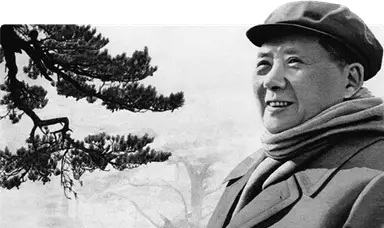
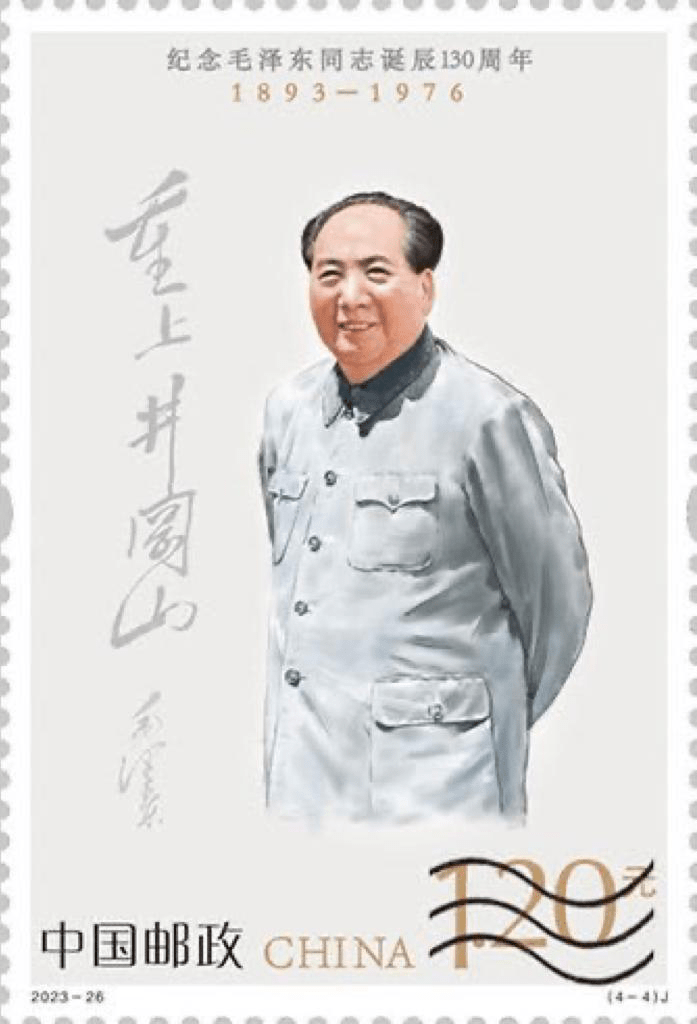
Today is the 130th birthday of Mao.
He did the impossible —
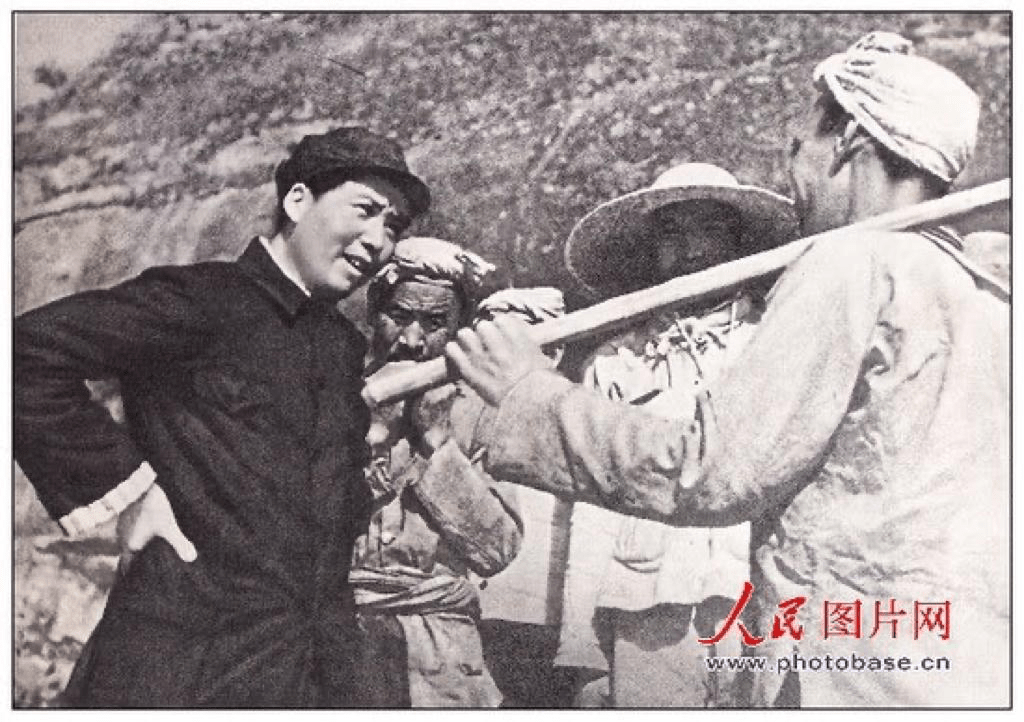
🔹liberated China from imperialists with the help of poor farmers
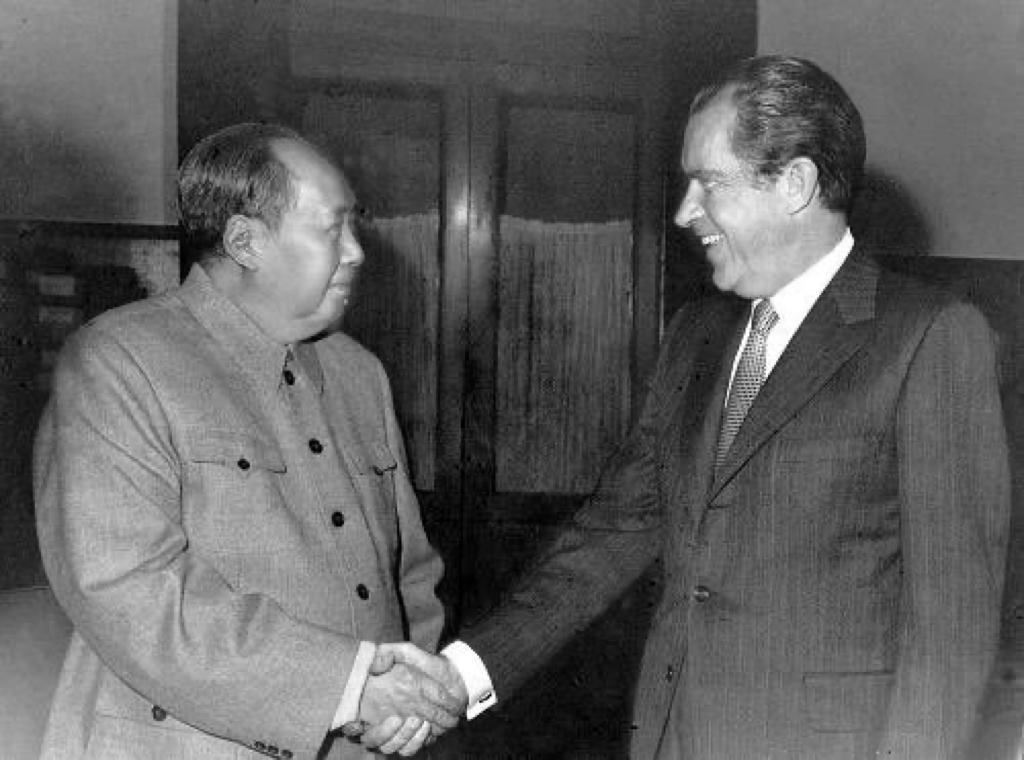
🔹improved China so much that America sought rapprochement
🔹earned the love of Chinese people so much that the U.S. tried to smear him later on 😆
மாஓ வின் படைப்புகளிலிருந்து இரண்டு சிறிய கட்டுரைகளை இத்துடன் ஆங்கிலத்தில் இணைத்துள்ளோம் . இன்றைய நமது இயக்கம் சந்திக்கும் சவால்களை சந்தித்து எதிர் கொள்வதற்கு உதவியாக இருக்கும் என்ற நம்பிக்கையிலிருந்து இதை அவருடைய 130 பிறந்த ஆண்டு நினைவாக பதிவிடுகிறோம்.உதவிகரமாக இருந்தால் comments இல் பதிவிடவும்
M . Balaji
Selected Works of Mao Tse-tung
Twenty Manifestations Of Bureaucracy
February, 1970
[SOURCE: Joint Publications Research Service, (Washington, DC)]
1. At the highest level there is very little knowledge; they do not understand the opinion of the masses; they do not investigate and study; they do not grasp specific policies; they do not conduct political and ideological work; they are divorced from reality, from the masses, and from the leadership of the party; they always issue orders, and the orders are usually wrong, they certainly mislead the country and the people; at the least they obstruct the consistent adherence to the party line and policies; and they cannot meet with the people.
2. They are conceited, complacent, and they aimlessly discuss politics. They do not grasp their work, they are subjective and one-sided; they are careless; they do not listen to people; they are truculent and arbitrary; they force orders; they do not care about reality; they maintain blind control. This is authoritarian bureaucracy.
3. They are very busy from morning until evening, they labour the whole year long; they do not examine people and they do not investigate matters; they do not study policies; they do not rely upon the masses; they do not prepare their statements; they do not plan their work. This is brainless, misdirected bureaucracy. In other words, it is routinism.
4. Their bureaucratic attitude is immense; they cannot have any direction; they are egoistic; they beat their gongs to blaze the way; they cause people to become afraid just by looking at them; they repeatedly hurl all kinds of abuse at people; their work style is crude; they do not treat people equally. This is the bureaucracy of the overlords.
5. They are ignorant; they are ashamed to ask anything; they exaggerate and they lie; they are very false; they attribute errors to people; they attribute merit to themselves; they swindle the central government; they deceive those above them and fool those below them; they conceal faults and gloss over wrongs. This is the dishonest bureaucracy.
6. They do not understand politics; they do not do their work; they push things off onto others; they do not meet their responsibilities; they haggle; they put things off; they are insensitive; they lose their alertness. This is the irresponsible bureaucracy.
7. They are negligent about things; they subsist as best they can; they do not have anything to do with people; they always make mistakes; they offer themselves respectfully to those above them and are idle towards those below them; they are careful in every respect; they are eight-sided and slippery as eels. This is the bureaucracy of those who work as officials and barely make a living.
8. They do not completely learn politics; they do not advance in their work; their manner of speech is tasteless; they have no direction in their leadership; they neglect the duties of their office while taking the pay; they make up things for the sake of appearances. The idlers [e.g., landlord] do not begin any matters, but concentrate mainly upon their idleness; those who work hard, are virtuous, and do not act like the officials are treated poorly. This is the deceitful, talentless bureaucracy.
9. They are stupid; they are confused; they do not have a mind of their own; they are rotten sensualists; they glut themselves for days on end; they are not diligent at all, they are inconstant and they are ignorant. This is the stupid, useless bureaucracy.
10. They want others to read documents; the others read and they sleep; they criticize without looking at things; they criticize mistakes and blame people; they have nothing to do with mistakes; they do not discuss things; they push things aside and ignore it; they are yes men to those above them; they pretend to understand those below them, when they do not; they gesticulate; and they harbour disagreements with those on their same level. This is the lazy bureaucracy.
11. Government offices grow bigger and bigger; things are more confused; there are more people than there are jobs; they go around in circles; they quarrel and bicker; people are disinclined to do extra things; they do not fulfil their specific duties. This is the bureaucracy of government offices.
12. Documents are numerous; there is red tape; instructions proliferate; there are numerous unread reports that are not criticized; many tables and schedules are drawn up and are not used; meetings are numerous and nothing is passed on; and there are many close associations but nothing is learned. This is the bureaucracy of red tape and formalism.
13. They seek pleasure and fear hardships; they engage in back door deals; one person becomes an official and the entire family benefits; one person reaches nirvana and all his close associates rise up to heaven; there are parties and gifts are presented. . . This is the bureaucracy for the exceptional.
14. The greater an official becomes, the worse his temperament gets; his demands for supporting himself become higher and higher; his home and its furnishings become more and more luxurious; and his access to things becomes better and better. The upper strata gets the larger share while the lower gets high prices; there is extravagance and waste; the upper and lower and the left and right raise their hands. This is the bureaucracy of putting on official airs.
15. They are egotistical; they satisfy private ends by public means; there is embezzlement and speculation; the more they devour, the more they want; and they never step back or give in. This is egotistical bureaucracy.
16. They fight among themselves for power and money; they extend their hands into the Party; they want fame and fortune; they want positions and, if they do not get them, they are not satisfied; they choose to be fat and to be lean; they pay a great deal of attention to wages; they are cosy when it comes to their comrades but they care nothing about the masses. This is the bureaucracy that is fighting for power and money.
17. A plural leadership cannot be harmoniously united; they exert themselves in many directions, and their work is in a state of chaos; they try to crowd each other out; the top is divorced from the bottom and there is no centralization, nor is there any democracy. This is the disunited bureaucracy.
18. There is no organization; they employ personal friends; they engage in factionalism; they maintain feudal relationships; they form cliques to further their own private interest; they protect each other, the individual stands above everything else; these petty officials harm the masses. This is sectarian bureaucracy.
19. Their revolutionary will is weak; their politics has degenerated and changed its character; they act as if they are highly qualified; they put on official airs; they do not exercise their minds or their hands. They eat their fill every day; they easily avoid hard work; they call a doctor when they are not sick; they go on excursions to the mountains and to the seashore; they do things superficially; they worry about their individual interests, but they do not worry whatsoever about the national interest. This is degenerate bureaucracy.
20. They promote erroneous tendencies and a spirit of reaction; they connive with bad persons and tolerate bad situations; they engage in villainy and transgress the law; they engage in speculation; they are a threat to the Party and the state; they suppress democracy; they fight and take revenge, they violate laws and regulations; they protect the bad; they do not differentiate between the enemy and ourselves. This is the bureaucracy of erroneous tendencies and reaction.
Transcription by the Maoist Documentation Project.
HTML revised 2004 by Marxists.org
Selected Works of Mao Tse-tung
ON LU HSUN
1937
[Speech at the meeting Commemorating the First Anniversary of the Death of Lu Hsun held in the North Shensi Public School on 19.10.1939. Reproduced from the fortnightly July (Chi-yueh), March 1938.]
Comrades,
Our main tasks at the present moment are those of the vanguard. At a time when the great national Resistance War is making rapid progress, we need a large number of activists to play the leading role [in it] and a large number of vanguards to find the path. Vanguards must be frank, positive, and upright people. They seek no self-interest, only national and social emancipation. They fear no hardships, instead, in the face of hardship they are determined and forever moving forward. Neither undisciplined nor fond of limelight, they have their feet firmly on the ground and are realistic. They are the guides on the road of revolution. In the light of the present state of the war, if the Resistance is the concern only of the government and armed forces, without the participation of the broad masses, we cannot be certain that we shall win the final victory. We must now train a large number of vanguards who will fight for our national liberation and can be relied upon to lead and organize the masses for the fulfilment of this historic mission. First of all, the numerous vanguards of the whole country must urgently organize themselves. Our communist party is the vanguard of national liberation. We must fight to the bitter end in order to accomplish our tasks.
Today we commemorate [ the death ] of Lu Hsun. We must first of all understand him and his place in the history of our revolution. We commemorate him not only because he was a distinguished writer but also because he, at the forefront of national emancipation, dedicated all his strength to the revolutionary struggle. (We commemorate him not only because he wrote well, becoming a great literary figure, but also because he was a vanguard for national liberation and gave tremendous help to the revolution. ) Although he did not belong to the communist party organization, his thinking, action, and writing were all Marxianized. He showed more and more youthful energy as his life drew to its end. He fought consistently and incessantly against feudal forces and imperialism. Under despicable circumstances of enemy pressure and persecution, he struggled (suffered) and protested. In a similar way, Comrades, you can also study revolutionary theories diligently while [living] under such adverse material conditions [because] you are full of militant spirit. The material arrangement of this school is poor, but here we have truth, freedom, and a place to train revolutionary vanguards.
Lu Hsun emerged from the decaying feudal society. But he knew how to fight back against the rotten society and the evil imperialist forces of which he had had so much experience . He used his sardonic, humorous, and sharp ( powerful ) pen to depict the force(s) of the dark society (and of the ferocious imperialists). He was really an accomplished ‘painter’. In his last years he fought for truth and freedom from the standpoint of the proletariat and national liberation.
Lu Hsun’s first characteristic was his political vision. He examined society with both a microscope and a telescope, hence with precision and farsightedness. As early as 1936 he pointed out the dangerous tendencies of the criminal Trotskyites. Now the clarity and correctness of his judgement have been proved beyond doubt by the facts—the obvious fact that the Trotskyite faction has turned into a traitorous organization subsidized by Japanese special agents.
In my view, Lu Hsun is a great Chinese saint—the saint of modern China, just as Confucius was the saint of old China. For his immortal memory, we have established the Lu Hsun Library and the Lu Hsun Teachers’ Training School in Yenan So that future generations may have a glimpse of his greatness.
His second characteristic was his militancy, which we mentioned a moment ago. He was a great steadfast tree, not a blade of wavering grass, against the onslaught of dark and violent forces. Once he saw a political destination clearly he strove to reach it, never surrendering or compromising half way. There have been half-hearted revolutionaries who fought at first but then deserted the battlefield. Kautsky and Plekhanov of foreign countries (Russia) were good examples [of this]. Such people are not infrequently found in China. If I remember correctly, Lu Hsun once said that at first all [of them] were ‘left’ and revolutionary, but as soon as pressure came, [they] changed and presented their comrades [to the enemy] as a gift. Lu Hsun bitterly hated this sort of people. While fighting against them, he educated and disciplined the young writers who followed him. He taught them to fight resolutely, to be vanguards, and to find their own way .
His third characteristic was his readiness to sacrifice himself, completely fearless of enemy intimidation and persecution and utterly unmoved by enemy enticement. With merciless pungency his sword-like pen cut all those he despised. Among the bloodstains of revolutionary fighters he showed his tenacious defiance and marched ahead while calling [the others to follow him]. Lu Hsun was an absolute realist, always uncompromising, always determined. In one of his essays he maintained that one should [continue to] beat a dog after it had fallen in water. If you did not, the dog wound jump up either to bite you or at least to shake a lot of dirty water over you. Therefore the beating had to be thorough. Lu Hsun did not entertain a speck of sentimentalism or hypocrisy.
Now the mad dog, Japanese imperialism, had not been beaten in water yet. We must learn this ‘Lu Hsun spirit’ and apply it to the whole country.
These characteristics are the components of the great ‘Lu Hsun spirit’. Throughout his life Lu Hsun never deviated from this spirit and that is why he was an outstanding writer in the world of letters and a tough, excellent vanguard in the revolutionary ranks. As we commemorate him, we must learn his spirit. [We] must take it to all the units engaged in the Resistance War and use it in the struggle for our national liberation.
Transcription by the Maoist Documentation Project.
HTML revised 2004 by Marxists.org
 Knock nock
Leave a comment