

- Published18 October 2022
Read more India stories from the BBC:
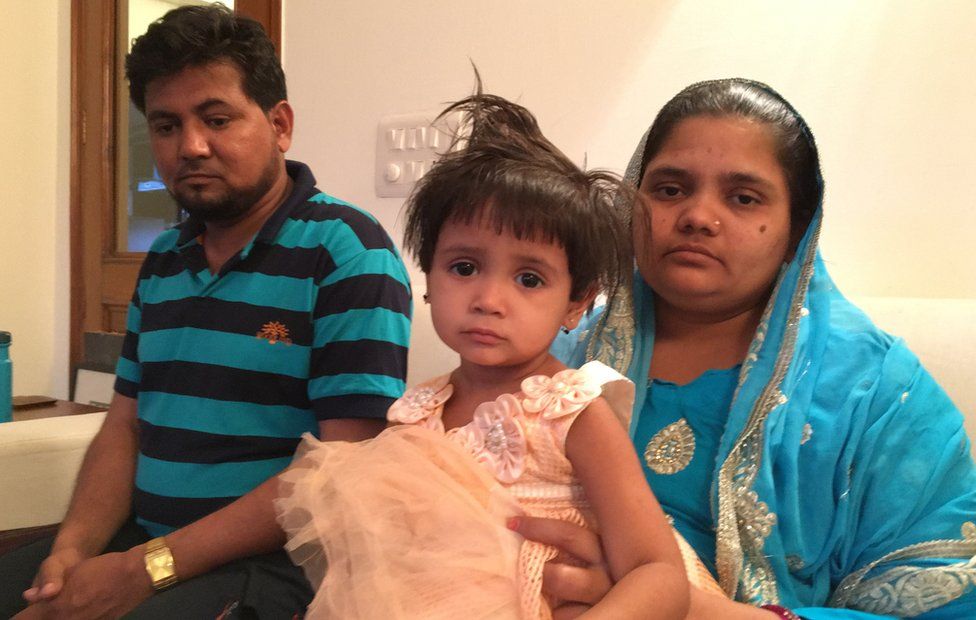
By Geeta Pandey
BBC News, Delhi
The government of Indian Prime Minister Narendra Modi approved the premature release of 11 men who were convicted for the gangrape of a pregnant Muslim woman and murder of 14 members of her family, including her three-year-old daughter, according to a court document.
The convicts were part of a Hindu mob that attacked Bilkis Bano and her family during the 2002 anti-Muslim riots in the western state of Gujarat.
The release of the men, who were serving life sentences for rape and murder, and the heroes’ welcome they were accorded had caused global outrage.
Many were especially aghast as the convicts had walked free on 15 August – the day India was celebrating its independence day and just hours after Mr Modi had given a speech asking citizens to respect women.
A viral video showed the men lined up outside the Godhra jail while relatives gave them sweets and touched their feet to show respect.
State officials at the time said a government panel had approved the application for remission as the men – first convicted by a trial court in 2008 – had spent more than 14 years in jail, and after considering other factors such as their age and good behaviour in prison.
But on Monday, the Gujarat government submitted a document in the Supreme Court revealing that they had sought the federal government’s approval – which was granted by the home ministry, led by Amit Shah, in July.
The approval had come despite opposition from a court and federal prosecutors who had said they should not be “released prematurely and no leniency may be shown” to them as their crime was “heinous, grave and serious”.
The top court is hearing several petitions challenging the convicts’ release.

The article contains details that some readers may find disturbing
Days after her attackers were freed, Bilkis Bano issued a statement calling the decision to free the men “unjust” and said it had “shaken” her faith in justice.
“When I heard that the convicts who had devastated my family and life had walked free, I was bereft of words. I am still numb,” she said.
“How can justice for any woman end like this? I trusted the highest courts in our land. I trusted the system, and I was learning slowly to live with my trauma. The release of these convicts has taken from me my peace and shaken my faith in justice,” she wrote, appealing to the Gujarat government to “undo this harm” and “give me back my right to live without fear and in peace”.
The decision had caused massive outrage in India. It was criticised by opposition parties, activists and several journalists, who said it discriminated against India’s minority Muslims. Attacks on the community have risen sharply since the BJP formed the federal government in 2014.
More than 6,000 activists, historians and citizens issued a statement urging the Supreme Court to revoke the early release of the convicts, describing it as a “grave miscarriage of justice”.
Many also pointed out that the release was in contravention of guidelines issued by both the federal government and the Gujarat state government – both say that rape and murder convicts cannot be granted remission. Life terms in these crimes are usually served until death in India.
The biggest setback from the state government’s decision has been for Bilkis Bano and her family.
The anger and despondence of the family is easy to understand considering the magnitude of the crime and the protracted battle they had to fight for justice.
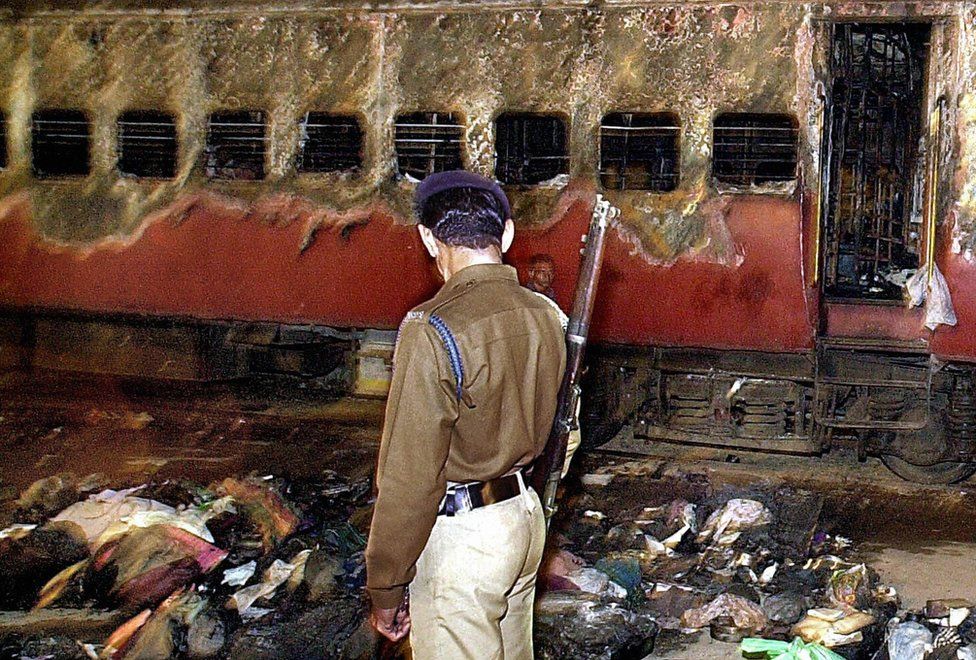
The attack on Bilkis Bano and her family was one of the most horrific crimes during the riots, which began after 60 Hindu pilgrims died in a fire on a passenger train in Godhra town.
Blaming Muslims for starting the fire, Hindu mobs went on a rampage, attacking Muslim neighbourhoods. Over three days, more than 1,000 people died, most of them Muslims.
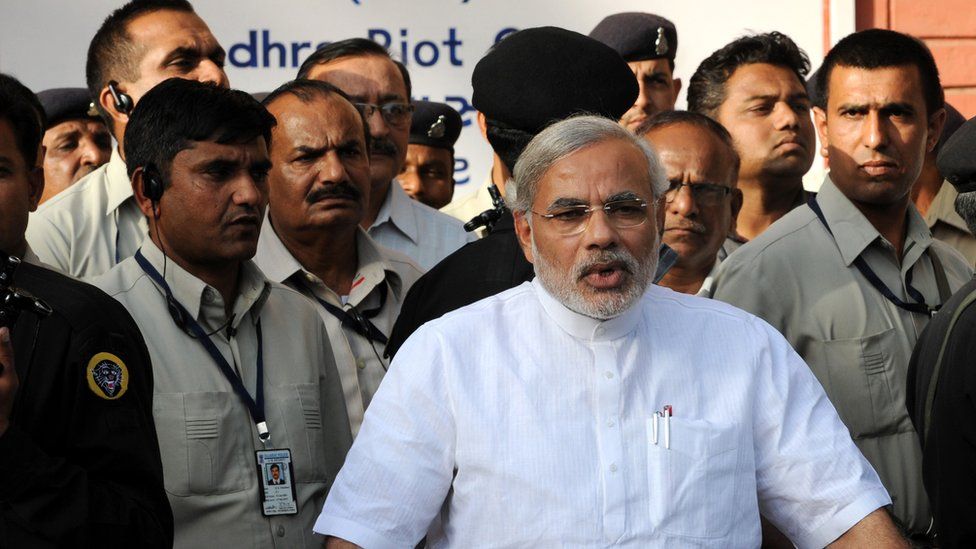
Prime Minister Narendra Modi, who was then Gujarat chief minister, was criticised for not doing enough to prevent the carnage. He has always denied wrongdoing and has not apologised for the riots.
In 2013, a Supreme Court panel also said that there was insufficient evidence to prosecute him. But critics have continued to blame him for the riots happening on his watch.
Over the years, the courts have convicted dozens of people for involvement in the riots, but some high-profile accused got bail or were exonerated by higher courts.
This included Maya Kodnani, an ex-minister and aide to Mr Modi, whom a trial court had called “the kingpin of the riots“.
And now the men who wronged Bilkis Bano have also been set free.
I met Bilkis Bano in May 2017 at a safe house in Delhi, just days after the Bombay High Court had confirmed the life sentences of the 11 convicted in her case.
Fighting back tears, she recounted the horrors of the attack.
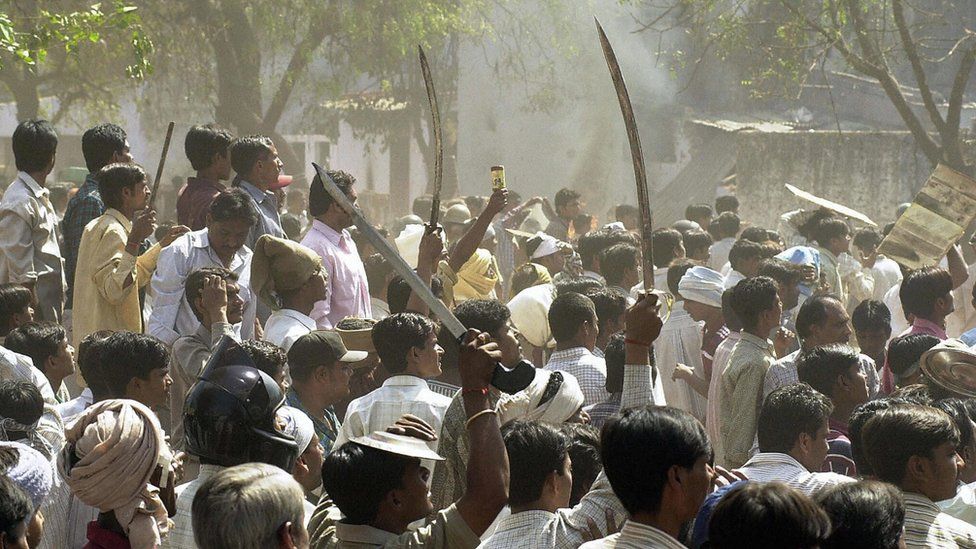
The morning after the train fire, Bilkis Bano – then 19 and pregnant with her second child – was visiting her parents in a village called Randhikpur near Godhra with her three-year-old daughter.
“I was in the kitchen making lunch, when my aunt and her children came running. They said their homes were being set on fire and we had to leave immediately,” she told me. “We left with just the clothes we were wearing, we didn’t even have the time to put on our slippers.”
Bilkis Bano was in a group of 17 Muslims that included her daughter, her mother, a pregnant cousin, her younger siblings, nieces and nephews, and two adult men.
Over the next few days, they travelled from village to village, seeking shelter in mosques or subsisting on the kindness of Hindu neighbours.
On the morning of 3 March, as they set out to go to a nearby village where they believed they would be safer, a group of men stopped them.
“They attacked us with swords and sticks. One of them snatched my daughter from my lap and threw her on the ground, bashing her head into a rock.”
Her attackers were her neighbours in the village, men she had seen almost daily while growing up. They tore off her clothes and several of them raped her, ignoring her pleas for mercy.
Her cousin, who had delivered a baby two days earlier while they were on the run, was raped and murdered and her newborn was killed.
Bilkis Bano survived because she lost consciousness and her attackers left, believing she was dead. Two boys – seven and four – were the only other survivors of the massacre.
Bilkis Bano’s fight for justice was long and nightmarish. It has been well documented that some police and state officials tried to intimidate her, evidence was destroyed and the dead were buried without post-mortems. The doctors who examined her said she hadn’t been raped, and she received death threats.
The first arrests in the case were made only in 2004 after India’s Supreme Court handed over the case to federal investigators. The top court also agreed that courts in Gujarat could not deliver her justice and transferred her case to Mumbai.
Her fight for justice was also disruptive for her family – they’ve had to move home nearly a dozen times.
“We still can’t go home because we’re afraid. Police and the state administration have always helped our attackers. When we are in Gujarat, we still cover our faces, we never give out our address,” her husband had told me.
During trial, there were calls for the death penalty for Bilkis Bano’s attackers, including from herself.
But after the high court in Mumbai sentenced them to life, she told me she was “not interested in revenge” and “just want them to understand what they’ve done”.
“I hope they will one day realise the enormity of their crime, how they killed small children and raped women.”
But, she added, she wanted them “to spend their entire lives in jail”.
After their release, Mr Rasool told the Indian Express newspaper that his wife was “distressed and melancholic”.
“The battle we fought for so many years has been wrapped up in one moment,” he said.
“We have not even had the time to process this news and we know that the convicts have already reached their homes.”
Understanding the Remission Policy That Led to the Release of Bilkis Bano’s Rapists
With all the outrage and debate that the remission has prompted, it is important to remember that at the centre of it stands a survivor negotiating with her lived trauma and harm every day.

Bilkis Bano, who was gangraped during the 2002 Gujarat riots, addresses a press conference in New Delhi on April 24. Photo: PTI

Support Us
Listen to this article:
The 2002 Gujarat riots in India are remembered as one of the most brutal episodes of violence post-Partition. Twenty years later, the violence and trauma that the riot victims suffered were renewed with the premature release of 11 gang-rape and murder convicts who had been sentenced to life imprisonment in the Bilkis Bano case.
During the 2002 Gujarat riots, then 21-year-old Bilkis Bano, who was five months pregnant, was gang-raped. Her mother and sister were raped, virtually her entire family, including her three-year-old daughter, were killed in front of her eyes. In 2008, a special Central Bureau of Investigation (CBI) court sentenced the 11 accused in her case to life imprisonment. The same was subsequently upheld by the Bombay high court in 2017.
The remission policy
On August 15 this year, the Gujarat government, on the recommendation of a Jail Advisory Committee, remitted the sentences of the 11 convicts. This remission was allowed as a result of a Supreme Court order on May 13 which authorised the Gujarat government to consider the convicts’ remission as per the 1992 remission policy which was in effect at the time of their conviction.
Also read: Release of Bilkis Bano Case Convicts: Conflicting Remission Policies Raise Difficult Questions
One of the convicts, Radheshyam Bhagwandas Shah alias Lala Vakil, had moved the Supreme Court in May through a writ petition under Article 32, seeking that the state of Gujarat be permitted to consider his application for remission under the 1992 remission policy. The Gujarat high court, where he had previously filed a petition, was of the view that the appropriate government to evaluate the convicts’ eligibility for remission was the Government of Maharashtra. This was based on the fact that the trial had been transferred to and heard in Maharashtra due to fear of evidence and witness tampering.
Quashing the Gujarat high court’s decision, the Supreme Court deemed Gujarat, not Maharashtra, the appropriate government to evaluate the remission. Following the same, a special panel consisting of judicial experts and politicians recommended to the Government of Gujarat that the 11 convicts be released.

Supreme Court of India. Photo: Flickr
The Supreme Court order, issued by Justices Ajay Rastogi and Vikram Nath, however, may not stand the scrutiny of established legal standards for determining the “appropriate government” for remission under Section 432(7) of the Code of Criminal Procedure (‘CrPC’).
At the outset, the Supreme Court’s decision was delivered in a writ petition. It overturned the Gujarat high court’s order even though the same had not been challenged.
The relevant sections here are Sections 432 and 433 of the CrPC. Section 432 deals with the authority to suspend or remit sentences. The ‘appropriate government’ under this provision has the authority to suspend the execution of the convict’s sentence or remit the whole or any part of the punishment imposed on them, either unconditionally or by imposing conditions accepted by the convict. Section 433 empowers the ‘appropriate government’ to commute death, life imprisonment, rigorous imprisonment, and simple imprisonment sentences.
The leading case on the matter, Union of India v Sriharan @ Murugan and Ors would affirm that the Government of Maharashtra was the appropriate government for determining the remission. However, interpreting CrPC section 432(7), the Supreme Court determined that the Gujarat government is the appropriate government since the case was transferred to and adjudicated in Maharashtra for the limited purpose of trial.
After the trial concluded and the prisoners were convicted, the case was then transferred back to the state where the crime was committed, in this case, Gujarat. With this reasoning, the Supreme Court attempts to supersede the express direction in section 432(7) and the V. Sriharan case. However, such reasoning does not adequately justify any deviation from well-established precedents.
Another strand of this very argument on which the court relies, to hold that Gujarat is the appropriate government, is a Bombay high court order passed in 2013. As per this decision, the Bombay high court held that since the case was sent to be tried in Mumbai under unusual circumstances and then transferred back to Gujarat, the appropriate prison to make decisions regarding the premature release of the convicts would be Gujarat.
However, the Supreme Court erred in reproducing the Bombay high court order since the latter was silent on the question of the appropriate government. The order was on the transfer of prisoners from the jail in Maharashtra to the jail in Gujarat, and since the Inspector General of Prisons had already decided on the matter, the high court opined that those orders for similar convicts be made in the same manner.
Reviewing the decision on which is the appropriate government for the purpose of decision-making would withdraw Gujarat’s government’s jurisdiction to release the convicts. However, even if they are to have jurisdiction, the decision to release the convicts is patently illegal.
Also read: Petitions Challenging Release of Convicts in Bilkis Bano Case Filed Before Supreme Court
The Supreme Court established certain factors for determining whether a convict should be granted remission in the Laxman Naskar case. These include considering whether the offence affects society at large, what the likelihood of the crime being repeated is, what is the convict’s potential to commit crimes in the future, if any fruitful purpose is served by keeping the convict in prison and what the socio-economic condition of the convict’s family is.
One of the convicts in the Bilkis Bano case petitioned the Supreme Court to have his remission application reviewed under the 1992 policy, which makes no distinction whether the case is investigated by the CBI or not, as in the case of the 2014 policy. Even if the case was to be considered under the 1992 policy, the Gujarat government was, as per Section 435(1)(a) CrPC, required to consult the Union government for the release of the convicts. It needs to be stressed here, that the word ‘consult’ has been interpreted as concurrence in the V. Sriharan case itself.
Overall, it can be observed that the remission stands on unsteady grounds with respect to the Supreme Court order and the Gujarat government’s decisions.
Biklis’s identity a motivation for hate crime
Centering Bilkis Bano and her narrative is an important part of understanding the moral and intersectional concerns related to the case. With all the outrage and debate that the remission has prompted, it is important to remember that at the centre of it stands a survivor negotiating with her lived trauma and harm every day. This is especially vital since Bilkis Bano’s identity was crucial to the occurrence of the incident. Her position as a Muslim woman was a motivation in the hate crime that was perpetrated upon her.
Existing at the complex intersection of gender and religion in a Hindu majoritarian state, Muslim women bear the burden of religious and gender subordination. In this context, a show of violence against them is a result of their intersectional identities and is closely tied to the social and political nature of violence itself, which also explains the interpersonal nature of violence that targets victims as part of a group.
While all citizens of the Indian state are granted equality by the Constitution, the reality of vulnerable groups pushes us to ask whether Bilkis Bano has equal status under law. For surely, the release does not constitute a valid exercise of the guided discretionary power of the State under Sections 432-435 CrPC.
Furthermore, the 11 convicts have been released all at once, without considering each convict’s case on an individual basis. This violates the Supreme Court’s decision in Maru Ram that directs the release of each convict on a case-to-case basis.
Recognising these facts and laying emphasis on them in the present discourse encourages us to understand the complexities situated at vulnerable intersections of gender and religion and how institutional barriers are exacerbated when these two operate simultaneously.
Jhuma Sen is an advocate practising at the Calcutta high court. She is also an adjunct faculty at the W.B. National University of Juridical Sciences. The author thanks Nimisha Nagpal for her research assistance.
1
Support The Wire
In India, New Wave of Trauma as 11 Convicted of Rape and Murder Walk Free
Just as Bilkis Bano had started to rebuild her life after grisly communal violence in 2002, a state government cut short her assailants’ life sentences.
- Share full article


By Karan Deep Singh, Suhasini Raj and Mujib Mashal
Aug. 20, 2022
GODHRA, India — For 15 years, as she moved from house to house for her family’s safety, Bilkis Bano waited for assurance from the courts that the men who gang-raped her and murdered many of her relatives would spend the rest of their lives in prison.
That finally came in 2017. In the years that followed, Ms. Bano said, she had been learning “slowly to live with my trauma” from the grisly communal bloodshed that racked the Indian state of Gujarat in 2002 and devastated her family. She and her husband were now ready to settle into a new home close to relatives and restart their business selling goats and buffaloes.
Then, this past week, the 11 perpetrators walked free, welcomed with sweets and garlands.
“The trauma of the past 20 years washed over me again,” Ms. Bano said in a statement released by her lawyer on Wednesday. “I am still numb.”
She has stopped talking to anyone outside her home, Yakub Rasul, her husband, said in an interview. “They are now out,” Mr. Rasul said. “We are thinking, ‘What will they do to us?’”
ADVERTISEMENT
The case of Bilkis Bano, a Muslim woman who was raped and her 3-year-old daughter killed by a Hindu mob, is a tragic reflection of India’s halting progress in addressing violence against women and of the deepening divides engendered by swelling Hindu nationalism.

The convicts’ early release came as the country marks 10 years since the horrific gang-rape of a young woman on a bus in the capital, New Delhi, which set off nationwide protests and led to collective soul-searching. The result was stricter laws, police reforms, wider protections for women and a continuing push to alter attitudes.
“I have one request to every Indian: Can we change the mentality towards our women in everyday life?” Prime Minister Narendra Modi said in an address on the 75th anniversary of India’s independence this past week. “It is important that in our speech and conduct, we do nothing that lowers the dignity of women.”
But the freeing of the men on the same day as Mr. Modi’s speech — and at the same time that the government has faced criticism for jailing activists and voices of dissent for long stretches — showed how easily political machinations can undermine efforts at justice, analysts said.
The Leaflet
Bilkis Bano judgment: A detailed explainer
PARAS NATH SINGH·JANUARY 9, 2024
The Supreme Court has passed a significant judgment, quashing the remission of eleven convicts who gang raped Bilkis Bano and murdered seven of her family members during the 2001 Gujarat Pogrom. Here is a detailed explainer on the judgment.
—
IN a damning indictment of the Gujarat government as well as the Supreme Court itself, a Supreme Court Bench comprising Justices B.V. Nagarathna and Ujjal Bhuyan has quashed the remission Orders releasing eleven convicts in the Bilkis Bano gang rape and multiple murder case.
The Bench has directed the convicts to report to the concerned jail authorities within two weeks from the date of judgment.
Justice Nagarathna, who authored the judgment, has said the courts had to be mindful of the spelling of the word “justice” and the content of the concept. Courts have to dispense justice and not let justice be dispensed with, she added.
Justice Nagarathna held that the grant of remission by the Gujarat government was a usurpation of the power of the Maharashtra government and against the rule of law.
Justice Nagarathna, who authored the judgment, has said the courts had to be mindful of the spelling of the word “justice” and the content of the concept.
Bilkis was 21 years old and pregnant when she was gang raped. She lost all the members of her family in the communal carnage. Her three-and-a-half-year-old daughter was butchered to death before her eyes.
The Central Bureau of Investigation (CBI), on the direction of the Supreme Court, investigated the matter, and the trial was held in Maharashtra on the directions of the Supreme Court to ensure an impartial investigation and fair trial.
In 2008, a Mumbai sessions court convicted the accused persons for offences under Section 302 and 376(2)(e)(g) read with Section 149 of the Indian Penal Code (IPC), and awarded them rigorous imprisonment for life and fine.
In May 2017, a division Bench of the Bombay High Court upheld the conviction and sentence awarded by the trial court. The findings recorded by the trial court as well as the Bombay High Court were also upheld by the Supreme Court.
What triggered the premature release of the convicts?
The Order passed by a two-judge Bench comprising Justice Ajay Rastogi and Justice Vikram Nath on May 13, 2022 was the bone of contention. Justice Rastogi’s Bench, while acting on a petition filed by one of the convicts, namely Radheshyam Bhagwandas Shah alias Lala Vakil, under Article 32 of the Constitution had quashed a Gujarat High Court Order of 2019 that held that since the trial had been concluded in Maharashtra, the application for premature release had to be filed in Maharashtra and not in Gujarat.
Also read: Bilkis Bano: Supreme Court quashes remission granted to 11 convicts by the Gujarat government
The high court had relied upon the decision of the Constitution Bench in Union of India versus V. Sriharan.
Justice Rastogi’s Bench also directed the Gujarat government to consider the premature release of the convict as per the 1992 remission policy which, according to the convicts, was in force when they were convicted.
Armed with the Order of Justice Rastogi’s Bench, the Gujarat government decided to grant premature release to all eleven convicts based on their “good behaviour” on August 10, 2022.
The release of all the eleven convicts sent shock waves across the country leading to the filing of public interest litigation (PIL) by social activists Subhasini Ali, former member of Parliament (MP) Mahua Moitra, and former Indian Police Services (IPS) officer Meeran Chanda Borwankar, among others.
Bano was represented by advocate Shobha Gupta, Moitra was represented by senior advocate Indira Jaising, Ali was represented by Aparna Bhat and Borwankar was represented by advocate Vrinda Grover.
Courts have to dispense justice and not let justice be dispensed with, Justice Nagarathna said.
Based on the arguments advanced before Justice Nagarathna’s Bench, ranging from the very maintainability of the petitions under Article 32 to the competence of the Gujarat government to grant the remission, the Bench framed the following questions:
- Whether the petition filed by Bilkis Bano under Article 32 of the Constitution was maintainable?
- Whether the writ petitions filed as PIL challenging the remission Orders were maintainable?
- Whether the government of Gujarat was competent to pass the Orders of remission?
- Whether the Orders of remission passed by the respondent Gujarat government in favour of convicts are in accordance with the law?
Also read: Bilkis Bano: Petitioners continue to argue for withdrawal of premature release
On the first question, the Bench held that the petition filed by the victim under Article 32 was maintainable. The Bench opined that Bilkis had filed the petition to enforce her fundamental rights under Article 21 of the Constitution which speaks of the right to life and liberty and Article 14 which deals with the right to equality and equal protection of the laws.
The Bench further observed that Article 32 is also to enforce the goals enshrined in the preamble of the Constitution, which speak of justice, liberty, equality and fraternity.
Thus, bearing in mind the expanded notion of access to justice, which also includes speedy remedy, the Bench held that the petition filed by Bano could not be dismissed on the ground of the availability of an alternative remedy under Article 226 of the Constitution or the ground of its maintainability under Article 32 of the Constitution.
The Bench also gave another reason to hold the petition by Bano maintainable. It noted that one of the convicts had filed a petition under Article 32 seeking a direction to the Gujarat government to consider his case for remission under the policy of 1992.
Justice Rastogi’s Bench had issued a direction to that effect, which the state government understood as if it was a command or a direction to grant remission within two months.
In the very same case, Justice Rastogi had rejected the contention of the Gujarat government that it was not the ‘appropriate government’ to grant remission.
Since there had been serious doubts about whether the Gujarat government was the appropriate government under Section 432(7) of the Code of Criminal Procedure (CrPC), 1973 and the same was argued as one of the grounds to challenge the remission Order, Justice Nagarathna opined that the high court would not have been in a position to entertain the petition under Article 226 of the Constitution of India in light of Justice Rastogi’s judgment.
Bilkis was 21 years old and pregnant when she was gang raped.
On the second question which concerned the maintainability of PILs filed by activists and public-spirited persons, Justice Nagarathna’s Bench chose not to provide an answer since Bano had also filed a writ petition adding that the consideration of Bano’s petition on its merits would suffice in the instant case.
The Bench thus opined that the consideration of the point on the maintainability of the PILs had been rendered wholly academic and did not require an answer in this case.
Also read: Bilkis Bano case: I have a right to reintegrate into society, convict tells Supreme Court
Coming to the heart of the matter, that is, whether the government of Gujarat was competent to pass the Orders of remission. Examining the scheme of the CrPC in particular Section 432(7)(b), the Bench reiterated what the Constitution Bench in V. Sriharan held.
That is, the appropriate government is the government of the State within which the offender is sentenced or the said Order is passed.
The Bench thus ruled that in the Bilkis Bano case, Maharashtra had the jurisdiction to consider the application for remission of the convicts as they were sentenced by a special court, Mumbai.
Justice Rastogi’s judgment obtained through fraud
Additional Solicitor General S.V. Raju, for the Gujarat and Union governments, sought to hide behind Justice Rastogi Bench’s Order directing the Gujarat government to consider the premature release of the convicts within two months.
The Order passed by a two-judge Bench comprising Justice Ajay Rastogi and Justice Vikram Nath on May 13, 2022 was the bone of contention.
Hence, the state government had no option but to consider the applications seeking premature release filed by the convicts. Here Justice Nagarathna’s Bench accepted the arguments made by senior advocate Indira Jaising on behalf of Moitra that the judgment dated May 13, 2022, passed by the Bench led by Justice Rastogi was null because it was obtained by playing fraud on the court in that there had been suppression of facts as well as misleading of court with erroneous facts.
The Bench highlighted the following facts among others:
- Radheshyam did not state in his petition before the Supreme Court that the High Court of Gujarat had dismissed his petition seeking premature release by taking note of Section 432 (7) of the CrPC and based on the decision in V. Sriharan as the trial had been concluded in Maharashtra.
- He did not mention that the application for premature release had been filed by him in Maharashtra and not in Gujarat, as directed by the judgment of the Gujarat High Court dated July 17, 2019.
- Although he approached this court as well as Gujarat High Court, he had termed the Order of the Gujarat High Court dated July 17, 2019 as an “impugned Order.” The said Order was not at all impugned or assailed in the proceedings before the Supreme Court. What was filed by the convict Radheshyam before the Supreme Court was a writ petition under Article 32 of the Constitution seeking a direction to the Gujarat government to consider his remission application.
Also read: Some convicts are ‘privileged’, Justice Nagarathna observes while hearing Bilkis Bano case
- In fact, there was no pleading or prayer for seeking setting aside of the Gujarat High Court Order dated July 17, 2019, nor was there any challenge to the said Order.
- That said Order had attained finality as no special leave petition against it was filed by the writ petitioner, Radheshyam; rather he had acted upon it.
- Curiously, in the writ petition filed under Article 32 of the Constitution, the Order dated July 17, 2019 has been set aside even in the absence of there being any prayer or discussion regarding it.
Justice Nagarathna thus held that writ proceedings before the Bench led by Justice Rastogi are in pursuance of suppression and misleading of the court and a result of suppressio veri suggestio falsi. She thus declared that the Order dated May 13, 2022 was obtained by fraud played on the court and hence, was a nullity and non est in law.
Justice Rastogi’s judgment is per incuriam
Justice Nagarathna’s Bench then went a step further. She held that the judgment by Justice Rastogi Bench was per incuriam for two reasons.
For a judgment to be per incuriam, it has to be ignorant of relevant statutory provisions or precedents.
Armed with the Order of Justice Rastogi’s Bench, the Gujarat government decided to grant premature release to all eleven convicts based on their “good behaviour” on August 10, 2022.
Justice Nagarathna’s Bench held that first, the judgment has ignored the binding precedent of the five-judge Bench in V. Sriharan which held that even if an offence is committed in state A but the trial takes place and the sentence is passed in state B, it is the latter state that shall be the appropriate Government. Secondly, it was passed in ignorance of a nine-judge Bench in Naresh Shridhar Mirajkar which held that an Order of a high court could not be set aside in a proceeding under Article 32 of the Constitution.
On the fourth question, of whether the remission Orders were passed in accordance with the law, the Bench opined that remission Orders were non-speaking reflecting complete non-application of mind.
Also read: Years after conviction, fine gets paid in Bilkis Bano case: Supreme Court questions the need
“All Orders dated August 10, 2022 are stereotyped and cyclostyled Orders. It is not necessary to dilate upon each of the aforesaid aspects of abuse of discretion in the instant case, as we have observed that the consideration of the impugned Orders or manner of exercise of powers is unnecessary, having regard to the answer given by us to point no. 3,” the Bench held.
Usurpation of power by the Gujarat government
The Bench also held that the passing of the remission Orders by the Gujarat government was an instance of usurpation of power since it was not an appropriate government. The Bench criticised the Gujarat government for not filing a review petition against Justice Rastogi Bench’s Order.
“We fail to understand as to why the Gujarat government, the first respondent herein, did not file a review petition seeking correction of the Order dated May 5, 2022 passed by this court in writ petition no. 135 of 2022 in the case of respondent no.3 herein.
“Had the Gujarat government filed an application seeking review of the said Order and impressed upon this court that it was not the ‘appropriate government’ but the Maharashtra government was the ‘appropriate government’, ensuing litigation would not have arisen at all.
“On the other hand, in the absence of filing any review petition seeking a correction of the Order passed by this court dated May 13, 2022, the first respondent, the Gujarat government, herein has usurped the power of the Maharashtra government and has passed the impugned Orders of remission on the basis of an Order of this court dated May 13, 2022 which, in our view, is a nullity in law,” the Bench held.
The Bench went on holding that the Gujarat government acted in tandem and was complicit with what Radheshyam had sought from the court.
Referring to the earlier Orders of the Supreme Court transferring the trial of the case to Maharashtra, Justice Nagarathna observed that this was exactly what the Supreme Court had apprehended at the previous stages of this case, which is why it had intervened on three earlier occasions in the interest of truth and justice by transferring the investigation of the case to the CBI and the trial to a special court in Mumbai.
Also read: Bilkis Bano case: I earned the remission, convict tells Supreme Court
“But, in our view, when no intervention was called for in the writ petition filed by one of the convicts or respondent no.3 herein, this court was misled to issue directions contrary to law and on the basis of suppression and misstatements made by respondent no.3 herein.
The Bench held that the petition filed by the victim under Article 32 was maintainable.
“We have held that the Order of this court dated May 13, 2022 to be a nullity and non est in the eye of law. Consequently, the exercise of discretion by the Gujarat government is nothing but an instance of usurpation of jurisdiction and an abuse of discretion,” the Bench held.
It added: “This is a classic case where an Order of this court has been used for violating the rule of law. Therefore, without going into the manner in which the power of remission has been exercised, we strike down the Orders of remission on the ground of usurpation of powers by the Gujarat government not vested in it. The Orders of remission are hence quashed on this ground also.”
Rule of law must prevail
Having quashed the remission Orders, the Bench wondered whether it should accept the argument by the convicts that their liberty may not be curtailed after having been out of jail for a year and more with no misuse of the liberty.
The Bench rejected the argument of the convicts and held breach of the rule of law amounts to negation of equality under Article 14 of the Constitution.
The Bench ruled that Maharashtra had the jurisdiction to consider the application for remission of the convicts as they were sentenced by a special court in Mumbai.
“In our view, this court must be a beacon in upholding the rule of law failing which would give rise to an impression that this court is not serious about the rule of law and, therefore, all courts in the country could apply it selectively and thereby lead to a situation where the judiciary is unmindful of rule of law. This would result in a dangerous state of affairs in our democracy and democratic polity,” the Bench observed.
“Rule of law does not mean protection to a fortunate few. The very existence of the rule of law and the fear of being brought to book operates as a deterrent to those who have no scruples in killing others if it suits their ends,” the Bench added.
It opined that in the event convicts are inclined to seek remission in accordance with the law, they have to be in prison as they cannot seek remission when on bail or outside the jail. The Bench thus directed them to report to jail authorities within two weeks.
Paras Nath Singh assisted senior advocate Indira Jaising in the petition filed by Mahua Moitra.

Paras Nath Singh is an Advocate-on-Record at the Supreme Court of India.
The Scroll
Act of fraud’: Why Supreme Court sent Bilkis Bano case gangrape-murder convicts back to jail
The court criticised the conduct of the Gujarat government and accused one of the convicts for ‘playing fraud’ on the court.
8 hours ago

The Gujarat government’s order to release from jail the 11 men sentenced to life imprisonment for gangrape and murder in the Bilkis Bano case was an “usurpation of jurisdiction and an instance of abuse of discretion”, the Supreme Court held on Monday as it quashed the remission of their sentences. In a stinging judgment, the bench came down hard on the government for breaching the rule of law and being “complicit” with the convicts.
The judgment, written by Justice BV Nagarathna on behalf of a bench comprising her and Justice Ujjal Bhuyan, also rebuked one of the convicts, Radheshyam Bhagwandas Shah, for “an act of fraud” on the Supreme Court in a writ petition he had filed at the court in 2022. The court’s judgment in that case had paved the way for the convicts to successfully seek remission of their life sentences from the Gujarat government later that year. It said that the convicts had “abused the process of law” in obtaining remission.
ADVERTISEMENT
Nagarathna and Bhuyan struck down that judgment as incorrect and “obtained by fraud played on this court”. They ordered the convicts to be re-imprisoned within a fortnight.
The 11 men had been convicted in 2008 for gangrape, murder and rioting against Bano and her family near Ahmedabad on March 3, 2002, during the Gujarat riots. She was 19 years old and pregnant at the time. Fourteen members of her family were also murdered in the violence, including her three-year-old daughter.
Narendra Modi of the Bharatiya Janata Party was chief minister of Gujarat at the time.
Scroll breaks down why Nagarathna overturned the remission orders, holding them illegal and the basis of her trenchant criticism of the Gujarat government and Shah.
The case
In 2022, Shah had filed a writ petition at the Supreme Court requesting that the Gujarat government be directed to consider his application for remission of his sentence based on the government’s 1992 remission policy.
ADVERTISEMENT
This policy had been subsequently replaced by a new policy in 2014 that barred granting remission to those convicted of, among other things, rape and murder.
However, Shah had argued that at the time of his conviction in 2008, it was the 1992 policy that held sway. Therefore, his remission application should be considered under the 1992 policy, not the 2014 one.
In May that year, a bench of the Supreme Court comprising Justices Ajay Rastogi and Vikram Nath ruled in favour of Shah. It directed the Gujarat government to consider his remission application as per the 1992 policy.
On August 15 that year, the Gujarat government remitted the sentences of all 11 convicts, setting them free. This decision had also been approved by the Union government. The remission was granted on grounds that were flimsy, Scroll had reported in 2022. Scroll has also reported that the state’s BJP government had ignored a Mumbai trial court’s opinion that the plea should not be granted. The board that granted remission was packed with members of the BJP.
ADVERTISEMENT
Bano filed a review petition against the Supreme Court’s May 2022 judgment. It was dismissed in December that year.
She also filed a writ petition at the Supreme Court challenging the release of the 11 convicts. This was heard by the bench of Nagarathna and Bhuyan in August, September and October last year.

Maharashtra, not Gujarat the appropriate government
The primary grounds on which the remissions were quashed by the Supreme Court was that the Gujarat government did not have jurisdiction to pass these orders.
Nagarathna’s judgment clarified that the relevant provision of the Code of Criminal Procedure, 1973, dealing with the remission of sentences is clear: that the government authorised to grant remission is of the state “within which the offender is sentenced or the said order is passed”. The place or location where the crime was committed is immaterial,
ADVERTISEMENT
In Bano’s case, even though the crimes were committed in Gujarat, the trial had been shifted to a special court in Mumbai in 2005 at the direction of the Supreme Court. This was done since Bano had expressed apprehensions about receiving a fair trial in a court in Gujarat. The Supreme Court had earlier also handed over the investigation of the case from the Gujarat Police to the Central Bureau of Investigation.
The Mumbai court convicted the 11 men. Therefore, it is the Maharashtra government, not Gujarat, which is the competent authority to address the convicts’ remission pleas.
The remission policy of the Maharashtra government permits remission applications for persons convicted of brutal crimes against women only after them having served a minimum of 28 years of sentence. This would mean that the 11 convicts would now remain behind bars till at least 2036.
‘Fraud’ on Supreme Court
In perhaps the most striking section of the judgment, Nagarathna overruled the May 2022 decision of the Supreme Court. She said that Shah was guilty of “misrepresenting and suppressing relevant facts, thus playing fraud on this Court”. She also ruled that the bench of Rastogi and Nath had not correctly applied the law in its decision.
ADVERTISEMENT
She noted that Shah had initially applied to the Gujarat High Court asking for the Gujarat government to be directed to consider the remission of his sentence. In 2019, the Gujarat High Court had dismissed his plea, asking him to approach the Maharashtra government since that was the competent authority for considering remission in his case.
Within 14 days of the High Court’s order, Shah had applied to the Maharashtra government for remission. The government had sought opinion on his application from the Central Bureau of Investigation, the special judge in Mumbai who had convicted Shah as well as the superintendent of police and the district magistrate from Dahod district in Gujarat, where Bano resides. All four had recommended against granting remission to Shah.
However, in his writ petition before the Supreme Court, Shah did not disclose that he had applied to the Maharashtra government and that the government had received negative recommendations. Neither did he disclose that the Gujarat government’s 1992 policy had been cancelled. He misled the court into believing that he had approached it due to a conflict between the 2019 Gujarat High Court order and a 2013 Bombay High Court order that was pronounced in an unrelated matter and had nothing to do with the remission of sentences.
Nagarathna and Bhuyan held that the Supreme Court’s May 2022 decision stood nullified due to the suppression and distortion of material facts by Shah.
ADVERTISEMENT
Nagarathna’s judgment flagged other infirmities in the May 2022 decision: that it struck down the Gujarat High Court’s 2019 order even though it had not been challenged by Shah and that it “was rendered by ignorance” of previous binding decisions of the Supreme Court on questions pertinent to the case.
It is unusual for a Supreme Court bench to overrule a previous decision passed by a bench with the same number of judges. Ordinarily, it would require a bench of at least three judges to strike down a two-judge bench decision of the court. As a matter of practice, in cases of conflict with a previous judgment of a bench of the same strength, benches return the matter to the chief justice to allocate to a larger bench of the court.

Gujarat government’s complicity
Nagarathna’s judgment excoriated the Gujarat government for “acting in tandem” with Shah. The government did not act in accordance with law in granting the remission orders, the court noted. This means that even if it was authorised to deal with the remission pleas, the orders would still have been struck down for being bad in law.
The court pointed out several fallacies in the Gujarat government’s conduct.
ADVERTISEMENT
It noted that the Supreme Court’s May 2022 decision only directed the government to consider Shah’s remission application as per the 1992 policy and was silent on the other convicts. The government was not bound by any court order to consider the premature release of the other ten convicts. It acted based on the Supreme Court’s direction “but contrary to the letter and spirit of law”, wrote Nagarathna.
The judgment went on to describe the remission orders as “non-speaking one[s] reflecting complete non-application of mind” and as “stereotyped and cyclostyled orders”. Remission cannot be granted arbitrarily and must only proceed after application of mind to the question, it held.
It also criticised the Gujarat government for bypassing the relevant provision of the Criminal Procedure Code on remission by which the judge who passed the conviction order must be consulted by the government considering a convict’s remission plea.
Instead of seeking the Mumbai special judge’s opinion on remission, the government had sought the opinion of the District and Sessions Judge in Gujarat’s Dahod city. Not only was this unlawful, the court held, but there were question marks over the independence of the judge at Dahod since he was also a member of the jail advisory committee tjat had separately recommended granting remission to all the convicts.
ADVERTISEMENT
Nagarathna’s judgment pointed out that the Gujarat government had correctly argued before the Supreme Court in Shah’s writ petition in 2022 that the Maharashtra government was the appropriate authority to grant remission. As a consequence, the bench questioned the Gujarat government for failing to file a review petition against the May 2022 order.
It said that the government would have filed a review if it “had in mind the provisions of law and the judgments of this Court, and had adhered to the rule of law”. A review would have ensued “that litigation would not have arisen at all”, according to the court.
This observation, however, does not seem to account for the fact that Bano had filed a review petition against the May 2022 judgment in the Supreme Court, which was dismissed.
The court said that the Gujarat government was at fault for breaching rule of law in “usurping power not vested in it” of the Maharashtra government.
In its most scathing remarks against the Gujarat government, the court said: “This is exactly what this Court had apprehended at the previous stages of this case and had intervened on three earlier occasions in the interest of truth and justice by transferring the investigation of the case to the [Central Bureau of Investigation] and the trial to the Special Court at Mumbai.”
A professor, a politician, a journalist — 3 women joined hands to fight for Bilkis Bano
Their petition came just before the gang rape survivor knocked on the Supreme Court’s door for justice
Written by Vikas Pathak
New Delhi | Updated: January 9, 2024 20:03 IST

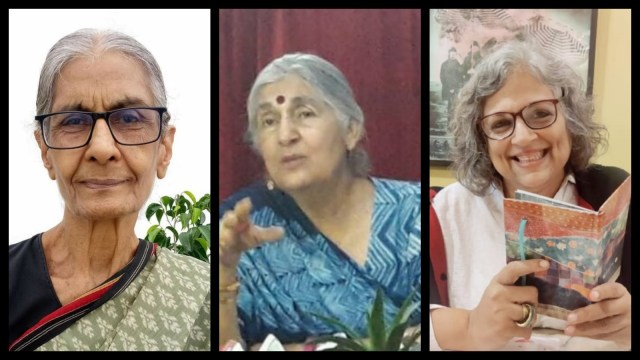 Professor Roop Rekha Verma (left), CPI(M)’s Sibhashini Ali (center), and journalist Revati Laul. (X/@litemeter, SubhashiniAli, RevatiLaul)
Retired philosophy professor from Lucknow University Roop Rekha Verma was at the Delhi airport to board a flight to Lucknow when she received a call from a friend, whom she does not want to name, asking whether she would become a petitioner to file a PIL in the Supreme Court against the remission of sentence of the convicts in the Bilkis Bano gang rape case.
The convicts had also been found guilty of murder. Verma readily agreed and sent her Aadhaar card via courier the next day to become a co-petitioner.
“There were a number of social activists and journalists deeply concerned about the remission. A petition was being planned. They contacted me and I readily agreed, as I was also very disturbed with the remission of the sentence by the Gujarat government,” said professor Verma, 80, who has also been active in social work, running an organisation, Saajhi Duniya, on issues of gender and communal harmony.
By this time, CPI(M)’s Subhashini Ali — who had met Bilkis at a relief camp in Gujarat two days after the gang rape and killings in 2002, when she was part of an AIDWA delegation to the state — had already decided to become a petitioner.
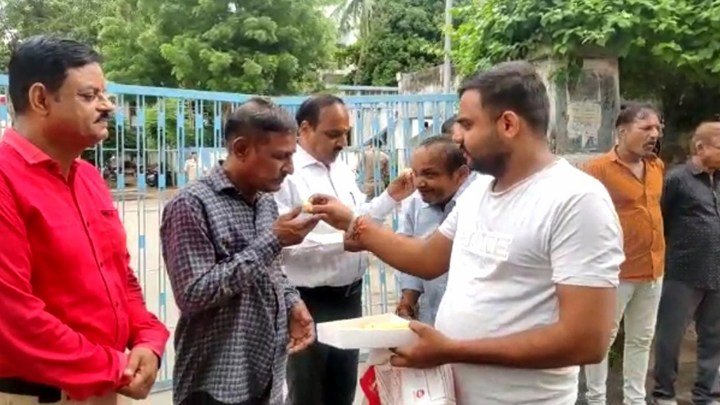 All 11 convicts were granted remission by the Gujarat government and released on August 15, 2022. (Express File Photo)
“When I heard that Bilkis asked whether this was the end of justice, it was like an electric shock. I thought what are we all doing? We were lucky that very good lawyers like Kapil Sibal, Aparna Bhat and others were helping us,” said Ali.
The petition was ready and two petitioners were on board. Now, the team was looking for a third petitioner, and it found her in journalist Revati Laul.
Don’t miss | Bilkis Bano speaks: Feel like I can breathe again, this is what justice feels like
“The petition had already been drafted and I was contacted. I was already incensed with the remission. I was an NDTV journalist in Gujarat and had met Bilkis after the incident happened. I have also written a book called Anatomy Of Hate. I readily agreed to be the third petitioner,” Laul told The Indian Express.
ADVERTISEMENT
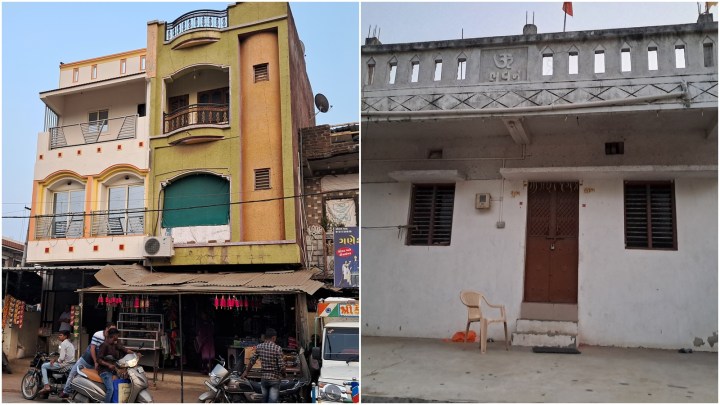 (From left) Residences of Govind Nai, and Radheshyam Shah, convicts in the case at Singvad in Dahod on Monday. Nirmal Harindran
Ali said she found the remission of the sentence “horrifying”. “I don’t think such an act of brutality has been recorded even in communal riots. This stands out as an act of brutality – gang rapes, babies being smashed to death, people being killed, a daughter being raped in front of the mother. We met this woman in the relief camp two days after the incident when we went there as part of an AIDWA team. She was very thin and four months’ pregnant. This poor woman showed courage; her husband was also standing by her. And then the conviction happened eight years later after the case was transferred to Maharashtra.”
Opinion | How two field-level officers stood up for Bilkis Bano
“After the conviction, we found that they were getting parole regularly. What stuck out was the completely shameless way in which a government was standing with the perpetrators of crime. A government should stand with the weak, who seek protection. Then this remission happened,” said Ali.
About what transpired when the petitioners filed a PIL in the apex court, Ali said, “It was being said that it was not admissible but the CJI said he was willing to admit it. Because of the enormity of the crime, I think.”
ADVERTISEMENT
Indira Jaising writes | By sending Bilkis Bano convicts back to jail, Supreme Court reasserts its lost power
Later, Bilkis herself moved the Supreme Court, which admitted her petition. The court said whether the PIL filed by activists was admissible or not was now just an academic question that could be settled in some other case.
“Another shock was the extent to which the government was prepared to go to protect these fellows. Not only did they go beyond the legal boundaries to offer these remissions beyond jurisdiction, but the entire state law machinery and top lawyers were brought to SC every day to browbeat everyone and get the case prolonged for as long as possible. A lot of other people also got impleaded. Then Bilkis came with her lawyer and said if so many people are willing to fight for me, I should also join the fight. It is good that the judgment has come. BJP leaders who defended this (the remission) on channels should be asked why they defended such criminals,” Ali said.https://www.youtube.com/embed/O6ZiyiKw8BA?version=3&rel=1&showsearch=0&showinfo=1&iv_load_policy=1&fs=1&hl=en-US&autohide=2&wmode=transparent
Verma said she had not met Bilkis Bano or her co-petitioner Revati Laul. “I did not know her (Bilkis). So, I did not know whether she was planning anything. In this situation, I wasn’t sure whether she or her family would move court,” she told The Indian Express. “Bilkis also went to court and it heard her petition. I am very happy. My confidence in the rule of law is restored. I wasn’t sure whether justice would come… Many judgments have disappointed us. So, this is a special day. A big salute to Bilkis and a big thanks to the judges.”
After the PIL was filed, expelled Lok Sabha MP and Trinamool Congress leader Mahua Moitra petitioned the Supreme Court separately against the remission. Former IPS officer Meeran Chadha Borwankar also moved the apex court against the remission.
© The Indian Express Pvt Ltd

Vikas Pathak is deputy associate editor with The Indian Express and writes on national politics. He has over 17 years of experience, and has worked earlier with The Hindustan Times and The Hindu, among other publications. He has covered the national BJP, some key central ministries and Parliament for years, and has covered the 2009 and 2019 Lok Sabha polls and many state assembly polls. He has interviewed many Union ministers and Chief Ministers. Vikas has taught as a full-time faculty member at Asian College of Journalism, Chennai; Symbiosis International University, Pune; Jio Institute, Navi Mumbai; and as a guest professor at Indian Institute of Mass Communication, New Delhi. Vikas has authored a book, Contesting Nationalisms: Hinduism, Secularism and Untouchability in Colonial Punjab (Primus, 2018), which has been widely reviewed by top academic journals and leading newspapers. He did his PhD, M Phil and MA from JNU, New Delhi, was Student of the Year (2005-06) at ACJ and gold medalist from University Rajasthan College in Jaipur in graduation. He has been invited to top academic institutions like JNU, St Stephen’s College, Delhi, and IIT Delhi as a guest speaker/panellist.… Read More
rof.Sumathi
IndiasDaughter
மீண்டும் மீண்டும் நினைவூட்ட வேண்டிய சில விஷயங்கள் :
- பில்கிஸ் பானுவைத் தாக்கிய ஆண்கள் அனைவரும் சிறுவயதில் இருந்தே அவருக்கு நேரடியாகத் தெரிந்தவர்களே. அவருடைய வீட்டிலிருந்து பால் வாங்கிச் சென்றவர்கள், அவரால் “சாச்சா” என்று மரியாதையுடன் அழைக்கப்பட்ட முதிவர்கள் தொடங்கி, பில்கீசின் தந்தைக்கு சிகிச்சை அளித்த மருத்துவர் வரை அக்கூட்டத்தில் இருந்தனர். பில்கிஸின் கையில் இருந்து குழந்தை
யை வலுக்கட்டாயமாகப் பிடுங்கி தரையில் அடித்துக் கொலை செய்தவர்களும் இவர்களே.
- சுயநினைவு திரும்பி திடுக்கிட்டு விழித்தபோது, ஒரு பிணக்குவியலுக்கு நடுவில் நிர்வாணக்கோலத்தில் கிடந்த பில்கீஸ் பானுவுக்கு ஆடையை வழங்கியவர் ஒரு ஆதிவாசிப் பெண் ஆவார். பின்னர், அவர் தனியாகவே காவல் நிலையம் சென்று தன்னை தாக்கியவர்களின் பெயர்களைச் சொல்லி புகார் அளித்தார். ஆனால், “சோமாபாய் கோரி” என்ற போலீஸ்காரர் புகாரை ஏற்க மறுத்து அவரை அங்கிருந்து விரட்டி அடித்தார். (பின்னர் அவர் நீதிமன்றத்தால் தண்டிக்கப்பட்டார்)
- பலாத்காரத்தால் பாதிக்கப்பட்ட மற்றவர்களைப் போல் அல்லாமல், பில்கிஸ் தனது முகத்தை கூட மறைக்காமல் ஊடகங்கள் முன் காட்சியளித்து வருகிறார். இன்றுவரை அவர் மேற்கொண்டு வரும் அணைத்து சட்டப் போராட்டங்களுக்கும் பக்கத் துணையாக இருந்து எல்லா உதவிகளையும் கணவர் யாகூப் ரசூல்தான் செய்துவருகிறார்.
- தாக்குதல் நடத்திய குற்றவாளிகள் கடந்த ஆண்டு விடுதலையாகி வெளியே வந்தபோது, அவர்களுக்கு மாலை அணிவித்தும் இனிப்புகளை வழங்கியும் கூட்டமாகச் சென்று வரவேற்றனர். அவர்களில் பெண்களும் இருந்தனர். கூடவே “அவர்கள் பிராமணர்கள் என்பதால், குற்றம் செய்திருக்க வாய்ப்பில்லை” என்று பாஜக எம்.எல்.ஏ.வின் அறிக்கையும் வெளியானது.
- உயிரைப் பணயம் வைத்து, அணைத்து நெருக்கடிகளையும் அழுத்தத்திலிருந்தும் தப்பிப் பிழைத்து நீதிக்காக தொடர்ந்து போராடி வரும் பில்கீஸ் பானு “இந்தியாவின் மகள்” என்று அழைக்கப்படுவதில்லையே ஏன்? பிரதான பெண்ணியக் கதையாடல்களில் கூட அவ்வாறு அவர் குறிப்பிடப்படுவதில்லையே ஏன்? இவ்வளவு பெரிய போராட்டத்தை நடத்தி வருபவர்களில் பில்கீஸ் பானுவைப்போல் எத்தனை உள்ளனர்?
மைய நீரோட்டத்தில் அவரை கொண்டாடுவதை தடுக்கும் அம்சம் அவரின் “அடையாள”த்தைத் (Identity) தவிர வேறு ஏதேனும் உண்டா?
@RaghuSudesh
 Knock nock
Leave a comment