

in Counter Solutions, Editor’s Picks
13/03/2024
This is an updated version of the “People’s Manifesto for Ecological Democracy” that Countercurrents.org published on 15th August 2020, where we set out a broad framework on how India should develop in an age of “Polycrisis”

Preamble
Since 2014, we have been subject to rule by a government that is the most petty, communal, callous and incompetent regime the modern Indian Republic has ever seen in its entire existence. The consequences are there for everyone to see – erosion of every universal value and principle – from common decency to rule of law; an obscene explosion of inequalities in wealth and power; the complete debasement of democratic institutions; open assault on minority populations; persecution of dissidents; and rampant violation of human rights.
No disaster happens overnight and every evil act or policy we witness today has a history perhaps as old as the Republic itself. The current regime builds with evil efficiency on the wickedness of past regimes, but what makes it different from any of its predecessors is its open attempt to trash the Indian Constitution and establish a theological, majoritarian dictatorship. A dictatorship that works solely for the benefit of traditional caste and corporate elites, drawn to each other by their common desire to rule without resistance or accountability.
The Republic of India 1.0, that emerged seven decades ago from the fire of anti-colonial struggles, is dead today without even a decent funeral, its corpse openly decaying on the streets and alleys of the nation. Let us not mince words here. Yes, this country is now de facto a ‘Hindu Rashtra’, the Jurassic monster ready to devour everything that India has been cherished for – democracy, tolerance, non-violence, ancient wisdom and of course, its vast and vibrant diversity.
A Hindu Rashtra where religious minorities, Dalits, Adivasis, women, workers, peasants, the poor in general will be second class citizens on a permanent basis. In the dystopian new order, unfolding before our eyes, much of the nation will be turned into a vast slave labour camp, where everyone will ‘know their place’ and quietly accept it or perish under the iron heels of the police state.
This is not unique of course and at the global level similar trends are visible in country after country, where political elites are using hatred, violence and propaganda as weapons of mass distraction to divert people from the real issues they face – from crumbling economies to ecological catastrophe. And all this to serve their super-rich masters who have concentrated wealth in their hands in way that would make the Emperors and monarchs of the past look like benign philanthropists.
And all this bitter and unfortunate wrangling on the planet comes at a time when collectively the entire human species faces annihilation due to runaway global warming or the threat of nuclear war. Studies reveal that high temperatures will make most of India unliveable in a few decades and much of India’s coastal villages and cities will be under water by the end of the century. On top of that fossil fuels and other resources are depleting fast, making it impossible to maintain the current models of economy, urban lifestyles or even meet the needs of the growing population of India. Sooner or later there is going to be an economic, social and ecological collapse.
Where do we go from here? What are the most pressing issues that need to be addressed today? What can we do to regenerate hope? What can we learn from our own history as well as that of others around the world? What is the pathway to a future India where everyone can live in peace but also with justice and dignity?
This document attempts to make a small and very modest beginning in outlining, based on suggestions from a very wide variety of people, some of the principles we need to firmly uphold and base our actions on. It is not an exhaustive document and has many limitations, but it is one that will always be open to fresh suggestions. Like a living document it will grow as the Indian people continue their struggle for liberty, equality, fraternity and justice.
This document is not prescriptive either and only indicative of the kind of the broad framework everyone can use to create their own manifestos at different levels – urban, rural, national, regional and local. The more such Manifestos that emerge from diverse groups and voices – and inspire action on the ground – the greater will be the strength of Indian democracy.Name:Email:
Principles and Demands:
Civilizational Justice
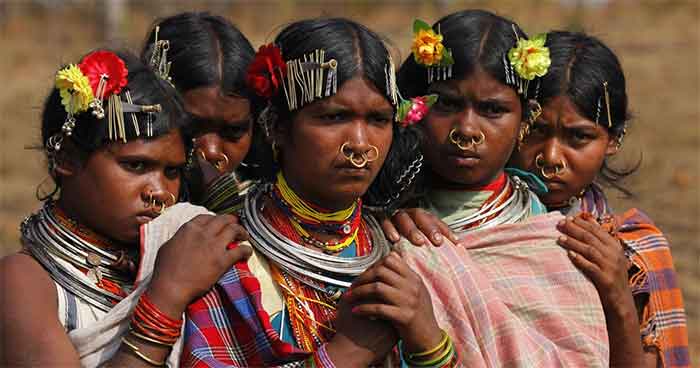
On the Indian subcontinent, we need to recognize and celebrate the primacy of those who represent the longest, unbroken legacy of living in harmony with Mother Earth – the indigenous people of India. They are the original inhabitants and protectors of the entire subcontinent, brutally and tragically pushed off their lands, enslaved, their way of life destroyed by colonising migrants, settlers, invaders, marauders of all kinds over the centuries. Restoring the centrality of these populations to everything that happens in India will be the first step towards not just healing the deep wounds inflicted on the indigenous people themselves but also redeeming the souls of the rest of the population.
- Declare the Adivasis and Dalits as original inhabitants of India and restore to them, full autonomy and control over their resources. Nothing will be done in the territories they control without the explicit permission of their own institutions.
- The Government of India should apologize to the Adivasis and Dalits of India, across all religious denominations, on behalf of rest of the country’s population. It should set up a special Commission to estimate the costs of displacement and destruction of their lives and territories since Independence and the compensation amount to be paid to them.
- The Scheduled Tribes and Other Traditional Forest Dwellers (Recognition of Forest Rights) Act, 2006 was meant to undo the historic injustice done to tribal communities. However, the tribal communities still continue to be viewed as encroachers in the forest and are denied the benefits of this historic Act. Instead of examining the claims of persons from the ST community, which may be open to the whims of officers, every adult should be allocated the 4 hectares of land, the maximum permissible under the law, to do justice to this community.
- Official recognition should be given to all Adivasi languages and the availability of text books for children in these languages ensured.
Global Justice
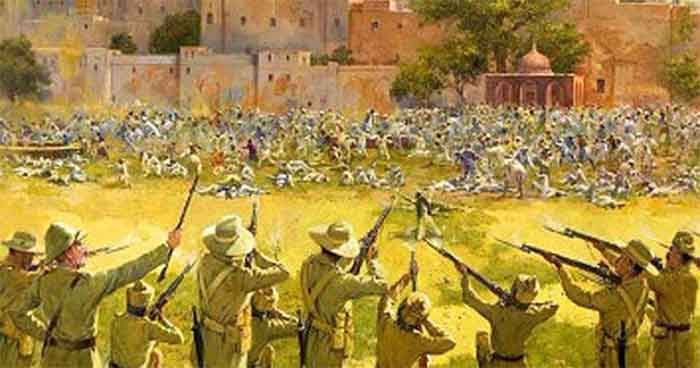
The history of modern colonialism, carried out over the last five hundred years by Western powers, cannot be undone but the injustice of the past can be confronted in the present and compensated for. All of us want to forgive and move on into the future but we cannot forget the crippling legacy of colonial abuse that has never really been brought to justice.
The Indian ruling class has never asked for such compensation on behalf of the people of India all these decades because they have, in so many ways, continued the colonial legacy of plundering the nation on behalf of a tiny elite. Even worse, while seven decades ago India was itself a colony, today as an independent nation, it has become a junior partner of global imperialism – mainly at the service of its former colonial masters or new ones like the United States of America. In that sense, the fight against imperialism today is closely linked to obtaining justice from our current colonial rulers too.
- India must insist on payment of compensation for colonial plunder by Great Britain for nearly two centuries and also demand reparations for all former colonies of the world in Asia, Africa and the Americas from their colonizers. A national and international Commission should be set up to study and estimate the compensation to be paid.
- India must call for restructuring of the global financial architecture to waive the debts of low-income nations and strictly regulate the influence of speculative, usurious and fictitious capital on the world economy.
- Cancel all treaties or agreements that compromise the fundamental interests of the Indian people, particularly those imposed on behalf of global corporations or armament manufacturers.
- India should strengthen relations with countries of the Global South and build a new international alliance against the domination of the world by a few rich and powerful countries.
- India should stop all purchases from Western arms manufacturers.
Ecological Justice
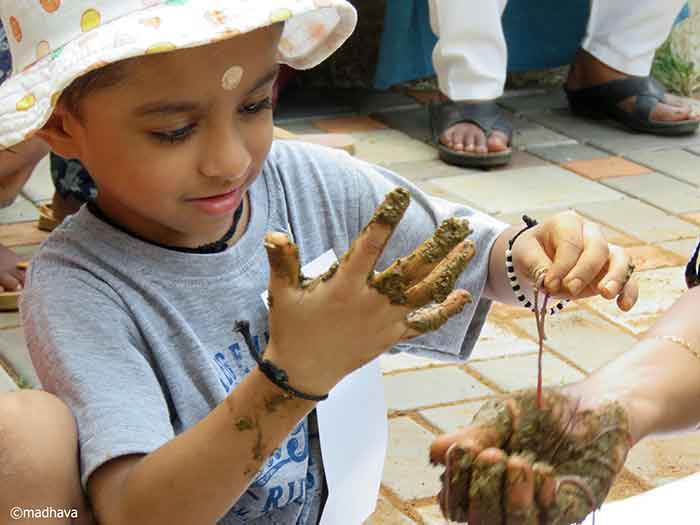
Restoring the health of the soil, water, air and forests of India has to be the top priority in the days ahead for everyone, as this is the very basis of survival of the people as well as all other life forms on the subcontinent.
It is predicted by several studies that human life will be difficult on the Indian subcontinent due to global warming by the end of the century or even well before that. The world and our nation are staring at an ecological collapse. We will have to protect our ecosystems to sustain life and ensure that our children and grandchildren will survive with dignity.
And the great injustice in this unfolding tragedy is that, the poorest and weakest sections of the global population are the ones who will bear the brunt of devastation, largely caused by the excesses of the richest parts of the world. This is unacceptable and the polluters from the rich countries and the rich within our own country must pay for the damage they have caused.
- Pass a law for the, “Rights of Mother Earth”, considering Nature as a living being with rights of its own.
- India must insist that historical polluters bear their exactly accounted share of the US$200 trillion cost of reducing atmospheric CO2 back to 300 ppm CO2. It must also insist that all nations meet their exactly accounted share of inescapable Carbon Debt. Failure to pay this ecological debt will mean automatic cancellation of all globally-owed financial debt of developing countries throughout the world.
- India must urgently implement water saving, arable land saving, climate change, sustainability, re-afforestation and land restoration measures. Stop dirty transport, dirty energy and prevent air pollution deaths – 9 million people die worldwide from air pollution each year, including over 1 million in India.
- India can lead the way to zero emissions and thence negative emissions for developing countries, by adopting renewable energy, re-afforestation, biochar, energy efficiency and building a sustainable, needs-based economy.
- India must decouple itself from fossil fuels. Private ownership of vehicles should be discouraged and public transport should be encouraged. Coal, nuclear and hydropower must be phased out. Clean energy like solar, wind, tidal etc should be the only energy production systems that the government builds on a large scale.
- Further, energy production must be localised. Village communities and home owners should be encouraged to produce energy for their use. If they produce extra, they should be allowed to sell it to the public grid. National policies must help resolve the current crisis of overconsumption by a few and under-consumption by the many, as well as ensure the greening of energy.
- Our ecosystem is a Commons and the ownership of the ecosystem should be handed over to the public. The idea of the Commons should be incorporated in school curriculum and a wider understanding of it should be encouraged through the public media, so that everyone becomes the custodian of the ecosystem. People should be the custodians of rivers, lakes, ponds, forest and the sea. Any changes to the status quo of these common assets should be done only with the assent of the public.
Social Justice – Ending Caste Apartheid
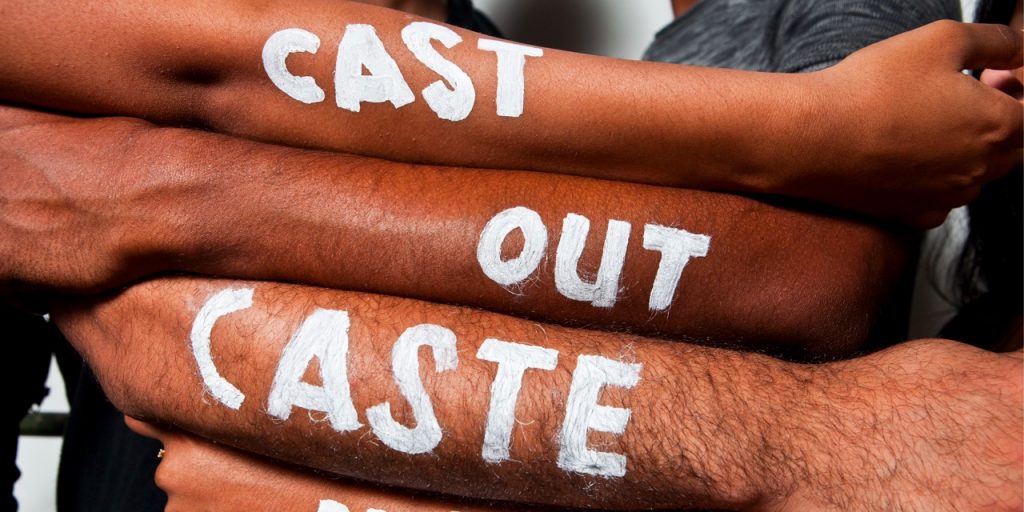
India is one of the oldest settler civilizations in the world with waves of migrants from many parts of the world arriving over the last four to six thousand years, taking over land and resources from even older indigenous populations. The Indian caste system, irrespective of its origins, has evolved into a marker of these migrations with the top of the social ladder occupied almost entirely by lighter-skinned, ‘Aryan’ migrants. The caste system in India is in fact the world’s most ancient and persistent system of apartheid.
Annihilating the caste system is closely linked to the fight to establish a truly democratic society, as envisaged by the founders of the Indian Republic and the Constitution. And while the ultimate goal is of establishing the equality of every citizen in the country, the injustices of the past have to be also accounted for in various ways, including through affirmative action on behalf of the oppressed castes and people of India.
- Declare the caste system as the world’s oldest form of apartheid and outlaw all expressions of caste supremacy everywhere, including in the religious texts
- All religious establishments should immediately stop reserving the post or job of priests to those from the upper castes and open them up to everyone, irrespective of caste.
- The wealth of all religious institutions should be used for public welfare mandatorily.
- Inter-religious and inter-caste marriages must be promoted and those carrying out or supporting honour killings should be strictly punished.
- All citizens should be given the right to choose their own religion, without fear of intimidation. All laws preventing the free choice of religion should be abolished.
- A law on the lines of SC & ST (Prevention of Atrocities) Act is required to counter violence like mob lynching or hate crimes, including speeches, instigated by communal and fundamentalist elements. Similarly law to prevent communal riots should also be in place.
- Everyone should have the freedom to choose the cuisine or wear the dress they want. No one should be coerced by the state or any other party to give up their way of life.
- Carry out the Caste Census across India and reframe reservation policies according to the true numbers of different castes and communities in India.
- Make reservation mandatory in all sectors, including private establishments. All converted scheduled caste citizens should get reservation in education and jobs.
Gender Justice and Rights of Sexual Minorities

For centuries men everywhere around the world have been predatory towards women and Indian men in that sense are not very different. The situation of women in India is perhaps even worse than elsewhere because of the deep-roots of patriarchy, the hierarchical caste system and the abject poverty that affects women more than men. The usurpation of power and resources by men in every walk of life in the country is rampant
On top of all this, India, in recent years, has also emerged as the global rape capital, owing to the impunity with which violence of all kinds is allowed in the country. The systematic attack on women in this country, has been institutionalized through the ghastly caste system and rigid cultural codes related to marriage and sexuality. The mindset of the Indian caste system is in fact not very different at all from that of an average rapist- ‘the mighty can and should always take advantage of the weak’. In many parts of India, even today, the sexual assault on Dalit or Adivasi women, is routine and considered ‘normal’ by upper caste males. The fight for gender justice is therefore closely tied to the fight of all oppressed castes and communities of India for equality and the right to live with dignity.
- Unequal wages and salaries to women for the same work as done by men should be made a criminal offense. Unpaid work done by women should be compensated in a fair manner.
- Cases of violence or sexual harassment against women must be dealt with strongly by the law implementation authorities.
- The rights of people with different sexual orientations – Lesbian, Gay, Bisexual, Transgender, Queer, Intersex, Asexual needs to be respected.
- All the laws that criminalise or discriminate against the LGBTQIA community should be abolished. India should pass laws that allows marriage among same sex and LGBTQIA communities.
Defending the Constitution
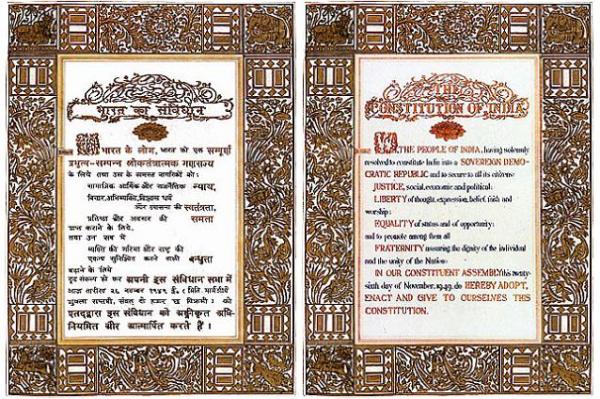
The idea of a written Constitution, clearly expounding the rules by which societies should conduct themselves, was a gift to the modern world from the French Revolution, that smashed the capricious rule of monarchy and the cabal of clergy and aristocrats around it. Taking forward its slogan of liberty, equality and fraternity, the Constitution of the United States further consolidated the idea of fundamental rights of citizens. The Indian Constitution, adopted in 1950, enshrined all these values plus more, including the principles of federalism and the notion of affirmative action on behalf of those who had been subjugated for millennia.
However, as Dr B.R. Ambedkar, who drafted the Indian Constitution famously said “Political democracy cannot last unless there lies at the base of it social democracy”. In other words, democracy is too important to be left to just well written Constitutions or to the kindness and wisdom of those in power. Democracy within human societies is ultimately possible only through the restoration of balances, by demolishing all attempts to concentrate wealth or unaccountable social and political power, wherever and whenever these manifest themselves.
- Defend the Indian Constitution against all attempts to negate or dilute its content is a fundamental duty of all those who believe in both rule of law and also the need to preserve the Republic of India as a vibrant democracy. This will require the people of India to organise effectively to challenge every violation of Constitutional principles and provisions.
- The Indian people will have to go beyond merely petitioning the courts in the defence of secularism, affirmative action, federalism, social welfare, freedoms of religion, cuisine, speech or the right to organise. They will have to draw from the history of the Indian freedom struggle and devise non-violent and peaceful means of enforcing these rights.
- The electoral democratic system needs to be restructured to suit our diverse and large population. While the electoral system is the foundation, this core needs to be reformed drastically. We call for implementation of a combination of Proportional Representation System (PRS), People’s Councils System (PCS) and Separate Electorates.
- Present day democratic processes and institutions help the concentration of power in a few hands. This has to change and power should be devolved to the people. The nation has had a history of republics, and direct democracy was practised at the village level. The village councils should once again be the centre of power. The central government should limit itself to finance and defence. The state government should limit itself to law and order, health and education. All other aspects of life should be governed by the village councils. The top down power structure should be turned upside down and power should emanate from the people.
- All draconian laws such as the Unlawful Activities Prevention Act should be repealed immediately
- All political prisoners who are incarcerated in Kashmir, North-East, as also in the other parts of the country under trumped up charges/draconian laws should be released.
- Laws like Citizenship (Amendment) Act, 2019 should be repealed.
- Innocent people who have been incarcerated for years should be compensated.
- In case the opposition parties come to power at the centre, they should institute a judicial enquiry (along the lines of Shah Commission) for the acts of omission and commission of the rulers over the last decade.
Federalism
The modern nation-state called India, which consists of many nationalities, ethnicities, cultures and linguistic groups, was put together by the East India Company and later by the British government as one entity. The departure of British colonialism from the sub-continent saw the partitioning of British India into several countries and the formation of a federal Republic of India. It is this federal structure, provided for by the Indian Constitution, that is critical to holding such a vast and diverse nation together. Any assault on federalism therefore is also an attack on the voluntary unity of the Indian Republic.
Federal rights of state are currently being debased by the current ruling regime, under the guidance of the RSS, for whom this country is nothing more than ‘Hindu-Hindi-Hindustan’ – a tone deaf, monocultural, upper caste Hindu autocracy. The centralizing and unitary trend under the forces of Hindutva are threatening autonomy of many regions and cultures of the Indian Republic.
The abrogation of Article 370 that gave Kashmir a special status and autonomy, if only on paper, by the Modi regime is a warning for all states of India – none of them is safe from being arbitrarily turned into a mere union territory with the mere stroke of a pen. The Indian Supreme Court’s shameful endorsement of this act of Constitutional vandalism leaves little hope for any redemption as long as the current dispensation remains in power.
For the political parties ruling these states – this is the last chance to stand up against the homogenising juggernaut of the Hindu Rashtra.
- Take away the power of the Union government – yes, ‘Union’ and not ‘Central’- to whimsically dissolve or breakup states and convert them into Union Territories.
- Colonial remnants like Governorship, Indian Administrative Services etc. are the tools the central government uses to interfere in administration of states. These undemocratic institutions, that are an impediment to true co-operative federalism should be abolished through a constitutional amendment once and for all.
- States should raise demand for items in the current concurrent list to be moved to the State List in order to limit concentration of power at the centre. As a beginning, primary and secondary level education, animal protection, animal husbandry and agriculture should be moved completely to the State List.
- Like in the case of G.S.T, direct taxes also, including personal and corporate income taxes, should also be equally shared between states and centre. Also any financial assistance to states from centre should not have any conditions attached.
- The ‘Rajya Sabha’ should literally become a ‘States Council’ as originally envisaged – a mechanism for giving due consideration to state’s views in central administration. For achieving this – aberrations like nomination of members and the provision to elect members who do not belong to respective states should be abolished. The ‘Money Bill’ mechanism, that does not require passage in the ‘Rajya Sabha’ and is being misused today should be abolished. States should demand a constitutional amendment for the same.
- There is a need for mechanisms that foster direct co-operation between states in advancing developmental, educational and ecological agendas.
Green Economy

The Club of Rome published its iconic report “Limits to Growth’’ in 1972 and showed that economies cannot grow forever as our resources are limited. In this context the economy of exponential growth model must be replaced by a sustainable steady state economic model, or even a de-growth model. And as Mahatma Gandhi famously said, “ There is enough for everyone’s need but not enough for everyone’s greed”. It is time to move away from a system that allows a few people to get filthy rich while the majority work and die as their slaves. We need an economy where the not only are the poor brought out of poverty but the rich too are alleviated of their prosperity, in their own best interests.
- The gross wealth inequality in India should be done away with. A wealth limit should be put in place. Those who hold over and above this limit must relinquish their wealth to the state to be used for public good.
- Corporations, estate owners and individuals own large swathes of land. A land ceiling legislation including that for plantations should be implemented. The land over and above the land ceiling should be taken over by the government and given to landless people.
- Villages/Town/Cities should be allowed to have their own local currencies. Most of the trade among towns/village people can be done in their local currencies.
- Implement a Universal Basic Income or equivalent system to ensure that every citizen gets a minimum income that allows them to live with dignity.
- Impose an inheritance tax on the top 5 % of wealthiest Indians.
The Rural-Urban Divide
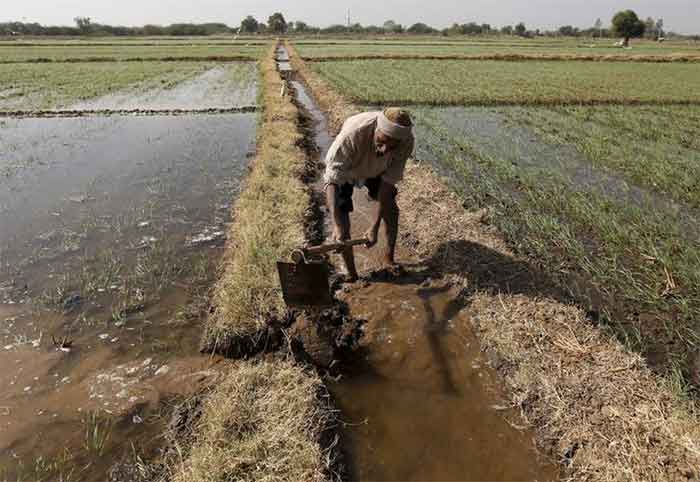
Historically, farmers, rural workers and artisans all over the world have subsidised the growth and prosperity of cities and industry by providing cheap food, raw materials and supply of labour. In India too this is the case the people of countryside have been milked dry to let the cities prosper and flourish. Without a drastic reversal in the terms of trade between urban and rural areas the latter will always remain second-class citizens in the country.
Today, with the corporatisation of agriculture the livelihoods of everyone in rural India is under threat. In particular, homestead farming is in danger of being taken over by corporates or given over to contract farming, this has to be resisted and homestead farming should be sustained and promoted.
Ironically, unemployed rural youth, recruited into the armed forces and police, have been used to against their own rural brethren to accept this grossly unfair economic and social arrangement, which perpetuates their status as second class citizens in their own land.
It is time to radically restructure urban-rural relations and ensure that farmers and rural populations get their fair share of national resources.
- Make urban centres pay back the subsidy provided by rural populations to them all these decades by introducing a new rural compensation tax. Use the funds to develop basic infrastructure, improve living standards and expand health and education networks in rural areas to help populations there live as equal citizens with their urban counterparts.
- Today, the age of industrial scale agriculture, which benefited a small section of big farmers and corporations, is coming to an end due to the ecological crisis as well as falling profitability. Promote an agroecology paradigm that is based on suitable cropping patterns and local seed diversity revival, so as to build economically viable, ecologically sustainable, autonomous and climate resilient agriculture.
- All towns/cities should be encouraged to produce their own food to reduce prices and improve nutrition of urban populations. Cities/towns can produce necessary vegetables in the vacant lots and through terrace gardening. Food grains required by cities/towns should be procured from nearby villages and long haul transportation of agricultural produce should not be encouraged.
- Even though industrial-scale agriculture is failing, there is a growing tendency to monopolise agriculture under large corporations. This is a threat to the homestead farming that fed the world for millennia. No family or entity should be allowed to own more than 10 acres of farmland.
Technology for the People

Today, technology shaped and owned by corporates, is being used by governments and big media to influence, control, monitor and oppress the world’s population, including in India. Rapid advances in Artificial Intelligence and automation are on the way to eliminating millions of jobs in the near future. Appropriate technology must be harnessed by communities to effectively counter this asymmetry of access to knowledge and control over tools of production.
- Foster community ownership of technology through learning, experimenting and adapting technology for the needs of local populations. Develop open source and sustainable technologies for all walks of life.
- Create a global network of technologists who can innovate and exchange know-how and help communities adapt complex technologies for local needs.
- Create alternate communication mediums to eliminate information asymmetry and misuse of data by corporates. Networked communities should collaborate to create glocal markets for goods, avoiding middlemen and ensuring data privacy.
Labour: Those who work shall rule
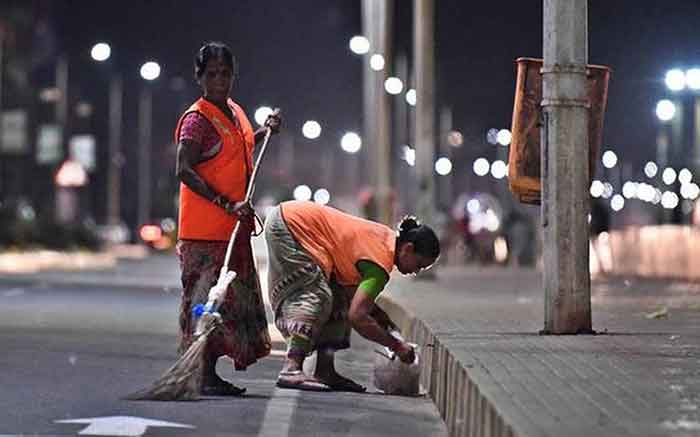
As Karl Marx put it a century and a half ago, the history of all humanity is the history of the struggle between masters, who control power and resources but do not work and slaves, who own little but do all the work. In the Indian context, this class struggle, is best understood using the lens of caste, the social pathology endemic to the subcontinent for millennia.
Indian society, from this perspective, can be divided into non-productive and productive castes. Historically it was the ‘lower’ castes who produced everything from food crops and tools to metal-ware, clothes and shoes. It was the artisans and carpenters, the people who engaged in cattle rearing and Adivasis who harnessed forest produce who have always been the backbone of the economy. However, it was the upper castes that accumulated wealth because of their higher social standing that gave them power over the lives, labour and resources of the lower castes.”
Even in the era of high-tech, financial capitalism, the control of Indian industry and business, not to mention political and cultural power, still rests largely in the hands of the upper castes. So the struggle against capitalist exploitation and for the rights of labour in India is inextricably tied up with the struggle to neutralise the deep rooted caste system – which is today also the main weapon of the ruling class to keep labour both divided and subjugated.
- Mobilise labour around not just economic but also political and social demands. Those who work should not remain mere wage slaves but organize, rise to power and rule the country.
- The only way to restore dignity of labour, completely absent in Indian society, is to fight for wiping out the gap in remuneration between those who work with their bodies i.e. manual labour and those who work with their brains i.e. intellectual labour. The difference in the resources they command for their respective contributions is a violation of the fundamental principle of equality and completely unjustified.
- The labour laws protecting the rights and basic dignity of human beings should be strictly implemented. Labour laws related to those in regular employment and in unorganized sector or in contract jobs should be the same.
- Right to employment should be made a fundamental right under the Constitution. An Act similar to the Mahatma Gandhi National Rural Employment Guarantee Act, 2005 should be introduced for the urban areas to provide jobs to youth. There must be no limit on the number of days of work under such employment guarantee laws and a minimum annual income must be guaranteed.
- Universal Social Security for every employee, paid for by a part by the employer and a matching savings by employee (that will be financed fully to partly by the Government for all below a certain minimum income level) should be in place.
Health = Human Rights
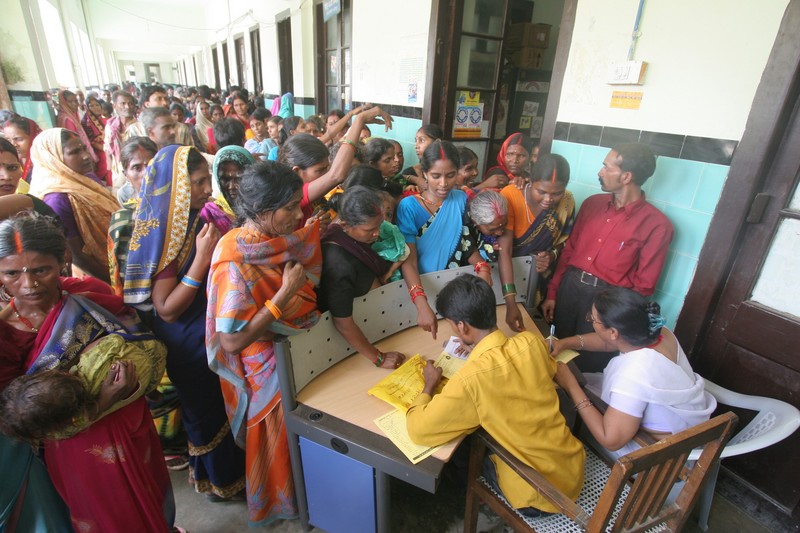
What really lies at the heart of the dismal Indian health system is not inefficiency or inadequate resources or lack of capability alone, but deliberate racist and colonial-style policies aimed at keeping the Indian population in a state of perpetual ill-health, anxiety and inability to physically fight for radical change.
Even a cursory glance at India’s public health system reveals it to be nothing less than a brutal killing field – one that throws an endless supply of patients as collateral damage to be dealt with by small numbers of poorly equipped doctors. While some get saved miraculously, the rest are condemned to chronic suffering or early release from existence altogether.
Health is not about doctors, hospitals and medicines alone but linked to political and social realities. Primarily, it is about human rights in its most fundamental sense – the right to live to the full extent of human biological potential and live in peace in peace with dignity. It is impossible to ensure the health of any population without achieving all other democratic rights and the right to both freedom and basic necessities of life.
- Make Right to Health a fundamental right for all citizens, linking it to the social, economic, cultural and political rights of citizens.
- Implement a free and universal healthcare system nationally of the highest quality.
- Raise the health budget to 5% of GDP immediately and to 7% at the end of five years.
- Launch a ‘Zero Hunger’ project to wipe out malnutrition in India, particularly among the Adivasi and Dalit communities. Ensure that income poverty does not result in physical and biological poverty too.
- Decriminalise medical practice by rural, unqualified doctors but set up a special Board to monitor their work and improve their quality. Give full scholarships for 10,000 unqualified rural doctors every year to undergo 2 or 3 year training to become qualified medical doctors. Set up new medical colleges for this purpose in a phased manner.
- Launch a special initiative to improve air quality in major Indian cities, particularly New Delhi, Kolkata and Mumbai to lower health impacts.
- Bring all essential medicines under price control through a system of price fixation based on manufacturing cost.
Redefining Education
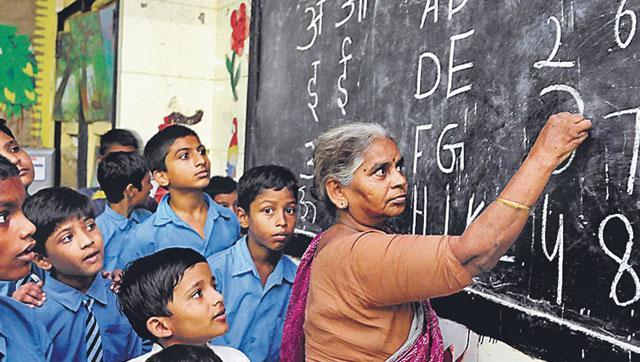
In a 1926 essay entitled “A Poet’s School,” Rabindranath Tagore points out “We have come to this world to accept it, not merely to know it. We may become powerful by knowledge, but we attain fullness by sympathy. The highest education is that which does not merely give us information but makes our life in harmony with all existence.”
These are words that ring true even more in our times than in Tagore’s own as we stare, as a species, into the abyss of global war, ecological destruction and a deep alienation of the individual from everything around. An education that represents mere accumulation of information, techniques and aggressive pursuit of power and wealth has to give way to a different kind of learning that is imbued with far greater understanding about the place of our species in nature and the limitations of both human intelligence and actions.
- A public and universal school system providing high quality education to every child in India will help provide the level playing field required to remove the discrimination due to socio-economic differences. However, so far no government in independent India has been willing to implement such a system. The gap between the education available to the elites and the poor continues to widen despite a Right of Children to Free and Compulsory Education Act, 2009 being in place. Apart from making schools truly child-centric, the number of hours at school must be reduced so that the child has time for participating in play, community activities and productive work (not paid labour). The time spent in productive work must increase with age gradually in an organic manner.
- English medium education should be provided free of cost to all children from kindergarten to class 12.
- Higher education should not be tuned to the needs of capitalist requirements and all education, including higher education, should be subsidised by the state.
- Education in liberal arts should not be neglected due to overemphasis on skills in science and technology.
- Expand the idea of education outside schools and university to recognize practical skills, folk talent and innovative individuals irrespective of their formal educational status. Recognize achievements outside the formal educational sector – e.g. award PhDs to outstanding farmers, workers, artisans.
Peace in South Asia
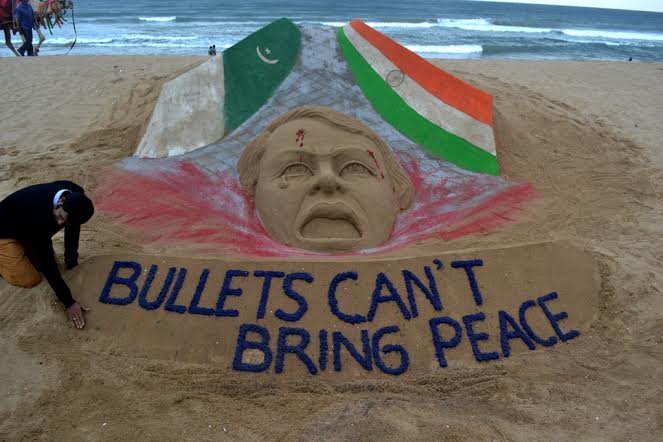
Keeping in mind the dangers of nuclear war and imperialist meddling in South Asia, a high priority for all those interested in peace in the region is to build public support for South Asian unity. They should use the common history, concerns and aspirations of the people of all South Asian countries to create a new cross-border culture of unity among the masses, with special focus on the legacy of joint struggles against British colonialism.
- Develop a minimum common program for the welfare and rights of people of South Asia, cutting across national borders.
- Abolish nuclear weapons completely from South Asia and reduce military expenditure by fifty percent as a first step.
- Work towards formation of a United States of South Asia – with maximum autonomy and independence to all nationalities and the expansion of the federal concept.
Acknowledgements
People’s Manifesto For India – Science-based Indian Blueprint For Developing Countries In A Worsening Climate Crisis
by Dr Gideon Polya
A People’s Manifesto for India’s Future: The A-Z of the India of my dreams
by Nivedita Dwivedi
People’s Manifesto on Social Justice and Human Rights
Co-Written by Sandeep Pandey, Shreekumar, Shiva Shankar, R. Ramachandran, Lubna Sarwath and Rajeev Yadav
A Manifesto For An Inclusive Electoral System
by Vivek Sakpal
For Peoples’ Manifesto: A Suggested LGBTQIA Perspective
by Dr P S Sahni
Manifesto For English Education For A Post Corona India
by Kancha Ilaiah Shepherd
Manifesto for a New India
by Nidhin Sowjanya
People’s Manifesto for India’s Future
by Prem Verma
Manifesto for mass movements for the future and survival of India
by Bhabani Shankar Nayak
A New Economy after Corona Virus
by Dr Walter Fernandes
Comment by Robert Snefjella
I’ve read through the Manifesto and what struck me was that there were no questions asked. Is that the best approach? While it is stated that the Manifesto is not prescriptive, it comes across as extremely prescriptive: ‘this should be done’; ‘that must be done’ is the tenor of the Manifesto throughout.
There are several basic problems with such an adamant approach, however tempting it is to take such a stance.
Strong assertions about complex issues on which others may hold quite different perspectives presents an immediate impediment to ongoing discussion of the issue in mutual humility and respect. Thus the self-corrective, profoundly educational potential of ongoing open dialogue on any issue is stillborn, or at best made more difficult than had the issue been introduced and approached in an open, humbly-questioning manner.
So for example, the carbon issue: Is it clear what constitutes an ideal percentage of CO2 in the atmosphere? Is this a matter on which there is much debate and presumably much to learn? This is a matter that constitutes for me a rather regrettable one since some years ago I wrote a paper, well received, based on the mistaken premise that the Intergovernmental Panel on Climate Change was doing good science, and derivative policy recommendations were thus based on good science. That was careless of me, because I had not taken a hard close look at the matter, but I was influenced – swept along – by all the media and sources, for example World Watch Institute, that represented the IGPCC as doing definitive work.
But to my chagrin, when I looked at the matter more closely, I became convinced that the IGPCC was doing shoddy and politicized pseudo science, and prescriptions based on their work would be a huge error.
The point is that I think there would be more benefit from a Manifesto that took a more open-minded interrogative and ongoing-discussion facilitating approach, rather than making a very large set of assertive statements.
Share:
Share onWhatsAppShare onFacebookShare onX (Twitter)Share onTelegramShare onRedditShare onEmail
Tags:
People’s Manifesto, People’s Manifesto for Ecological Democracy, People’s Manifesto for India’s Future
Support Countercurrents
Countercurrents is answerable only to our readers. Support honest journalism because we have no PLANET B.
Become a Patron at Patreon
 Knock nock
Leave a comment