

How the “spiritual atom bomb” wrecked China

Aug 24, 2024
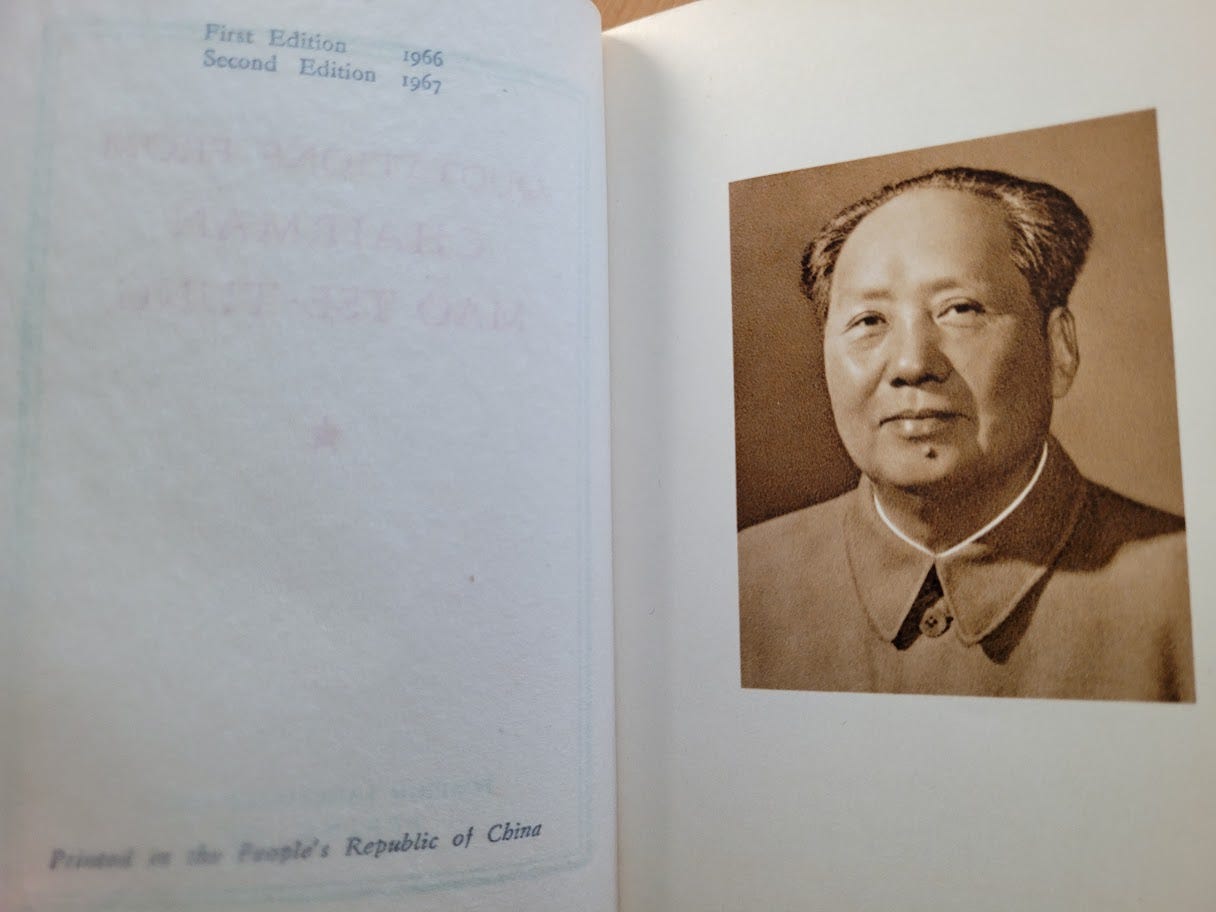
My maternal grandfather was a manager in the British textile industry. In that capacity, he traveled to China in 1971 and acquired the above second-edition copy of Mao Zedong’s “Little Red Book.” The 1966 Foreword by Lin Piao, Vice Premier of China and Vice Chair of Communist Party, says a great deal in just a few words about the nature of Maoism. Quote:
Comrade Mao Tse-tung is the greatest Marxist-Leninist of our era. He has inherited, defended and developed Marxism-Leninism with genius, creatively and comprehensively and has brought it to a higher and completely new stage.
Mao Tse-tung’s thought is Marxism-Leninism in the era in which imperialism is heading for total collapse and socialism is advancing to world-wide victory. It is a powerful ideological weapon for opposing imperialism and for opposing revisionism and dogmatism. Mao Tse-tung’s thought is the guiding principle for all the work of the Party, the army and the country.
Therefore, the most fundamental task in our Party’s political and ideological work is at all times to hold high the great red banner of Mao Tse-tung’s thought, to arm the minds of the people throughout the country with it and to persist in using it to command every field of activity. The broad masses of the workers, peasants and soldiers and the broad ranks of the revolutionary cadres and the intellectuals should really master Mao Tse-tung’s thought; they should all study Chairman Mao’s writings, follow his teachings, act according to his instructions and be his good fighters. …
In our great motherland, a new era is emerging in which the workers, peasants and soldiers are grasping Marxism-Leninism, Mao Tse-tong’s thought. Once Mao Tse-tung’s thought is grasped by the broad masses it becomes an inexhaustible source of strength and a spiritual atom bomb of infinite power. … It is our hope that all comrades will learn earnestly and diligently, bring about a new nation-wide high tide in the creative study and application of Chairman Mao’s works and, under the great red banner of Mao Tse-tung’s thought, strive to build our country into a great socialist state with modern agriculture, modern industry, modern science and culture and modern national defence!1
In just a few paragraphs, one can both see the powerful emotional appeal of Maoism as well as its leaps of logic and faulty assumptions. The passage emphasizes the brilliance of Mao, fidelity of Mao’s thought to the Marxist-Leninist inheritance, rejection of ideological heretics (“revisionism,” “dogmatism”), Maoism as the foundation of all activities and in particular of political, military, and national life, the need to imbue the whole people with Maoist doctrine, and that this adherence would be rewarded by the collapse of colonialism/capitalism and the rise of China a successful socialist nation, both economically and scientifically modern.
In brief: follow Mao’s ideas, ignore the wreckers, and we will prosper. Obviously, things didn’t quite turn out the way Mao promised.
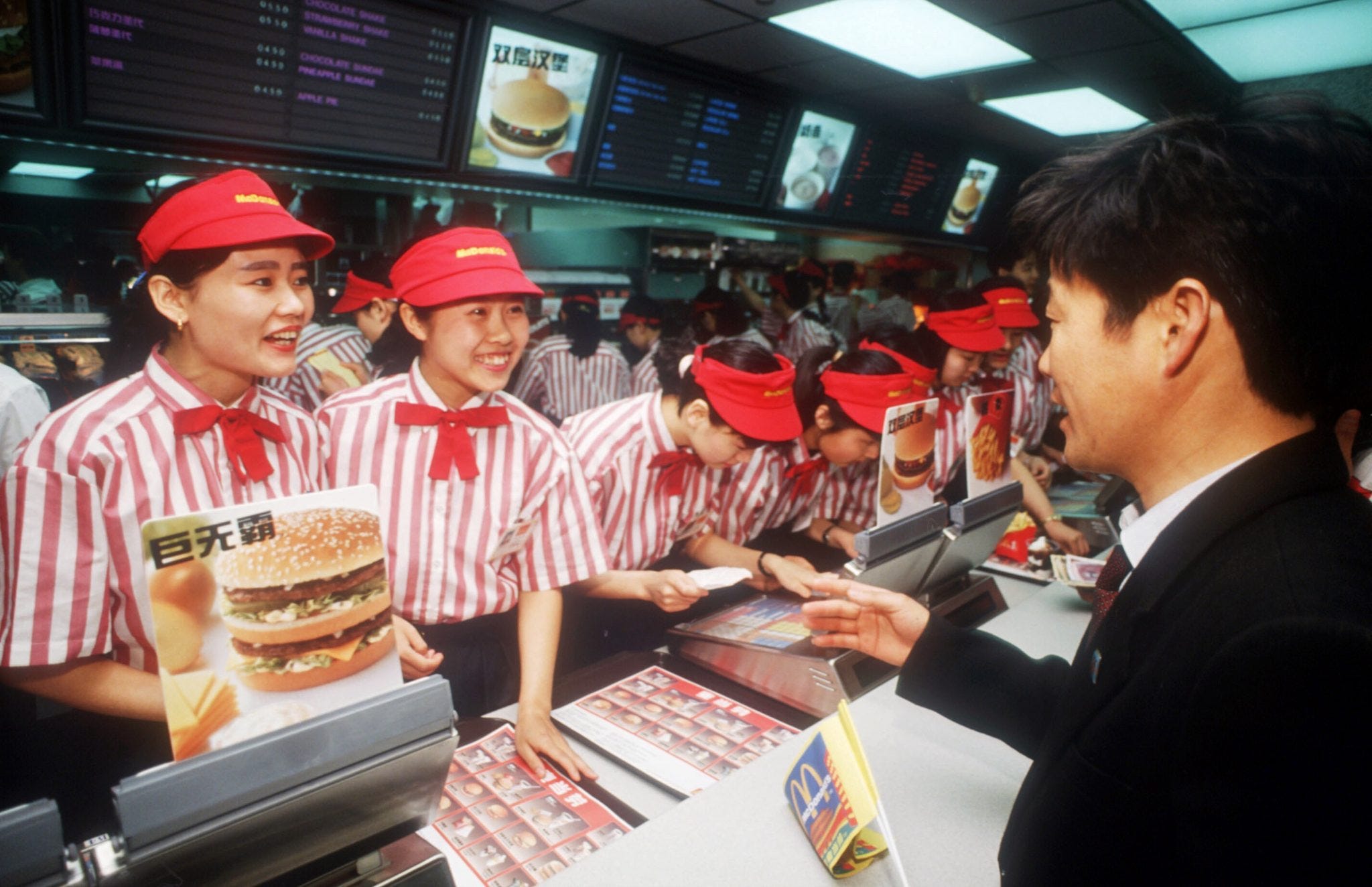
The flaws in Maoism’s promises are essentially twofold. Firstly, it conflates “capitalism” with “imperialism.” It is quite true that Mao’s China undertook an often successful activist foreign policy, supporting communist and/or anticolonial revolutionaries in North Korea, Vietnam, Algeria, Angola, Mozambique, and other nations. Through this support, China powerfully contributed to dissolution of the French and Portuguese colonial empires, and kicked the Americans out of Vietnam.
All this may have been a great victory for the independence and pride of nations in the Global South, long held under the domination of the white man. Yet that in no way implied the end of capitalism. Indeed, one of postwar capitalism’s most powerful traits is in separating economic trade between nations from the need for formal colonial domination. While the newly-independent nations of Africa and Asia engaged in various experiments in nationalist/socialist economics, the great majority would come to allow trade with the developed capitalist world. A 2015 Pew poll found that the Vietnamese in particular, still governed by a Communist Party, were particularly enthusiastic capitalists and Americanophiles.

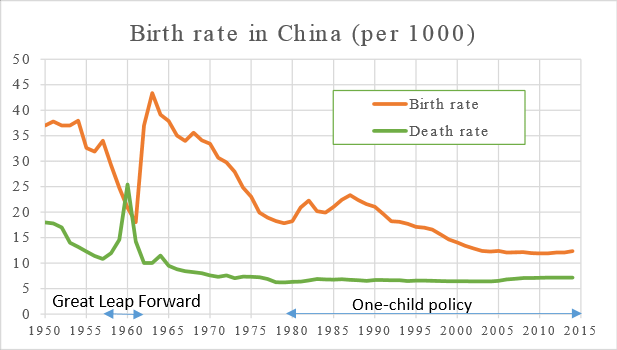
Secondly, Maoism claims that raising a nation of zealous communists is the key to national economic and scientific development. I know of no nation which has become economically developed through ideological fanaticism. In the case of China, Mao’s campaign of forced industrialization and agricultural collectivization, the Great Leap Forward of 1958-1962, led to a famine that killed between 15 and 55 million Chinese.
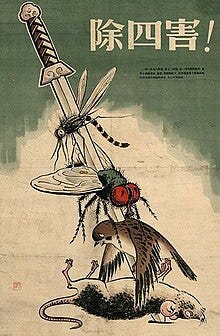
The Four Pests Campaign urged all Chinese to exterminate mosquitoes, flies, sparrows, and rats, which were considered threats to public health and agriculture. Sparrows were attacked because of their supposed consumption of grain, but wiping them out led to an explosion in insect populations feeding off the crops.
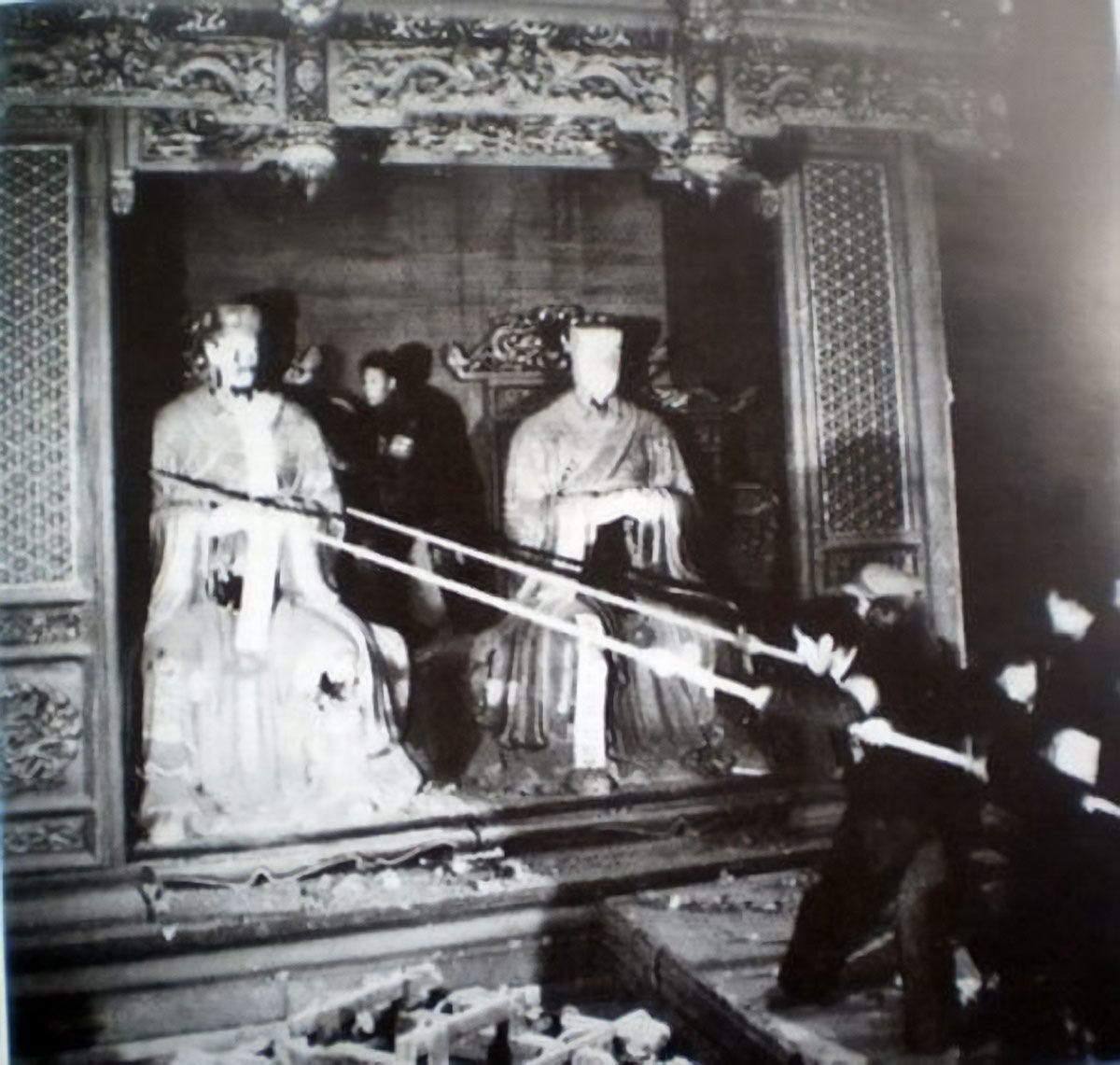
The catastrophic failure of Maoist economics was soon followed by the 1966-76 Cultural Revolution, whereby young people in particular were encouraged to purge China of any vestige of capitalist or “reactionary” culture. The destruction of Chinese cultural heritage was staggering.
The hard lesson for many people living under revolutionary dictatorships, and indeed for sincere officials within these régimes, is that it is far easier to denounce foreigners and enforce ideological rectitude than it is to build an economically successful modern country. The centralization of a command economy reduces a nation’s economic intelligence to the systemic idiocy of the central bureaucracy or, potentially worse, the mood swings of the dictator. Inflamed passion, whether of a dictator or a mass movement, is rarely a good basis for decision-making, whether political, economic, or otherwise.
While China was tearing itself apart, ethnically-Chinese islands in Taiwan, Hong Kong, and Singapore were joining Japan among the first non-Western nations to escape Third-World status. Mao never faced justice for his monumental crimes and errors of judgment, dying in 1976. While never disavowing Mao, his eventual successor, Deng Xiaoping, was tremendously impressed by capitalist Singapore during his visit there, seeing that poverty and underdevelopment were not inevitable in a majority-Chinese nation.
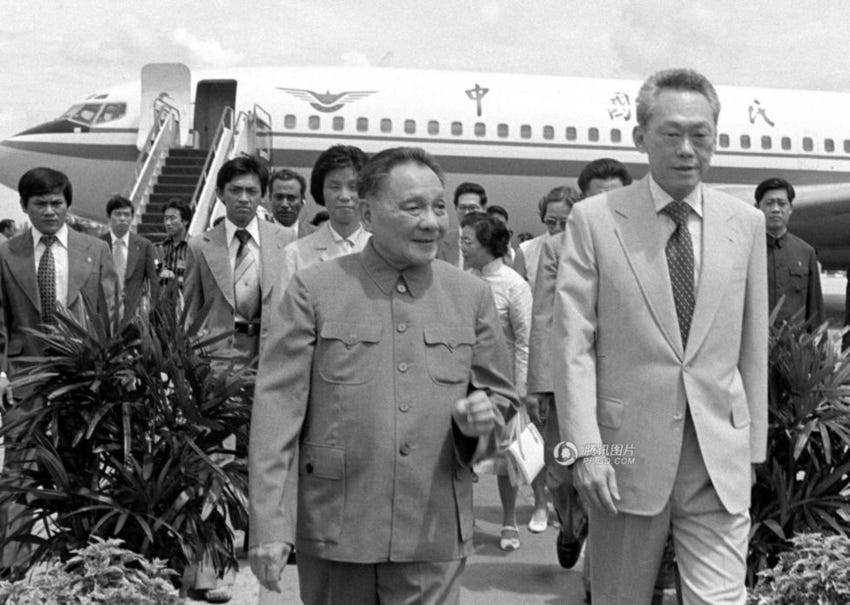
Prime Minister Lee Kuan Yew of Singapore had shown how a dispassionate economic policy had enabled his country to go from third-world status (GDP per capita of $430 in 1960) to achieving Western standards of living (indeed, Singapore would go on to become about twice as wealthy as the former colonial master, Great Britain). Lee’s economic policies were based on the market, robust legal protections for property and investment, foreign investment, and technology transfer (learning from the West and Japan). Such institutions and practices, essentially inspired by their successful track record among the Anglo-Americans and Japanese, were far superior in mobilizing and maximizing the nation’s collective intelligence to achieve national development, than had been Maoism’s bureaucratic central planning and politics of organized mass hysteria.
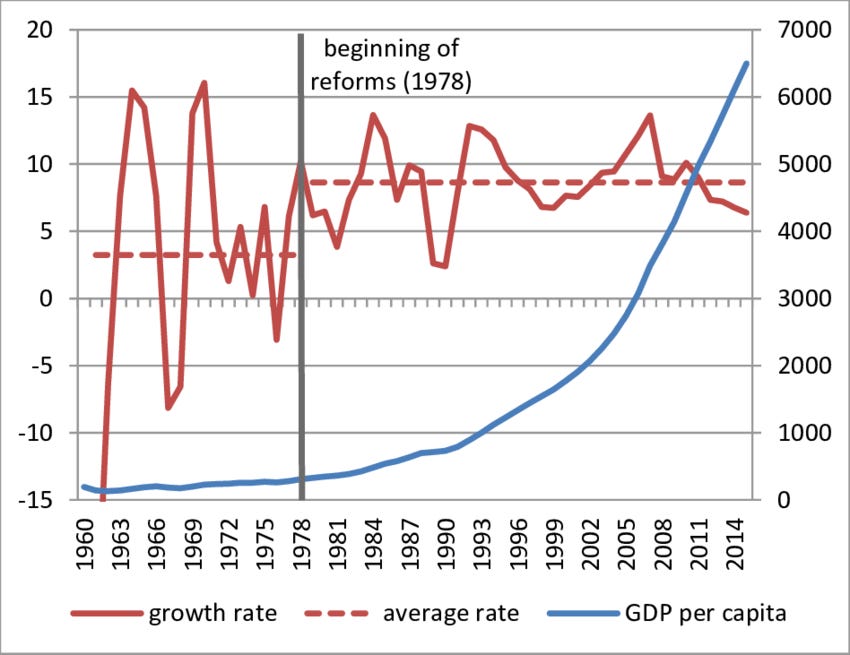
While Mao’s face still graces China’s currency bills, Deng steadily dismantled the Maoist economic system, replacing it with a rough-and-tumble form of capitalism (saving face by calling it “socialism with Chinese characteristics”). The results have been spectacular. Amazingly, in 1980 after three decades of Maoism, China had become poorer than most African countries. Today, China is not only significantly wealthier than Africa, but it is deploying tremendous public and private investment there, to the worry of many Western diplomats.
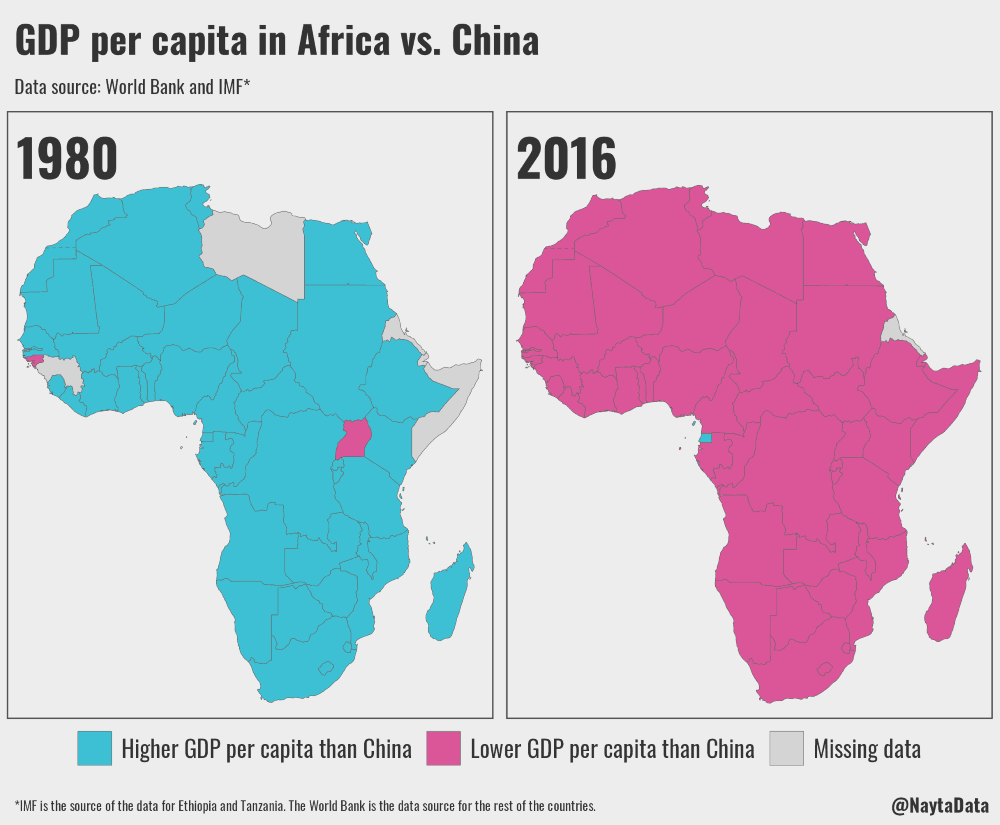
China is now, with the United States, one of the two great political, economic, and scientific superpowers in the world. No thanks to Mao’s brand of politics. Whether sincere or cynical, Maoism inflamed a wounded national pride and egalitarian envy to the point of hysteria, with policies that ruined countless lives and inflicted tremendous damage on one of the world’s very great nations.Subscribe
Original spelling and punctuation. Mao Tse-Tung, Quotations of Mao Tse-Tung (Beijing: Foreign Languages Press, 1967), pp. i.-iii.


 Knock nock
Leave a comment