

Is History Repeating Itself?

May 31, 2024
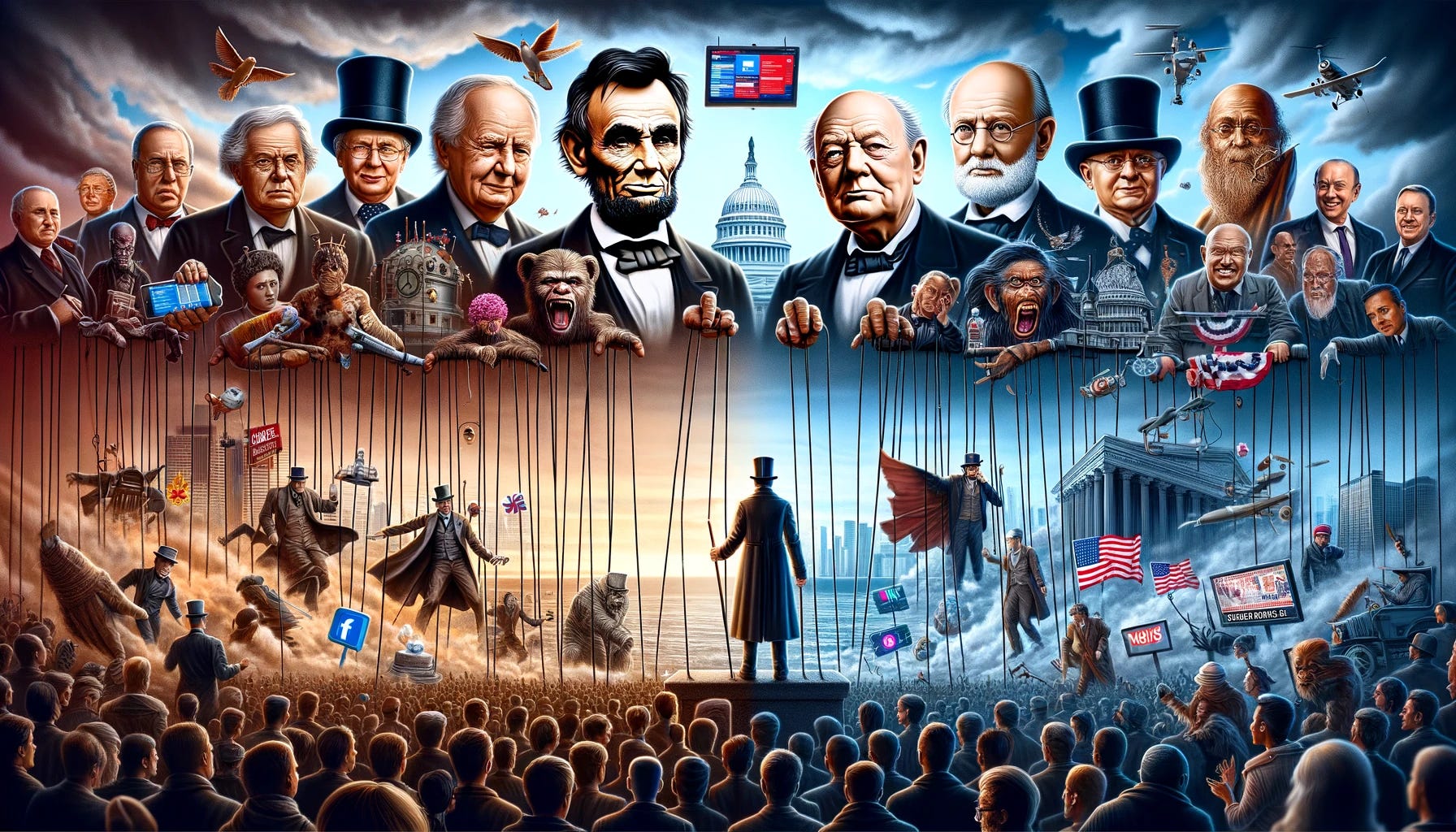
We live in an era where information technology and the internet reign supreme, the dissemination of news has become instantaneous and pervasive. This unprecedented connectivity has laid bare the inner workings of political systems worldwide, often revealing a landscape that appears chaotic and dysfunctional. The transparency afforded by modern technology has highlighted a host of issues, suggesting that politics today is more troubled than ever.
Wherever we look, we see a political mess marked by unprecedented division, rampant corruption, and a pervasive difficulty in discerning what is true or not. Corruption scandals and unethical behaviour among politicians erode public trust, leading to widespread cynicism. Unlike historical figures known for their integrity and visionary leadership, many of today’s politicians appear more interested in personal gain, further alienating the electorate and destabilizing democratic foundations.
The Impact of Information Technology and the Internet

The internet and information technology in general, have revolutionized the way we consume news. Social media platforms, news websites, and instant communication tools have made it possible for anyone with an internet connection to access real-time updates on political events. This transparency, while empowering, has also unmasked the messiness inherent in modern politics. Scandals, corruption, and policy blunders are no longer confined to hushed conversations in backrooms; they are broadcast globally, often within moments of occurring.
But is it that the internet helped reveal an inherent mess that always existed, or is the internet the cause of this mess? I would say both.
The Decline of Political Integrity
One of the most glaring revelations of our hyper-connected world is the apparent decline in political integrity. Politicians are constantly under the scrutiny of the public eye, and many have been found wanting. Personal scandals, unethical behaviour, and financial improprieties are frequently exposed, leading to a pervasive distrust in political figures. This erosion of integrity is compounded by the fact that many politicians seem to lack the experience and personal success that one might expect from leaders of nations.
Politicians today appear more like movie stars than leaders.
Additionally, actual movie stars now frequently come out in support of politicians or present opinions to influence their followers—something that was unheard of in the past. Why? You are a bloody actor, not a politician.
We also need to mention that clearly some scandals are fabricated or exaggerated events used to attack political figures.
Historical Context: Ancient and Modern

Historically, politics has always been fraught with challenges and controversies. However, today’s politicians often lack the leadership, character, and ethos that distinguished influential leaders of the past. Here are a few examples:
- Ancient Rome: During the Roman Republic, figures like Julius Caesar and Cicero were known for their oratory skills, strategic minds, and, often, personal integrity. Despite political machinations and corruption, many such leaders of the past demonstrated a level of competence and character that modern politicians seem to lack.
- Renaissance Italy: The Medici family in Florence, though not without their flaws, displayed a shrewd understanding of politics and governance, combining patronage of the arts with political acumen. Their influence was deeply felt in both politics and culture.
- Modern Times: Consider Winston Churchill, whose leadership during World War II was marked by a strong sense of duty and resilience. Similarly, leaders like Nelson Mandela showed immense character and moral integrity in their fight against apartheid and their efforts to unify South Africa.
The Influence of Powerful Entities

The lack of skills among politicians to effectively govern has opened the door for powerful people and corporations to exert significant influence over political decisions. Lobbying, campaign contributions, and corporate interests often guide the actions of elected officials, leading to policies that favour the wealthy and powerful over the general populace.
This dynamic has contributed to the perception that politicians are mere puppets, with their strings being pulled by those with money and power.
And let me make myself clear. I am not against wealthy and powerful people; I am against corrupt powerful people, in many cases not very intelligent, who use their position to manipulate society for their own benefit.
Here are a few historical examples of puppet leadership:
- Roman Empire: In the later years of the Roman Empire, emperors like Nero and Commodus were heavily influenced by their advisors and other powerful figures, leading to mismanagement and eventual decline.
- 19th Century Europe: The Concert of Europe, while a period of relative peace, was also characterized by powerful states manipulating smaller nations and rulers to maintain a balance of power that served their interests.
- Contemporary Politics: In modern times, the influence of lobbyists in Washington, D.C., and other capitals around the world shows how corporate interests can dominate political agendas, often at the expense of ordinary citizens.
The Collapse of Society
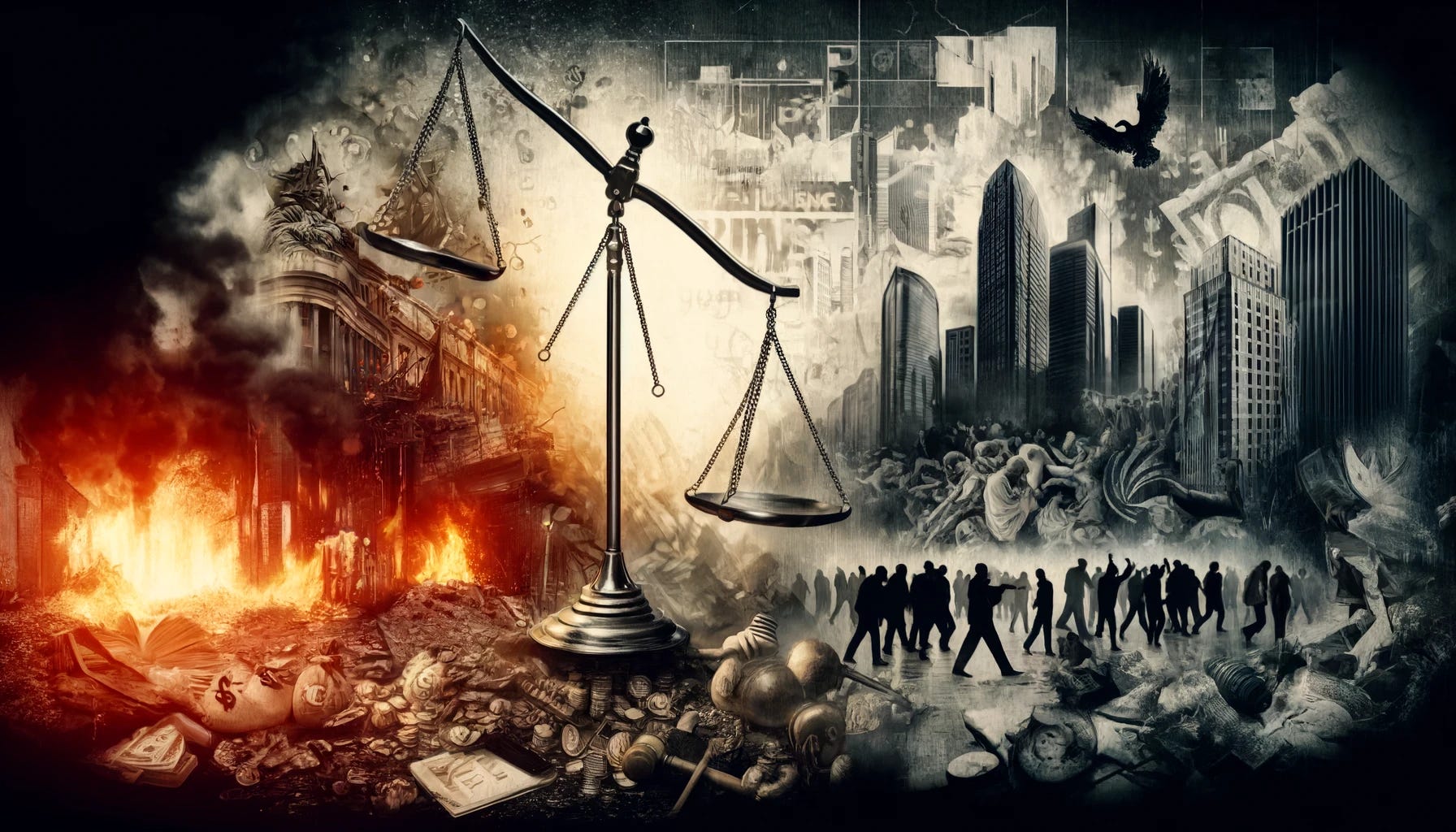
Adding to the turmoil is the broader societal collapse that seems to be unfolding. Economic inequality, the collapse of morals and values, social unrest, and a general sense of disillusionment pervade many countries. The global pandemic has further exacerbated these issues, highlighting the inadequacies of political leadership in times of crisis. As societies struggle with these challenges, the shortcomings of political leaders become even more pronounced, fuelling further discontent and instability.
It appears that we are moving towards a direction that humanity has experienced many times throughout history—when significant changes occur, leading to extremes and the opposite sides of the pendulum.
In such times, division is maximized, violence becomes prominent, and the struggle to regain balance begins.
A Global Perspective
The issues plaguing modern politics are not confined to any single country; they are a global phenomenon. From the United States to Europe to developing nations, the same patterns of corruption, incompetence, and undue influence are evident. The internet ensures that these issues are visible to all, creating a sense of shared frustration and disillusionment among citizens worldwide.
And because of that, those in power will need to control the flow of information, under the guise of fighting “misinformation” and promoting “free speech” by actually silencing dissenting voices. This goes hand in hand with people’s inability to take responsibility, leading them to give up their power to others, particularly the government. This tendency is further fuelled and promoted by those who benefit most from such a strategy: the powerful few who will increase their grasp on people and society in general. To what end? That’s a whole new article to be written in the future.
However, I need to say that I truly believe that the best leader would be a successful businessperson with strong moral and ethical foundations, someone who contributes to society, is highly charitable, and has a happy, stable family.
After all, running a country successfully requires the same principles as running a successful business to ensure that its citizens prosper.
Lack of Leadership, Character, and Ethos
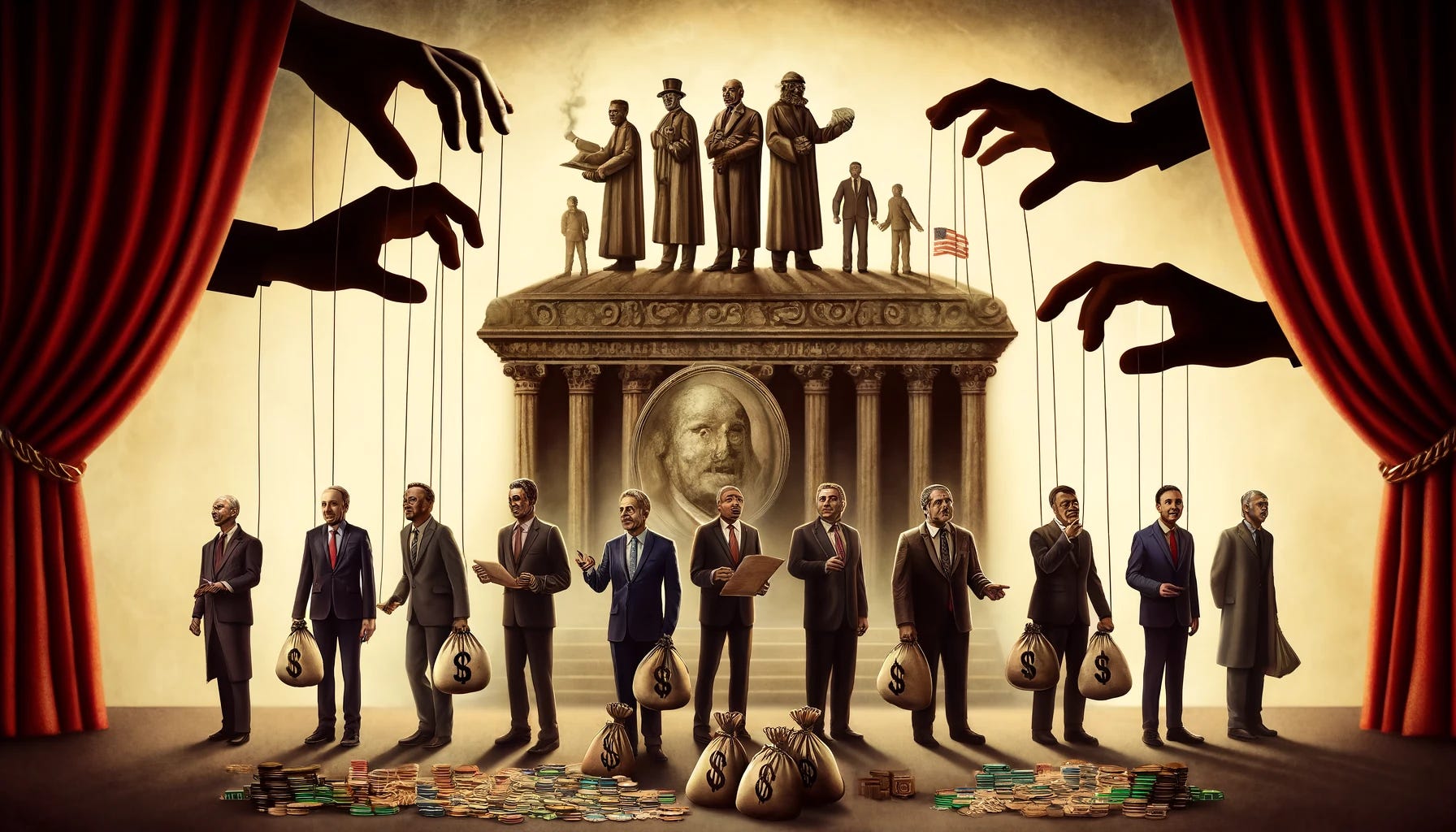
Clearly, modern politicians often lack the leadership qualities that defined historical figures.
Effective leadership requires vision, integrity, and the ability to inspire and unite people.
Unfortunately, many contemporary politicians are perceived as lacking these attributes:
- Lack of Vision: Many politicians today focus on short-term gains rather than long-term strategies. They are often driven by the need to win the next election or appease immediate public opinion, leading to policies that are reactive rather than proactive. This short-sightedness results in a lack of comprehensive plans to address long-term challenges.
- Integrity Issues: Scandals and ethical lapses are alarmingly common in modern politics. Corruption, nepotism, and conflicts of interest are frequently exposed, eroding public trust in political institutions. Historical figures like Abraham Lincoln or Mahatma Gandhi are remembered for their steadfast integrity and moral principles, qualities that seem increasingly rare in today’s political landscape.
- Inability to Inspire: Unlike historical leaders who could galvanize nations and inspire collective action, many modern politicians struggle to connect with and inspire their constituents. Political rhetoric often falls flat, perceived as insincere or overly scripted. This lack of genuine connection and inspiration further alienates the public and diminishes the effectiveness of political leadership.
These shortcomings contribute to a broader crisis of confidence in modern political systems, where leaders are often seen as self-serving rather than serving the public good.
The absence of visionary, ethical, and inspiring leadership makes it difficult to address the complex issues facing societies today, leading to a perpetuation of political and social instability.
Conclusion

In conclusion, the advent of information technology and the internet has played a crucial role in exposing the flaws and failings of modern politics. The transparency they provide has revealed a political landscape marked by a decline in integrity, an over-reliance on powerful entities, and a collapse in societal trust and stability.
We, the citizens, become increasingly aware of these issues, the call for genuine, competent, and ethical leadership grows louder.
The question remains: will the political class rise to the challenge, or will the messiness of today’s politics continue to erode the foundations of our societies? The answer lies in our collective ability to demand better from our leaders and hold them accountable in the age of information.
I will conclude by saying that every time we have faced such upheaval in human history, significant changes occur in a painful way, but at the end new charismatic leaders emerge to lead a new ear for better or worst! Let’s hope for better …
Thanks for reading The Modern World! Subscribe for free to receive new posts and support my work.
 Knock nock
Leave a comment