


A reflection on Jacob Bronowski’s “The Ascent of Man.”
- By David Deutsch
- November 22, 2013
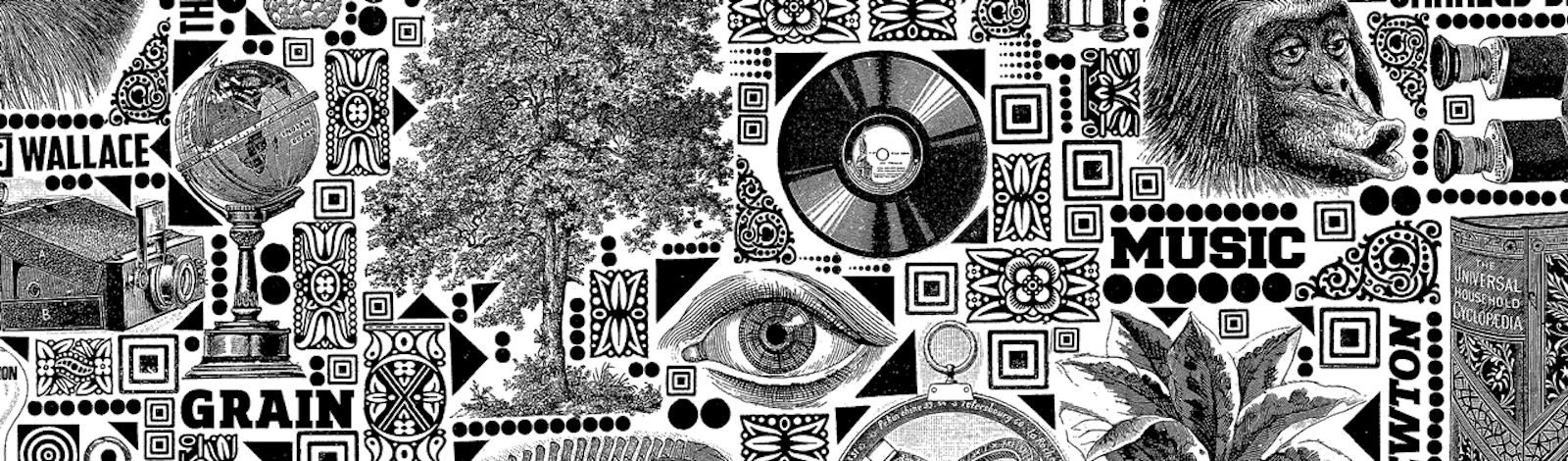
- Illustration by Lorenzo Petrantoni
- Share
Sign up for the free Nautilus newsletter:
science and culture for people who love beautiful writing.NL – Article speedbumpSign up for free

Arange of dark hilltops appears against a dawn sky. On a ridge in the far distance we can discern a human silhouette. It is someone telling us about the uniqueness of Man. “Man …” says the tiny figure in the landscape, “is not a figure in the landscape …”
“He is the shaper of the landscape,” continues Jacob Bronowski, dwarfed by the looming hills that have not been reshaped since the last ice age.
When a narrator expresses a paradox, it should be regarded as a promise to explain something amazing. Bronowski, in this historic 13-part television documentary, delivered on his promises.
He was a one-off. A patrician British academic, he had arrived in Britain at the age of 12 in the aftermath of World War I, speaking no English. He and his family were Jewish refugees from Łódź in the Russian Empire (now Poland). One of the 20th century’s most eloquent advocates of Western values, he was denied senior positions at British universities because (according to his daughter, the historian Lisa Jardine) MI5 mistakenly suspected him of being a communist sympathizer. A powerful intellect of unusual breadth and originality, he was never lucky enough to make the spectacular discovery that would have got him recognized as a great mathematician or scientist, but he made contributions to mathematics, poetry, paleontology, history, moral philosophy, and—during World War II—strategic bombing. Despite his hatred of war in general, he believed it would be pious humbug to stand aside from making the world a better place through winning a war.1 He wrote books (mostly collections of his electrifying public lectures) and became a respected media pundit. But he is, rightly, best known for his last project, The Ascent of Man (1973), in my view the finest television documentary series ever made.
It came about as a sort of reply to Kenneth Clark’s 1969 series Civilisation, itself a very successful documentary, but one that had been criticized for identifying “civilisation” almost exclusively with art (and European art at that), barely mentioning science. So David Attenborough, at that time the controller of BBC2, who had commissioned Civilisation, looked around for a scientist who could restore the balance by explaining science on television as Clark had explained art, and demonstrate to those steeped in the humanities that scientific knowledge is both thrilling and momentous. Bronowski, with his cross-disciplinary qualifications, was a natural choice, and turned out to be perfectly suited to that task. For in Bronowski’s scheme of things, scientific discovery and artistic achievement—and moral and political progress too—are all integrated in the most detailed, practical way. For example, while the truths of science are morally neutral, the practice of science absolutely depends on certain values. It cannot continue unless independence of thought, the rejection of authoritative sources of truth, and tolerance of dissent are valued and actively practiced by the scientific community. Nor can the wider society make progress in the longer term unless it is able to do as science does: confront its own constitutive ideas with reality and change them creatively when they fail.
Bronowski saw the purpose of art as being the same as that of science: to give meaning and order to our experience by revealing hidden structure beneath the appearances. That conception gives an objective meaning to progress in those fields. Moreover, neither a scientific discovery nor a work of art can be made by merely “copying nature,” for appearances are deceptive, traditions flawed. Hence a system of open-ended self-correction is needed. Creativity and boundless imagination are as essential in the mathematical sciences as in the humanities; criticism and testing in art just as in science.
We have ascended in that sense, so that by now we could, if we wished, shape mountains on the moon, and live there.
The Ascent of Man conveys this unity in a beautifully explained account of the pivotal steps in the history of ideas. But Bronowski’s agenda was deeper and more urgent than that. Though he expressed it with characteristic understatement, his was a message of rebellion, a bold attempt to correct one of the great misconceptions of modern times and single-handedly to redirect the great river of intellectual history.
The misconception might—if its perniciousness were generally acknowledged—be called antihumanism: the pattern of ideas that disparages the human species, jeers at its claims to superiority over other species, or to any special entitlement, glories in its cosmic insignificance, and reinterprets its advent as nothing special and its subsequent progress as mostly illusory or fraudulent—and thus in all these senses, denies its ascent. Antihuman ideas would have seemed wicked or insane to the great majority of thinkers since the Enlightenment at least. But during Bronowski’s lifetime, many of them had become mainstream, to the extent of being taken for granted in academic and everyday discourse. So Bronowski’s rebellion is already there in his title: The Ascent of Man. He says that it refers to the “brilliant sequence of cultural peaks”—such as the invention of stone tools, agriculture, cities, and modern science—by which humans have learned how “not to accept the environment but to change it,” thereby improving our lives. And that this progress, despite continual setbacks, has been cumulative for as long as our species has existed.
Think again about those hills of Bronowski’s. Humans really do have the ability to shape them—for instance into fortresses, or temples, or stepped terraces for growing rice. Or to dismantle an entire hill and rebuild it somewhere else as a pyramid or a great wall. Shaping hills (or valleys, or forests) was in fact among the earliest and crudest of our distinctive achievements. If those hills did happen to be unchanged since the ice age it was only because human beings had happened to decide to leave them alone and to shape something else. But what conclusively resolves the paradox is not so much that we can shape our environment (after all, even ants build anthills) but that we shape it into novel forms, with novel functions and purposes, and choose whether and how to make the changes, and invent new purposes (such as scientific research, art, and literature) and new behaviors (such as farming, city-dwelling, and engineering) that enable us to thrive in the formerly lethal environments that we have shaped.
We have ascended in that sense, and improved our ability to do so, incrementally since prehistoric times, and ever more rapidly of late, so that by now we could, if we wished, shape mountains on the moon, and live there. And if we choose to continue our ascent, we shall soon be able to reshape anything from the scale of molecules (nanotechnology) to that of planets (terraforming and geoengineering) for our convenience and delight.
“The Ascent of Man” is also a scholarly pun. It refers to Charles Darwin’s book The Descent of Man (1871), which defended the proposition that humans are descended from other animals. Bronowski of course had no quarrel with the “descent of Man” in that sense: It was essential to his world-view. But he did want to refute the slew of antihuman fallacies and misconceptions that it had inspired. For instance, the fallacy that since we are descended from animals, we should expect to explain something about the roots of warfare by studying the fight-or-flight responses of bison; about adultery by studying the mating behavior of chimpanzees; about nation-states by studying the territorial instincts of birds, and so on. Books claiming to do so, such as Robert Ardrey’s The Territorial Imperative (1966), Konrad Lorenz’s On Aggression (1966) and Desmond Morris’s The Naked Ape (1967), had been enthusiastically received. Their shared approach, of reinterpreting human social and political behaviors as being due to inherited remnants of animal instincts, soon came to dominate both public and academic discourse about human nature.
But in Bronowski’s view, that approach is a nonsense and a travesty. His argument (one of the delights of The Ascent of Man is that it consists entirely of argument) begins by directing our attention away from the common heritage of animals and toward one particular difference between humans and all other present-day species: Every other species is exquisitely adapted by evolution to a certain range of environments, and to a certain range of lifestyles that it is genetically programmed to act out in them. But evolution “has not fitted Man to any specific environment. On the contrary … he has a rather crude survival kit. And yet … one that fits him to all environments.”
How exactly this unique “survival kit” works is still mysterious, but we know that it confers an ability to use imagination, reason, and critical thinking, with which our ancestors could improve their ideas; and it confers the “emotional subtlety and toughness” to apply those ideas to improve the landscape to meet their objectives. And to improve those objectives themselves to create new and better ways of life.
In all respects, we were worse off than we are now.
This was of course a biological adaptation, encoded in DNA. But it was fundamentally different from all other adaptations in the biosphere. For it enabled, for the first time, further complex adaptations to be encoded, and improved, independently of DNA. Improving genes by biological evolution requires vast numbers of individuals to die for every scintilla of progress made. But the ability to encode whole new patterns of behavior and to pass them on by cultural means finally disconnected progress from death. As Karl Popper put it, we humans can “let our ideas die in our place.” And this set in motion two radical new forms of evolution which are millions of times more rapid, and infinitely more powerful, than that of genes, namely, the evolution of ideas in individual human minds, and the evolution of culture.
If you want to know how bison, chimpanzees, or birds lived 10,000 years ago you need only study how they live now (in the wild). But for humans, you would learn nothing by that method. Ten thousand years ago we lived in very different surroundings, made a living in different ways, had quite different economic and family relationships, and pursued different objectives. In all these respects, we were worse off—in some of them brutally, almost unimaginably worse2—than we are now. In another thousand years, or even a hundred, we may have changed as much again. If we then look back to try to understand the changes, we shall not find the explanation written in our genes.
The fitness “to all environments” that our new adaptation conferred—the universality of the human condition—has disconnected humans from their genetic inheritance. The behavior, lifestyle, abilities, and limitations of all other species are indeed explained entirely through the information in their DNA and the forces of natural selection that created it in their ancestors— that is, through their descent (in Darwin’s sense). But what is important about humans can only be understood through their ascent (in Bronowski’s).
Yet ascent is far from inevitable. Our ancestor and cousin species, who already had our survival kit, can hardly ever have used it for making progress. That is why those species are all extinct. We are the only species left on Earth with the capacity for taking control of our environment and lifestyles, and improving both on less-than-geological timescales. Even we did so only sporadically until the current spate of rapid progress, brought about by the scientific revolution and the Enlightenment.
These fits and starts were possible because, unlike every other survival kit in the biosphere, ours does not come with inborn knowledge of when to use it and what to use it for. It couldn’t, because it includes the ability to change those things too. The propensity to use it to create progress is itself cultural, but most cultures in history have not valued or protected the behaviors that permit progress.
The Ascent of Man depicts many different cultures and societies. Bronowski describes their achievements with admiration and their predicaments with compassion. But his reason for discussing them is always to judge them—and always according to his explanation of whether, and how, they were capable of making progress. Thus, his rebellion defies a further taboo: cultural relativism, the idea that there is no such thing as one culture or society’s values and traditions being better than another’s. And therefore that objectively there is no such thing as progress either—no ascent— only the meeting of some culture’s preferences, which another may loathe.
Aren’t people “basically the same everywhere?” In Bronowski’s view, individual people aren’t basically anything, because their basic aptitude is universal. But in regard to cultures, Bronowski draws an uncompromising distinction between those that facilitate ascent and those that do not.
Filming the last remnants of an ancient horse-based culture in Afghanistan, Bronowski did not regret its decline. On the contrary, instead of applying the customary condescending doublethink towards primitive cultures, Bronowski traced the 5,000-year history from the earliest gangs of horsemen who stole from farmers what they could not produce themselves, to Genghis Khan, the terror of medieval civilization, and does not hesitate to classify that entire strand of cultural history along with Stalinism and Nazism as an archetypal enemy of the ascent of man. And the Nazi tank as the descendant of the war horse. “War,” says Bronowski, “is not a human instinct” (this was a sideswipe at Lorenz and all who wish to see the animal mind inside the human), “it is a highly planned and cooperative form of theft.” Similarly, Bronowski dared to stand in front of the great stone statues of Easter Island and declare that “These frozen faces … mark a civilization which failed to take the first step on the ascent of rational knowledge.” Bronowski said, “I am fond of these ancient, ancestral faces, but in the end, all of them are not worth one child’s dimpled face,” for one human child—any child—has the potential to achieve more than that entire civilization did. Yet “for most of history, civilizations have crudely ignored that enormous potential … children have been asked simply to conform to the image of the adult.” And thus ascent has been sabotaged or frozen.
Continued ascent will depend on adopting Bronowski’s unified understanding that human values are not arbitrary nor science merely utilitarian: that there is a truth of the matter in cultures just as in scientific theories. That these truths are not obvious nor mechanically obtainable in either case, but can be approached only through institutions of relentless error-correction including those of science and of an open society. Bronowski spoke of peaks, but there have been many troughs too. Today, civilization still has enemies. There are still those who devote their creativity to the archaic objective of resisting new ideas. More dangerously, in my view, the many-stranded civilization of reason and science that has so powerfully promoted ascent in recent centuries still sits on the unstable fence between its aspirations for progress and the specious comfort of stasis. Two hundred years after the Luddites, it is still not sure whether labor-saving devices cause wealth or poverty. Two hundred years since Malthus, it has still not realized that the recipe for doom is not “too many people,” but too few ideas. After 300 unprecedented years of sustained progress, it is still tempted to revert to its predecessors’ educational priorities, namely to produce “higher standards” (i.e. more standardized children). And after 50 years of conservationism, it is no longer sure whether it is better to kill a herd of elephants or a child. Most dangerous of all, it is no longer even sure whether its own spread—to other cultures, or to other planets and star systems—would be a good thing.
Go forth, therefore, and watch The Ascent of Man.3 If you have already done so, watch it again.
David Deutsch has done seminal work on quantum computation and is a member of the Centre for Quantum Computation at the Clarendon Laboratory, Oxford University.
This article originally appeared in the Winter 2014 Nautilus Quarterly.
Footnotes
- See Bronowski’s essay, The Dilemma of the Scientist (1956).


The Ascent of Man by Jacob Bronowski – review
This article is more than 13 years old
Tim Radford finds Bronowski’s history of humanity, The Ascent of Man – reissued with a foreword by Richard Dawkins – as compelling as ever
Next month’s book is Steve Jones’s Almost Like a Whale: The Origin of Species Updated, which Tim will review on 27 May
Fri 15 Apr 2011 08.17 EDTShare32
Fame has a momentum all of its own, but that does not explain the enduring recognition accorded to Jacob Bronowski. In 1972 he was a little-known mathematician who knew a lot about the poet William Blake. In 1973, thanks to a 13-part television series on BBC2, he had become one of the world’s most celebrated intellectuals, and by the late summer of 1974 he was dead.
The book spun from the television series went on to sell millions. Now, 38 years later, the BBC has reissued it, with a foreword by Richard Dawkins but otherwise unchanged. In the intervening years, a hundred popularisers, practitioners and science historians have tried to tell much the same story, each time with more up-to-date information and a more acute sense of contemporary awareness. So The Ascent of Man should have a decidedly dated feel.
But it doesn’t – not, at least, to this reader. It proceeds briskly through what is by now the standard science-oriented western European version of human history – the Palaeolithic, the dawn of civilisation, the Greeks and the Romans, the Islamic empire, Galileo, Newton, the Industrial Revolution, Mendeleev, Pasteur, Darwin, Einstein and the nuclear age – and it still seems as good as any other history of discovery, and a great deal sharper and more readable than some.
Some of the fluency stems from Bronowski’s greedy enthusiasm for intellectual adventure, including poetry (I still have his 1972 book William Blake and the Age of Revolution, and felicitously, a new scholarly monograph from Imprint Academic, The Happy Passion by Antony James, tells us a lot more about Bronowski’s output).
Some of the fluency stems from Bronowski’s decision to put as much of the script for the TV series into the book as possible. “A spoken argument is informal and heuristic; it singles out the heart of the matter and shows in what way it is crucial and new,” he writes in his own foreword.
But the enduring freshness stems from something else. Bronowski had a gift for identifying the themes and advances that would seem just as vital 40 years on. He also had a gift for sentences minted with precision, and Dawkins picks out two of them in his foreword: “The hand is the cutting edge of the mind … The most powerful drive in the ascent of man is pleasure in his own skill.”
That is more than just an example of the Bronowski way with words. It is an illustration of his ability to stand just slightly off-centre, to see the unexpected in the familiar, and select imagery that has life, action, movement. He identifies the keen edge of a stone blade, the baked bricks of Sumer, the marble of Greece and the stone arches of Rome, as evidence of human exploration of the visible structure of matter.
This same attitude helps him demonstrate that the hit-and-miss handiwork of the Bronze Age, the intricate craftsmanship of Samurai swordsmiths, and the not-quite-futile endeavours of the medieval alchemists, were all tentative explorations of the invisible nature of matter. Geometry, and Greek and Islamic experiments in mathematics, began to expose the importance of shape, distance, perspective and to reveal a vision of the universe “not as a series of static frames but as a moving process”.
Ultimately, his journey leads him “through the gateway of the atom … in a world which our senses cannot experience. There is a new architecture here, a way that things are put together which we cannot know: we only try to picture it by analogy, a new act of imagination.”
And the Bronowski imagination dances on, leading us to new insights: he talks about the fabrication of the 92 elements through stellar fusion from the universal raw material of hydrogen and pauses, just for a moment, to contemplate carbon “formed in a star whenever three helium nuclei collide at one spot within less than a million millionth of a second. Every carbon atom in every living creature has been formed by such a wildly improbable collision.”
These are sentences formed by a mind that can compose imagery, and then select exactly the right words to represent the image. The additional puzzle is that he can express them so flawlessly in a language that, until he was 12, he had never heard.
The book, of course, is in one obvious sense out of date: it stops at Crick and Watson, and von Neumann, and the notion of Homo sapiens as an egghead, a highbrow, the product of a brain determined by its shape and capacity. In 1973, the last Apollo astronauts had just left the moon, molecular biology had barely begun, computing was something cumbrous involving small memories and whirring tapes, and neuroscience was still stuck in its own Dark Age.
But in another sense, The Ascent of Man is as compelling as ever. The brain, he understands, is not just an instrument for action. It is an instrument for preparation; it both drives the human hand and is driven by it; it is an instrument wired to learn, control speech, plan and make decisions.
In the course of the last chapter, he reminds us that from the printed book comes “the democracy of the intellect” and that humans are primarily ethical creatures. These are the words of a man who studied the devastation of Nagasaki.
All our science, all our endeavour, is for something. “We are nature’s unique experiment to make the rational intelligence prove itself sounder than the reflex. Knowledge is our destiny.” This is not just a book about science. It is a book about why science matters, and what it really tells us. That is not a message likely to go out of date in a few decades.
Tim Radford‘s geographical memoir The Address Book: Our Place in the Scheme of Things is published by Fourth Estate on 28 April

The Ascent of Man
This article is about the documentary series. For the book “The Ascent of Man by Means of Natural Selection”, see Alfred Machin (writer). For the narrative poem “The Ascent of Man”, see Mathilde Blind. For the cartoon which has been described this way, see March of Progress.
| The Ascent of Man | |
|---|---|
| DVD cover | |
| Genre | Documentary |
| Developed by | David Attenborough |
| Directed by | Adrian Malone, Dick Gilling, Mick Jackson, David Caird Paterson and David John Kennard |
| Presented by | Jacob Bronowski |
| Country of origin | United Kingdom |
| Original language | English |
| No. of episodes | 13 |
| Production | |
| Producers | Adrian Malone and Dick Gilling |
| Production location | Worldwide (27 countries) |
| Running time | 676 minutes (52 minutes per episode) |
| Original release | |
| Release | 5 May 1973 |
The Ascent of Man is a 13-part British documentary television series produced by the BBC and Time-Life Films first broadcast in 1973. It was written and presented by Polish-British mathematician and historian of science Jacob Bronowski, who also authored a book adaptation. Intended as a series of “personal view” documentaries in the manner of Kenneth Clark‘s 1969 series Civilisation, the series received acclaim for Bronowski’s highly informed but eloquently simple analysis, his long, elegant monologues, and its extensive location shoots. The programme began broadcasting on BBC2 at 9 pm on Saturday, 5 May 1973[1] and was released in the US 7 January 1975.[2] To celebrate its 50th anniversary, the documentary was again broadcast on BBC4 in the Summer of 2023.
Overview
[edit]
The title alludes to The Descent of Man (1871), Charles Darwin‘s second book on evolution. Over the series’ 13 episodes, Jacob Bronowski travels around the world in order to trace the development of human society through its understanding of science. It was commissioned specifically to complement Kenneth Clark‘s Civilisation (1969), in which Clark argued that art reflected and was informed by the major driving forces in cultural evolution. Bronowski had written in his 1951 book The Commonsense of Science: “It has been one of the most destructive modern prejudices that art and science are different and somehow incompatible interests”.[3] Both series were commissioned by David Attenborough, then controller of BBC Two, whose colleague Aubrey Singer had been astonished by Attenborough prioritising an arts series (i.e. Civilisation) given his science background.[4]
Bronowski’s book adaptation of the series, The Ascent of Man (1973), is an almost word-for-word transcript from the television episodes, diverging from the original narration only where the lack of images might make its meaning unclear. A few details of the film version were omitted from the book, notably from episode 11, “Knowledge or Certainty”.
Production
[edit]
| This section needs additional citations for verification. Please help improve this article by adding citations to reliable sources in this section. Unsourced material may be challenged and removed. Find sources: “The Ascent of Man” – news · newspapers · books · scholar · JSTOR (August 2024) (Learn how and when to remove this message) |
The 13-part series was shot on 16 mm film. Executive producer was Adrian Malone; film directors were Dick Gilling, Mick Jackson, David Kennard, and David Paterson. Quotations were read by actors Roy Dotrice and Joss Ackland. Series music was by Dudley Simpson with Brian Hodgson and the BBC Radiophonic Workshop. Additional music includes work by Pink Floyd and the Moody Blues, among others. Apart from Bronowski, the only other named people appearing are the sculptor Henry Moore, and an elderly Polish man, Stefan Borgrajewicz. In Episode 11, Borgrajewicz’s face is explored in different ways as a means of testing the limits of knowledge; via different wavelengths of the electromagnetic spectrum, a set of paintings by Feliks Topolski, and by the descriptions of a blind woman feeling his face at the beginning of the programme. Her description of his face as having “lines of possible agony” is clarified at the very end of the episode, which reveals him to have been a survivor of Auschwitz.
Distribution
[edit]
The complete series was digitally remastered and released on DVD in 2007 by Ambrose Video Publishing, Inc.
Episodes
[edit]
- Lower than the Angels – Evolution of humans from proto-ape to the modern form 400,000 years ago.
- The Harvest of the Seasons – Early human migration, agriculture and the first settlements, and war.
- The Grain in the Stone – Tools, and the development of architecture and sculpture.
- The Hidden Structure – Fire, metals and alchemy.
- Music of the Spheres – The language of numbers and mathematics.
- The Starry Messenger – Galileo’s universe—and the implications of his trial on the shift to “northern” science.
- The Majestic Clockwork – Explores Newton and Einstein’s laws.
- The Drive for Power – The Industrial Revolution and the effect on everyday life.
- The Ladder of Creation – Darwin and Wallace’s ideas on the origin of species.
- World within World – The story of the periodic table—and of the atom.
- Knowledge or Certainty – Physics and the clash of the pursuit of absolute vs. imperfect knowledge, and the misgivings of the scientists realising the terrible outcome of the conflict. Auschwitz. Hiroshima and Nagasaki.
- Generation upon Generation – The joys of life, sex and genetics—and the dark side of cloning.
- The Long Childhood – Bronowski’s treatise on the commitment of humanity.
Legacy
[edit]
- Adrian Malone and David Kennard later emigrated to Hollywood, where they produced Carl Sagan‘s Cosmos (1980).
- Mick Jackson went on to direct the 1978 TV series Connections and, later, feature films including The Bodyguard.
- The Ascent of Man was placed 65th on a list of the 100 Greatest World Television Programmes voted for by industry professionals and drawn up by the British Film Institute in 2000.[5]
- Charlie Brooker praises Bronowski and The Ascent of Man in his BBC Four programme Charlie Brooker’s Screenwipe.[6]
References
[edit]
- ^ The Ascent of Man: 1: Lower than the Angels Radio Times: Issue 2582, 1973-05-03.
- ^ IMDB release info
- ^ Deutsch, David, Not Merely the Finest TV Documentary Series Ever Made: A reflection on Jacob Bronowski’s “The Ascent of Man”, Nautilus Quarterly, November 22, 2013 – a lengthy review
- ^ Attenborough interview in The Ascent of Man DVD set
- ^ “The BFI TV 100”. Archived from the original on 30 November 2005. Retrieved 3 August 2009.
- ^ “Charlie Brookers Screenwipe S1E1P1”. YouTube. Archived from the original on 3 October 2014. Retrieved 4 February 2010.
External links
[edit]
 Knock nock


Leave a comment