

8 minute read

October 20, 2023 5:57 PM EDT
Warning: This post contains spoilers for Killers of the Flower Moon.
Based on journalist David Grann’s 2017 best-selling book of the same name, Killers of the Flower Moon recounts the true story of how a white businessman and self-proclaimed “true friend” of the Osage Nation orchestrated the brutal murders of numerous members of the tribe in early 1920s Oklahoma.
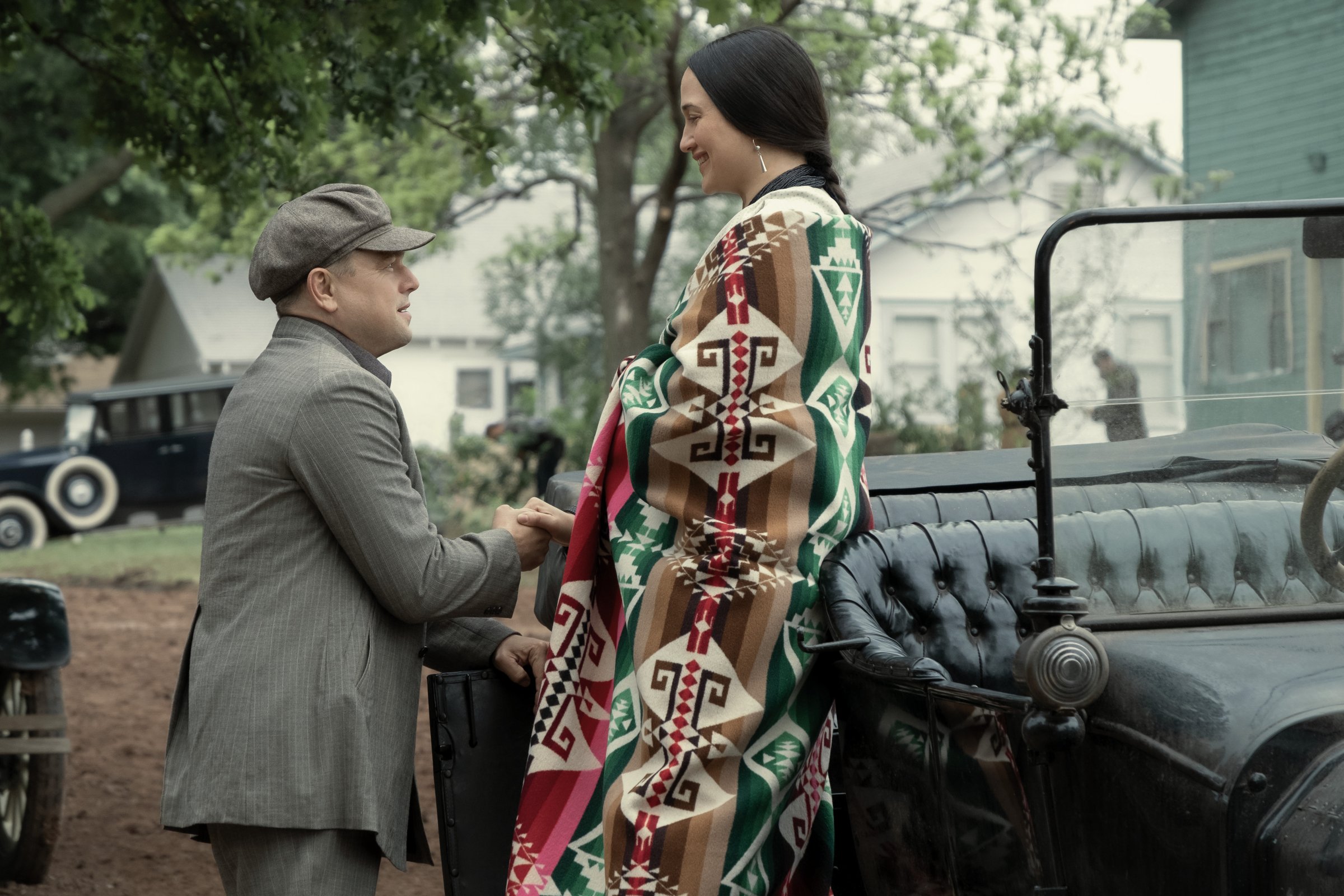
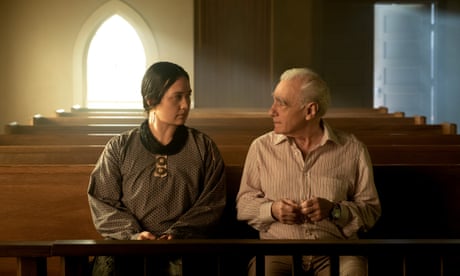
Directed and co-written by Martin Scorsese, the film centers on the relationship between an Osage woman, Mollie Kyle (Lily Gladstone), and white World War I veteran, Ernest Burkhart (Leonardo DiCaprio), nephew of the aforementioned wealthy rancher, William K. Hale (Robert De Niro). Set at a point in time when the Osage were considered the richest people per capita in the world following the discovery of oil reserves under their land, the movie follows Ernest as he marries Mollie at the direction of his uncle and then conspires with him to kill off Mollie’s family and a number of other Osage in order to cash in on their oil headrights and life insurance policies.
Grann’s book reads as a whodunnit mystery that explores the broader historical context of what came to be known as the “Reign of Terror”—including how the crimes against the Osage were investigated and partially solved by a team of government field agents led by former Texas Ranger Tom White (played by Jesse Plemons in the movie). But in adapting the book, Scorsese said that he wanted to shift the spotlight away from “all the white guys” and make Mollie and Ernest’s marriage the driving force of the film.
Killers Of The Flower Moon | Official Trailer | Paramount
0 seconds of 2 minutes, 21 secondsVolume 0%
“What I wanted to capture, ultimately, was the very nature of the virus or the cancer that creates this sense of a kind of easygoing genocide,” he said at an Oct. 16 press conference. “When there is betrayal that deep, and we know for a fact that it was that way, there’s our story.”
Here’s how faithfully Scorsese’s version of the Killers of the Flower Moon story captures the real history behind the Osage murders.
Read more: Martin Scorsese Still Has Stories to Tell
The headright system
In 1906, nearly 45 years after the Osage Nation had legally purchased and settled on a permanent reservation in north central Oklahoma Indian Territory, Osage Principal Chief James Bigheart and a half-Native lawyer named John Palmer negotiated a deal with the U.S. government wherein every full-blood Osage received an allotment of 657 acres of land that included a headright in the tribe’s communal mineral trust. While surface property could be sold or leased, the deal stipulated that mineral trust headrights—the right to receive a quarterly distribution of funds from the tribe’s underground mineral estate—could only be inherited by their owner’s legal heir.
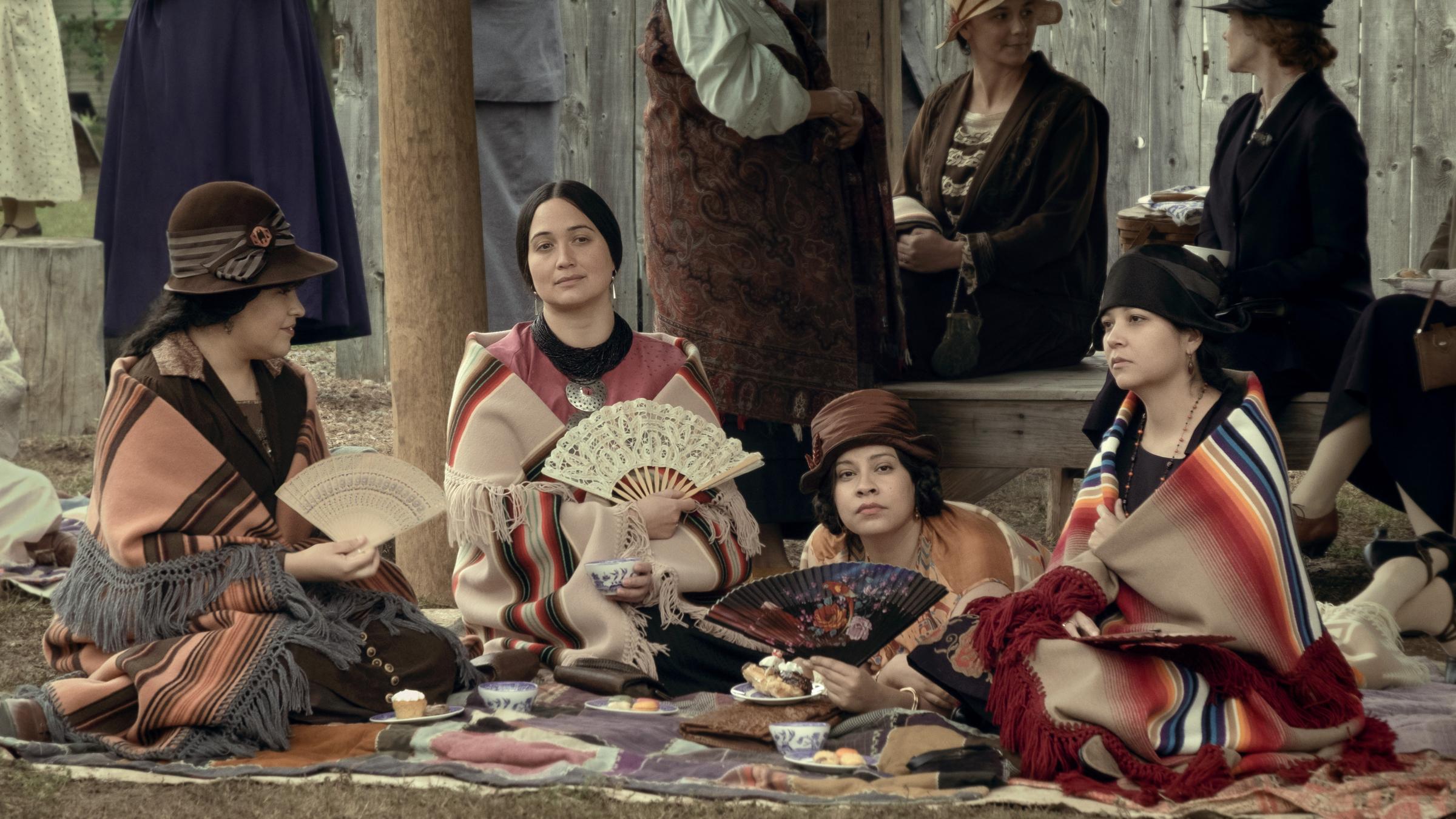
This meant that when oil fields were discovered under the reservation just a few years later, the Osage became some of the wealthiest people in the world. However, there was a catch: the Osage were not free to spend their own money.
The U.S. government put a system of guardianship in place, under which any Osage who was deemed “incompetent” was assigned a guardian (almost always a white man) who controlled their money. The system often resulted in guardians withholding or outright stealing money from the Osage.
The movie shows Mollie visiting her guardian to request access to her own money to pay medical bills.
The marriage of Mollie and Ernest
As is shown in the movie, Ernest met Mollie while he was working as a taxi driver in Osage County. They married in 1917 at Hale’s urging and eventually had three children together, Elizabeth, James “Cowboy,” and Anna. Years later, while Ernest was on trial, Anna died at the age of 4 after contracting whooping cough.
The film depicts Mollie and Ernest as having a loving relationship even as he was conspiring to murder her family. While it’s impossible to know how Ernest and Mollie truly felt about each other, Scorsese said that it was the couple’s real-life granddaughter, Margie Burkhart, who convinced him that their marriage should be the heart of the movie.
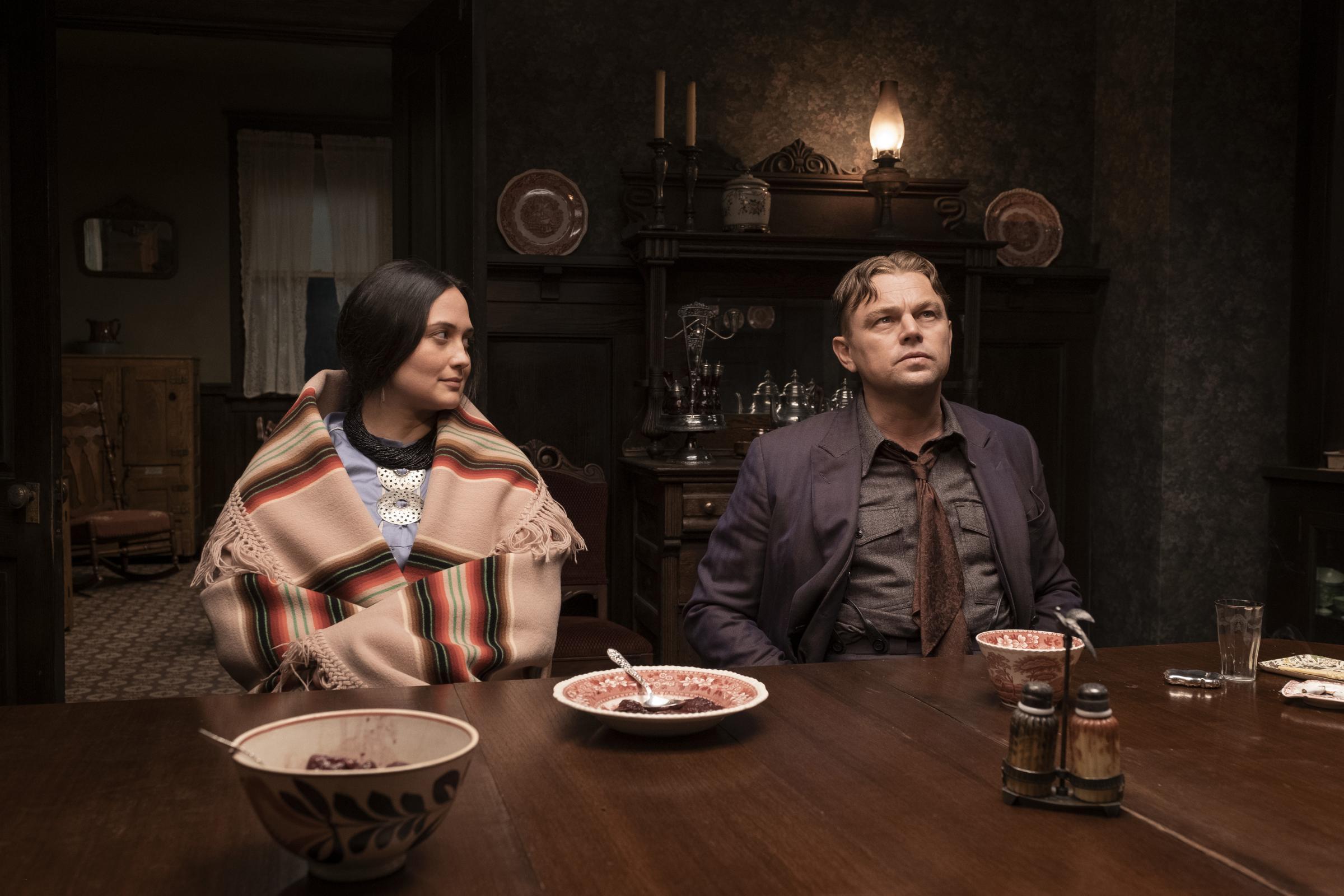
“She said we have to remember that Ernest loved Mollie, and Mollie loved Ernest,” he said during an Oct. 16 press conference. “It’s a love story. So what happened was the script shifted that way and it became gritty.”
However, the suggestion that Ernest actually loved Mollie is controversial to some involved in the project. At the film’s premiere, Osage language consultant Christopher Cote told the Hollywood Reporter that, as an Osage himself, he was hoping Killers of the Flower Moon would be told from the perspective of Mollie and her family.
Read More: The Ending of Killers of the Flower Moon Is Astonishing
“I think it would take an Osage to do that,” he said. “Martin Scorsese not being Osage I think he did a great job representing our people. But this history is being told almost from the perspective of Ernest Burkhart. And they kind of give him this conscience and they kind of depict that there’s love. But when somebody conspires to murder your entire family, that’s not love. That’s beyond abuse.”
The Reign of Terror
The Reign of Terror began in 1921 with the deaths of Mollie’s sister Anna Brown (played by Cara Jade Myers) and Charles Whitehorn (Anthony J. Harvey), who were both found shot in the head in remote rural areas within a short time of each other. Over the course of the next four years, at least 24 members of the Osage Nation and their allies—including Mollie’s mother Lizzie (Tantoo Cardinal), sisters Minnie (Jillian Dion) and Rita (JaNae Collins), brother-in-law Bill (Jason Isbell), and cousin Henry Roan (William Belleau)—died violent or suspicious deaths.
The movie shows Ernest slowly poisoning Mollie, who was diabetic, by giving her injections of what she was told was insulin to keep her weak and wasting away in bed during the later years of the Reign of Terror, an alleged attempt on her life that Mollie survived.
The FBI investigation and trial
When Rita and Bill Smith and their housekeeper Nettie Brookshire (Shonagh Smith) were killed in an explosion at their home in 1923, it prompted the Osage Tribal Council to appeal to the federal government for help.
It was at this point in time that the newly created Bureau of Investigation (the agency that would later become the FBI) assigned White to the case and it became the Bureau’s first murder investigation. White led a team of field agents, several of whom went undercover in the community, to gather evidence and uncover the truth: that Hale, along with a number of accomplices, had orchestrated the murders of over 20 Osage as part of a scheme to profit off their deaths. Hale’s accomplices included Ernest and his brother Bryan (Scott Shepherd) as well as a a lineup of local career criminals.
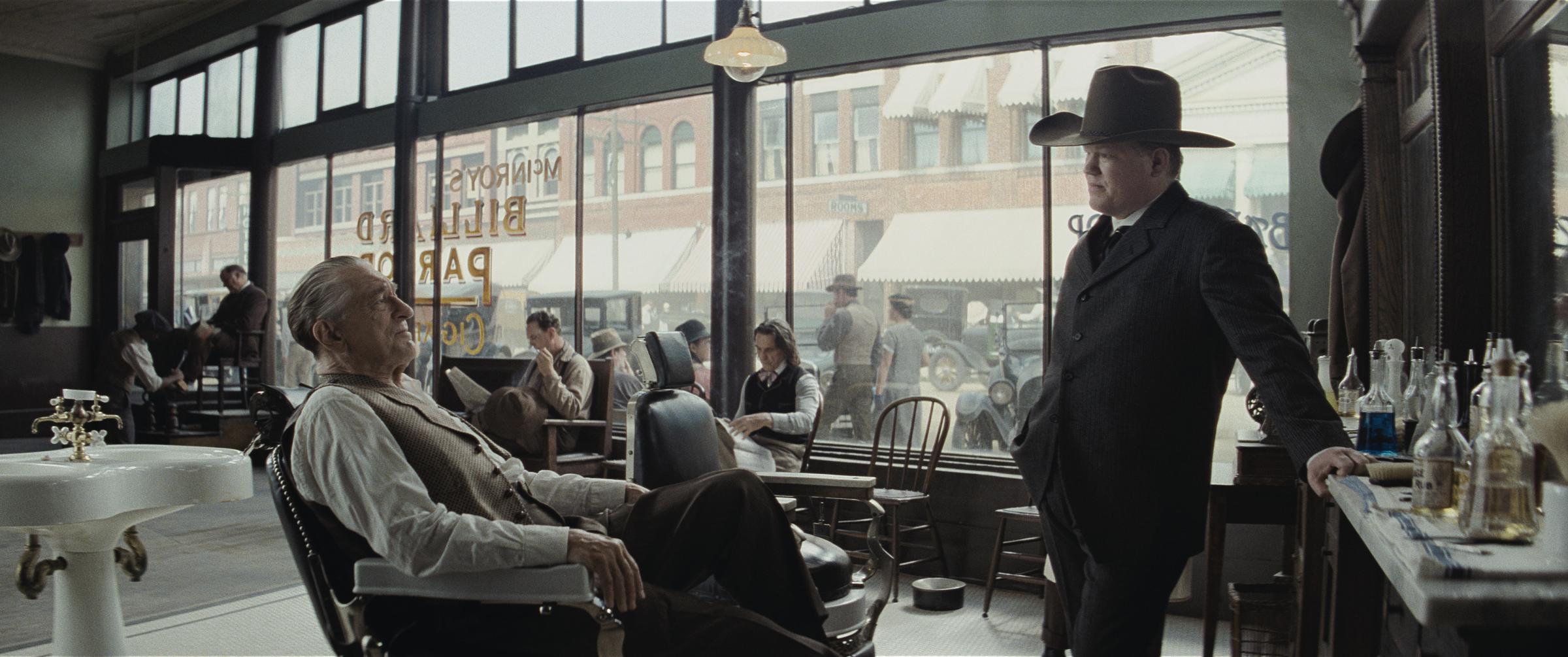
After both Hale and Ernest were arrested in January 1926 for the murders of Rita, Bill, and Nellie, Ernest ended up confessing to his role in the crimes and identified Hale as the mastermind of the plot. He also named local thief and bootlegger John Ramsey (Ty Mitchell) as Henry Roan’s killer. That April, another local bootlegger, Kelsie Morrison (Louis Cancelmi), and Bryan Burkhart were charged with Anna’s murder.
Drawn-out and arduous legal proceedings ensued, with Ernest agreeing to testify for the prosecution in the Smiths’ murder before being intimidated into instead testifying for the defense before once again changing his mind, pleading guilty, and testifying for the state.
Ultimately, Ernest, Hale, Ramsey and Morrison were all sentenced to life in prison—Ernest for Rita, Bill, and Nellie’s murders; Hale and Ramsey for Henry Roan’s; and Morrison for Anna’s. However, Ernest, Hale, and Ramsey were all eventually paroled and, in 1966, Ernest received a full pardon from Oklahoma governor Henry Bellmon.
Mollie, who stood by her husband until he confessed to his role in her family’s murders in court in 1926, divorced Ernest and later got remarried to a man named John Cobb. She died at the age of 50 in 1937.
Systemic violence
While Hale was suspected of being the mastermind behind the 24 murders that took place during the Reign of Terror, the Killers of the Flower Moon book delves into how deadly violence against the Osage was part of a more sweeping conspiracy. In fact, Grann’s research indicates that in the years before Anna Brown’s death and the years after Hale went to prison, there were numerous other Osage who died under mysterious circumstances—and their deaths were never investigated.
“I thought I was writing a book about this singular evil figure who had been apprehended by the FBI,” Grann told Smithsonian Magazine. “Instead, I began to realize that this was less a story about who did it and who didn’t do it. It was really about a culture of killing and a culture of complicity… [with] many of these murders carried out by individuals who were profiting from this very corrupt system of targeting the Osage, often marrying into their families and then plotting to kill them to steal their oil money and inheritance.”
More From TIME

Scorsese’s Killers of the Flower Moon describes the struggles of the Osage people. Here’s why they are still fighting
This article is more than 11 months old

Hundreds of Native Americans were murdered for their oil in the 1920s. But they’re still battling the US government for what is theirsFri 20 Oct 2023 04.00 EDTShare
This week, director Martin Scorsese releases his film Killers of the Flower Moon: the true story of the mass murder of Osage Native Americans and the plot to steal the tribe’s oil wealth. The film is a powerful telling of what came to be known as the Reign of Terror, a period that resulted in the deaths of as many as 200 Osage. But the story didn’t end there. For the past 27 years, I have been reporting on what happened afterwards. My documentary Long Knife – produced by George DiCaprio, with his son Leonardo’s encouragement – recounts, in the words of the Osage people, what happened in the century since the killings portrayed in the film, from the Terror to oil thievery to today’s fight for sovereignty.
Over the past century, the Osage Nation has continued to suffer massive oil thievery, impoverishment and oil sludge poisoning on their Oklahoma reservation. “It’s not over,” Osage principal chief, Geoffrey Standing Bear, tells me. “It’s still happening.” At the heart of it is legal control of Osage native land by the US Bureau of Indian Affairs, an entity the Osage call the Ma-he-tah, or the Long Knife. Standing Bear, a lawyer himself, likens the arrangement to a military occupation.
The Osage’s current misfortunes began in 1894 with, ironically, the discovery of a gigantic oil reservoir under their Oklahoma land. Suddenly, desperately poor Osage became the richest people on Earth.
But for the US government, that was too much oil and too much money under the control of a people who were not at that time recognised as US citizens. In 1906, the US Congress passed the Burke Act, named after congressman Charles Burke, who called American Indigenous people “half animal”. Burke would head the Bureau of Indian Affairs, which determined that Osage were not sufficiently competent to handle their new wealth. It assigned each full-blood Osage a white “guardian”.
These guardians wrote themselves into Osage wills and insurance policies, then systematically murdered their wards and took their oil rights. That’s where Killers of the Flower Moon ends, in the 1920s.
But the predation continued. The US government barred the tribe from developing their own oil and instead auctioned off the Osage’s drilling rights. The giant reserves were then exploited by the behemoths we now know as Getty Oil, ConocoPhillips, Sinclair and Exxon.
The Osage were left with small “stripper” wells producing too little oil to send out through pipelines. Beginning in the 1960s, a small operator out of Wichita, Kansas, Koch Industries, agreed to send out small tanker trucks to take the Osage crude. Except that Koch truckers would take 30 barrels and write down 20. In 1996, I was brought in as a forensic expert on energy frauds. I calculated they had skimmed off $2.4bn (£2bn) – about $6bn in today’s money.
It’s said that behind every great fortune is a great crime. It was this Osage oil that created one of America’s greatest fortunes: the Koch family, whose wealth is calculated at over $120bn. Kochs have used this wealth to build a fearsome ultra-rightwing force that can create and destroy political careers. Lisa Graves of True North, an authority on corporate lobbying, calculates that Koch interests have spent no less than $200m on campaigns to attack climate change science.
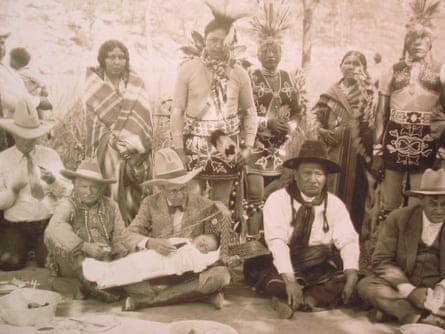
To the Osage, it’s still raw. Only months ago, Everett Waller, Osage’s resource chair, confronted the Bureau of Indian Affairs at a tense hearing. “When you get a quote from Koch Oil that said they deserve a barrel for every two they had to pay for, you should have hung the bastards.” (Appropriately, in Killers, Waller plays the fierce Osage leader, Paul Red Eagle.)
Today, the Koch oil trucks are gone, but their poisons are left behind – and I’m not just talking about the economic legacy. Former Koch trucker Jack Crossen told me that Koch ordered its workers to cover up toxic sludge spilt into creeks and water supplies.
Right now, Chief Standing Bear is at war with the system that engendered the Koch heist, the 1920s Reign of Terror and continuing cruelties. The US government still claims ultimate power over Osage money and lands, simply changing the murderous “guardianship” scheme to the “trusteeship” of the Bureau of Indian Affairs. The chief explains: “This is our land, and we bought this land with our own money. But the federal government says: ‘The ownership title may belong to you, but the day-to-day control and operation belongs to the federal government.’ And who do they get to help manage? Koch oil!”
For the chief, it’s also personal. The US government to this day lists Chief Standing Bear as “incompetent”, despite his national recognition as one of America’s top trial attorneys. During those few years of oil wealth 100 years ago, the Osage invested in education and skills, with some becoming noted scholars at Stanford and Oxford, and they gave America its first prima ballerina, Maria Tallchief (née Elizabeth Marie Tall Chief). The chief took me to the Bureau of Indian Affairs office, where, in a huge leatherbound book, he and other college graduates in his family are listed as incompetent. It’s more than an insult. It is part of the legal structure that allows the federal government to remain as sovereign over reservation affairs.
Today, Koch’s trucks are gone, but Koch’s campaign to deny climate science and stop the government taking action on greenhouse gas emissions has undermined Osage demands for funds to seal up the thousands of methane-spewing, poisonous wells abandoned by corporate drillers. And Waller needs the sovereign rights granted to other Americans so the Osage can launch his long-term plan to “put it all underground” – that is, instead of drilling oil, drilling huge, clean geothermal reserves. That puts the Osage on the frontline in the war over climate and Koch-ocracy.
While the Osage are appreciative of Scorsese and Leonardo DiCaprio bringing the 1920s Terror to the screen, they want the world to know that their story doesn’t end when the movie credits roll. Former chief Jim Roan Gray, whose great-grandfather’s murder is at the centre of Killers, says the Osage want to be seen as more than victims: they are warriors confronting their US rulers for control of their own land and lives.
Greg Palast is an investigator of corporate fraud and racketeering turned journalist. His documentary Long Knife: Osage Oil and the New Trail of Tears will be released in early 2024
- Do you have an opinion on the issues raised in this article? If you would like to submit a response of up to 300 words by email to be considered for publication in our letters section, please click here.
I hope you appreciated this article. Before you move on, I wanted to ask if you would consider supporting the Guardian’s journalism during one of the most consequential news cycles of our lifetimes.
We have never been more passionate about exposing the multiplying threats to our democracy and holding power to account in America. In the heat of a tumultuous presidential race, there is an urgent need for free, trustworthy journalism that foregrounds the stakes of November’s election for our country and planet.
Yet, from Elon Musk to the Murdochs, a small number of billionaire owners have a powerful hold on so much of the information that reaches the public about what’s happening in the world. The Guardian is different. We have no billionaire owner or shareholders to consider. Our journalism is produced to serve the public interest – not profit motives.
And we avoid the trap that befalls much US media: the tendency, born of a desire to please all sides, to engage in false equivalence in the name of neutrality. We always strive to be fair. But sometimes that means calling out the lies of powerful people and institutions – and making clear how misinformation and demagoguery can damage democracy.
From threats to election integrity, to the spiraling climate crisis, to complex foreign conflicts, our journalists contextualize, investigate and illuminate the critical stories of our time. As a global news organization with a robust US reporting staff, we’re able to provide a fresh, outsider perspective – one so often missing in the American media bubble.
Around the world, readers can access the Guardian’s paywall-free journalism because of our unique reader-supported model. That’s because of people like you. Our readers keep us independent, beholden to no outside influence and accessible to everyone – whether they can afford to pay for news, or not.
If you can, please consider supporting us just once, or better yet, support us every month with a little more. Thank you.
Betsy Reed
Editor, Guardian US

Wikipedia
,
The Osage Indian murders were in Osage County, Oklahoma, during the 1910s–1930s. Newspapers described the increasing number of unsolved murders and deaths among young adults of the Osage Nation as the “Reign of Terror”.[1][2] Most took place from 1921 to 1926. At least 60 wealthy, full-blood Osage persons were reported killed from 1918 to 1931.[3] Newer investigations indicate that other suspicious deaths during this time could have been misreported or covered-up murders, including those of individuals who were heirs to future fortunes. Further research has shown that the death toll may have been in the hundreds.[4]: 307–308 [5]
The tribe had retained mineral rights to its reservation.[6] Each tribal member had what were known as headrights to the mineral rights on communal land.[7][8] When valuable oil was found on their land and leases were sold for oil production, each member with headrights was paid a share of the lucrative annual royalties for leases by oil companies. In 1906 and subsequent years, United States Congress passed a series of laws, ostensibly intended to help the Osage retain wealth, that created a system of guardianship for “minors and incompetents”, as determined by and under the jurisdiction of Oklahoma’s local county probate courts.[9][10] The Oklahoma courts routinely found American Indians to be incompetent without considering mental capacity. For example, a guardian was appointed for one Indian woman on the basis that her savings suggested a lack of spending which was evidence that she did not understand the value of money. Many guardians used their appointment to gain control over the ward’s wealth for their own personal benefit.[11][12][13] During this period, numerous white men married Osage women to become guardians of their estate.
Some of the murders were committed to enable whites to take over the headrights of Osage members when inheriting property after deaths. The Osage found minimal assistance from local law enforcement to investigate the deaths, as it was dominated by powerful whites working in their own interests. Later investigation, including that of the Bureau of Investigation (BOI, the precursor to the Federal Bureau of Investigation), revealed extensive corruption among local officials involved in the Osage guardian program, including lawyers and judges. Most of the murders were never prosecuted. Nevertheless, several perpetrators were convicted of murder, including William Hale, a powerful rancher who ordered the murders of his nephew’s wife and other members of her family to gain control of their headrights and oil wealth. Two other perpetrators implicated with Hale, Henry Grammer and Asa Kirby, died under suspicious circumstances during the BOI investigation. Several others involved were convicted of lesser charges, such as perjury, witness tampering, and contempt of court, for attempting to impede the investigation.
In 1925, the U.S. Congress changed the law to prohibit non-Osage from inheriting headrights from Osage with half or more Native American ancestry, in an effort to protect the Osage. The U.S. government continued to manage the leases and royalties from oil-producing lands. Over decades, the tribe became increasingly concerned about these assets. In 2000, the Osage Nation filed a suit against the Department of the Interior, alleging that it had not adequately managed the assets and paid people the royalties they were due. The suit was settled in 2011 for $380 million and commitments to improve program management.[14][15]
Background
[edit]
In 1897, oil was discovered on the Osage Indian Reservation, present-day Osage County, Oklahoma. The United States Department of the Interior managed leases for oil exploration and production on land owned by the Osage Nation through the Bureau of Indian Affairs and later managed royalties, paying individual allottees.[16] As part of the process of preparing Oklahoma for statehood, the federal government allotted 657 acres (266 ha) to each Osage on the tribal rolls in 1907. Thereafter, they and their legal heirs, whether Osage or not, had headrights to royalties in oil production, based on their allotments of lands.[17] The headrights could be inherited by legal heirs, including non-Osage. The tribe held the mineral rights communally and paid its members money from leases by a percentage related to their holdings.
By 1920, the market for oil had grown dramatically and brought much wealth to the Osage. In 1923 alone, the tribe took in more than $30 million (equivalent to $352 million in 2023).[18] People across the U.S. read about the Osage, called “the richest nation, clan, or social group of any race on earth, including the whites, man for man”.[3] Some Osage used their royalties to send their children to private schools. Others bought luxury cars, clothes, jewelry, and travels to Europe, and newspapers across the country covered their activities.[3] Along with tens of thousands of oil workers, the oil boom attracted many white opportunists to Osage County. As the writer Robert Allen Warrior characterizes them, some were entrepreneurial, and others were criminal, seeking to separate the Osage from their wealth by murder if necessary.[19]
Believing the Osage would not be able to manage their new wealth, the U.S. Congress passed a law in 1921 which required that courts appoint guardians for each Osage of half-blood or more in ancestry, who would manage their royalties and financial affairs until they demonstrated “competency”.[20][21] Under the system, even minors who had less than half-Osage blood were required guardians, regardless of living parents. The courts appointed the guardians from local white lawyers or businessmen. The incentives for criminality were overwhelming. Such guardians often maneuvered legally to steal Osage land, their headrights, or royalties. Others were suspected of murdering their charges to gain the headrights.[17][19]
At that time, eight lawyers were working in Pawhuska, the Osage County seat, which had 8,000 residents. The number of lawyers was said to be the same in Oklahoma City, which had 140,000 residents.[22] In 1924, the Department of the Interior charged two dozen guardians of Osage with corruption in the administration of their duties related to their charges. All avoided punishment by legal settlement out of court. These guardians were believed to have swindled their charges out of millions of dollars. In 1929, $27 million was reported as still being held by the Guardian System, the organization set up to protect the financial interests of 883 Osage families in Osage County.[23]
Murders in Osage County
[edit]

In the early 1920s, eighteen Osage and three non-Osage people in Osage County were reported murdered within a short period of time. Colorado newspapers reported the murders as the “Reign of Terror” on the Osage reservation.[1][2] Some murders seemed associated with several members of one family.
On May 27, 1921, local hunters discovered the decomposing body of 36-year-old Anna Brown in a remote ravine of Osage County. Unable to find the killer, local authorities ruled her death as accidental because of alcohol poisoning and put the case aside.[24] An autopsy revealed that the cause of death was not alcohol, but a bullet fired into the back of her head.[15] Brown was divorced, so probate awarded her estate to her mother, Lizzie Q. Kyle.[15] Kelsie Morrison, a petty criminal, later admitted to murdering Brown and testified that William Hale, a prominent local rancher, had asked him to do so. Morrison received a life sentence in 1926, for his participation in the Brown murder. However, in January 1931, his conviction was reversed since he had been promised immunity in exchange for his testimony for the prosecution. Morrison was killed in a shootout with police on May 25, 1937.[25]
Along with his admission, Morrison implicated Hale’s nephew and Brown’s ex-boyfriend, Byron Burkhart,[4]: 12 in her murder.[4]: 207 Morrison testified that, after meeting Brown earlier at her sister Mollie Kyle‘s home, he and Burkhart took a heavily intoxicated Brown to Three Mile Creek, where Morrison shot and killed her. Morrison was also responsible for the murders of William Stepson, who died of a suspected poisoning in 1922, and Tillie Powell Morrison, who died of a suspected poisoning in 1923. One of Morrison’s associates later said he’d confessed to both murders to him.[4]: 12
In 1931, Morrison’s murder conviction was overturned since he had been promised immunity in exchange for his testimony for the prosecution against others involved in the murders. He was released from prison on July 16, 1931, after completing a separate sentence for assault with intent to kill.[26] Morrison, 38, was killed in a shootout with the police on May 25, 1937.[27]
The body of another Osage, Brown’s cousin Charles Whitehorn, also known as Charles Williamson, was discovered near Pawhuska on the same day as hers. Whitehorn had been shot to death.[15] Two months later, Lizzie Q. Kyle was killed. Local authorities had initially ruled that Lizzie’s death was due to old age.[28] By that time, Lizzie had headrights for herself and had inherited the headrights from her late Osage husband and two daughters. Her heirs became fabulously wealthy.
On February 6, 1923, Henry Roan, another cousin of Brown’s, also known as Henry Roan Horse, was found in his car on the Osage Reservation, dead from a shot in the head.[24] Roan had a financial connection with Hale, having borrowed $1,200 from the cattleman. Hale fraudulently arranged to make himself the beneficiary of Roan’s $25,000 (equivalent to $447,000 in 2023) life insurance policy.[29] On March 10, 1923, a bomb destroyed the Fairfax residence of Anna’s sister Rita Smith, killing Rita and her servant, Nettie Brookshire. Rita’s husband, Bill Smith, sustained massive injuries from the blast and died four days later. Shortly before his death, Bill gave a statement implicating his suspected murderers and appointed his wife’s estate. Later investigations revealed that the bomb contained 5 US gallons (19 L) of nitroglycerin.[15]
On June 28, 1923, Hale and Burkhart put George Bigheart on a train to Oklahoma City to be taken to a hospital. George Bigheart was the son of James Bigheart, the last hereditary Osage chief.[30] Hale was Bigheart’s neighbor and friend, and had recently been designated by the court as Bigheart’s guardian. There, doctors suspected that he had ingested poisoned whiskey. Bigheart called attorney William Watkins “W. W.” Vaughan,[a] asking him to come to the hospital as soon as possible for an urgent meeting. Vaughan complied, and the two men met that night. Bigheart had said he had suspicions about who was behind the murders and had access to incriminating documents that would prove his claims.[31]
Vaughan boarded a train that night to return to Pawhuska.[31] In the morning he was missing when the Pullman porter went to wake him. His berth on the train had not been used. Vaughan’s body was later found with his skull crushed, beside the railroad tracks near Pershing, about 5 miles (8 km) south of Pawhuska.[31][28] The documents Bighorn had given him were missing. Vaughan’s body was so badly disfigured that the coroner could not be certain whether the man had fallen off the train or else been beaten first and then pushed off. The coroner ruled the cause of death was “suspicious”, but did not rule that it was murder.[32] Bigheart died at the hospital that same morning.
Thirteen other deaths of full-blooded Osage men and women, who had guardians appointed by the courts, were reported between 1921 and 1923. By 1925, at least sixty wealthy Osage had died and their land (and headrights) had been inherited or deeded to their guardians, who were local white lawyers and businessmen.[3] The Bureau of Investigation (BOI), which preceded the Federal Bureau of Investigation (FBI), sent investigators to the reservation and found a low-level market in contract killers to kill the Osage for their wealth.[3] In 1995, writer Robert Allen Warrior wrote about walking through an Osage cemetery and seeing “the inordinate number of young people who died during that time.”[19]
In 1925, Osage tribal elders, with the help of local law officer James Monroe Pyle, sought assistance from the BOI when local and state officials could not solve the rising number of murders. Pyle presented his evidence of murder and conspiracy and requested an investigation. The BOI sent Tom White to lead an investigation. Because of the numerous leads and perception that the local police were corrupt, White decided he would be the public face of the investigation, and most of the agents would work undercover. The other agents recruited were: a former New Mexico sheriff; a former Texas Ranger; John Burger, who had worked on the previous investigation; Frank Smith; and John Wren, a member of the Ute Nation who had previously been a spy for the Mexican revolutionaries.[4]: 115–116
Investigation
[edit]

The Osage Tribal Council suspected that Hale was responsible for many of the deaths. The Commissioner of Indian Affairs in the Department of the Interior sent four agents to act as undercover investigators. Working for two years, the agents discovered a crime ring led by Hale, known in Osage County as the “King of Osage”.[1][33] Hale and his nephews, Ernest and Byron Burkhart, had migrated from Texas to Osage County to find jobs in the oil fields. Once there, they discovered the immense wealth of members of the Osage Nation from royalties being paid from leases on oil-producing lands.[1] Hale’s goal was to gain the headrights and wealth of several tribe members, including his nephew’s Osage wife, Mollie Burkhart, the last survivor of her family. The Osage murders began with Osage killings. The family of an Osage woman, Mollie Burkhart, became a prime target. Her relatives were shot and poisoned. And it was just the beginning, as more and more members of the tribe began to die under mysterious circumstances. [34]
To gain part of the wealth, Hale persuaded Ernest to marry Mollie Kyle, a full-blooded Osage.[35][31] Hale arranged for the murders of Mollie’s sisters, her brother-in-law, her mother, and her cousin, Henry Roan, to cash in on the insurance policies and headrights of each family member.[35][36]
As the BOI investigation of the conspiracy expanded, other witnesses and participants were murdered.[36] Mollie and Ernest Burkhart inherited all of the headrights from her family. Investigators soon discovered that Mollie was already being poisoned.[25]
Ernest Burkhart’s attempt to kill his wife failed. Mollie, a devout Catholic, had told her priest that she feared she was being poisoned at home. The priest told her not to touch liquor under any circumstances. He also alerted one of the BOI agents. Mollie recovered from the poison she had already consumed and divorced Ernest after the trials. She later married again. Mollie Burkhart Cobb died of unrelated causes on June 16, 1937. Her children inherited all of her estate.[15]
Charges and trials
[edit]

Hale, his nephews, and one of the ranch hands they hired were charged with the murder of Mollie Kyle‘s family. Hale was charged with the murder of Roan, who had been killed on the Osage Reservation, making it a federal crime.[24] Two of his accomplices, Henry Grammer and Asa Kirby, had died before the BOI investigation was completed. Hale and his associates were convicted in state and federal trials from 1926 to 1929, which had changes of venue, hung juries, appeals, and overturned verdicts. In 1926, Ernest pleaded guilty to being part of the conspiracy.[37]
Several others were prosecuted for trying to impede the investigation. In 1927, a lawyer working in the interest of Hale, William Scheff, was convicted of furnishing whiskey for a witness in an attempt to get her to change her testimony. Scheff was sentenced to one year and one day in prison for federal liquor violations.[38] In 1928, Reverend P. C. Hesser, a member of the grand jury which indicted Hale and Ramsey, was convicted of perjury for lying that Ramsey’s confession had not been signed. He was sentenced to two years in prison and fined $100 (equivalent to $1,800 in 2023).[39] In 1929, Irving Claude Hale, a half-brother of Hale, was sentenced to 60 days in prison for contempt of court. Theodore Cavalier, a local farmer, said Irving Hale had approached him and offered him money to sit on the jury and vote for an acquittal.[40]
Various residents of Pawhuska petitioned Oklahoma Governor Jack C. Walton to conduct a full investigation of the deaths of George Bigheart and his attorney, William Vaughan. Walton assigned Herman Fox Davis to the investigation. Shortly after the assignment, Davis was convicted of bribery. Although Walton later pardoned Davis, the investigation of Bigheart and Vaughan was never completed.[29] On November 9, 1923, Davis and three other men, Frank Brumley, Eustace Knight, and Tom Rudolph, robbed and murdered Paul J. McCarthy, a prominent attorney. All four men were found guilty or pleaded guilty to this murder, and were each sentenced to life in prison with hard labor.[41]
In the case of the Smith murders, Ernest suddenly changed his plea to guilty, saying he wanted to tell the truth. He was sentenced to life in prison with hard labor. He turned state’s evidence, naming his uncle as responsible for the murder conspiracy. Ernest said that he had used a person named Henry Grammer as a go-between to hire a professional criminal named Asa “Ace” Kirby to perform the killings.[42]
Both Grammer and Kirby were killed before they could testify. Grammer, 39, died in a car crash on June 14, 1923. Kirby, 23, was killed while robbing a store on June 23, 1923. The shopkeeper had been tipped off in advance, and had been waiting for Kirby. It was later discovered that the man who had tipped off the shopkeeper about the upcoming robbery was Hale. After his parole, Hale’s relatives said he once remarked, “If that damn Ernest had kept his mouth shut we’d be rich today.”[42]
John Ramsey confessed to participation in the murder of Roan as soon as he was arrested. He said that Hale had promised him five hundred dollars, equivalent to $8,900 in 2023, and a new car for killing Roan. Ramsey met Roan on a road outside the town of Fairfax, and they drank whiskey together. Then Ramsey shot Roan in the head. Ramsey changed his story, claiming that the actual killer was Curly Johnson. His accomplice, Byron Burkhart, Ernest’s brother and another Hale nephew, had turned state’s evidence.
The trials received national newspaper and magazine coverage. Sentenced to life imprisonment, Hale, Ramsey, and Ernest Burkhart later received parole despite protests from the Osage. Hale and Ramsey were both paroled in 1947. Hale died in 1962, and Byron died in 1985.
Ernest was paroled in 1937. In 1940, he and a woman named Clara Mae Goad robbed the Osage home of Lillie Morrell Burkhart, his former sister-in-law, stealing $7,000 in valuables, equivalent to $150,000 in 2023.[43] In 1941, Ernest and Clara were both found guilty of federal burglary charges. Clara was sentenced to 5 years in prison. Ernest was sentenced to 7 years in prison and had his parole revoked. U.S. District Judge Franklin Elmore Kennamer granted Ernest’s request not to be sent to the USP Leavenworth, where Hale and Ramsey were serving their life sentences.[44][45]
After completing his federal sentence at the United States Penitentiary in Atlanta, Burkhart was returned to the Oklahoma State Penitentiary to resume his life sentence. Ernest was paroled again in October 1959. During his parole hearing, he downplayed his own involvement in the murders, referring to himself as an “unwitting tool” of his uncle: “All I did was deliver a message. Other than that I’m as innocent as you. I delivered a message from my uncle to John Ramsey and that’s all I did.”[46]
In 1966, Ernest applied for a pardon. Citing his cooperation with the investigation (White had credited his confession as vital for the convictions of Hale and Ramsey), the Oklahoma Parole Board voted 3–2 in favor of a pardon, which was granted by Governor Henry Bellmon.[25] Ernest Burkhart died in 1986.[4]: 270
In the early 1990s, journalist Dennis McAuliffe of The Washington Post investigated the suspicious death of his grandmother, Sybil Beekman Bolton, an Osage with headrights who died in 1925 at age 21. As a youth he had been told she died of kidney disease, then as a suicide. His doubts arose from a variety of conflicting evidence. In his investigation, McAuliffe found that the BOI believed that the murders of several Osage women “had been committed or ordered by their husbands.”[17]
Most murders of the Osage during the early 1920s went unsolved.[17] McAuliffe found that when Bolton was a minor, the court had appointed her white stepfather, attorney Arthur “A.T.” Woodward, as her guardian. Woodward, who died in 1950, also served as the federally appointed Tribal Counsel,[47] and he had guardianship of four other Osage charges, each of whom had died by 1923.[3]
McAuliffe learned that his grandmother’s murder had been covered up by a false death certificate. He came to believe that Woodward was responsible for her death.[17] His book about his investigation, Bloodland: A Family Story of Oil, Greed and Murder on the Osage Reservation (1994), presents an account of the corruption and murders during this period.[3]
Osage County officials sought revenge against Pyle for his role in bringing the murders to light. Fearing for his life, Pyle and his wife fled to Arizona, where he again served as an officer of the law. He died there in 1942.
Change in law
[edit]
To try to prevent further criminality and to protect the Osage, in 1925 Congress passed a law prohibiting non-Osage from inheriting headrights from Osage who had half or more Native American ancestry.[25][48]
Trust management lawsuit
[edit]
The Department of Interior continued to manage the trust lands and pay fees to Osage with headrights. In 2000, the tribe filed a lawsuit against the department, alleging that federal government management of the trust assets had resulted in historical losses to its trust funds and interest income.[14][15] This was after a major class-action suit had been filed against the departments of Interior and Treasury in 1996 by Elouise Cobell (Blackfeet) on behalf of other Native Americans, for similar reasons.
In 2011, the U.S. government settled with the Osage for $380 million, $513 million in 2023[49] dollars. The settlement also strengthened management of the tribe’s trust assets and improved communications between the Department of Interior and the tribe.[14] The law firm representing the Osage said it was the largest trust settlement with one tribe in U.S. history.[15][50]
Claims of genocide
[edit]
The events have been characterized as a genocide due to the intentions of its perpetrators to destroy the Osage nation.[51][52][53] While some label the murders themselves as an instance of genocide, others include the murders in a longer process of genocide against the Osage nation.[54][55] Estimates vary widely as to the percentage of the Osage nation killed in the murders, with the lowest estimate being 10% of 591 full-blood Osage being killed.[56]
In popular culture
[edit]
- James Young Deer produced a silent film in 1926 called Tragedies of the Osage Hills that mentions the murders, considered a lost film.[57]
- John Joseph Mathews (Osage), set his novel Sundown (1934) in the period of the murders.[19]
- “The Osage Indian Murders”, a dramatization of the case first broadcast on August 3, 1935, was the third episode of the radio series G-Men, created and produced by Phillips Lord with cooperation of the FBI.[58][59]
- Western novelist Fred Grove, part Osage on his mother’s side, was 10 years old when he was an “ear” witness to the bombing murders of Bill and Rita Smith and Nettie Brookshire. This incident haunted him. Several of his novels were based on aspects of the case: his first novel, Flame of the Osage (1958), two written in roughly the middle of his career: Warrior Road (1974) and Drums Without Warriors (1976), and one of his last, The Years of Fear (2002).[58]
- The Kyle family murders were featured as a dramatic part of the 1959 film The FBI Story, starring James Stewart as fictional FBI agent Chip Hardesty, a composite character who leads the investigation.[29]
- John Clinton Hunt, step-son of John Joseph Mathews (Osage), portrayed this period in his novel The Grey Horse Legacy (1968).[60]
- Linda Hogan‘s Mean Spirit (1990) explores a fictional version of the murders.[58]
- Dennis McAuliffe Jr.’s book The Deaths of Sybil Bolton (1994) was the first book to utilize the FBI files on the case for background research. It is an investigation into the death of the author’s Osage grandmother who died during the murders. It was republished in 1999 with the title Bloodland: A Family Story of Oil, Greed and Murder on the Osage Reservation. The third edition, The Deaths of Sybil Bolton: Oil, Greed, and Murder on the Osage Reservation contains a foreword by David Grann.[58]
- Charles Red Corn’s novel A Pipe for February (2005) is set during the 1920s in the Osage Nation during the murders.[58]
- Tom Holm‘s novel The Osage Rose (2008) is a fictionalized account of murders on Osage Territory intended to strip Osage members of their headrights and land.[58]
- American journalist David Grann investigated the case for his 2017 non-fiction book Killers of the Flower Moon: The Osage Murders and the Birth of the FBI. The book was adapted by Martin Scorsese and Eric Roth for the 2023 film Killers of the Flower Moon starring Leonardo DiCaprio, Lily Gladstone, and Robert De Niro.[61]
- American playwright David Blakely adapted Dennis McAuliffe’s The Deaths of Sybil Bolton (1994) into the 2018 one-act Four Ways to Die and later the full-length play The Deaths of Sybil Bolton (2019).[58]
- OETA‘s documentary series Back in Time debuted an episode on the murders in 2021 titled “Osage Murders — The Reign of Terror.”[58]
See also
[edit]
Notes
[edit]
- ^ The attorney’s name is given as the correct W. W. Vaughan in some sources (such as Fixico) and as the incorrect Vaught in others (such as Farris). He was sometimes called “Will”. He was born on May 18, 1869, in Knox County, Kentucky; died on June 29, 1923, in Oklahoma; and was buried in Pawhuska Cemetery in Pawhuska, Osage County, Oklahoma. Killers of the Flower Moon (2017) dedicates one chapter to W.W. Vaughan. It is clear that the correct name is Vaughan, as Grann wrote about interviews with two of Vaughan’s grandchildren, Martha and Melville of Pawhuska.
References
[edit]
- ^ Jump up to:a b c d Fixico 2012, p. 41.
- ^ Jump up to:a b Brignell 2022, p. 6.
- ^ Jump up to:a b c d e f g Jefferson, Margo (August 31, 1994). “BOOKS OF THE TIMES; Digging Up a Tale of Terror Among the Osages”. The New York Times. Archived from the original on December 12, 2023. Retrieved December 2, 2011.
- ^ Jump up to:a b c d e f Grann, David (2017). Killers of the Flower Moon: the Osage Murders and the Birth of the FBI (First ed.). New York: Knopf Doubleday Publishing Group. ISBN 9780385534253.
- ^ “The FBI’s First Big Case: The Osage Murders”. HISTORY. September 1, 2018. Archived from the original on February 10, 2024. Retrieved July 16, 2023.
- ^ Fixico 2012, pp. 24–25.
- ^ “Osage Oil”. Oklahoma Historical Society. Retrieved March 25, 2024.
- ^ “Frequently Asked Questions”. Osage Nation. June 3, 2016. Retrieved March 25, 2024.
- ^ Rarick, Joseph F. “Lands Allotted Among the Osage Indians, Part IV”. Archived from the original on January 22, 2024. Retrieved January 9, 2024.
- ^ “Report of the Commissioner of Indian Affairs to the Secretary of the Interior For the Fiscal Year Ended June 30, 1921” (PDF). Department of the Interior. 1921. pp. 25–26. Archived (PDF) from the original on October 25, 2022. Retrieved January 9, 2024.
- ^ “Administration of Indian Affairs In The State of Oklahoma: Hearing Before the Comm…on H.J. Res.181”. February 21, 1924. Retrieved January 9, 2024.
- ^ Seielstad, Andrea (August 13, 2021). “The disturbing history of how conservatorships were used to exploit, swindle Native Americans”. The Conversation. Archived from the original on March 5, 2024. Retrieved January 9, 2024.
- ^ Kesler, Sam Yellowhorse; Aronczyk, Amanda; Romer, Keith; Rubin, Willa. “Blood, oil, and the Osage Nation: The battle over headrights”. NPR. Archived from the original on February 19, 2024. Retrieved January 9, 2024.
- ^ Jump up to:a b c “A Historic Settlement with the Osage Tribe of Oklahoma”. Department of Justice. October 21, 2011. Archived from the original on January 14, 2024. Retrieved March 3, 2017.
- ^ Jump up to:a b c d e f g h Howell, Melissa (January 12, 2014). “The Reign of Terror”. NewsOK. Archived from the original on January 15, 2014.
- ^ Fixico 2012, pp. 47–48.
- ^ Jump up to:a b c d e McAuliffe 1994, p. ?.
- ^ Grann, David (March 1, 2017). “The Marked Woman”. The New Yorker. Archived from the original on November 29, 2023. Retrieved August 18, 2024.
- ^ Jump up to:a b c d Warrior, Robert Allen (October 27, 1995). “Reviewed work: ‘The Deaths of Sybil Bolton’; an American History, Dennis McAuliffe, Jr”. Wíčazo Ša Review. 11 (1): 52–55. doi:10.2307/1409043. JSTOR 1409043.
- ^ Solly, Meilan (October 18, 2023). “The Real History Behind ‘Killers of the Flower Moon’”. Smithsonian Magazine. Archived from the original on December 9, 2023. Retrieved November 7, 2023.
- ^ Brignell 2022, p. 88.
- ^ McAuliffe 1994, pp. 146–147.
- ^ Bailey, Garrick (2004). Art of the Osage. Seattle: University of Washington Press. p. 142.
- ^ Jump up to:a b c “The Osage Murders: Oil Wealth, Betrayal and the FBI’s First Big Case”. National Museum of the American Indian. March 1, 2011. Archived from the original on August 16, 2013. Retrieved April 23, 2016.
- ^ Jump up to:a b c d “Osage Murders”. Oklahoma Historical Society. Archived from the original on July 29, 2013. Retrieved December 2, 2011.
- ^ “Page 001”. digitalprairie.ok.gov. Archived from the original on January 27, 2024. Retrieved January 3, 2024.
- ^ “Morrison gun battle”. Corpus Christi Times. May 26, 1937. p. 6. Archived from the original on March 12, 2024. Retrieved January 20, 2024.
- ^ Jump up to:a b Curtis, Gene (November 26, 2006). “Reign of Terror Kills Osage Family”. Tulsa World. Archived from the original on April 25, 2023. Retrieved April 23, 2016.
- ^ Jump up to:a b c Farris, David (April 29, 2015). “A look at the Osage Indian murders”. Edmond Life and Leisure. Archived from the original on October 23, 2023. Retrieved April 23, 2016.
- ^ Ewen, Alexander; Wollock, Jeffrey (2014). “Osage Reign of Terror”. Encyclopedia of the American Indian in the Twentieth Century. New York: Facts On File, Inc. Retrieved April 27, 2016.
- ^ Jump up to:a b c d Fixico 2012, p. 52.
- ^ McAuliffe 1994, pp. 265–266.
- ^ “Osage Indian Murders”. Federal Bureau of Investigation. Archived from the original on May 28, 2022.
- ^ “The Osage Murders”. LOREC Ranch.
- ^ Jump up to:a b Burns, Louis F. (1989). A History of the Osage People. Tuscaloosa: University of Alabama Press. pp. 439–442.
- ^ Jump up to:a b Fixico 2012, pp. 52–53.
- ^ Fixico 2012, p. 53.
- ^ “Scheff v. United States, 33 F.2d 263”. casetext.com. Archived from the original on January 27, 2024. Retrieved November 8, 2023.
- ^ “Reverend Hesser”. Stillwater Gazette. June 8, 1928. p. 8. Archived from the original on July 16, 2023. Retrieved July 16, 2023.
- ^ “T.C. Hale”. Miami News-Record. February 3, 1929. p. 8. Archived from the original on July 17, 2023. Retrieved July 16, 2023.
- ^ “Rudolph v. State, 32 Okla. Crim. 265 | Casetext Search + Citator”. casetext.com. Archived from the original on June 22, 2023. Retrieved June 21, 2023.
- ^ Jump up to:a b Grann, David (November 16, 2021). Killers of the Flower Moon: Adapted for Young Readers: The Osage Murders and the Birth of the FBI. Random House Children’s Books. p. 225. ISBN 978-0-593-37734-5.
- ^ “Burglary”. The Newkirk Herald Journal. August 15, 1940. p. 5. Archived from the original on July 17, 2023. Retrieved July 16, 2023.
- ^ “Ernest Burkhart”. Valley Morning Star. April 26, 1941. p. 8. Archived from the original on November 3, 2023. Retrieved November 3, 2023.
- ^ “Ernest Burkhart”. Tulsa World. April 30, 1941. p. 9. Archived from the original on November 3, 2023. Retrieved November 3, 2023.
- ^ “Parole Ernest”. The Chickasha Daily Express. October 26, 1959. p. 1. Archived from the original on October 27, 2023. Retrieved July 16, 2023.
- ^ McAuliffe 1994, p. 147.
- ^ May, Jon D. “Osage Murders”. Encyclopedia of Oklahoma History and Culture. Oklahoma Historical Society. Archived from the original on July 29, 2013. Retrieved December 2, 2011.
- ^ “Value of 2011 US Dollars today – Inflation Calculator”. http://www.inflationtool.com. Archived from the original on October 2, 2023.
- ^ Duty, Shannon Shaw (January 14, 2022). “Minerals Council seeks return of Osage Headrights through federal legislation”. Osage News. Retrieved March 25, 2024.
- ^ Morska, Izabela (December 8, 2022). “Animality as an excuse for murder: David Grann and Killers of the Flower Moon”. Beyond Philology (19/4): 97–127. doi:10.26881/bp.2022.4.04. ISSN 2451-1498.
- ^ American Mythologies: New Essays on Contemporary Literature (DGO – Digital original ed.). Liverpool University Press. 2005. doi:10.2307/j.ctt5vjbd1. ISBN 978-0-85323-736-5. JSTOR j.ctt5vjbd1.
To authorize the Osage terror as genocide and to connect a corner of Oklahoma to a global tribal history, she recreates the Holocaust as a site of hybridity.
- ^ Asenap, Jason (November 6, 2023). “Killers of the Flower Moon and who gets to tell an Osage story”. Vox. Archived from the original on March 6, 2024. Retrieved November 8, 2023.
- ^ Coyne, Delaney (October 26, 2023). “How the Osage Nation became Catholic: The hard truths in ‘Killers of the Flower Moon’”. America Magazine. Archived from the original on March 10, 2024. Retrieved November 8, 2023.
- ^ Bryant, Michael (May 7, 2020). “Canaries in the Mineshaft of American Democracy: North American Settler Genocide in the Thought of Raphaël Lemkin”. Genocide Studies and Prevention. 14 (1): 21–39. doi:10.5038/1911-9933.14.1.1632. ISSN 1911-0359.
- ^ United States Census (1930). “Indian Population of the United States” (PDF). 1930 Federal Population Census. Archived from the original (PDF) on March 5, 2024.
At that time the mixed bloods had reached about 33 percent or the total. Since then, the population has steadily increased, but the number or full bloods has continued to decline. In 1910, 591, or 43.0%, claimed to be of full blood, but by 1930 the number of full bloods had declined to 545, or 23.3 percent.
- ^ Lovato, Natasha (January 13, 2023). “UCLA lecturer digs deeper on Hollywood’s long-lost Reign of Terror films”. Osage News. Retrieved March 23, 2024.
- ^ Jump up to:a b c d e f g h Watts, James D. Jr (October 14, 2023). “Books, movies and plays about the Osage ‘Reign of Terror’”. Tulsa World. Retrieved November 28, 2023.
- ^ Camardella, Bob. “Boxcars711 Old Time Radio – Gangbusters “The Osage Indian Murders G-Men” (8-03-35) Boxcars711 Old Time Radio Pod – 30:42″. radiopublic.com. Retrieved March 23, 2024.
- ^ Logston, Guy. Guy Logsdon, “Mathews, John Joseph”, Encyclopedia of Oklahoma History & Culture, 2009. Accessed March 1, 2015.
- ^ Kroll, Justin (October 10, 2018). “Leonardo DiCaprio and Martin Scorsese to Reteam on ‘Killers of the Flower Moon’”. Variety. Archived from the original on December 3, 2023. Retrieved December 12, 2020.
Bibliography
[edit]
- Brignell, Rhy (December 31, 2022). ‘There is something in this land that will sustain us’: Osage Oil and Extraction in Indigenous Literatures (PhD). University of East Anglia.
- Fixico, Donald L. (2012). The Invasion of Indian Country in the Twentieth Century: American Capitalism and Tribal Natural Resources (Second ed.). University Press of Colorado. ISBN 978-1-4571-1166-2. JSTOR j.ctt46nvt7.
- McAuliffe, Dennis (1994). The Deaths of Sybil Bolton: An American History. Times Books., republished as: Bloodland: A Family Story of Oil, Greed and Murder on the Osage Reservation. Council Oak Books. 1994. ISBN 978-1-57178-083-6.
Further reading
[edit]
- Bill Burchardt, “Osage Oil” The Chronicles of Oklahoma 41 (Fall 1963)
- Doherty, Jim (2004). Just the Facts: True Tales of Cops & Criminals. Deadly Serious Press. p. 192. ISBN 9780966753479. Archived from the original on March 21, 2019. Retrieved March 21, 2019.
- Franks, Kenny Arthur (1989). The Osage Oil Boom. Oklahoma Heritage Association. p. 180. ISBN 9780865460751. Archived from the original on March 21, 2019. Retrieved March 21, 2019.
- Hogan, Lawrence J. (1998). The Osage Indian Murders: The True Story of a Multiple Murder Plot to Acquire the Estates of Wealthy Osage Tribe Members. Amlex. p. 282. ISBN 9780965917414. Retrieved March 21, 2019.
- Kennedy, Deanna M.; Harrington, Charles F.; Verbos, Amy Klemm; Stewart, Daniel; Gladstone, Joseph Scott; Clarkson, Gavin (2017). American Indian Business: Principles and Practices. University of Washington Press. p. 248. ISBN 9780295742106. Archived from the original on March 21, 2019. Retrieved March 21, 2019.
- McAuliffe, Dennis The Deaths of Sybil Bolton : Oil Greed and Murder on the Osage Reservation. Chicago Review Press 2021.
- Hess, Janet Berry (2015). Osage and Settler: Reconstructing Shared History through an Oklahoma Family Archive. North Carolina: McFarland. p. 232. ISBN 9781476621173. Archived from the original on March 21, 2019. Retrieved March 21, 2019.
- Red Corn Charles H. A Pipe for February : A Novel. University of Oklahoma Press. 2005.
 Knock nock
Leave a comment