

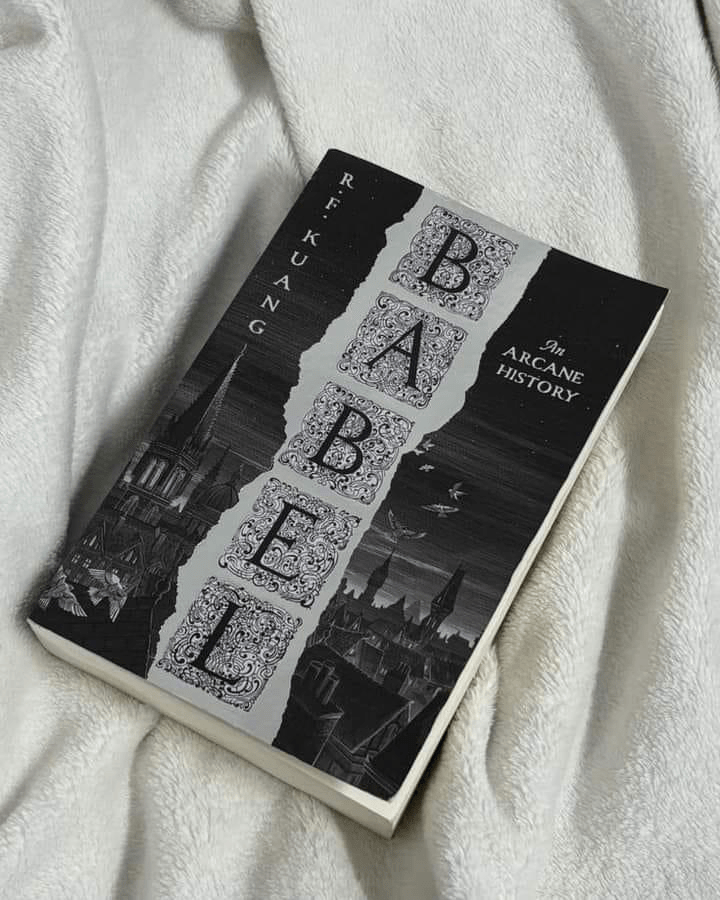
The Power of Language: In Babel, language is portrayed as both a tool for understanding and a weapon for control. The book illustrates how language shapes thought and culture and how mastery of it can lead to power, but also manipulation and oppression.
Colonialism and Exploitation: Set in 19th-century Oxford, Babel exposes the ways in which colonial powers exploit resources and people from other nations. This novel presents an allegory of colonialism, showing how knowledge and academia can be co-opted to serve imperial interests.
The Cost of Assimilation: Through the character of Robin, a Chinese student brought to England, the novel explores the personal cost of assimilation. Robin struggles with his identity, torn between loyalty to his heritage and the allure of acceptance in British society. The lesson here is about the dangers and compromises that often come with trying to belong in a dominant culture that suppresses others.
Violence as a Means of Resistance: The book delves into the necessity and morality of violence in the face of oppression. Robin and his peers confront the idea that change often requires force when peaceful means are ineffective, raising complex questions about justice, ethics, and revolution.
Academic Elitism and Gatekeeping: Babel critiques the exclusivity of academic institutions, portraying Oxford as a place that glorifies knowledge but restricts it to the privileged few. It highlights how academia can perpetuate inequalities and keep marginalized groups out, encouraging readers to question who gets access to knowledge and why.
The Burden of Knowledge: With their profound understanding of language, the characters find themselves bearing the weight of knowledge that demands action. This suggests that awareness of injustice brings a responsibility to address it, even when doing so risks personal safety and comfort.
Solidarity and Friendship in the Face of Adversity: The friendships in Babel emphasize the importance of solidarity, especially among those marginalized by society. The students’ bond becomes a source of strength, illustrating how collective support can empower individuals to challenge larger systems.
Babel is a compelling exploration of language, colonialism, and resistance, combining dark academia with fantasy elements to question the ethical responsibilities of knowledge, the cost of assimilation, and the complex paths toward justice. Through its richly woven narrative, it encourages readers to consider the moral imperatives of standing against oppression and the sacrifices that may come with it.
GET BOOK:https://amzn.to/4fgXBeE
Instant #1 New York Times Bestseller from the author of The Poppy War
“Absolutely phenomenal. One of the most brilliant, razor-sharp books I’ve had the pleasure of reading that isn’t just an alternative fantastical history, but an interrogative one; one that grabs colonial history and the Industrial Revolution, turns it over, and shakes it out.” — Shannon Chakraborty, bestselling author of The City of Brass
From award-winning author R. F. Kuang comes Babel, a thematic response to The Secret History and a tonal retort to Jonathan Strange & Mr. Norrell that grapples with student revolutions, colonial resistance, and the use of language and translation as the dominating tool of the British empire.
Traduttore, traditore: An act of translation is always an act of betrayal.
1828. Robin Swift, orphaned by cholera in Canton, is brought to London by the mysterious Professor Lovell. There, he trains for years in Latin, Ancient Greek, and Chinese, all in preparation for the day he’ll enroll in Oxford University’s prestigious Royal Institute of Translation—also known as Babel.
Babel is the world’s center for translation and, more importantly, magic. Silver working—the art of manifesting the meaning lost in translation using enchanted silver bars—has made the British unparalleled in power, as its knowledge serves the Empire’s quest for colonization.
For Robin, Oxford is a utopia dedicated to the pursuit of knowledge. But knowledge obeys power, and as a Chinese boy raised in Britain, Robin realizes serving Babel means betraying his motherland. As his studies progress, Robin finds himself caught between Babel and the shadowy Hermes Society, an organization dedicated to stopping imperial expansion. When Britain pursues an unjust war with China over silver and opium, Robin must decide…
Can powerful institutions be changed from within, or does revolution always require violence?
 Knock nock
Leave a comment