

– V.P. CHINTAN SECOND MEMORIAL LECTURE
delivered by IRFAN HABIB
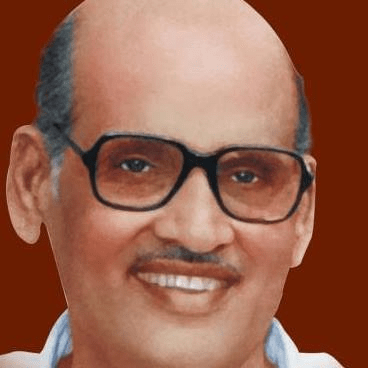
V.P. Chintan – VPC as he was known to thousands of workers, youth and students in Tamil Nadu – was a remarkable figure in the Indian revolutionary movement. Ever since he joined the Communist Party in 1939 when he was 21, his life had been an untiring and heroic struggle in the cause of our working people; a wonderfully inspiring half a century until his death in 1987 – of revolutionary struggle. A man profoundly interested in the development of the scientific ideology in India, education against Britain. Unfortunately, British Marxist historians like Dobb and Hobsbawn have either omitted a consideration of this aspect of colonial relationships or have only assigned it a marginal role in the origins and sustenance of capitalist expansion in Britain. This lapse has surely to be rectified if the real significance of colonialism in the formation of the capitalist economy is to be properly assessed.
In still another matter, there has been a seeming lag in Marxist appraisals of nineteenth century colonialism. Some of the blame may go to the extreme popularity of Lenin’s Imperialism, the Highest Stage of Capitalism which was taken to suggest that imperialism, as a vehicle of capitalists’ striving for territory and wealth abroad, came only with the development of finance capital and monopoly. Indeed, Lenin went so far as to say that :
When free competition in Great Britain was at its height, i.e., between 1840 and 1860, the leading British bourgeois politicians were opposed to its colonial policy and were of the opinion that the liberation of the colonies and their complete separation from Great Britain was inevitable and desirable.
I am sure Lenin would not have written these words had he known that Marx had regarded the anti-colonial professions of the British Free Traders of that very period with healthy scepticism. When India had been in the process of annexation, everyone had kept quiet; once the ‘natural limits’ had been reached, they had become loudest with their hypocritical peace cant’. But, then, ‘firstly, they had to get it (India) in order to subject it to including self-education – was a passion with him. Throughout his political life, educating workers, school boys and school girls and also college students politically and ideologically was a central concern with him. Amidst his extremely busy working day VPC found time, against all odds, to snatch time for reading, going deeper into things ideological, philosophical and theoretical and raising his own level of knowledge in a scientific sense. VPC took the right to criticism, including self-criticism seriously within the movement. He was a man of hard strength and unflinching loyalty to the cause of the working people, qualities which enabled him to stand up and face severe repression and high risks from the enemies of the revolutionary movement.
The annual V.P. Chintan Memorial Lecture instituted by the Indian School of Social Sciences is our small, continuing, tribute to this inspiring revolutionary leader. The first lecture in the series ‘Development of Scientific Ideology in India’ was delivered on July 18, 1987 by B.T. Ranadive, a veteran revolutionary, Politburo member of the Communist Party of India (Marxist) President of the Centre of Indian Trade Unions.
The present lecture, on ‘Problems of Marxist Historiography by Prof. Irfan Habib, is the second in this series. Prof. Irfan Habib, one of our most eminent historians today, teaches at the Aligarh Muslim University; he is also the Chairman of the Indian Council of Historical Research. Apart from innumerable scholarly articles in reputed journals. Prof. Habib also has to his credit a number of important books: His ‘Agrarian system of Mughal India is widely recognised as a classic in the field, his Atlas of Mughal India. is regarded as path breaking, monumental piece of work; he is the co-editor of the widely acclaimed Volume I of the Cambridge Economic History of India. A top-ranking academician, Prof. Habib is also well known for the active interest he has taken in the struggle for democratic causes and against communalism of all hues, in particular.
In this lecture Prof. Habib takes an incisive and searching look at a number of important issues concerned with Marxist Historiography. His canvas in the lecture is wide ranging: He has dealt with very fundamental issues relating to ‘Mind and Matter in History’, ‘Social Formations and class struggles’, ‘Capitalism and Colonialism’, ‘National Movement’ and ‘Historiography of Socialism’.
One perhaps cannot think of a better tribute to VPC-a man who was profoundly interested in the development of scientific ideology; a man for whom education was a passion; someone who took criticism and self criticism seriously; a man of unflinching loyalty to the cause of the working people and for whom Marxism Leninism was not a dogma, but a guide to action.
K. Nagaraj
On behalf of the
Indian School of Social Sciences, Madras.
 Knock nock
Leave a comment