

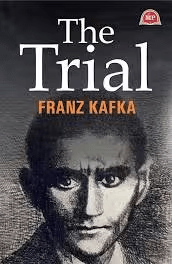
Franz Kafka was a man consumed by dualities—an artist trapped in a bureaucrat’s body, a son crushed beneath the weight of an overbearing father, a lover forever estranged from intimacy.
Born in Prague in 1883, Kafka lived at the crossroads of fading empires and emerging modernity, a world teetering between ancient traditions and the cold, impersonal machinery of industrialization.
By day, he toiled in an insurance office, navigating labyrinthine regulations, but by night, he poured his soul into writing—shaping the despair, alienation, and absurdity of his existence into haunting literary forms.
It was during one of his darkest periods, suffocating under the weight of his father’s disapproval and his own self-loathing, that Kafka wrote The Trial.
The novel, left unfinished at his death in 1924, is a bleak allegory of power, guilt, and humanity’s futile struggle against incomprehensible authority.
The story begins with an arrest. Josef K., an unremarkable man in an unnamed city, is detained one morning without explanation.
What follows is a nightmarish descent into a world of faceless judges, opaque accusations, and endless corridors of shifting rules.
K. learns nothing of his crime, only that he must defend himself in a system that offers no clarity, no justice, and no escape.
Kafka’s world mirrors the bureaucratic sprawl of early 20th-century Europe, where the individual was increasingly dwarfed by the machine of the state.
Written during the rise of totalitarianism and the slow erosion of personal freedoms, The Trial captured the growing fear that modern life was stripping humanity of its dignity and autonomy.
“It’s only because of their stupidity that they’re able to be so sure of themselves,” one character sneers, encapsulating the grim satire of Kafka’s vision.
In the novel’s harrowing climax, Josef K. is led to his execution, bewildered and defeated, and stabbed “like a dog.”
Kafka himself died at the age of 40, his genius unrecognized, but The Trial remains a timeless indictment of the dehumanizing forces that continue to shadow us—a work as unsettling and enigmatic as the man who created it.
Book: https://amzn.to/4hVcncp
 Knock nock
Leave a comment