

In the seven decades of the working of the Constitution, there has been a gradual drift towards the entrenching of a set of its characteristics, says the author in his new book ‘The Indian Constitution: A Conversation with Power’
Published – January 24, 2025 09:02 am ISTREAD LATERPRINT

A protest in Srinagar against the removal of Article 370 of Jammu and Kashmir. | Photo Credit: Nissar Ahmad
The Constitution of India, which came into effect on January 26, 1950, is “a terrain of contestation between different visions of power and its history has been marked by a centralising drift”. A new book argues that the seeds of this drift — concentration of power with the Union Executive — are contained within the text and design of the Constitution itself. Over the years, the courts (in particular, the Supreme Court) have aided and abetted this through a set of ‘inflection-point’ judgments. An excerpt from The Indian Constitution: A Conversation with Power.
In the seven decades of the working of the Constitution, there has been a gradual drift towards the entrenching of its first set of characteristics: unitary, concentrated, representative, electoral, homogenous, and Statist power, at the cost of federal, distributed, direct, guarantor, plural, and individual power. This shift that I call, in short, the ‘centralising drift’, has come about in different ways.

A Constitution-themed cartoon exhibition, at the Ernakulam District Court premises. | Photo Credit: R.K. Nithin
Constraining factors
First, there is the constitutional text itself. As Nirvikar Singh points out in the context of federalism, the Constitution is chock-full of ‘escape clauses’ that skew the terrain of contestation at the outset. Whether it is overriding central powers in Centre-state fiscal relations, the use of ‘notwithstanding’ clauses scattered throughout the Constitution, or wide-ranging gubernatorial power in the Schedule VI Areas, these escape clauses seemingly constrain and counteract the Constitution’s own impulses towards the distribution and diversification of power. Such ‘escape clauses’ are not limited to federalism but pervade the Constitution. Whether it is presidential power to appoint the officers of fourth-branch institutions (including, even, an interim power to appoint the members of the Election Commission!), or the provisions on administrative detention, the constitutional text, as well as its silences, indicate that this is an executive-trusting document.

Participants hold the tricolour at a rally in Srinagar, marking the third anniversary of the abrogation of Article 35A and 370. | Photo Credit: PTI
It is important to note that ‘escape clauses’ are not self-interpreting. Their scope and limitations are subject to judicial adjudication. Consequently, much like the framers of the Constitution were faced with choices about how to organise power — the judiciary (specifically, the Supreme Court) has been faced with a set of choices about how to interpret the Constitution’s scheme of organising power. When faced with these choices, the Supreme Court has often chosen to further facilitate or accelerate the Constitution’s centralising drift. I call these judgments constitutional inflection points: they are events that definitively entrench the centralising drift, while significantly weakening the decentralising vision of power that is also present within the constitutional text.
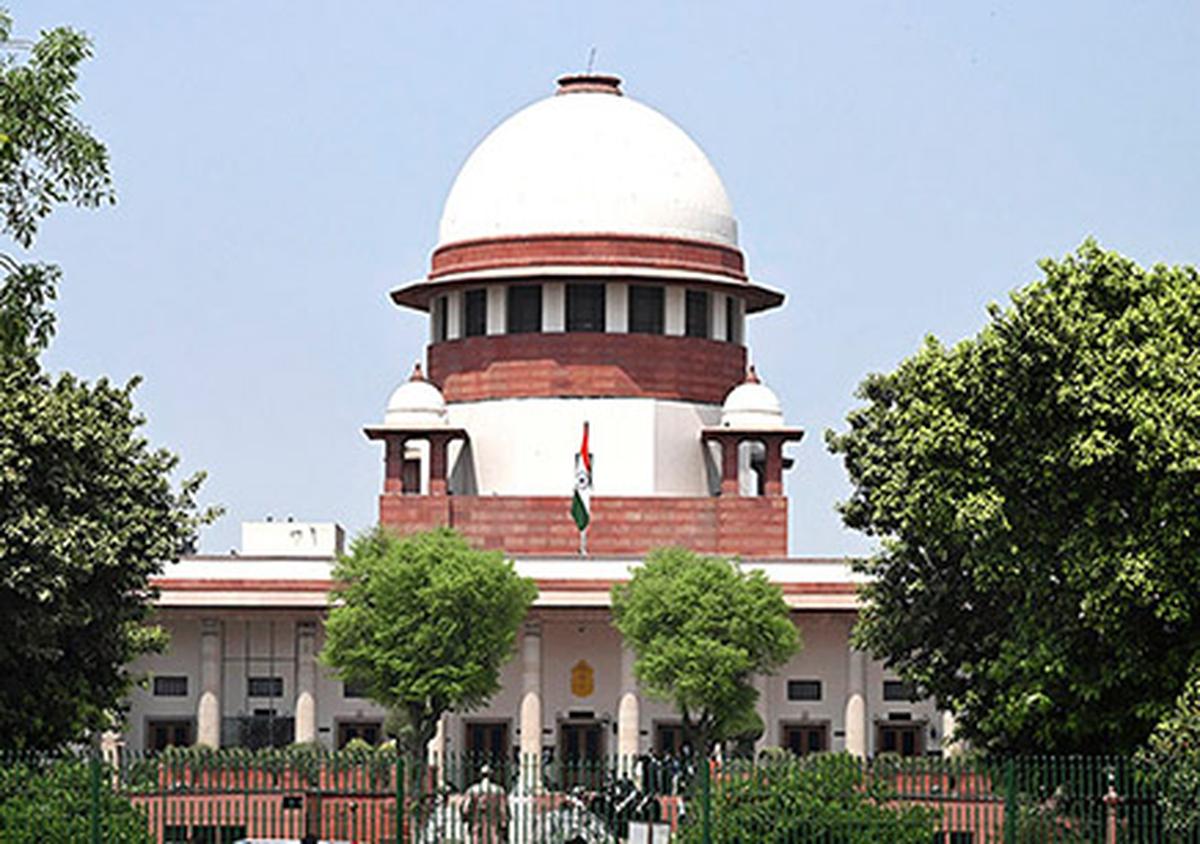
A view of the Supreme Court of India in New Delhi. | Photo Credit: Sushil Kumar Verma
An early Supreme Court judgment that in my view constitutes an ‘inflection point’ in the evolution of Indian federalism is the State of West Bengal vs Union of India. In this case, the Supreme Court endorsed the centralising reading of the Constitution. This reading proceeded upon a set of contested premises, but has been crystallised and entrenched by the Court’s jurisprudence in the years following the judgment, contributing to federalism being one of the sites where the ‘centralising drift’ is most pronounced.
This ‘centralising drift’ infects multiple parts of the Constitution; it was at the heart of the series of controversial constitutional measures that were utilised to ‘amend’ Article 370 of the Indian Constitution in 2019, remove the autonomy of the state of Jammu and Kashmir, and downgrade its status to a Union Territory. In my analysis of the ‘Article 370 Case’, an alternative understanding of Indian federalism, advanced by Justice Subba Rao’s dissenting opinion in State of West Bengal vs Union of India, could have been applied to a concrete constitutional dispute, with very different consequences.

A deserted view of the Dal Lake, Srinagar. | Photo Credit: Getty Images/istock
These judgments decided not just the issues before them, but also contributed towards shaping a ‘constitutional common sense’ in favour of the centralising drift. The very fact that the constitutional text is a terrain of contestation, and that the cases under study presented the judiciary with a choice, indicates that the centralising drift is not inevitable.
Power and rights
As Roberto Gargarella has correctly pointed out, there is no necessary conceptual connection between centralisation of power and (for example) the protection of rights. In theory, a powerful central executive may indeed be an effective guarantor of rights. In fact, in the Indian context, as Madhav Khosla notes, there was a clear line of constitutional thinking that sought to strengthen the powers of the central executive in order to free individuals from local patterns and institutions of dominance. At the same time, the lessons of history demonstrate that a greater and greater concentration of power in a single entity or office is invariably a threat to the meaningful exercise of individual freedom, or of social transformation. This is especially true when we look at how the centralising drifts along various axes of power reinforce and entrench each other, creating a structure of power that becomes, in essence, unaccountable.
A caveat: as is true for all the axes of power, the terrain of the Constitution is not exhaustive of the question of power. There is the domain of politics, about which the Constitution often has very little, if anything, to say. In the case of federalism, in particular, the relationship between the Centre and the States has depended at least as much on the prevailing political balance of power at any given time, rather than the constitutional text and constitutional interpretation.
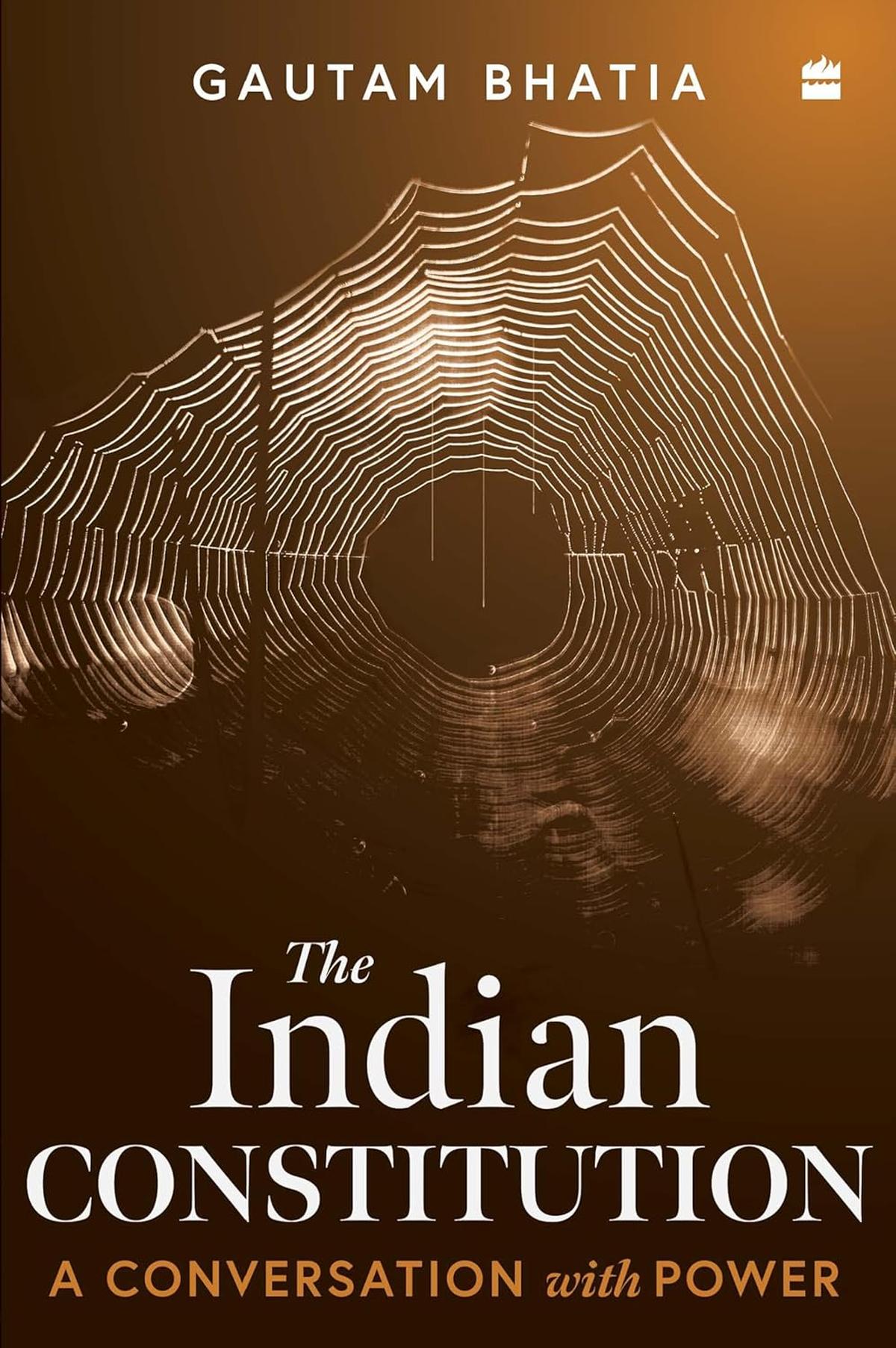
The Indian Constitution: A Conversation with Power; Gautam Bhatia, HarperCollins, ₹599.
Excerpted with permission from HarperCollins.
Published – January 24, 2025 09:02 am IST
The video of the launch discussion of The Indian Constitution: A Conversation with Power is now on YouTube. Watch it here —
In conversation with the Supreme Court Observer about The Indian Constitution: A Conversation with Power —
 Knock nock
Leave a comment