


“Our strategy should be not only to
confront empire, but to lay siege to it. To deprive it of oxygen. To shame it. To mock it. With our art, our music, our literature, our stubbornness, our joy, our brilliance, our sheer relentlessness – and our ability to tell our own stories. Stories that are different from the ones we’re being brainwashed to believe. The corporate revolution will collapse if we refuse to buy what they are selling – their ideas, their version of history, their wars, their weapons, their notion of inevitability.”
~Arundhati Roy
THE ENABLING ACT
The Enabling Act allowed the Reich government to issue laws without the consent of Germany’s parliament, laying the foundation for the complete Nazification of German society. The law was passed on March 23, 1933, and published the following day. Its full name was the “Law to Remedy the Distress of the People and the Reich.”
KEY FACTS
- 1Adolf Hitler and the Nazi Party used intimidation and persecution to ensure the passage of the law. They prevented all 81 Communists and 26 of the 120 Social Democrats from taking their seats, detaining them in Nazi-controlled camps.
- 2German judges did not challenge the law. They viewed Hitler’s government as legitimate and continued to regard themselves as state servants who owed him their allegiance and support.
- 3The Enabling Act became the cornerstone of Hitler’s dictatorship.
BackgroundThe Law to Remedy the Distress of the People and the Reich is also known as the Enabling Act. Passed on March 23, 1933, and proclaimed the next day, it became the cornerstone of Adolf Hitler’s dictatorship. The act allowed him to enact laws, including ones that violated the Weimar Constitution, without approval of either parliament or Reich President von Hindenburg.PHOTOSS troops enter the Kroll Opera House (Photo)On the day of the vote on the so-called Enabling Act, the Nazi leadership sent SS troops into the makeshift Reichstag building, formerly the Kroll Opera, to intimidate other political parties. Berlin, Germany, March 23, 1933.The Enabling Act allowed the Reich government to issue laws without the consent of Germany’s parliament, laying the foundation for the complete Nazification of German society. The full name of the law was the “Law to Remedy the Distress of the People and the Reich.”Credits:
- Nederlands Instituut voor Oorlogsdocumentatie
In addition to the procedure prescribed by the Constitution, laws of the Reich may also be enacted by the Reich Government. This includes laws as referred to by Articles 85, Sentence 2, and Article 87 of the Constitution.Article 2
Laws enacted by the Reich Government may deviate from the Constitution as long as they do not affect the institutions of the Reichstag and the Reichsrat. The rights of the President remain undisturbed.Article 3
Laws enacted by the Reich Government shall be issued by the Chancellor and announced in the Reichsgesetzblatt. They shall take effect on the day following the announcement, unless they prescribe a different date. Articles 68 to 77 of the Constitution do not apply to laws enacted by the Reich Government.Article 4
Reich treaties with foreign states that affect matters of Reich legislation shall not require the approval of the bodies concerned with legislation. The Reich Government shall issue the regulations required for the execution of such treaties.Article 5
This law takes effect with the day of its proclamation. It loses force on April 1, 1937, or if the present Reich Government is replaced by another.Berlin, March 24, 1933The Reich President von Hindenburg
Reich Chancellor Adolf Hitler
Reich Minister of the Interior Frick
Reich Minister of Foreign Affairs Freiherr von Neurath
Reich Minister of Finance Graf Schwerin von KrosigkAuthor(s): United States Holocaust Memorial Museum, Washington, DCDISCUSSION QUESTIONItems 1through 1of 2SEE ALSO
Law, Justice, and the Holocaust
With a series of key decrees, legislative acts, and case law, the Nazi leadership gradually moved Germany from a democracy to a dictatorship. The role of the legal profession in general and the actions of judges in particular were critical.
Skip complementary section (continue reading)
Tags
- LanguageEnglish
Background
Between 1933 and 1945, Germany’s government, led by Adolf Hitler and the National Socialist (Nazi) party, carried out a deliberate, calculated attack on European Jewry.
Basing their actions on racist beliefs that Germans were a superior people and on an antisemitic ideology, and using World War II as a primary means to achieve their goals, the Nazis targeted Jews as the main enemy, killing six million Jewish men, women, and children by the time the war ended in 1945. This act of genocide is now known as the Holocaust. As part of their wide-reaching efforts to remove from German territory all those whom they considered racially, biologically, or socially unfit, the Nazis targeted many other groups as well, including Germans with mental and physical disabilities, Roma (also known as Gypsies), Soviet prisoners of war, Poles, gay men, and Jehovah’s Witnesses. In the course of this state-sponsored tyranny, the Nazis left countless lives shattered and millions dead.
The most significant perpetrators of these crimes are well known: Hitler, Adolf Eichmann, Heinrich Himmler, and Reinhard Heydrich, as well as the SS, among others. But less known are the contributions of “ordinary” people—doctors, lawyers, teachers, civil servants, officers, and other professionals throughout German society—whose individual actions, when taken together, resulted in dire consequences. Put simply, the Holocaust could not have happened without them.
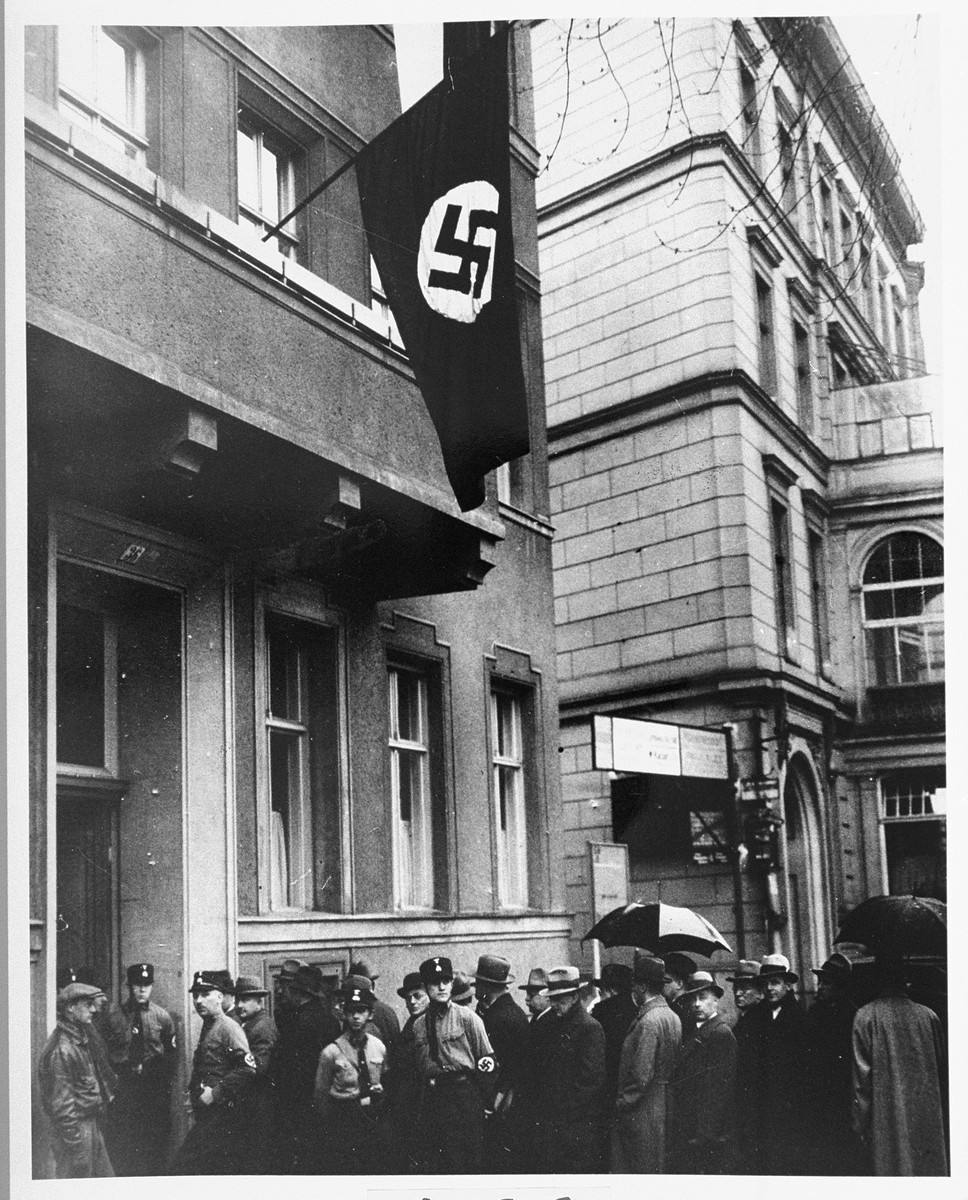
The role of those in the legal profession in general and the actions of judges in particular were critical. Conforming to new laws, decrees, and norms, lawyers helped to oust Jewish colleagues from the courts, professional associations, and law firms. They were motivated by prejudice against Jews and new opportunities that opened up for their career and professional advancement.
Many senior jurists in Nazi Germany had been on the bench throughout the years of the Weimar Republic (1918–1933) and, before that, during the Imperial regime of Kaiser Wilhelm II (1888–1918). Coming from a longstanding authoritarian, conservative, and nationalist tradition, judges believed deeply in reinforcing government authority, ensuring public respect for the law, and guaranteeing that state actions had a legal basis (Rechtsstaat). At the same time, they valued judicial independence in the form of protection from arbitrary or punitive removal from the bench and freedom from dictates regarding decision making. Above all, they rendered judgment based on such fundamental Western legal principles as the equality of all citizens, the right of an accused person to a fair trial, and the concept that there could be no crime or penalty without prior law.
In spite of these values, political democracy presented serious challenges to the judiciary. Many judges rejected the legitimacy of the democratic Weimar Republic, since it had come about through revolution, which they considered, by definition, a violation of the law. This attitude had long-term consequences for the republic. Judges routinely imposed harsh verdicts on left-wing defendants, whom they regarded with suspicion as revolutionary agents of various foreign powers, while acting leniently toward right-wing defendants, whose nationalist sentiments typically echoed their own. As a result, in the mid-1920s, supporters of the republic proclaimed a “crisis of trust,” demanding the temporary suspension of judicial independence and the removal of reactionary and antidemocratic judges from the bench. Judges regarded these developments with alarm, rejecting proposals for reform as a perversion of justice. Many were convinced that the criticism leveled upon them, which had come from the political left and from parliament, undermined the authority of the state.
When Hitler came to power, he promised to restore judges’ authority and shield them from criticism even as he curtailed their independence and instituted reeducation programs designed to indoctrinate jurists in the ideological goals of the party. The Nazi leadership used a series of legal mechanisms—which, in contrast to the revolutionary overthrow of power in 1918, judges tended to consider legitimate—to gradually assume and consolidate Hitler’s power. Then, step by step, and always under the guise of safeguarding the state, the Nazi leadership imposed legislation that fulfilled its ideological goals of rearmament, military expansion, and racial purification. Throughout the 1930s and especially after the Nazi regime began World War II in 1939, the judiciary typically rendered verdicts according to the principles of Nazi ideology and the wishes of the Führer.
In reality, judges were among those inside Germany who might have effectively challenged Hitler’s authority, the legitimacy of the Nazi regime, and the hundreds of laws that restricted political freedoms, civil rights, and guarantees of property and security. And yet the overwhelming majority did not. Instead, over the 12 years of Nazi rule, during which time judges heard countless cases, most not only upheld the law but interpreted it in broad and far-reaching ways that facilitated, rather than hindered, the Nazis’ ability to carry out their agenda.
How was this possible? Why did it happen? It seems clear that the Nazi period presented individual judges—as it did so many others—with intense personal and ethical dilemmas. And while it is all too easy to condemn them in retrospect, oversimplifying their circumstances and declaring moral absolutes from a safe historical distance, it is more difficult and, ultimately, more useful to examine critically and objectively the pressures they faced. Moreover, it is neither the outright heroes nor the obvious villains whose stories are the most deeply challenging. Rather, it is through studying the actions of the ambivalent, conflicted, and ordinary individuals that the realities of ethical struggle become accessible.
The links below present a series of key decrees, legislative acts, and case law that show the gradual process by which the Nazi leadership, with support or acquiescence from the majority of German people, including judges, moved the nation from a democracy to a dictatorship. They show the series of legal steps that left millions vulnerable to the racist and antisemitic ideology of the Nazi state. These legal instruments reveal the positions that judges took and the questions that they faced during the Nazi regime; in so doing, they provide a framework for thoughtful and meaningful debate on the role of the judiciary in society and its responsibilities today.
From Democracy to Dictatorship
The following documents relate to the transition from democracy to dictatorship in Germany.
- Decree of the Reich President for the Protection of the People and the State (Reichstag Fire Decree), February 28, 1933
- Arrests without Warrant or Judicial Review: Preventive Police Action in Nazi Germany, as of February 28, 1933
- Law to Remedy the Distress of the People and the Reich (The Enabling Act), March 24, 1933
- Law for the Imposition and Implementation of the Death Penalty (Lex van der Lubbe), March 29, 1933
- Law against the Founding of New Parties, July 14, 1933
- Oaths of Loyalty for All State Officials, August 20, 1934
Implementing the Nazi Agenda
The following selected documents show key legal mechanisms used to implement the Nazi agenda
- Nuremberg Race Laws (Reich Citizenship Law and Law for the Protection of German Blood and German Honor), September 15, 1935
- Supreme Court Decision on the Nuremberg Race Laws, December 9, 1936
- Decree against Public Enemies (Folk Pest Law), September 5, 1939
- Katzenberger Case
- First Letter to All Judges (Guidelines for Sentencing), October 1, 1942
- Jurists’ Trial Verdict (US v. Josef Alstötter, et al.), December 4, 1947
Last Edited: Aug 22, 2023
Author(s): United States Holocaust Memorial Museum, Washington, DC
Discussion Question
Items 1 through 1 of 2
See Also
- Glossary of Terms and Individuals in the Nazi Judicial SystemArticle
- Law and Justice in the Third ReichArticle
- Law, Justice, and the HolocaustSeries
- The Role of German Professionals and Civil LeadersSeries
Series: Law, Justice, and the HolocaustSeries: Law, Justice, and the Holocaust
Items 1 through 5 of 15
- 1Law, Justice, and the Holocaust•••
- 2Law and Justice in the Third Reich•••
- 3Reichstag Fire Decree•••
- 4Arrests without Warrant or Judicial Review•••
- 5The Enabling Act•••
- 6Law for the Imposition and Implementation of the Death Penalty•••
- 7Law against the Founding of New Parties•••
- 8Oaths of Loyalty for All State Officials•••
- 9Nuremberg Race Laws•••
- 10Supreme Court Decision on the Nuremberg Race Laws•••
- 11Decree against Public Enemies•••
- 12First Letter to All Judges•••
- 13Subsequent Nuremberg Proceedings, Case #3: The Justice Case•••
- 14Background: Jurists’ Trial Verdict•••
- 15Glossary of Terms and Individuals in the Nazi Judicial System
Switch SeriesLaw, Justice, and the HolocaustThe Role of German Professionals and Civil Leaders
Critical Thinking Questions
- How have judicial and legal professional codes of conduct changed after the Holocaust?
- What pressures and motivations may have affected members of the legal profession as the Nazi government consolidated its power in the 1930s?
- Besides members of the judiciary, what other professionals were charged with crimes in the wake of the Holocaust?
 Knock nock
Leave a comment