
By Nietzsche, Steinbeck, Pope and Others

Mar 22, 2025
With the world doing its best to wear us down at the moment, I’ve been having a rummage around the bookshelves for a little tonic. The resulting anthology this week brings together voices from across time and disciplines, each grappling with what it means to hope.
There’s sprouting buds on the trees, after all.Subscribe
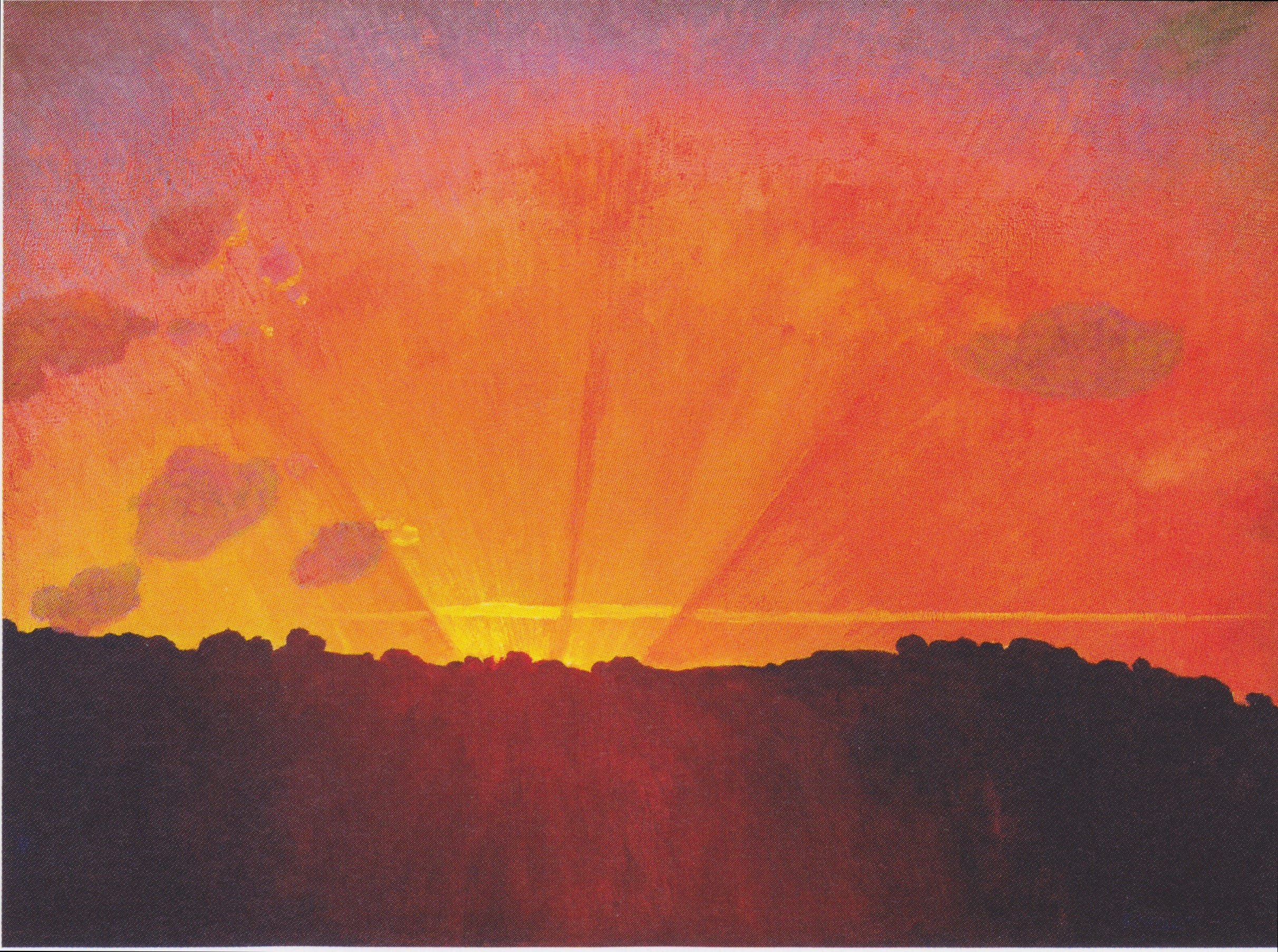
Sunrise, Felix Vallotton, 1900
Hope, for writers like Shakespeare and Pope, is more than just wishful thinking. It can be a source of strength and resilience.
‘Cease to lament for that thou canst not help, / And study help for that which thou lament’st. / Time is the nurse and breeder of all good. / Here, if thou stay, thou canst not see thy love; / Besides, thy staying will abridge thy life. / Hope is a lover’s staff; walk hence with that / And manage it against despairing thoughts.’
William Shakespeare, Two Gentlemen of Verona, 1598
‘I have a longing for life, and I go on living in spite of logic. Though I may not believe in the order of the universe, yet I love the sticky little leaves as they open in spring. I love the blue sky, I love some people, whom one loves you know sometimes without knowing why. I love some great deeds done by men, though I’ve long ceased perhaps to have faith in them, yet from old habit one’s heart prizes them.’
Fyodor Dostoevsky, The Brothers Karamazov, 1880
“Hope” is the thing with feathers – / That perches in the soul – / And sings the tune without the words – / And never stops – at all –
And sweetest – in the Gale – is heard – / And sore must be the storm – / That could abash the little Bird / That kept so many warm –
I’ve heard it in the chillest land – / And on the strangest Sea – / Yet – never – in Extremity, / It asked a crumb – of me.’
Emily Dickinson, Poem 254, 1891
‘Hope humbly then; with trembling pinions so Wait the great teacher death, and God adore. What future bliss, he gives not thee to know, But gives that hope to be thy blessing now.
Hope springs eternal in the human breast: Man never is, but always to be blest’
Alexander Pope, An Essay on Man, 1734
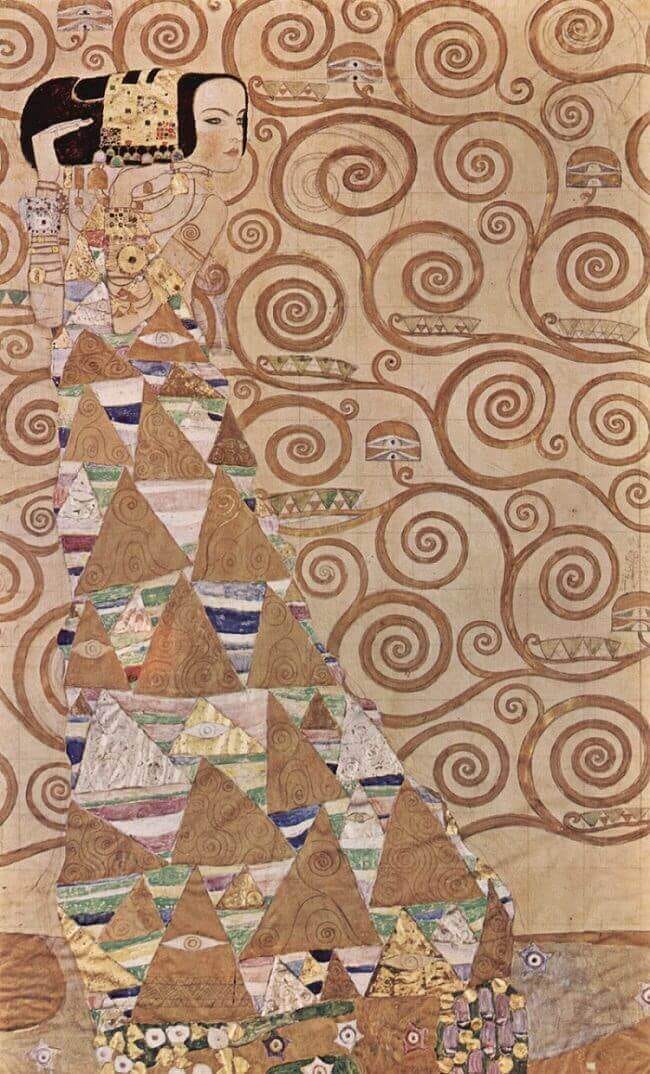
Expectation, Gustav Klimt, 1905
‘Oceanic dawn / at the center / of my life, / waves like grapes, / the sky’s solitude, / you fill me / and flood / the complete sea, / the undiminished sky, / tempo / and space, / sea foam’s white / battalions, / the orange earth, / the sun’s / fiery waist / in agony, / so many / gifts and talents, / birds soaring into their dreams, / and the sea, the sea, / suspended / aroma, / chorus of rich, resonant salt, / and meanwhile, / we men, / touch the water, / struggling, / and hoping, / we touch the sea, / hoping.
And the waves tell the firm coast: / ‘Everything will be fulfilled.’’
Pablo Neruda, Ode to Hope, c1968
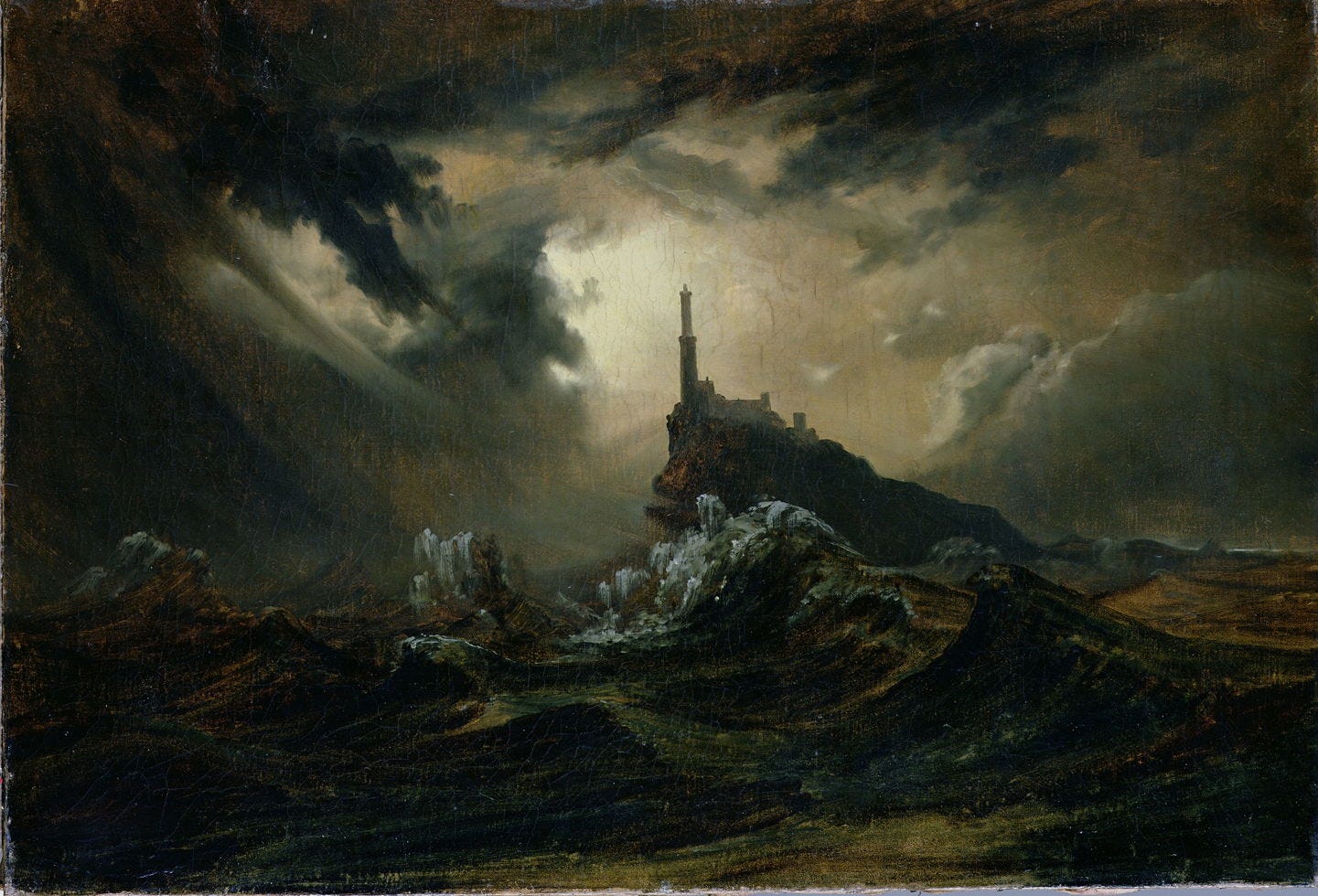
Stormy Sea with Lighthouse, Carl Blechen, c 1826
But hope isn’t just something we turn to in tough times—it’s woven into who we are, a fundamental part of being human.
As the Latin proverb goes, dum spiro, spero: ‘while I breathe, I hope’
‘Hope is both the earliest and the most indispensable virtue inherent in the state of being alive. If life is to be sustained hope must remain, even where confidence is wounded, trust impaired.’
Erik Erikson, Childhood and Society, 1950
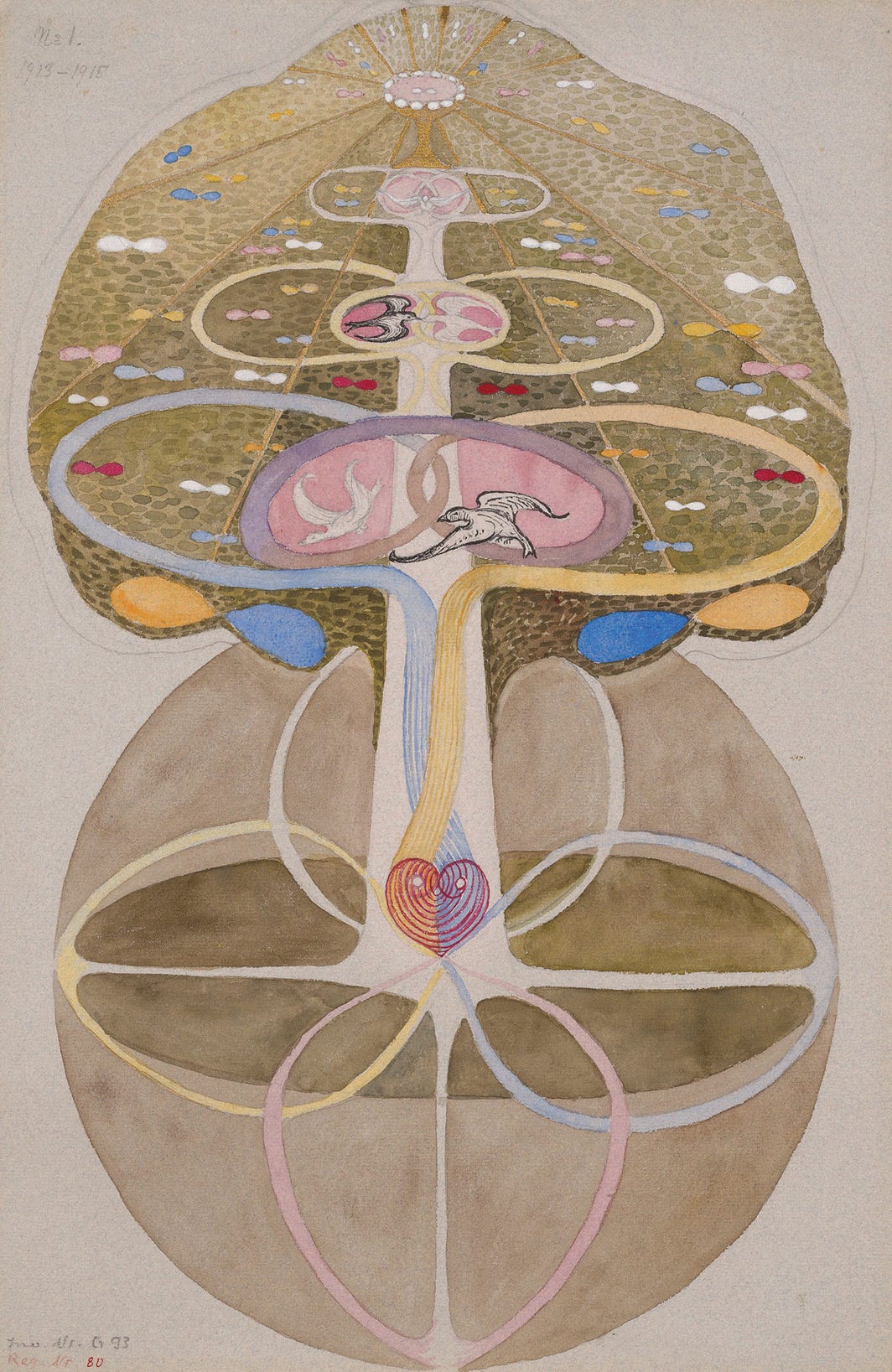
The Seed of Life, Hilma af Klint, c1914
‘Hope is a diagnostic human trait, and this simple cortex symptom seems to be a prime factor in our inspection of our universe. For hope implies a change from a present bad condition to a future better one. The slave hopes for freedom, the weary man for rest, the hungry for food. And the feeders of hope, economic and religious, have from these simple strivings of dissatisfaction managed to create a world picture which is very hard to escape. Man* grows toward perfection; animals grow toward man; bad grows toward good; and down toward up, until our little mechanism, hope, achieved in ourselves probably to cushion the shock of thought, manages to warp our whole world. Probably when our species developed the trick of memory and with it the counterbalancing projection called “the future,” this shock-absorber, hope, had to be included in the series, else the species would have destroyed itself in despair. For if ever any man were deeply and unconsciously sure that his future would be no better than his past, he might deeply wish to cease to live… In saying that hope cushions the shock of experience, that one trait balances the directionalism of another, a teleology is implied, unless one know or feel or think that we are here, and that without this balance, hope, our species in its blind mutation might have joined many, many others in extinction.’
John Steinbeck, The Log from the Sea of Cortez, 1951
‘Either we have hope within us or we don’t; it is a dimension of the soul; it’s not essentially dependent on some particular observation of the world or estimate of the situation. Hope is not prognostication. It is an orientation of the spirit, an orientation of the heart; it transcends the world that is immediately experienced, and is anchored somewhere beyond its horizons.’
Václav Havel, Disturbing the Peace, 1986
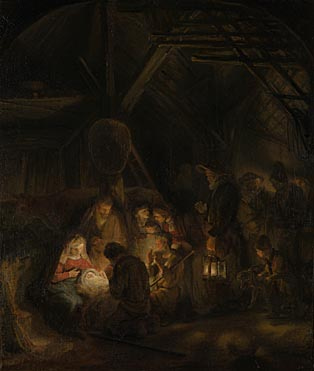
The Adoration of the Shepherds, Rembrandt, 1654
Hope may be a natural part of us, but it’s not just something we feel—it’s something we do. It’s what pushes people to take a stand, to reach out, and to work toward something better. Hope is a call to action.
‘Hope locates itself in the premises that we don’t know what will happen and that in the spaciousness of uncertainty is room to act. When you recognize uncertainty, you recognize that you may be able to influence the outcomes — you alone or you in concert with a few dozen or several million others. Hope is an embrace of the unknown and the unknowable, an alternative to the certainty of both optimists and pessimists. Optimists think it will all be fine without our involvement; pessimists take the opposite position; both excuse themselves from acting. It’s the belief that what we do matters even though how and when it may matter, who and what it may impact, are not things we can know beforehand. We may not, in fact, know them afterward either, but they matter all the same, and history is full of people whose influence was most powerful after they were gone’
Rebecca Solnit, Hope in the Dark: Untold Histories, Wild Possibilities, 2004
‘To be hopeful in bad times is not just foolishly romantic. It is based on the fact that human history is a history not only of cruelty, but also of compassion, sacrifice, courage, kindness.
What we choose to emphasize in this complex history will determine our lives. If we see only the worst, it destroys our capacity to do something. If we remember those times and places—and there are so many—where people have behaved magnificently, this gives us the energy to act, and at least the possibility of sending this spinning top of a world in a different direction.
And if we do act, in however small a way, we don’t have to wait for some grand utopian future. The future is an infinite succession of presents, and to live now as we think human beings should live, in defiance of all that is bad around us, is itself a marvelous victory.’
Howard Zinn, The Optimism of Uncertainty, 2004
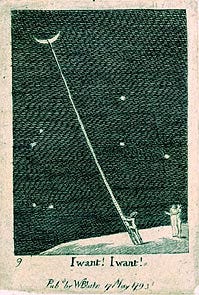
I Want, I Want, William Blake, 1793
But what happens when hope fades entirely? When there is no belief in change, no vision of a better future? The absence of hope, in the hands of writers from Dante to Bloch, is the very nature of despair. It’s even etched above the gates of hell.
‘Through me the way into the suffering city,
Through me the way to the eternal pain,
Through me the way that runs among the lost,
Justice urged on my high artificer,
My maker was divine authority,
The highest wisdom, and the primal love,
Before me nothing but eternal things were made,
And I endure eternally,
Abandon every hope, who enter here’
Dante Alighieri, The Divine Comedy, c1321
‘The most tragic form of loss isn’t the loss of security; it’s the loss of the capacity to imagine that things could be different.’
Ernst Bloch, The Principle of Hope, 1986
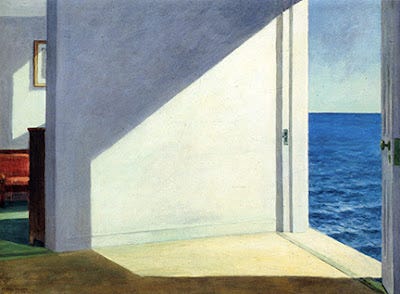
Rooms by the Sea, Edward Hopper, 1951
‘It is necessary to hope though hope should always be deluded; for hope itself is happiness, and its frustrations, however frequent, are yet less dreadful than its extinction.’
Samuel Johnson, Idler, No. 58. 1758-1760
Yet even when hope remains, it is not always a blessing. It can sustain people through hardship, but it can also bind them to illusions, keeping them waiting for a future that never arrives. Nietzsche takes this idea of hope as something binding people to suffering to its sharpest edge
‘Strong hope is a much greater stimulant of life than any single realized joy could be. Sufferers must be sustained by a hope which no actuality can contradict and which cannot ever be realized: the hope of another world. (Precisely on account of this power that hope has of making the unhappy linger on, the Greeks regarded it as the evil of evils, as the most mischievous evil: it remained behind in Pandora’s box)’
Friedrich Nietzsche, The Antichrist, 1895
And yet, despite all its complexities, hope remains an undeniable force in human life. Sometimes, it doesn’t take the form of grand ideals or unreachable dreams but instead exists in quiet, everyday persistence. Benjamin Disraeli captures this simple, unwavering optimism in just three words:
‘Something will turn up.’
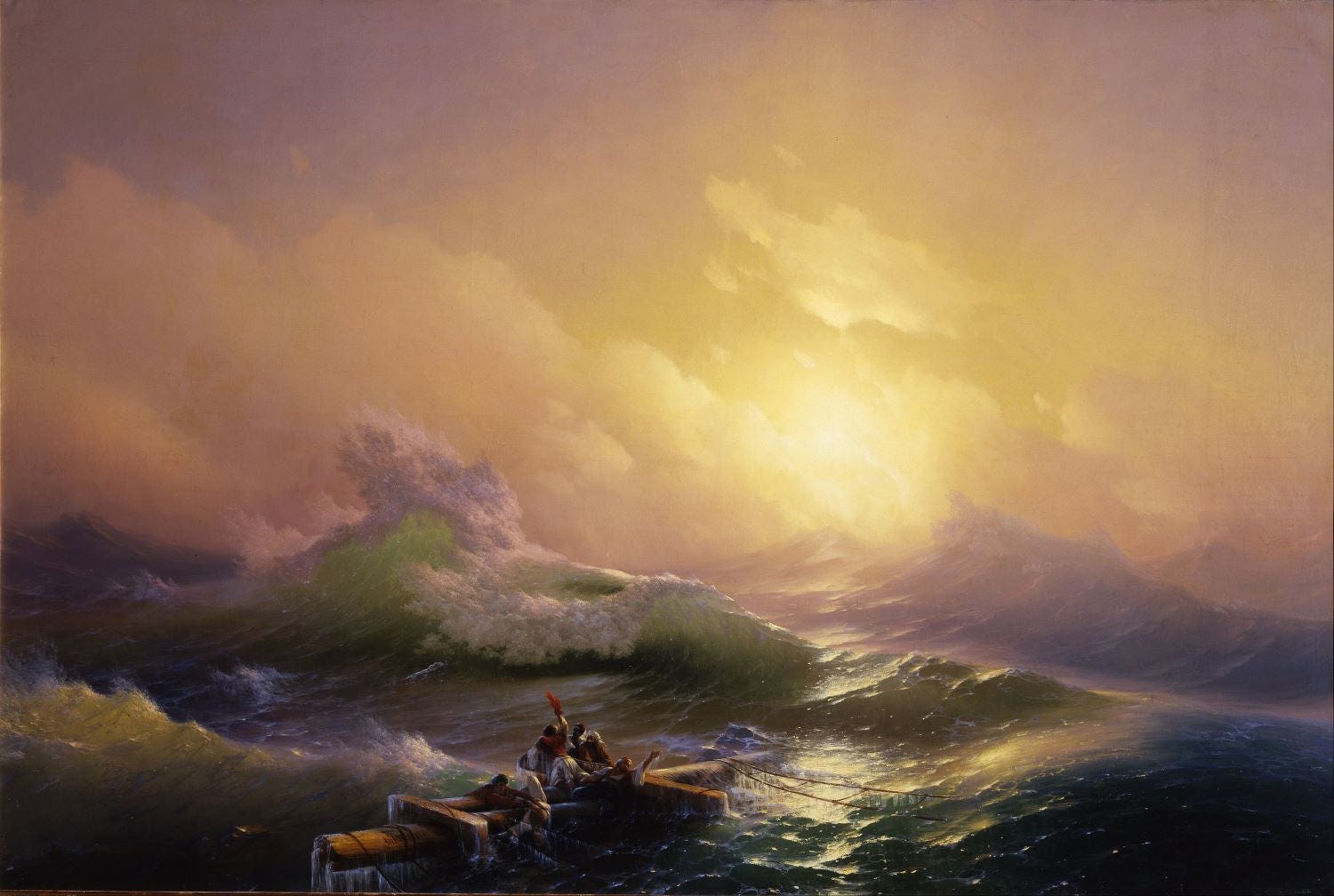
The Ninth Wave, Ivan Aivazovsky, 1850
Thanks for reading The Humanities Library ! Subscribe for free to receive new posts and support my work.
 Knock nock
Leave a comment