

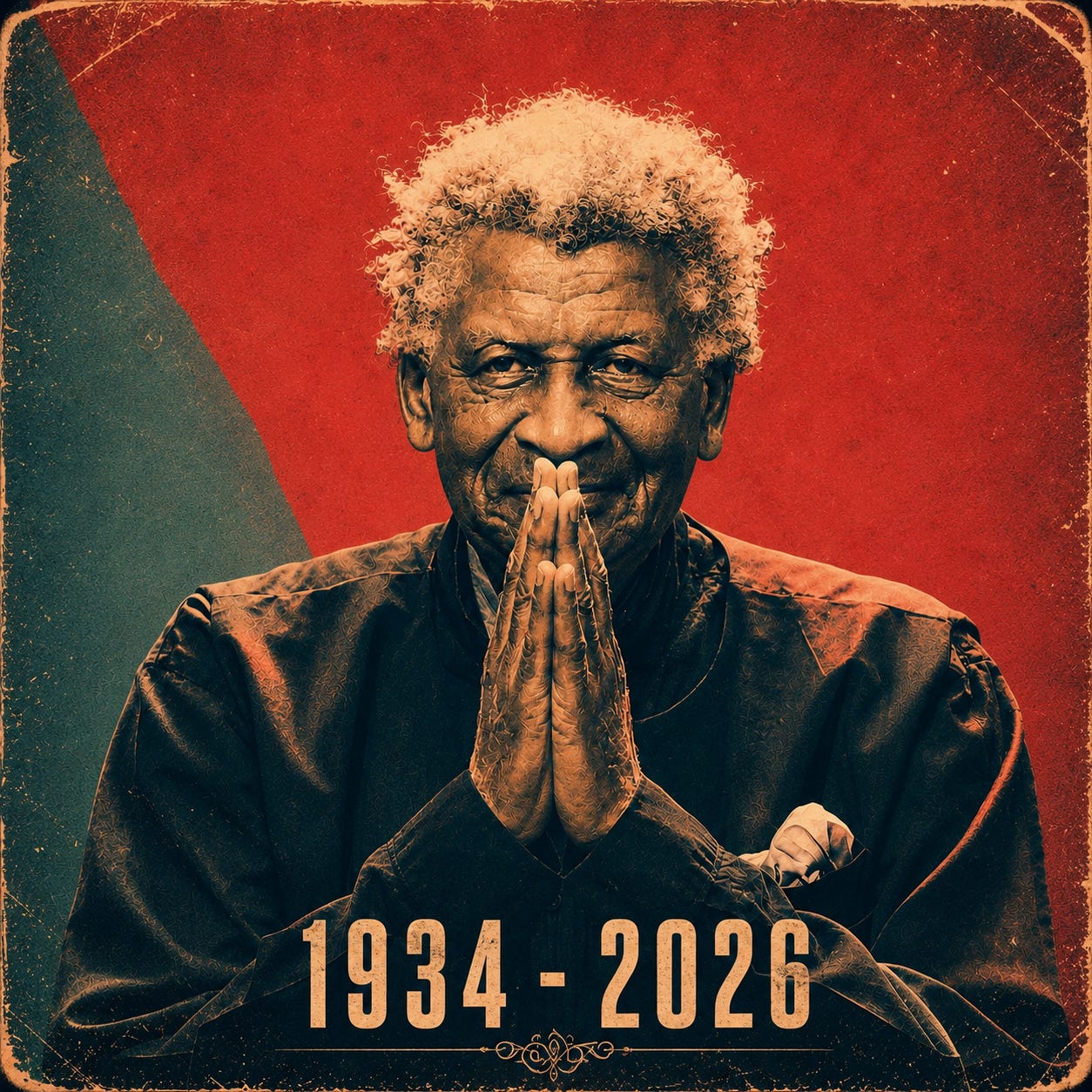
1934-2026
Jun 16, 2026
Abdullah Ibrahim, the South African pianist and composer whose music became both a living testimony and an instrument of resistance during apartheid, died Monday in Germany after a short illness. He was 91. His death closes one of the most remarkable chapters in modern jazz: a career that stretched across eight decades, bridged continents, and transformed the sounds of Cape Town into a global musical language.
Abdullah Ibrahim’s piano style combined hymn-like simplicity with a deeply embedded sense of rhythm rooted in South African traditions. He did not overwhelm audiences with velocity. His music was often categorized as beautiful but simple. Underneath that perceived simplicity lay one of the most sophisticated artistic minds of the twentieth century.
Born Adolph Johannes Brand in Cape Town on October 9, 1934, Ibrahim grew up in District Six, one of South Africa’s most culturally vibrant and racially mixed neighborhoods before apartheid-era removals shattered the community. His earliest influences came from church hymns, neighborhood dance bands, Muslim devotional traditions, brass bands, township piano styles, and the American jazz records filtering into the country from abroad. Those seemingly disparate influences would remain embedded in his music for the rest of his life.
By the 1950s, performing under the name Dollar Brand, he had emerged as one of South Africa’s most formidable young musicians. Deeply influenced by bebop but unwilling to merely imitate American models, he sought to create a distinctly South African modernism. In 1959, he co-founded the Jazz Epistles alongside future stars including Hugh Masekela, helping create one of the first modern Black South African jazz ensembles to document the country’s emerging postwar jazz identity. Their recordings demonstrated that sophisticated modern jazz could speak in a South African accent without sacrificing artistic ambition.
The timing was not ideal. Following the 1960 Sharpeville Massacre and the government’s escalating repression of Black political life, opportunities for Black musicians narrowed considerably. The Jazz Epistles disbanded. Ibrahim left South Africa in 1962 and entered a long exile that would shape both his life and his music.
Abdullah Ibrahim’s international career began through a combination of chance and persistence in Zurich. In 1963, while he was leading a trio during a long engagement at the Club Africana, his future wife, singer Sathima Bea Benjamin, urged Duke Ellington to come hear him after a concert. Ellington agreed, listened quietly from the audience, and was immediately impressed by the group’s sound. He arranged a recording session in Paris, which was later issued as Duke Ellington Presents the Dollar Brand Trio. That endorsement carried Ibrahim’s distinctly South African style to global audiences, giving his music a level of visibility that seemed impossible just a few years earlier.
Despite the notoriety and international acclaim, Ibrahim’s greatest achievement may have come not in exile, but in his ability to remain emotionally anchored to home.
His signature composition, “Mannenberg,” emerged in 1974 after a return to South Africa. Built around a rolling piano figure and an unforgettable melody, the piece became integral to local political consciousness. During a period when political organizing faced severe restrictions, the song circulated through townships, homes, and community gatherings. It became an unofficial soundtrack of resistance. Years later, Nelson Mandela would refer to Ibrahim as “our Mozart,” a testament not only to his artistry but also to his role in helping carry the burden of preserving cultural memory during one of South Africa’s darkest periods.
There was a deep sense of humanity in Ibrahim’s music, even when it was not explicitly political. His way of processing the experiences that shaped him produced a quiet introspection usually associated with great writing and oratory, yet he achieved it through his approach to the piano. Whether performing solo piano recitals, leading ensembles, or composing orchestral works, he remained committed to exploring the emotional geography of South Africa.
Recognition came gradually but decisively. In 2019, he was named a National Endowment for the Arts Jazz Master, one of the highest honors available to an American jazz artist. By then, he had already accumulated numerous awards, international residencies, and honorary distinctions. Yet public recognition never appeared to alter his artistic priorities. Even into his late eighties, his performances retained the same quiet authority that had defined his work for decades. His final public appearance in South Africa came earlier this year at the Cape Town International Jazz Festival.
Abdullah Ibrahim’s death removes one of the last living figures whose career connected the modern jazz tradition directly to the anti-apartheid struggle. But his significance extends beyond politics and beyond genre. He demonstrated that resistance need not always arrive through confrontation. Sometimes it arrives through preservation and memory. Through the stubborn refusal to allow a culture’s deepest sounds to disappear.
Ibrahim’s legacy does not end with jazz. It also runs through hip-hop, where his daughter, the New York underground rapper Jean Grae, has built her own fiercely independent path. Across two generations and two different idioms, the through line is clear: a refusal to compromise on voice and a belief that depth will outlast noise.
Many musicians spend their lives searching for a distinctive voice. Ibrahim found one and spent the next sixty years proving how much could be said with it.
Abdullah Ibrahim built a body of work that did not depend on force to make its mark. He never chased volume, speed, or spectacle; he worked slowly and patiently, with complete conviction. The monument he leaves behind is one of the most unique in modern music, and one of the most durable.
-All Things Jazz-
Subscribe to All Things Jazz
Abdullah Ibrahim, the South African pianist and composer whose music became both a living testimony and an instrument of resistance during apartheid, died Monday in Germany after a short illness. He was 91. His death closes one of the most remarkable chapters in modern jazz: a career that stretched across eight decades, bridged continents, and transformed the sounds of Cape Town into a global musical language.
Abdullah Ibrahim’s piano style combined hymn-like simplicity with a deeply embedded sense of rhythm rooted in South African traditions. He did not overwhelm audiences with velocity. His music was often categorized as beautiful but simple. Underneath that perceived simplicity lay one of the most sophisticated artistic minds of the twentieth century.
Born Adolph Johannes Brand in Cape Town on October 9, 1934, Ibrahim grew up in District Six, one of South Africa’s most culturally vibrant and racially mixed neighborhoods before apartheid-era removals shattered the community. His earliest influences came from church hymns, neighborhood dance bands, Muslim devotional traditions, brass bands, township piano styles, and the American jazz records filtering into the country from abroad. Those seemingly disparate influences would remain embedded in his music for the rest of his life.
By the 1950s, performing under the name Dollar Brand, he had emerged as one of South Africa’s most formidable young musicians. Deeply influenced by bebop but unwilling to merely imitate American models, he sought to create a distinctly South African modernism. In 1959, he co-founded the Jazz Epistles alongside future stars including Hugh Masekela, helping create one of the first modern Black South African jazz ensembles to document the country’s emerging postwar jazz identity. Their recordings demonstrated that sophisticated modern jazz could speak in a South African accent without sacrificing artistic ambition.
The timing was not ideal. Following the 1960 Sharpeville Massacre and the government’s escalating repression of Black political life, opportunities for Black musicians narrowed considerably. The Jazz Epistles disbanded. Ibrahim left South Africa in 1962 and entered a long exile that would shape both his life and his music.
Abdullah Ibrahim’s international career began through a combination of chance and persistence in Zurich. In 1963, while he was leading a trio during a long engagement at the Club Africana, his future wife, singer Sathima Bea Benjamin, urged Duke Ellington to come hear him after a concert. Ellington agreed, listened quietly from the audience, and was immediately impressed by the group’s sound. He arranged a recording session in Paris, which was later issued as Duke Ellington Presents the Dollar Brand Trio. That endorsement carried Ibrahim’s distinctly South African style to global audiences, giving his music a level of visibility that seemed impossible just a few years earlier.
Despite the notoriety and international acclaim, Ibrahim’s greatest achievement may have come not in exile, but in his ability to remain emotionally anchored to home.
His signature composition, “Mannenberg,” emerged in 1974 after a return to South Africa. Built around a rolling piano figure and an unforgettable melody, the piece became integral to local political consciousness. During a period when political organizing faced severe restrictions, the song circulated through townships, homes, and community gatherings. It became an unofficial soundtrack of resistance. Years later, Nelson Mandela would refer to Ibrahim as “our Mozart,” a testament not only to his artistry but also to his role in helping carry the burden of preserving cultural memory during one of South Africa’s darkest periods.
There was a deep sense of humanity in Ibrahim’s music, even when it was not explicitly political. His way of processing the experiences that shaped him produced a quiet introspection usually associated with great writing and oratory, yet he achieved it through his approach to the piano. Whether performing solo piano recitals, leading ensembles, or composing orchestral works, he remained committed to exploring the emotional geography of South Africa.
Recognition came gradually but decisively. In 2019, he was named a National Endowment for the Arts Jazz Master, one of the highest honors available to an American jazz artist. By then, he had already accumulated numerous awards, international residencies, and honorary distinctions. Yet public recognition never appeared to alter his artistic priorities. Even into his late eighties, his performances retained the same quiet authority that had defined his work for decades. His final public appearance in South Africa came earlier this year at the Cape Town International Jazz Festival.
Abdullah Ibrahim’s death removes one of the last living figures whose career connected the modern jazz tradition directly to the anti-apartheid struggle. But his significance extends beyond politics and beyond genre. He demonstrated that resistance need not always arrive through confrontation. Sometimes it arrives through preservation and memory. Through the stubborn refusal to allow a culture’s deepest sounds to disappear.
Ibrahim’s legacy does not end with jazz. It also runs through hip-hop, where his daughter, the New York underground rapper Jean Grae, has built her own fiercely independent path. Across two generations and two different idioms, the through line is clear: a refusal to compromise on voice and a belief that depth will outlast noise.
Many musicians spend their lives searching for a distinctive voice. Ibrahim found one and spent the next sixty years proving how much could be said with it.
Abdullah Ibrahim built a body of work that did not depend on force to make its mark. He never chased volume, speed, or spectacle; he worked slowly and patiently, with complete conviction. The monument he leaves behind is one of the most unique in modern music, and one of the most durable.
-All Things Jazz-


Leave a comment