

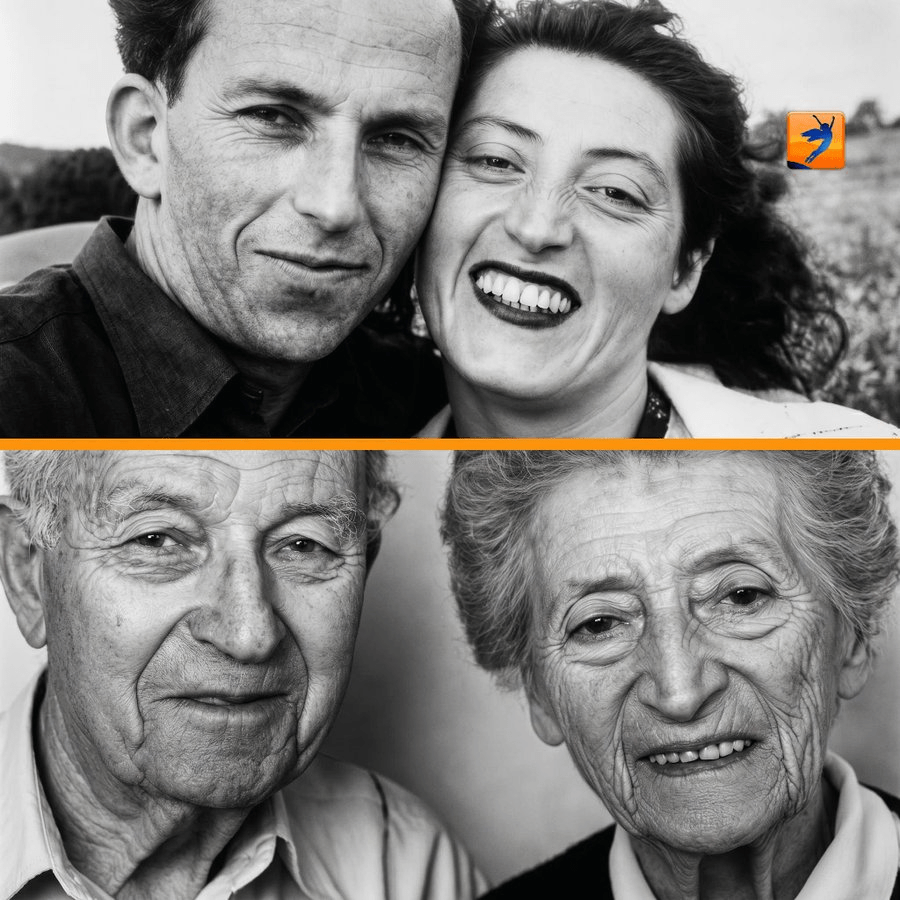
In 1943, the Gestapo finally caught Raymond Aubrac, one of France’s most wanted Resistance leaders. The German secret police sentenced him to death, and his execution was only days away. At the same time, his wife Lucie was six months pregnant with their second child. Most people in her position would have gone into hiding, grieved quietly, and prayed for a miracle. Lucie Aubrac decided to do something completely different. She got her hands on forged identity papers, created a believable cover story, and walked straight into the office of Klaus Barbie. History would later remember Barbie as the brutal Butcher of Lyon, but Lucie did not let fear stop her. She looked him in the eye and successfully convinced him to grant her a final visit with her condemned husband. But Lucie did not risk her life just to say a tearful goodbye. While she was inside the prison area, she was secretly memorizing the positions of the guards, counting the minutes between patrols, and mapping out the exact route the prison truck would take. She was treating a desperate situation like a military operation. On October 21, 1943, that prison truck rolled through the streets of Lyon. It was carrying Raymond and several other prisoners toward what should have been their final destination. What the German soldiers did not know was that Lucie had spent weeks quietly assembling a dedicated team of Resistance fighters. She planned an ambush with absolute precision. When the truck finally reached the chosen ambush spot, her team struck fast, coordinated, and without a single moment of hesitation. In the middle of the sudden gunfire and chaos, Raymond Aubrac was pulled free from the truck. Lucie, who was visibly and unmistakably pregnant, had organized every single detail of his dramatic liberation. Right after the rescue, the couple had to go into deep hiding. A few weeks later, Lucie gave birth to their daughter in a secret safe house while German forces searched frantically for them across France. They managed to evade capture until the war ended. When liberation finally came, the Aubracs did not just try to sit back and recover from their trauma. Instead, they rebuilt their lives and continued to serve their country. Raymond became a celebrated engineer and entered public life to help rebuild France’s infrastructure. Lucie became a respected historian, pouring decades of her life into making sure that the women of the French Resistance were never forgotten. She wanted to make sure these women, who were so often unnamed in the history books, were written permanently into the record. Together, the couple raised three children, traveled the world, argued, laughed, and grew old side by side. Years later, journalists asked Lucie what had compelled her to risk everything on that dangerous October day. She did not hesitate for a second. She looked at them and said, “He was my husband. What else would I do?” In his final years, he continued speaking publicly to young generations about the Resistance, the power of memory, and the absolute obligation to tell the truth about history. When Lucie passed away in 2007 at 94, and Raymond followed her in 2012 at 97, they left behind a 64-year marriage that was a testament to the ultimate triumph of life and family over hatred. Their love didn’t just survive a war—it blossomed into a lifetime of shared smiles, proving that the greatest force in the world is a heart that refuses to give up on the one it loves.
·


Leave a Reply