

by Dr. S.P.V.A. Sairam
Aug 10, 2026
Letter from Livingstone Hall — Tide in the affairs of Men — Brutus Vs Shantideva — Twin objectives of Education — Critique of Prof. Shailaja Paik [Dalit feminist & hater of Dr.Ambedkar ] — All round empowerment of Women — Academics and Sports for Women — Call of Cassius — Gandhi and the disservice of great men — Run after power, not penance.
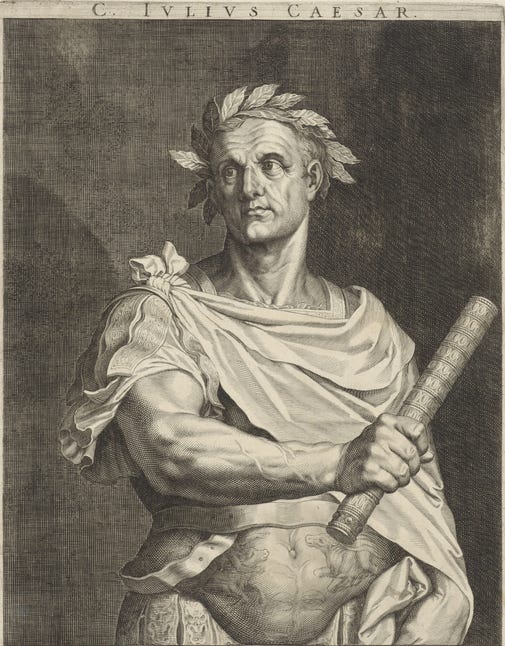
On July 21, 1913, young Bhim set foot in the majestic city of New York. He had already been travelling for nearly one month on his way from Bombay to New York, with a brief halt at Naples in Italy. It was the first time he had traveled outside his country, and the journey across the mighty Atlantic Ocean must have been as thrilling as it could possibly be.
Thanks for reading! Subscribe for free to receive new posts and support my work.Subscribe
The journey is remarkable in the sense that young Bhim was the first person in the history of Untouchable community to go abroad to pursue a PhD, as such it was a milestone in itself. But nevertheless, the decision to embark on such a journey was far from easy. The challenges faced by this young and bright man were numerous. Just a few months before his departure to America, he had lost his father to a cruel twist of fate. The great Subedar Major, Ramji Maloji Ambedkar, couldn’t live long to see his son embark on a journey of triumph, although he was fully aware of his son’s unwavering passion for education. Then there were the responsibilities of family, young Bhim had already married Ramai, and they had a child named Yeshwanth. Added to this was their dismal financial condition.
And so, carrying the immense weight of loss and responsibilities, armed with the fire of unconquerable will, young Bhim sailed the ocean, to wrest his dreams from the hands of destiny.
I] There is a tide in the affairs of Men
Although he was separated from his family and friends by nearly 8000 miles, he was not altogether distant from his ambitions and goals to emancipate his wretched brethren. This fact becomes clear after examining one of the few surviving letters that he wrote from America.
Staying in a hall named after one of founding fathers of America, Robert R. Livingston, in the middle of summer, our Young Bhim, who would later become the supreme founding father of Modern India, set out to write a letter to one of his father’s friends. He began with a note of gratitude and appreciation:
“My dear Jamedar,
I am deeply thankful to you for the interest you have usually taken in me and I shall ever remember the tears of a fatherly affection that fell down from your eyes when you came to wish me good-bye, and hope you will regard my other brothers with equal sympathy as you do me favoring them with your kind advice when you think it is needful. Not only your kind attitude has impressed me but your reforming spirit has always induced me to wish many more of your kind”
He then turned to the lamentable state of the sons of Subedhars and Jamedars with respect to education:
“…but nothing will be more displeasing to me or to anyone else who earnestly desires the well-being of this down-trodden community than to see your sons not acquitting themselves [with education]. I believe you are wise enough to profit yourself by correcting the mistakes committed by that giant race of Subhedars and Jamedars whom our unfortunate community had the honour to count among its members”

At this juncture, young Bhim quotes the following remarkable lines from Shakespeare’s Julius Ceaser:
“You must remember what Shakespeare says:
‘There is a tide in the affairs of men,
Which if taken at the flood leads on to fortune.
Omitted the voyage of their life is,
Bound in shallows and miseries.’
And which is exactly applicable now to the sons of Jamedars and Subedars, whom we can count by scores.”
In modern English, these lines can be paraphrased as: There’s a kind of tidal movement, a back-and-forth, in the affairs of men. Acting when you are at high tide leads to success. But if you miss high tide, all the rest of the voyage of your life will be mired in the shallows of misery.
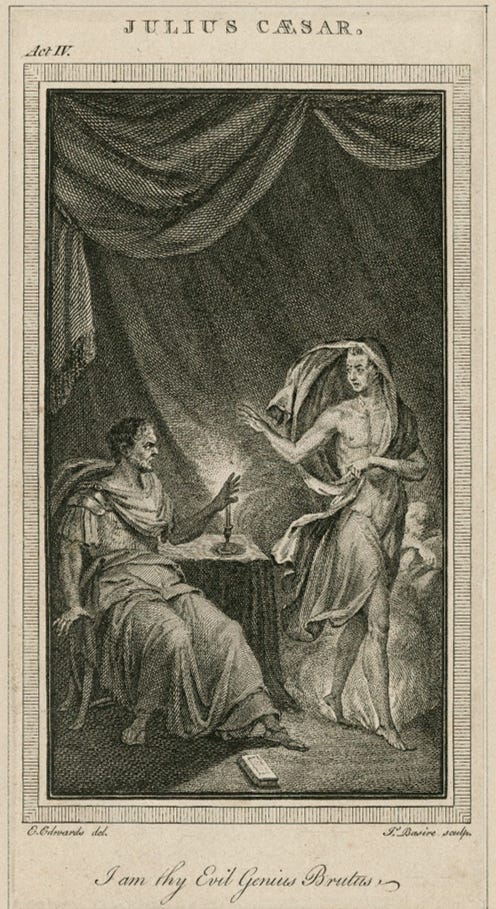
In other words, opportunities rarely come in life, and success follows when we seize them at the right moment. If not, life becomes miserable.
In the original Shakespearean play, which was believed to be published in 1623, these words were spoken by the Roman politician Brutus to Cassius. As is known, Brutus, one of the key assassins of Julius Caesar, dreamed of ruling Rome after delivering the final stab to the emperor on March 15th. But his dreams were shattered to pieces when he learned that Antony and Octavius were raising armies to foil his plans. It is in this context of impending attack that Brutus utters these words to Cassius, devising plans to outsmart his opponents at this crucial moment.
But, when young Bhim quoted Brutus, he was not asking the Jamedar to device plans to outsmart some military opponent or to conquer a kingdom. The high tide he was speaking of was about the opportunity and potential of Education in the emancipation of his forlorn brethren.
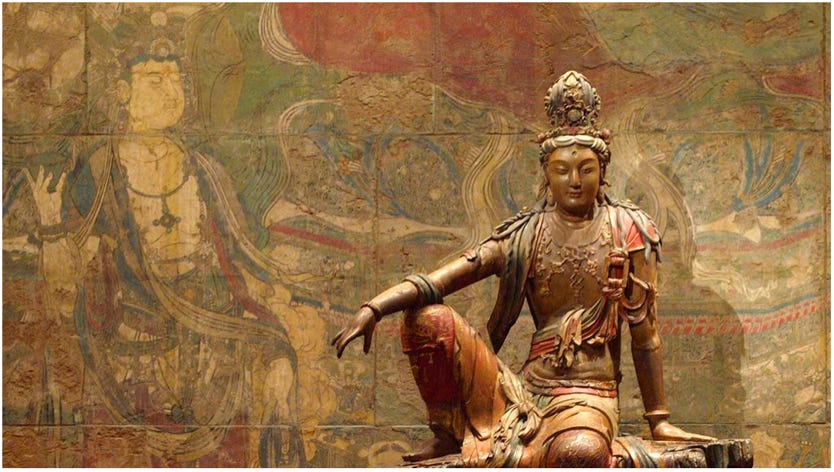
In this sense, although he quoted the words of Brutus, his intention behind this call echoes the words of the great Buddhist teacher Shantideva from many centuries earlier [1]:
“It is so hard to find the time and tools I need
To help those with whom I share this world.
If I don’t seize the chance now,
It may never arise again!”
Bhim’s call for seizing the opportunity was for the attainment of the common good and not for any selfish gains.
Historically, access to education for Untouchables was a nightmare. The advent of the brutal colonial empire provided a tiny opportunity for education, at least for the members of Untouchables [both men and women] who were in the British Army. But, after 1890s, when the British stopped recruiting Untouchables to the army, the fate of these soldiers in the Army reverted to their previous state – socially and economically. Consequently, the Subedhars and Jamedars began neglecting the noble task of educating their own children. It was this mistake that Young Bhim asked the Jamedar to rectify.
Despite the ban on recruiting the Untouchables, avenues of education remained narrowly open. In this context, young Bhim implores the Jamedar to seize the opportunity, for they fail to act, they will inevitably face immense hardship.
II] Twin objectives of Education
The idea of utilizing education as a transformative means to emancipation forms a core part of Dr. Ambedkar’s life and philosophy. In the pursuit of this goal, he ran innumerable educational campaigns, wrote articles and memoranda to officials of all ranks, up to the Prime Ministers and the Emperor of Britain, debated and put forth proposals in the legislatures, established schools, hostels and educational institutions, sent students to abroad, and so on.
Why did Dr. Ambedkar lay such heavy emphasis on education? It is impossible to give a detailed answer to this question in this article, but I shall furnish a broad response. I quote a passage from the Scheduled Castes Manifesto [1951], in which he outlined the potential of education in enabling the common masses to capture the instrumentalities of state:
“The Scheduled Castes Federation will fight for the raising of the Backward Classes, the Untouchables and the Tribal people both in the matter of Education and Services. This will receive topmost priority in the plan of action by the Federation and will be treated as fundamental. Neither delay or want of means will be allowed to stand in the way of carrying this part of the Programme into effect.
The sort of Education which the Scheduled Castes Federation has in mind with regard to these classes is not primary education, not even Secondary Education. What it has in mind is advanced education of such high order, both in this country and outside, which will enable these classes to fit themselves for taking hold of administration.
Similarly, in the matter of services, the Scheduled Castes Federation will insist on reservation, subject to minimum qualifications, so long as these classes are not able to find their place in the Civil and Military services of the country.
Today there is rampant a worst sort of communalism in the Civil and Military services of the country by the higher classes. The services have become the monopoly of a few communities. When the lower classes are trying to break this monopoly by demanding that they who are at present excluded from services, are decried as communalists. The Scheduled Castes Federation will not allow this perverted logic to stand in the way of the non-privileged classes in the way of the fulfilment of their demand for occupying their rightful place in the affairs of this country.”
There is an interesting anecdote shared by Dr. Ambedkar himself on why advanced education is necessary for the masses. Recalling his conversation with the then Viceroy, Lord Linlithgow, Babasaheb recollected:
“…One day I went to Lord Linlithgow and regarding the expenditure on education I said, “If you do not get angry, I would like to ask you a question. I am alone equal to fifty graduates, Aren’t I? He had to accept it. Again, I asked him, “What is the reason of it?” He said, “We do not know the reason.” I said, “My learning is so great that I could sit on the pinnacle of the palace. I want such men. Because, from there, one can make overall surveillance. If our people are to be protected, then such sharp-eyed men should be created. What can a mere clerk do? At the very moment Lord Linlithgow was convinced by my words and sixteen men were sent to England for higher education.”
In short, by disseminating the highest form of education to the Scheduled Castes, Scheduled Tribes, and Backward Classes, Dr. Ambedkar dreamt of transforming the status of the oppressed into that of the rulers of this great nation.
Besides this, according to Dr. Ambedkar there is another and equally important objective that education can meet, namely to unmask the lies of the oppressor, which is the foundation of oppression. Babasaheb wrote:
“What must the Untouchables strive for? Two things they must strive for is education and spread of knowledge. The power of the privileged classes rests upon lies which are sedulously propagated among the masses. No resistance to power is possible while the sanctioning lies, which justify that power is accepted as valid. While the lie which is the first and the chief line of defence remains unbroken there can be no revolt. Before any injustice, any abuse or oppression can be resisted, the lie upon which it is founded must be unmasked, must be clearly recognized for what it is. This can happen only with education” [The second thing that he urged us to strive for is to have an independent political power].
This is how Dr. Ambedkar perceived the importance of education in meeting the twin objectives of tuning the mind to reason [free from the snares of the oppressor], and enabling the masses to become the rulers of the country. The consequences of the lack of this education, in meeting these twin objectives, have been accurately captured by Mahatma Jotiba Phule [2]:
Without education wisdom was lost; without wisdom morals were lost; without morals development was lost; without development wealth was lost; without wealth the Shudras were ruined; so much has happened through lack of education.
This explains why both Dr. Ambedkar and Phule couple struggled immensely to put their thoughts into writing despite their failing health. They wrote their books, articles, pamphlets, and other works with the sole purpose of empowering and enlightening the masses and persuading them to achieve these twin objectives.
III] Education of Girls & overall empowerment of Women
In the same letter addressed to Jamedar, young Bhim highlights the supreme need to educate girls to realize the ends of emancipation:
“I am inclined to blame the parents and not the sons miserable as they are now. We must now entirely give up the idea that parents give “Janma” to the child and not “Karma”. They can mould the destiny of their children: and if we but follow this principle be sure that we shall soon see better days and our progress will be greatly accelerated if male education is pursued side by side with female education, the fruits of which you can very well see verified in your own daughter.”
This remarkable advocacy, against the notion of predestination and championing the cause of education for girls at the young age of 22, speaks volumes about the fact that young Bhim had already developed a solid foundation for his emancipatory vision long before he studied at the mighty universities of Columbia, LSE and Gray’s Inn. As has been aptly remarked by my friend JS Vinay:
“It is Babasaheb Ambedkar who made Columbia or LSE great. It is their fortune that he could grace his presence there, and not vice versa”
In this context, it is shocking that scholars like Prof. Shailaja Paik are hell bent on maligning the legacy of Dr. Ambedkar with respect to women’s empowerment. For instance, in her article “Dr. Ambedkar and the Prostitute”, she writes [3]:
“Although he [Dr. Ambedkar] forcefully critiqued brahmanical patriarchy and advocated for women’s radical and transgressive agency, he also at times made respectable women supplementary to men’s primary political tasks, thereby underlining some gendered duties.
A serious problem for him, as with other radicals and reformers, was how to simultaneously create and support educated and autonomous women while restricting their potential roles to those of ‘wives’ and ‘mothers’ and eliminating those of ‘non-wives’ and ‘prostitutes”
These accusations against Dr. Ambedkar have no foundation whatsoever. If Dr. Ambedkar really wanted to restrict the roles of women to those of ‘wives’, why did he strongly advocate for the provisions of divorce in his Hindu Code Bill? A woman who takes divorce is no longer a wife to someone, or to put it the words of Prof. Paik, she becomes a non-wife.
Yet Prof. Paik argues that Dr. Ambedkar wanted to eliminate the very role of the non-wife! Dr. Ambedkar did not want women to remain wives forever in their lives; indeed, the very purpose of provisions of divorce was to enable women to dissolve the bond of marriage [as per the requirements of law] and to become free. It is astounding that his philosophy of liberation has been misconstrued as dogmas of unfreedom.
To understand more about the vision of Dr. Ambedkar for women, we must turn to the resolutions passed at the Second Session of the All-India Depressed Classes Women’s Conference in 1942. Some of the important resolutions passed at the conference were:
1) Recognition of the Right to Divorce for women [This is nearly a decade before the discussion of Hindu Code Bill in the 1950s],
2) Abolition of Polygamy,
3) Betterment of economic conditions of the Working-Class Women in Mills, factories, railways and so on,
4) Promotion of Education, establishment of schools, and grants related to scholarship for girls,
5) Appointment of Lady supervisors in Mills,
6) Reservation to Depressed Women in all legislative and other representative bodies.
Even a cursory look at the above resolutions reveals us that Dr. Ambedkar dreamed of an overall empowerment of women in all walks of life – social, educational, political and economic.
Emphasis needs to be laid on the participation of women from all sections of Depressed Classes in the active politics of Ambedkarite movement. One of the best and recent books written on this theme comes from the pen of Prof. Sunita Sawarkar, titled “Dhor Chambhar Striyanchya Ambedkari janivancha Parigh”. Not to mention the powerful women legislators that Ambedkarite movement produced, such as Annai Meenambal Shivaraj, Eashwari Bai, Shantabai Dani and others. Their political engagement was undoubtedly directed toward the comprehensive emancipation of their oppressed community, and not toward excelling in their ‘restricted’ roles as ‘wives’ and ‘mothers.’
It is also worth recalling some fascinating facts related to Babasaheb’s own Milind College. Speaking proudly about the system of co-education in his institutions under People’s Education Society, he rejoiced:
“It is important to note that girls also are taking education along with the boys in this college. The college has really laid a new revolutionary foundation for the education of girls in this socially backward area where coeducation is non-existent. Secondly, there are girl students from all castes and religions in this college. The college has arranged for a bus so that girls are encouraged to come to the college.
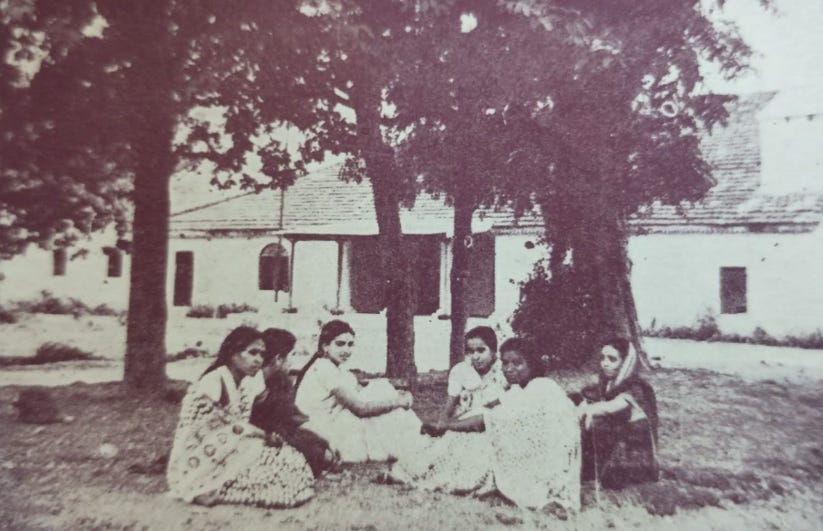
…The doors of this college are open for all religions. There is no casteism in this college. The Professors of the college belong to various different castes and religions. The vision of the college is to build a strong character with knowledge, humility and values among the students. This college gives special attention to the education of backward and Untouchable students whose strength is gradually increasing”
Along with his utmost focus on education, Babasaheb wanted the overall development of both boys and girls. In pursuit of this goal, he ensured that students received proper training in sports such as cricket, football, boxing, and more.
Here is a picture of Dr. Ambedkar from the time when the Siddharth College boxing team won the Sir Leslie Wilson Cup at a boxing tournament. Dr. Babasaheb is seen in the photograph alongside the winning team’s players, as well as the college principal and professors.
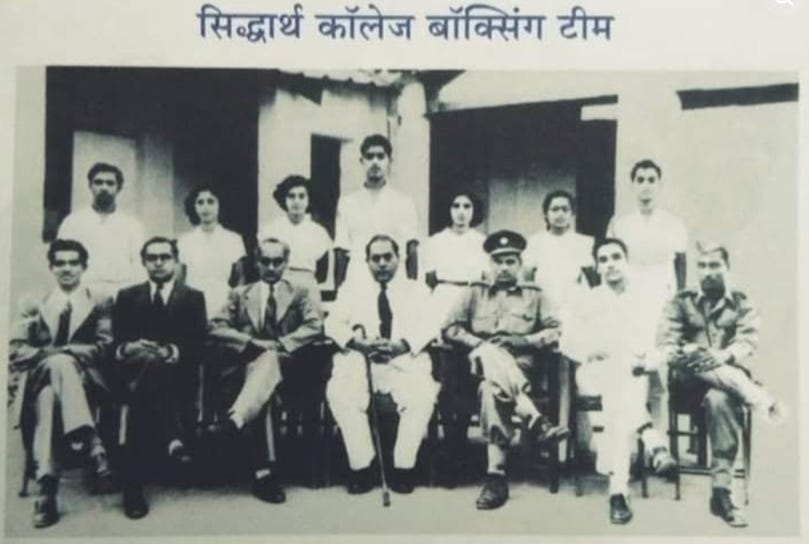
Did Dr. Ambedkar lay this ‘revolutionary foundation for the education of girls’ and provide them intense training in sports such as boxing, so that they could become better “housewives’ and ‘mothers?” It would be absurd to draw such a conclusion, but Prof. Paik wants us to believe in absurdity.
I shall like to close this segment by quoting the words of Dr. Ambedkar on the rights of women regarding the inheritance of property:
“In today’s era, property is the foundation of freedom. Until women are recognized as heirs to property, their slavery will not end. I had made such provisions in the Hindu Code Bill…Until now, there were restrictions on the wife receiving her husband’s property after his death, which I have removed. My firm contention is that ownership of the husband’s total property should go to his wife after him, and upon a woman’s death, her property should go to her daughter. After a father passes away, his property is divided among brothers. Why shouldn’t their sister also get a share in it?
… In England, women can take a divorce by their own will and live their lives; behind this is the right to inheritance they received. Similarly, in the Malabar society, divorces have mostly not been happening for the last 50–60 years because women there also have the right to inheritance. That is why the husband treats her well. Therefore, women will have to launch an agitation so that they too get the right to inheritance just like men.”
A man who championed the all-round empowerment of women – social, economic, political, educational etc – all throughout his life has been accused of wanting to make “respectable women supplementary to men’s primary political tasks” and to restrict their potential roles to those of ‘wives’ and ‘mothers! Can there be greater tragedy than this?
IV] The hour of Liberty has come
The next reference to Julius Caesar in the letters of Babasaheb appears nearly 35 years after his letter to Jamedar. While the first reference to characters in the epic Shakespearean drama revolves around the assassination of Caesar and the events that followed, the second reference is cited in the context of the assassination of Gandhi.
In a letter addressed to Dr. Savita Ambedkar, Babasaheb called the assassination of Gandhi a foul act and narrated how he was moved to see his dead body [4]:
“I entirely agree with you that Gandhi should [not] have met his death at the hands of a Maharashtrian. Nay! I go further and say that it would have been wrong for anybody to have committed such a foul deed. You know that I owe nothing to Mr. Gandhi and he has contributed nothing to my spiritual, moral and social make up. The only person to whom I owe my being is Gautam [Buddha].
Notwithstanding his antipathy to me, I went to the Birla House on Saturday morning and was shown his dead body. I could see the wounds. They were right in the heart. I was very much moved on seeing his dead body. I went with the funeral procession for a short distance as I was unable to walk and then returned home and again went to the Rajghat on the Jamuna but could not get to the Burning Place being unable to break the ring formed by the crowd”
Achieving separate electorates for Scheduled Castes at the Second-Round Table Conference was a path breaking milestone for Babasaheb. He had single handedly achieved this mission and brought “independent and representative” political power to the hands of the Untouchables for the first time in their history. But this magnificent achievement was nipped in the bud by Gandhi through his ignoble fast, which ultimately compelled Babasaheb to sign the Poona Pact in 1932. What followed was a series of confrontations between Dr. Babasaheb Ambedkar and Gandhi on a wide range of socio-religious and political questions, in which the former has displayed sheer dominance in incisive analysis, clarity of thought, vision and noble actions.
The zenith of this conflict was reached when Dr. Ambedkar fulminated against and exposed the so-called Mahatma and his party in his “What Congress and Gandhi have done to the Untouchables” [1945], which, to use the words of Ramachandra Guha, had shaken Gandhi to the core [5]. Gandhi commissioned his trusted friends such as Rajaji and Santhanam to counter the learned doctor, but even here he was destined to be disappointed [6]. In 1946, the issue of separate electorates was once again brought to the forefront by Babasaheb, and even then, Gandhi did not change his mind – despite some form of persuasion from people like Rajkumari Amrit Kaur [7], and continued to oppose reasonable negotiations with Dr. Ambedkar on the fate of Untouchables [8]. So much for his concern towards Untouchables!
Notwithstanding all these differences with Gandhi nearly over three decades, Dr. Ambedkar went to see his dead body. This single incident speaks tomes about the sterling character of Dr. Babasaheb Ambedkar, a man who was deeply moved by the death of his opponent, who had, opened his real fangs to him.
Agreeing with Dr. Savita Ambedkar that they were passing through a critical time, Babasaheb went on to share his impeccable pith of wisdom on “disservice” done by the great men by quoting the memorable words from Julius Caesar:
“You rightly say that we are passing through a very critical time and don’t know the future. My own view is that great men are of great service to their country, but they are also, after a certain time, a great hindrance to the progress of their country. There is one incidence [sic] in Roman history which comes to my mind on this occasion…
…When Caesar was done to death and the matter was reported to Cicero, Cicero said to the messengers, ‘Tell the Romans, your hour of liberty has come.’ While one regrets the assassination of Mr. Gandhi, one can’t help finding in his [sic] heart the echo of [the] sentiments expressed by Cicero on the assassination of Caesar.
Mr. Gandhi had become a positive danger to this country. He had choked all free thoughts. He was holding together the Congress—which is a combination of all the bad and self-seeking elements in the society, who were agreed on no social or moral principle governing the life of society, except the one of praising and flattering Mr. Gandhi. Such a body is unfit to govern a country.
As the Bible says, something good cometh out of evil, so also, I think that good will come out of the death of Mr. Gandhi. It will release people from [the] bondage of a Superman, it will make them to think for themselves and it will compel them to stand on their own merits.”
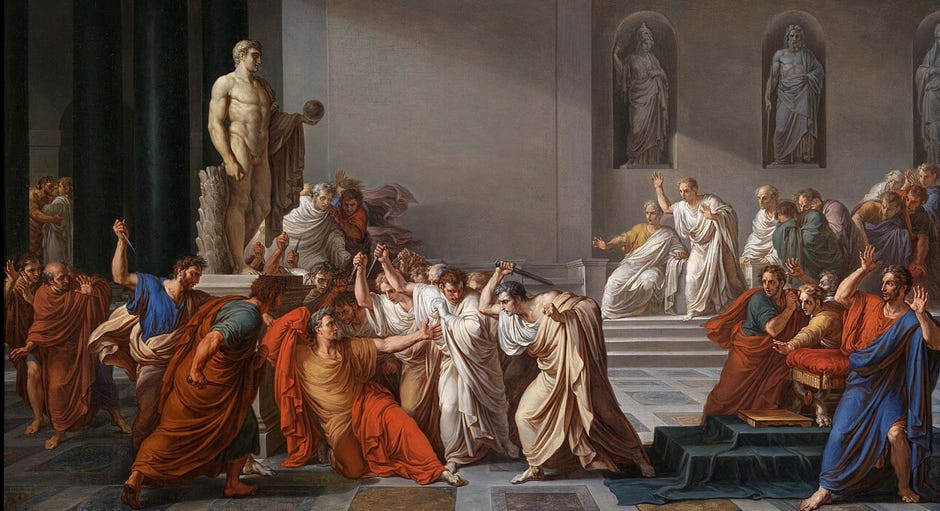
In all probabilities, Babasaheb was quoting the words of Cinna or Cassius in the Julius Ceaser, and not Cicero. The lines below from Julius Caesar could have been in his mind when he wrote the letter to Dr. Savita Ambedkar:
“CASCA and the other conspirators stab CAESAR. BRUTUS stabs him last.
CAESAR: Et tu, Bruté? —Then fall, Caesar.
CINNA: Liberty! Freedom! Tyranny is dead! Run hence, proclaim, cry it about the streets.
CASSIUS: Some to the common pulpits, and cry out, “Liberty, freedom, and enfranchisement!”
If the worship of superman is a dangerous stumbling block to progress, then what shall be done? I shall do no more to conclude this article by quoting the terrific words of Dr. Ambedkar on the question of the way ahead:
“You must abolish your slavery yourselves. Do not depend for its abolition upon God or Superman. Your salvation lies in political powers and not in making pilgrimages and observance of fasts.
It is the duty of the Legislature to provide for your food, clothes, shelter, education, medicine and all the means of earning a livelihood. The work of law-making and of its execution is to be performed with your consent, help and will.
In short, law is the abode of all worldly happiness. You capture the power of law-making. It is, therefore, your duty to divert your attention from fast, worship and penance and apply it to capturing law-making power. That way lies your salvation. That way will end your starvation. Remember that it is not enough that a people are numerically in majority. They must be always watchful, strong, well-educated and self-respecting to attain and maintain success.”
About the author: Dr S.P.V.A. Sairam is a dentist and an independent researcher who has been exploring and writing on the lives of Dr Ambedkar, Phule couple, Sayajirao Gaikwad and other anti-caste thinkers. You can access his articles and talks here.
References:
1] Shantideva. How to Be Caring: An Ancient Guide to a Compassionate Life. Selected, translated, and introduced by Jay L. Garfield, Princeton University Press, 2025.
2] Phule, J. (1881). Shetkaryaca Asud (The whipcord of the cultivators) (G. Omvedt & B. Patankar, Trans.).
3] Paik, S. (2022), Dr Ambedkar and the ‘Prostitute’: Caste, Sexuality and Humanity in Modern India. Gender & History, 34: 437-457. https://doi.org/10.1111/1468-0424.12557
4] Ambedkar, Savita. Babasaheb: My Life with Dr Ambedkar. Translated by Nadeem Khan, Vintage/Penguin Random House, 2022
5] Guha, Ramachandra. “Prelude to Partition.” Gandhi: The Years That Changed the World, 1914–1948, Vintage/Penguin Random House India, 2019, pp. [758 – 760]
6] Gandhi, Mohandas K. The Collected Works of Mahatma Gandhi. Vols. 87–88, Publications Division, Ministry of Information and Broadcasting, Govt. of India, 1983–1984. Includes: “Letter to C. Rajagopalachari” (vol. 87, p. 406) and “Letter to K. Santhanam” (vol. 88, p. 173).
For Dr. Ambedkar’s reply to this criticism, see https://archive.org/details/mkbook2800mkga/page/228/mode/2up
7] Gandhi, Mohandas K. “Letter to Amrit Kaur.” In The Collected Works of Mahatma Gandhi, Vol. 94, 342. New Delhi: Publications Division, Ministry of Information and Broadcasting, Govt. of India, 1994.
8] Gandhi, Mohandas K. “Letter to Vallabhbhai Patel.” The Collected Works of Mahatma Gandhi, vol. 91, Publications Division, Ministry of Information and Broadcasting, Govt. of India, 1989, p. 393.
Thanks for reading! Subscribe for free to receive new posts and support my work.


Leave a Reply