

15 hours ago
5 min read


Sarkar’s scholarship made me question how history itself ought to be understood, how historians construct their questions, how historiographical positions evolve, and how no interpretation of the past should ever become immune to criticism.
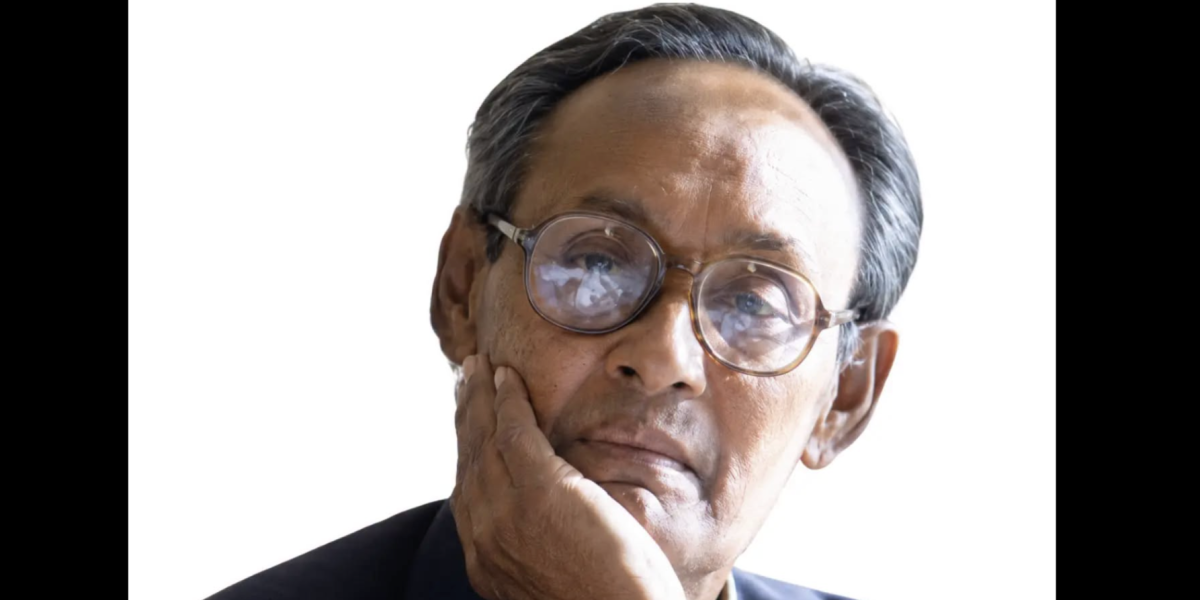
Sumit Sarkar. Photo: Facebook.
There are historians whose books we read, historians whose arguments we admire, and historians whose scholarship quietly becomes part of our own intellectual lives.
For me, Sumit Sarkar belonged to the last category. I never had the privilege of meeting him, attending one of his seminars, or listening to one of his lectures. Yet, in a rather unusual way, Sarkar became one of the teachers of my intellectual life. PlayNextMute
Advertisement
When I first developed an intellectual fascination with History as a discipline and chose it as my subject for undergraduate study, I was curious to know about the historians who had mastered the discipline. I would often ask my father about them.
He had studied for his MA in Modern History at the University of Delhi between 1977 and 1979, and he would speak of Sarkar, who was then teaching at Delhi University, with considerable respect.
What impressed my father was not merely Sarkar’s command over modern Indian history, but particularly his historiographical approach. At that age, I did not fully understand what he meant by that. Years later, I would.
I pursued my BA Honours in History at Hans Raj College, University of Delhi, between 2016 and 2019. It was during these undergraduate years that Sarkar’s scholarship became an important part of my own intellectual formation. One of my professors, Sharmila Srivastava, introduced us to Sarkar’s seminal work, Modern India, 1885–1947.
Advertisement
Her notes were often deeply informed by his scholarship, and she repeatedly encouraged us to read Sarkar alongside the other prescribed literature. I became curious and purchased Modern India myself. I also borrowed another of his major works, Modern Times: India 1880s–1950s, from our college library.
Also read: Sumit Sarkar Taught Generations to Take History Seriously
The latter offered a later and substantially reconceived treatment of the period covered in his earlier work. With these two books in my possession, I decided that they would form the intellectual foundation of my preparation for my modern Indian history papers.
Almost all my classmates were using Sekhar Bandyopadhyay as their principal text for modern Indian history, supplemented by articles recommended by our professors. Their choice was entirely understandable. Bandyopadhyay is an outstanding historian, and his work offers a comprehensive and analytical engagement with the major historiographical traditions of modern India.
It brings together nationalist, Cambridge, Marxist, subaltern and other perspectives, and provides students with a nuanced understanding of the debates surrounding modern Indian history. It is therefore unsurprising that his work became useful not only to university students but also to generations of civil services aspirants who wanted a balanced and analytical account of the subject.
Advertisement
My own choice was different. To be honest, I largely skipped Bandyopadhyay and chose to rely primarily on Sarkar. It was certainly a gamble. What drew me towards Sarkar was, in part, precisely what some readers might regard as a limitation in his work.
His historical writing did not always give me the impression of an artificially detached and perfectly balanced account in which every historiographical position was presented from an equal distance. His scholarship possessed a distinct intellectual sensibility, and his arguments carried particular commitments, emphases and questions that were recognisably his own. That appealed to me.
Also read: History Must Be Based Solely on Evidence: Irfan Habib
We are often taught to approach history through the ideals of objectivity, analytical distance and scientific method. The Rankean tradition has had an enormous influence on the discipline’s understanding of historical scholarship, and there is considerable value in the insistence upon evidence, critical inquiry and methodological rigour.
Advertisement
At the same time, I gradually began to realise that the aspiration towards complete neutrality has its own limitations. Historians do not approach the past without questions, assumptions or sensibilities. The choice of what to investigate is itself an intellectual choice. The decision about whose voices deserve greater attention is also an intellectual choice.
The sources that a historian chooses to interrogate, the silences that a historian attempts to recover, and the historical processes that a historian considers worthy of explanation are all shaped, at least to some extent, by the questions that the historian brings to the past.
During my third and final year at Hans Raj College, when we studied the core papers on modern Indian history, I had also become deeply fascinated by the Subaltern Studies school. Ranajit Guha’s Elementary Aspects of Peasant Insurgency in Colonial India, which had been recommended by our professors, had a profound impact on me.
The attempt to recover the autonomous political agency of peasants and other subaltern groups, and to challenge historical narratives centred primarily on elites, was intellectually exhilarating. At the same time, Srivastava again directed me towards Sarkar. This time, she encouraged us to read his essay, “The Decline of the Subaltern in Subaltern Studies”, which appeared in his collection Writing Social History. That essay forced me to reconsider a historiographical position that I had begun to embrace rather enthusiastically.
Sarkar’s critique did not simply tell me that Subaltern Studies was wrong. Instead, it compelled me to interrogate the assumptions within the school itself and to think about the limitations that could emerge even within a historiographical project that had originally sought to challenge elite-centred histories.
That was perhaps one of the most valuable lessons I received through Sarkar’s scholarship. No historiographical position should become an intellectual comfort zone. It should always remain possible to admire a school of thought while questioning it, to respect a historian while disagreeing with the historian, and to change one’s own position without abandoning one’s intellectual curiosity.
Also read: What Exactly Is ‘Marxist History’?
For me, Sarkar demonstrated that historical scholarship could be rigorous and analytical without pretending that the historian possessed no intellectual standpoint. His work made me more comfortable with the idea that a historian’s intellectual commitments do not necessarily diminish the value of historical scholarship, provided that those commitments remain open to evidence, argument and criticism. I therefore stuck with Sarkar.
I built my examination answers around the arguments that I encountered in his books. I supplemented them with scholars who supported, developed or complicated his positions, and I also made it a point to acknowledge historians who disagreed with him. I then tried to arrive at my own analytical conclusions rather than merely reproducing the arguments of any one historian.
In other words, I did not simply use Sarkar as an authority. I used his scholarship as a point of departure for thinking. Interestingly, that gamble worked reasonably well. I graduated from Delhi University with a first division and a CGPA of 7.554, which was a respectable score in History during my time.
My engagement with Sarkar did not end with my undergraduate years. When I subsequently pursued my MA in Modern History at the Centre for Historical Studies at Jawaharlal Nehru University between 2019 and 2021, I became even more conversant with his scholarship. His essays and articles formed part of our course readings, and I encountered his arguments within a much wider and more theoretically diverse historiographical landscape.
Interestingly, however, I felt that the emphasis placed on his scholarship was not quite as pronounced as it had been during my undergraduate years at Hans Raj College. Perhaps some of this difference was personal and contextual.
Srivastava had been directly influenced by Sarkar’s teaching and scholarship, and Sarkar himself had taught at Delhi University, which may have contributed to the particular reverence with which his work was presented in our undergraduate classroom. This certainly did not mean that Sarkar was not respected within JNU’s historical circles.
Rather, the intellectual environment at the Centre exposed us to a much wider range of historiographical traditions and scholars, including a substantial body of work by historians and theorists from outside India, which inevitably occupied a considerable part of our academic attention.
For me, therefore, JNU did not diminish my engagement with Sarkar. Instead, it placed his scholarship within a much broader intellectual universe and allowed me to understand both its strengths and its limitations with greater maturity.
Years later in 2026, even while writing my Odisha Civil Services Mains examination, I found myself returning to many of the intellectual habits that had developed through this engagement with historiography. History was my optional subject, and I wrote my answers drawing upon the arguments and debates that had shaped my understanding of the discipline over the years.
I eventually scored 159 marks in Paper I and 154 marks in Paper II, crossing 300 marks overall and emerging as the topper in History optional. I would never claim that those marks were because of Sarkar, because such a claim would reduce a complex intellectual journey to a simplistic causal relationship.
However, I can say with certainty that the intellectual habits that helped me write those answers were, in part, cultivated through my engagement with his scholarship. That is why his passing feels strangely personal.
There is something particularly moving about the generational journey through which I encountered him. My father knew him as a teacher. I first knew him through my father’s memories. I then encountered his scholarship through the classroom of Srivastava.
I subsequently encountered him directly through his books and essays. I encountered his scholarship again within the much wider historiographical world of JNU. Eventually, his arguments found their way into my own historical writing. This, perhaps, is how intellectual legacies actually survive. They survive not merely through citations, commemorations and university syllabi, but through people who read, question, disagree, reinterpret and carry ideas into another generation.
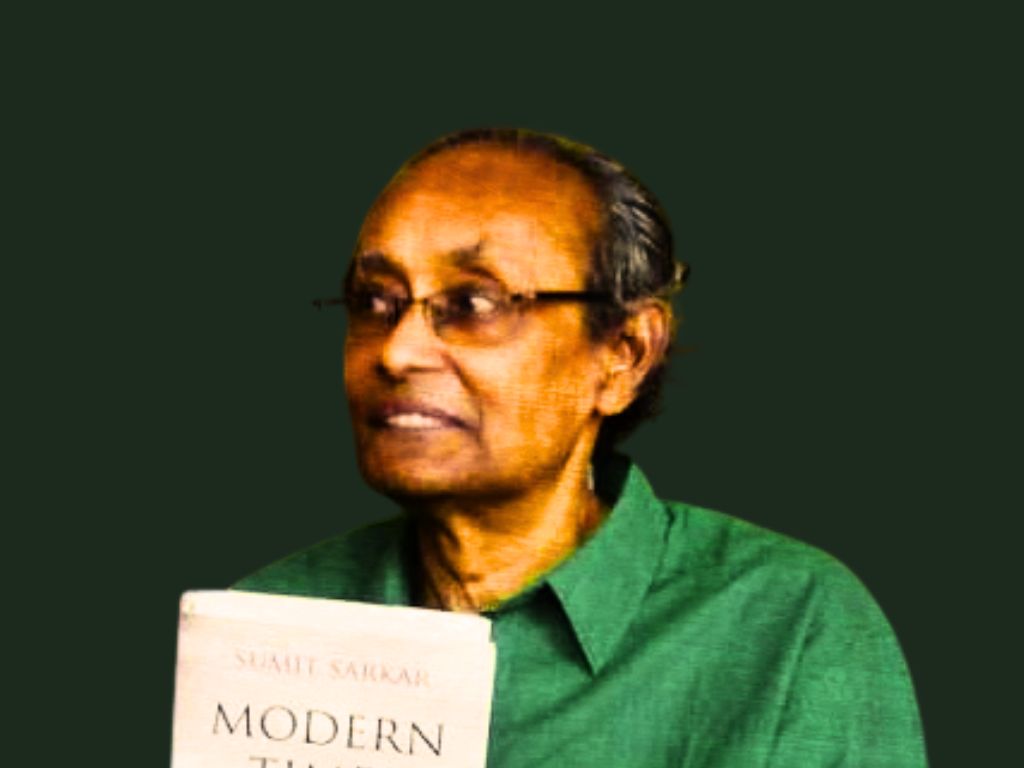
Sumit Sarkar (1939-2026). Photo: Facebook.
Sarkar’s own intellectual journey makes this especially significant. He is often labelled as a Marxist historian. He was also closely associated with the Subaltern Studies project and was among its founding figures, yet he later became one of its important critics. His scholarship therefore cannot easily be reduced to a single historiographical label.
He continually engaged with the tensions within the writing of modern Indian history, including the relationship between nationalism and its critics, between elite and popular politics, between historical agency and structural forces, and between analytical rigour and the intellectual questions that make history meaningful. Perhaps that is why his work stayed with me.
I never had the good fortune of meeting him. I never sat in his classroom or attended one of his talks, unlike some other eminent historians whom I have had the privilege of meeting or listening to, including Romila Thapar and Irfan Habib. My relationship with Sarkar remained entirely mediated through his scholarship.
Yet I have come to realise that intellectual relationships do not necessarily require physical proximity. A teacher whom one never met can still teach. A historian belonging to an earlier generation can alter the way one looks at the past. A book picked up out of curiosity can quietly shape the way one thinks for years.
For me, Sarkar was never merely an eminent historian whose books I happened to read. He unsettled some of my assumptions through his critiques, acquired new meaning for me within the intellectually diverse environment around me, and eventually became part of the intellectual vocabulary with which I wrote my own history.
I owe him an immense debt of gratitude. His scholarship did not simply help me understand modern India better. It made me question how history itself ought to be understood, how historians construct their questions, how historiographical positions evolve, and how no interpretation of the past should ever become immune to criticism.
Perhaps that is among the greatest legacies that a historian can leave behind. A historian’s most enduring contribution is not necessarily a set of conclusions to be memorised, but a set of questions that continue to make subsequent generations think.
Sarkar has left behind many such questions. His voice has fallen silent, but his scholarship will continue to speak, argue, provoke and teach generations of historians who, like me, may never have had the privilege of meeting him.
Somnath Pati is a scholar of History trained at Hans Raj College and JNU, and an incoming Odisha Civil Services officer.
Advertisement
This article went live on August eighteenth, two thousand twenty six, at fifty-six minutes past four in the afternoon.
The Wire is now on WhatsApp. Follow our channel for sharp analysis and opinions on the latest developments.
 Knock nock
Leave a comment