


26/Aug/2026

Illustration: Pariplab Chakraborty.
This article is the first in a three-part series.
The Bombay high court‘s judgment in the Tarun Tejpal case is more than another major decision on rape law. It reflects the tensions of a society that has undergone rapid social, economic and cultural transformation over the past two decades, compelling courts to interpret constitutional principles within multiple and often conflicting social realities.PlayNextMute
Current Time 0:25
/
Duration 2:04FullscreenBackward Skip 10sPlay VideoForward Skip 10s
Advertisement
This series does not seek to revisit the facts of the case or opine upon the correctness of the judgment. Instead, it uses the judgment as a point of departure to examine larger constitutional questions that have received little attention in public discourse.
§
Long before constitutions articulated rights or criminal statutes defined consent, societies evolved norms governing attraction, courtship, sexuality, power and restraint. Whether these norms were just or oppressive is a separate question. They nevertheless provided a common vocabulary through which women and men interpreted each other’s behaviour.
The law intervened only when these social institutions failed.
Advertisement
The Bombay high court’s judgment in the Tarun Tejpal appeal represents one such occasion for us to reflect on the gulf between law and society. Much of the public conversation has focused upon one compelling observation made by the court that the “perfect victim” is a myth. That phrase will undoubtedly become the judgment’s most quoted passage.
Yet its real significance lies elsewhere. The judgment is not merely a repudiation of one stereotype about women. It signals India’s entry into an international constitutional movement that has quietly transformed the law of sexual offences over the past three decades.
The transformation has occurred not primarily through legislative revolution but through a more subtle process. Courts across constitutional democracies have gradually changed the questions they ask. For nearly two centuries, judges frequently asked whether a complainant behaved as a genuine victim ought to behave. Modern constitutional jurisprudence asks a fundamentally different question. Did she consent? That shift may appear deceptively simple. In reality, it represents one of the most profound changes in modern criminal jurisprudence.
The invisible anthropology of rape law
Every legal system rests upon certain assumptions about human behaviour. Often these assumptions remain unstated because they appear self-evident to the generation that created them. Nineteenth-century rape jurisprudence was built upon one such invisible anthropology. A “truthful” woman was expected to resist physically. She would immediately complain to the nearest authority. She would sever all contact with the accused. She would exhibit visible emotional devastation.
Any delay in reporting, continued communication with the accused, apparent composure or inconsistency in narration invited judicial suspicion. This expectation was rarely expressed as a formal rule of law. It nevertheless permeated legal reasoning across common-law jurisdictions. Judges routinely treated post-assault behaviour as a measure of credibility rather than recognising that human beings respond to trauma in profoundly different ways.
Advertisement
Also read: Lessons in Male Rage from a 13-Year Trial and Beyond
The irony was striking. The law claimed to assess evidence objectively while relying upon deeply subjective assumptions regarding how “real” victims ought to think, remember and behave. The result was a legal framework in which stereotypes quietly masqueraded as ‘evidence’.
It is this intellectual inheritance that the Bombay high court explicitly rejects. The court observes that survivors process trauma differently and that courts possess no scientific basis to prescribe a uniform behavioural pattern after sexual assault. Behaviour before or after the incident cannot, by itself, determine credibility.
From morality to autonomy
For centuries, sexual offences were understood through the language of morality. Respectability. Chastity. Honour. Character. Marriage. Female virtue. The complainant’s social identity often became inseparable from the legal evaluation of her complaint. Gradually, constitutional democracies abandoned this framework in favour of the principle of autonomy. The question was no longer whether a woman behaved like a ‘respectable’ woman. The question became whether she voluntarily agreed to participate in the specific sexual act.
Advertisement
This was not merely a legal adjustment. It represented a philosophical transformation. The law ceased to protect an abstract social morality and instead protected the individual’s bodily autonomy. The first decisive articulation of this transformation came from Canada.
The Canadian Supreme Court’s decision in R. v. Ewanchuk (1999) occupies a place in consent jurisprudence comparable to Brown v. Board of Education in equality law or Donoghue v. Stevenson in negligence. Its significance lies not in the facts alone but in the principle it established. The court rejected the notion of implied consent. Consent, it held, is not something inferred from silence, passivity or ambiguity. It must be affirmatively communicated by the complainant. Equally significant was the court’s rejection of the defence of “implied consent” based upon assumptions regarding female behaviour.
The decision dismantled centuries of judicial speculation about what women “must have meant”. Instead, it insisted that the law concerns itself with what the complainant actually communicated. This represented a constitutional commitment to autonomy over assumption.
England carried this evolution further. The Sexual Offences Act, 2003, defined consent as agreement by choice, with the freedom and capacity to make that choice, while requiring that an accused’s belief in consent be objectively reasonable. The inquiry no longer centred solely on the complainant’s conduct but also on whether the accused had taken reasonable steps to ascertain consent.
Also read: When it Comes to Rape By Men in Uniform, the Media Forgets the Victim is Also Part of the ‘Nation’
Australian courts added another important dimension by incorporating insights from behavioural science. Trauma-informed adjudication recognised that delayed reporting, fragmented memory, continued interaction with the accused or emotional composure are not reliable indicators of fabrication. Equally, psychology was never permitted to replace evidence; it merely cautioned courts against relying upon intuition unsupported by science.
Scandinavian reforms, particularly Sweden’s affirmative consent legislation and Spain’s subsequent “Only Yes Means Yes” law, completed the transition by emphasising voluntary participation rather than the absence of resistance. Across jurisdictions, rape law has steadily moved from protecting social morality to safeguarding individual autonomy.
Indian jurisprudence did not remain insulated from these developments. The Justice Verma Committee, constituted after the horrific events of December 2012, represented perhaps the most comprehensive reconsideration of Indian sexual offence law since Independence. The Criminal Law (Amendment) Act, 2013, introduced substantial changes to the definition of rape, strengthened protections surrounding consent and amended the law of evidence to reduce reliance upon a complainant’s sexual history or perceived moral character. The constitutional vocabulary had changed.
Dignity, autonomy, equality, consent. These ideas are increasingly shaped by judicial reasoning. The Bombay high court’s judgment must therefore be situated within this constitutional evolution. Its rejection of the “perfect victim” is not an isolated judicial flourish. It reflects a broader international movement away from judging complainants through inherited assumptions regarding female behaviour.
If nineteenth-century courts distrusted women because they failed to resemble the “perfect victim”, behavioural science explains why trauma manifests differently across individuals. It explains why some survivors delay disclosure. Why others remain in contact with perpetrators. Why memory may become fragmented. Why outward composure often conceals profound psychological injury.
The Bombay high court’s judgment marks an important stage in India’s constitutional engagement with modern consent jurisprudence. But it also raises a larger question that extends far beyond one prosecution. Can legal principles developed within other constitutional democracies be transplanted onto a society whose social evolution may not have kept pace with modern notions of body autonomy?That question, surprisingly, has received little attention.
It is to that uniquely Indian constitutional challenge that we must now turn.
Sandhya Gokhale is a lawyer, writer and film maker.
Author’s declaration: I used AI as a research aid while developing this series, particularly for comparative jurisprudence and checking relevant legal sources. The arguments, analysis and conclusions are my own.
PART – 2
The Tejpal Judgment: India’s Cultural Migration and the Fragmentation of Intimacy
27/Aug/2026
5 min read


Applying the evolving global jurisprudence on consent has proved uniquely challenging in India’s complex socio-cultural landscape.
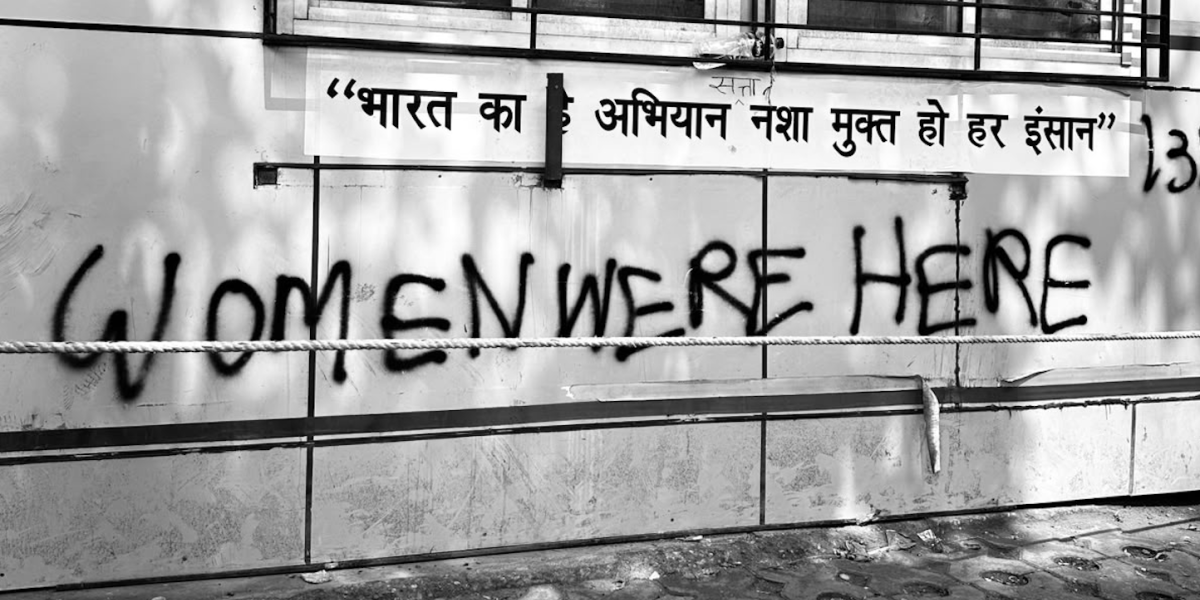
“Women were here,” reads a graffiti by protestors near Jantar Mantar in Delhi. Photo: Special Arrangement.
This is the second part of a three-part series. Read part one.
The Bombay high court’s judgment in the Tarun Tejpal case is more than just a major decision on rape law. It reflects the tensions of a society that has undergone rapid social, economic and cultural transformation over the past two decades, compelling courts to interpret constitutional principles within multiple and often conflicting social realities.PlayNextMute
Current Time 0:32
/
Duration 2:04FullscreenBackward Skip 10sPlay VideoForward Skip 10s
Advertisement
This 3-part series does not seek to revisit the facts of the case or opine upon the correctness of the judgment. Instead, it uses the judgment as a point of departure to examine larger constitutional questions that have received little attention in public discourse.
§
The Bombay high court’s judgment in the Tejpal case firmly situates Indian rape jurisprudence within an important international constitutional movement. As discussed in the first article of this series, courts across Canada, the United Kingdom, Australia and Scandinavia have progressively dismantled the stereotype of the “perfect victim”, replacing assumptions about female behaviour with the constitutional principles of autonomy, dignity and affirmative consent.
Yet comparative jurisprudence has one inherent limitation. Law travels more easily than society. Judicial principles may be borrowed, legislative reforms enacted and constitutional doctrines adopted. Social transformation, however, follows its own rhythm. It is shaped by history, economics, culture, education and lived experience. It cannot simply be imported.
Advertisement
That distinction is particularly significant for India. Most Western democracies evolved towards contemporary consent jurisprudence after several decades of gradual social change. The sexual revolution, women’s economic participation, changing family structures, public conversations around sexuality and educational reform preceded many legal developments. Law largely consolidated an already evolving social reality.
India’s experience has been fundamentally different. Our constitutional vocabulary has evolved with remarkable speed; our social vocabulary has not. This is not because Indian society is resistant to change, but because it is changing simultaneously in several directions. Any meaningful analysis of consent in contemporary India therefore requires a layered sociological lens, one that recognises the intersecting influences of class, caste, gender, religion, region, migration and economic mobility rather than searching for a single explanatory narrative.
The last three generations have witnessed transformations unprecedented in Indian history. Economic liberalisation fundamentally altered patterns of employment and migration. Women entered universities and professions in unprecedented numbers. Small towns became connected to metropolitan labour markets. The digital revolution collapsed geographical boundaries. Social media and global entertainment exposed young Indians to ideas about relationships, sexuality and personal autonomy that earlier generations rarely encountered.
These developments did not merely change behaviour. They relocated millions of Indians into entirely different social environments. The better description I prefer is not social change but cultural migration. Migration usually refers to movement across geography. Here it refers to movement across behavioural worlds.
Also read: ‘Freedom Begum’: The Impact of Gentrification on Culture
Advertisement
A young woman may grow up in a household where discussions around sexuality remain deeply uncomfortable, where marriage continues to determine social legitimacy and where parental authority shapes personal decisions. She may simultaneously study in a metropolitan university, work in an international media organisation or multinational corporation, collaborate daily with men as equals, travel independently, socialise after work and consume global digital culture.
Neither of these lived worlds are artificial. Both are equally real. The same individual therefore negotiates multiple behavioural expectations every day.

A Pinjra Tod rally on International Working Women’s Day. The informal students group was formed in 2015 and demanded equitable rights for women and men on college campuses. The collective is no longer active. Credit: Facebook/Pinjra Tod
The same complexity confronts young men. A first-generation professional from a semi-urban background may sincerely embrace constitutional ideals of equality while remaining emotionally shaped by older understandings of masculinity, pursuit and authority. His workplace encourages informality. His family often expects deference. Popular culture sends contradictory messages. Social media celebrates personal freedom while rarely discussing emotional responsibility. And then he is also exposed to the proliferation of free pornographic content.
Neither women nor men are necessarily unfamiliar with the law. Most professional institutions today provide workplace orientation, sexual harassment policies and mandatory training on maintaining safe and respectful workplaces. What these programmes rarely offer, however, is a deeper engagement with the complexities of attraction, rejection, power, emotional responsibility and consent within unequal relationships. Young professionals therefore negotiate multiple social languages simultaneously, often without a coherent behavioural framework through which to reconcile them.
Advertisement
This is where the Indian experience differs fundamentally from that of many constitutional democracies. The challenge is not merely changing values. It is the coexistence of competing value systems. There is no single Indian social experience. Another India rarely enters constitutional discourse.
Millions of migrant workers – construction labourers, security guards, drivers, factory workers and artisans – live for months, often years, away from their families. The digital revolution has given them unprecedented access to sexual imagery through inexpensive smartphones and low-cost data plans, but it has not altered the socio-economic realities that severely limit opportunities for stable, consensual intimate relationships.
The result is neither a simple story of technological liberation nor one of inevitable criminality. It is a complex intersection of migration, loneliness, economic inequality, sexual deprivation and the absence of meaningful public conversations about relationships, mental health and responsible sexuality.
Also read: Making and Unmaking Colonial Criminal Law: From Macaulay to Now
Any serious sociological understanding of contemporary India must recognise this reality alongside the experiences of urban professionals and university campuses. There, class profoundly shapes relationships. Caste continues to regulate marriage and intimacy. Religious traditions influence family structures in different ways. Urban and rural experiences increasingly coexist within the same workplace. Migration continuously redraws these boundaries.
A first-generation college student entering an elite university inhabits a different social world from someone raised within an affluent metropolitan household, even though both remain equally subject to the same constitutional guarantees.
Consequently, what appears to be one society often contains several overlapping societies. This diversity enriches India. It also complicates the law of consent. The constitution speaks one language. Society speaks many. Perhaps nowhere is this fragmentation more visible than in the institutions that shape everyday behaviour.
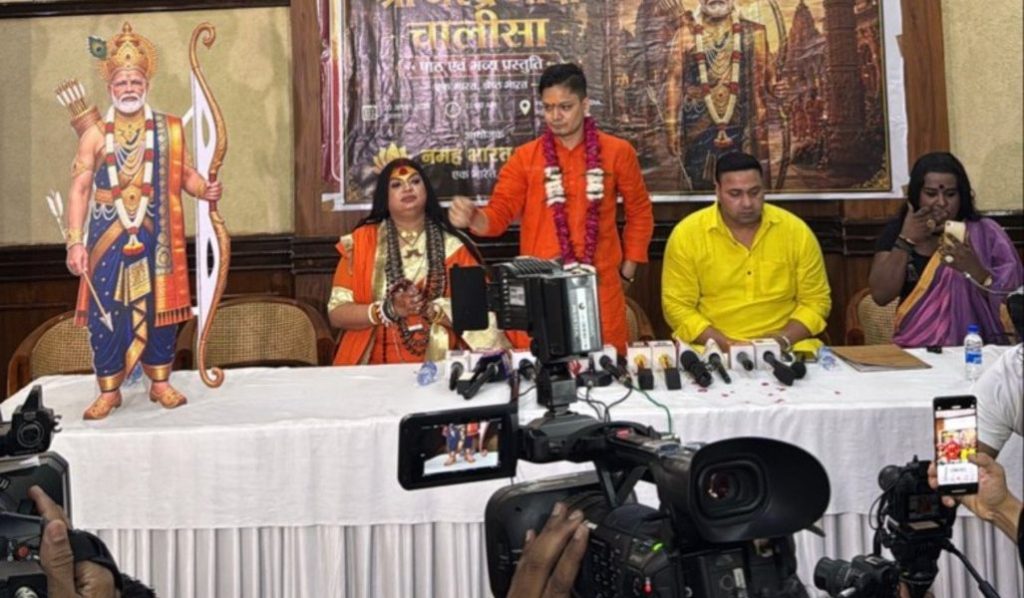
An event held at Press Club of India, New Delhi, on August 20, 2026, worshipping a cardboard cutout of Prime Minister, Narendra Modi. Photo: X/@@Sheetal2242
For generations, families, schools, neighbourhoods and community structures broadly reinforced similar expectations regarding relationships, authority and social conduct. Those expectations frequently restricted women and often denied individual autonomy. Nevertheless, they constituted a relatively coherent behavioural framework.
That coherence has steadily weakened. The family often continues to speak the language of reputation. The constitution speaks the language of autonomy. Educational institutions encourage independence but rarely teach the ethics of relationships. Corporate workplaces emphasise equality while functioning within unmistakable hierarchies of power. Popular culture projects competing ideas of intimacy, while digital media accelerates behavioural change without cultivating an equally robust ethic of responsibility.
Politics increasingly invokes questions of cultural identity. No single institution now provides a coherent civic education regarding intimacy. Instead, young Indians receive multiple and often contradictory messages. The law enters this conversation only after those contradictions have produced conflict.
India’s social transition acquired an additional complexity after 2014. Even as global conversations around bodily autonomy, workplace equality and affirmative consent increasingly influenced universities, professional spaces and digital culture, public life witnessed an assertive political project that sought to recast India’s identity through a more culturally homogeneous civilisational narrative. This represented a departure from India’s historically plural and layered social fabric, where diverse philosophical traditions, faiths, regional cultures and ways of life had long coexisted, often in creative tension.
The consequences extended beyond electoral politics. The renewed emphasis on cultural conformity inevitably shaped public conversations on gender, sexuality and family. Simultaneously, the constitutional commitment to scientific temper, critical inquiry and individual liberty increasingly encountered a public discourse centred on civilisational revival. That discourse frequently privileged selective readings of tradition as markers of cultural authenticity and national identity. The consequence was not merely a political shift but a constitutional one: the liberal promise of autonomy increasingly coexisted with narratives that reaffirmed inherited hierarchies in questions of family, gender and sexuality.
Whether viewed (by Hindutva’s proponents) as cultural renaissance or (by its critics) as ideological retrogression, this divergence also altered the normative landscape within which young Indians negotiate intimacy, hierarchy and personal autonomy. Constitutional law and sections of public discourse were no longer evolving in the same direction.
The constitutional significance lies elsewhere. Young Indians are now required to negotiate competing normative frameworks, each claiming legitimacy. The consequence is not the disappearance of older values nor the complete triumph of liberal individualism. It is the multiplication of behavioural expectations. The Nirbhaya case (2012) compelled India to confront the brutal realities of sexual violence and transformed the legal architecture governing such offences.
The Tejpal judgment (2026) belongs to the next phase of that constitutional journey. It asks a different set of questions, not about recognising sexual violence, but about understanding consent, authority, workplace hierarchy and credibility within a society whose behavioural norms are in transition. They do not arise in a social vacuum. They arise within institutions marked by hierarchy, ambition, professional dependence and changing gender relationships. Consent is negotiated not merely between two individuals but within structures of authority that simultaneously encourage informality and reproduce unequal power.
The law rightly acknowledges these realities. But it cannot itself resolve them. Indeed, this is where the constitutional challenge begins.
The law can define consent with increasing sophistication. It can reject stereotypes, recognise structural inequalities and regulate abuses of power. What it cannot do is create the shared civic vocabulary through which women and men learn to negotiate attraction, rejection, intimacy and authority before those questions become matters of criminal litigation.
The Bombay high court’s judgment therefore represents something larger than an important decision in rape jurisprudence. It reflects a constitutional democracy confronting a society whose legal understanding of autonomy has evolved more rapidly than its social institutions. Law has become more coherent than society itself. The consequences of that divergence increasingly arrive before the criminal courts.
The constitutional challenge of the coming decades will not simply be refining and enforcing the law of consent. It will ensure that society itself develops a language through which freedom and responsibility mature together.
Unless that happens, courts will continue to be asked to resolve disputes whose origins lie far beyond the courtroom. Even as we welcome the high court’s verdict in the Tejpal case, we need to remember the wider battle still to be won at the level of Indian society. No constitutional democracy, however enlightened its judges or progressive its laws, can indefinitely expect criminal jurisprudence to perform the work of social transformation.
Sandhya Gokhale is a lawyer, writer and film maker.
Author’s declaration: I used AI as a research aid while developing this series, particularly for comparative jurisprudence and checking relevant legal sources. The arguments, analysis and conclusions are my own.
PART -3
The ‘Perfect Victim’ and the Limits of Law: What the Tejpal Judgement Reveals About Consent and Power
28/Aug/2026
5 min read
The Tarun Tejpal judgment raises questions that go beyond rape law and political binaries, forcing us to confront changing ideas of consent, power, gender and responsibility.

Illustration: Pariplab Chakraborty
This is the third and final part of the series. Read part one and two.
The Bombay high court’s judgment in the Tarun Tejpal case is more than just a major decision on rape law. It reflects the tensions of a society that has undergone rapid social, economic and cultural transformation over the past two decades, compelling courts to interpret constitutional principles within multiple and often conflicting social realities.PauseNextMute
Current Time 0:03
/
Duration 2:04Fullscreen
Advertisement
This three-part series does not seek to revisit the facts of the case or opine upon the correctness of the judgment. Instead, it uses the judgment as a point of departure to examine larger constitutional questions that have received little attention in public discourse.
§
By the time the Bombay high court delivered its judgment in the Tarun Tejpal appeal, public debate had hardened into familiar binaries. For many, the judgment represented the long-overdue correction of a deeply flawed acquittal and an affirmation of women’s constitutional rights. For some, the conviction was political and that Tehelka and Tejpal, having long been hostile to the BJP and critical of its governments, had finally been made to pay a political price.
This argument deserves separate examination because its chronology presents an obvious difficulty. Tejpal’s political position had not changed when the Goa trial court acquitted him in 2021. If the BJP-led Goa government had politically engineered the prosecution to destroy an anti-BJP journalist, why did the trial court, operating within precisely that political context, acquit him? And if the subsequent conviction is itself now cited as evidence of political persecution, the allegation has moved beyond the executive to the independence and integrity of the judges.
Advertisement
Suffice it to say that an acquittal followed by a conviction on appeal does not, by itself, establish political interference; appellate courts exist precisely because courts may differ in their assessment of evidence and law. One may disagree with the high court’s reasoning, question its treatment of evidence or debate whether the threshold for overturning an acquittal was properly applied.
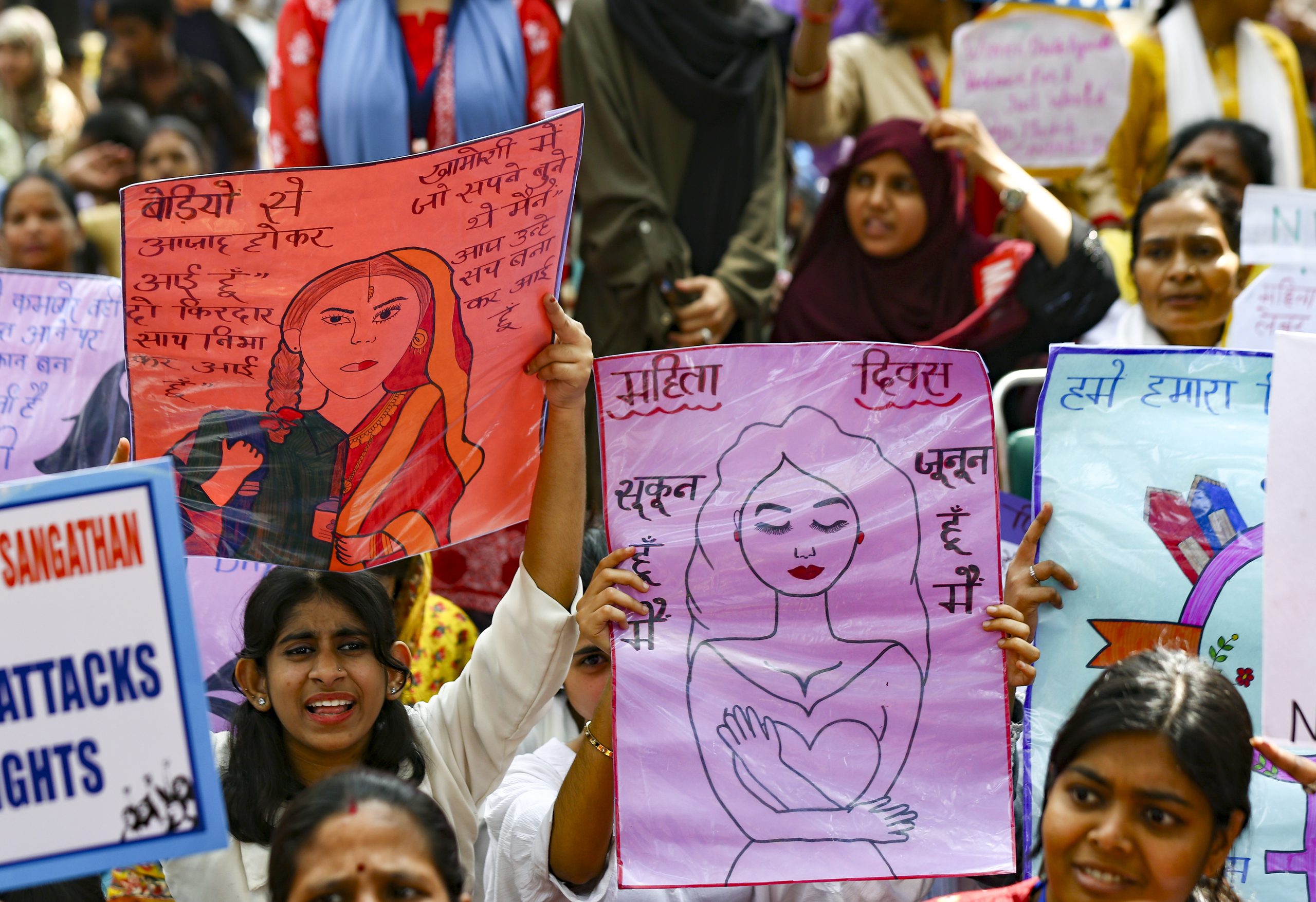
New Delhi: All India Progressive Women’s Association (AIPWA) members hold posters regarding women’s rights on the occasion of International Women’s Day, at Jantar Mantar in New Delhi, Sunday, March 8, 2026. Photo: PTI.
These are legitimate judicial questions. But converting disagreement with the reasoning into proof of political capture is another matter. If an acquittal demonstrates judicial independence while a conviction demonstrates judicial subservience, the verdict itself becomes evidence of the alleged conspiracy. Such reasoning is circular.
When political progressivism meets gender progressivism
There is, however, another and very different politics that must not be obscured by the “BJP versus Tehelka” frame: the politics of gender. Political progressivism and gender progressivism are not synonymous. Feminism has long confronted the uncomfortable fact that some of the most successful, progressive and publicly celebrated men have behaved badly towards women.
Writers, artists, academics, filmmakers, journalists, activists and political leaders who have spoken eloquently about equality and freedom have not always conducted their private relationships according to the principles they publicly defended. One of feminism’s enduring contributions has been to expose precisely this contradiction: progressive politics does not automatically produce egalitarian relationships and ideological commitment cannot be treated as evidence of conduct towards women.
This distinction matters in the Tejpal case because political ideology and gender power operate on different axes. A man may be an uncompromising critic of an authoritarian government and still occupy considerable professional and institutional power over a younger woman. He may champion civil liberties and yet fail to respect another person’s autonomy. He may belong to a progressive political culture while reproducing the gender hierarchies that feminism has spent decades exposing. There is no logical contradiction in these propositions.
Advertisement
Also read: 20 Years of the Anti-Domestic Violence Act: Why Are Women Still Waiting for Justice?
Feminist jurisprudence has, in fact, challenged the tendency to look for a particular ‘type’ of sexual aggressor: the conservative man, the violent man, the obviously predatory man, the stranger in the dark. Sexual misconduct does not conform to such a convenient taxonomy. Power can operate through hierarchy, mentorship, professional dependence, reputation, age, access and institutional authority, even where the man does not fit the stereotype of an overtly coercive male.
Equally, however, feminism cannot mean that a man’s political identity becomes evidence of guilt. The feminist challenge is precisely to examine power and conduct without allowing ideological labels to substitute for proof.
Tejpal’s credentials as an anti-establishment journalist therefore cannot become a form of immunity from scrutiny. Women’s constitutional equality requires that allegations of sexual misconduct be taken seriously, including when the accused is a celebrated or politically sympathetic man.
Advertisement
Beyond political binaries
This is where the debate becomes more difficult than the familiar contest between ‘feminist’ and ‘anti-feminist’ or ‘establishment’ and ‘anti-establishment.’ The question before the judges was whether the prosecution had established the offences charged, on admissible evidence and to the standard required for criminal conviction. That is ultimately where the judgment must stand or fall.
Whether Tejpal ought to have been convicted or the trial court’s acquittal affirmed, are questions the Supreme Court will no doubt examine as part of the appellate process. Reducing the judgment to a political referendum is therefore flawed. Its deeper constitutional significance lies elsewhere: can criminal law meaningfully resolve conflicts arising not merely from individual misconduct, but from a society undergoing rapid, uneven and often contradictory social transformation?
The Bombay high court consciously rejects one of the oldest assumptions in rape jurisprudence: that there exists a recognisable behavioural pattern by which courts can identify a truthful complainant. It dismantles the ‘perfect victim’ stereotype, holding that delayed disclosure, continued interaction with the accused, outward composure or apparent inconsistency cannot, by themselves, undermine credibility. This is more than an act of compassion. It is a necessary correction to psychological myths masquerading as common sense.

‘Reclaim the Night,’ a global feminist campaign demanding that women have the fundamental right to safely occupy public spaces at night, protesters at an event in Jadavpur, Kolkata, on September 7-8, 2025. Photo: By arrangement.
The judgment also compels a more nuanced understanding of power. The relationship between the parties cannot be understood merely as one between two adults; it was mediated by institutional authority. The accused was an employer, mentor, public figure and someone capable of influencing the complainant’s professional future.
Power is seldom exercised through explicit threats alone. It may operate through aspiration, admiration, dependence, fear of exclusion and institutional culture. Such invisible hierarchies can shape autonomy in workplaces, universities, media and creative industries, often leaving little documentary evidence.
Law must recognise these realities without converting every asymmetrical relationship into a presumption against consent. Inequality is constitutionally relevant, but not constitutionally conclusive. That distinction will become increasingly important as allegations of sexual misconduct arise within professional relationships marked by mentorship, collaboration and unequal institutional power.
This brings us back to an issue raised in the earlier articles in this series: India today is experiencing not merely legal reform, but also profound cultural migration. Social institutions no longer speak a common language about intimacy, authority, sexuality and consent. Families, workplaces, universities, politics, cinema and digital media often communicate conflicting behavioural expectations. When these expectations collide, the conflict ultimately reaches the courtroom.
What law cannot do
The temptation is to expect judges to supply the coherence that society itself lacks. That expectation is misplaced. Criminal courts are institutions of adjudication. They determine liability; they do not create social ethics.
A judgment can define consent in legal terms, but it cannot teach people how to negotiate attraction responsibly. It can punish an abuse of power, but it cannot cultivate mutual respect. It can recognise autonomy, but it cannot create the emotional literacy necessary to exercise autonomy responsibly.
Those tasks belong elsewhere – to families willing to speak honestly about relationships; to schools and universities willing to move beyond biological instruction towards a serious engagement with relationships, boundaries and responsibility; to workplaces willing to acknowledge power without infantilising adults; and to a public culture capable of discussing intimacy without reducing it either to moral panic or libertarian slogans.
Also read: Beti Padhao, Beti Chup Karao: How Women Were Targeted After the Jantar Mantar Protests
Law intervenes after many of these institutions have failed. That is why criminal courts increasingly appear burdened with questions they were never designed to answer. Every generation imagines that legislation and judicial decisions can resolve its deepest social conflicts. History suggests otherwise. Law can prohibit coercion, protect dignity, expose prejudice and refine the meaning of consent. It cannot create the civic culture within which freedom is responsibly exercised. That remains the unfinished task of society itself.
The Bombay high court has performed an important constitutional function by rejecting the legal fiction of the ‘perfect victim.’ The larger challenge, however, lies beyond the courtroom.
India must develop a shared civic vocabulary through which freedom, equality, desire, rejection, authority and responsibility can be negotiated long before they become subjects of criminal litigation. If we continue to expect judges to perform that work, we ask criminal law to compensate for failures that originate far beyond its constitutional competence.
Perhaps that is the most enduring lesson of the Tejpal judgment. Not that the law has finally answered the question of consent, but that it has reached the point where society must begin answering it too.
Sandhya Gokhale is a lawyer, writer and film maker.
Author’s declaration: I used AI as a research aid while developing this series, particularly for comparative jurisprudence and checking relevant legal sources. The arguments, analysis and conclusions are my own.


Leave a comment