

Steinbeck dreamt of an America that was not defined by ruthless power or an expansionist’s triumph, but by principles of empathy, justice, and dignity.
3 hours agoShare
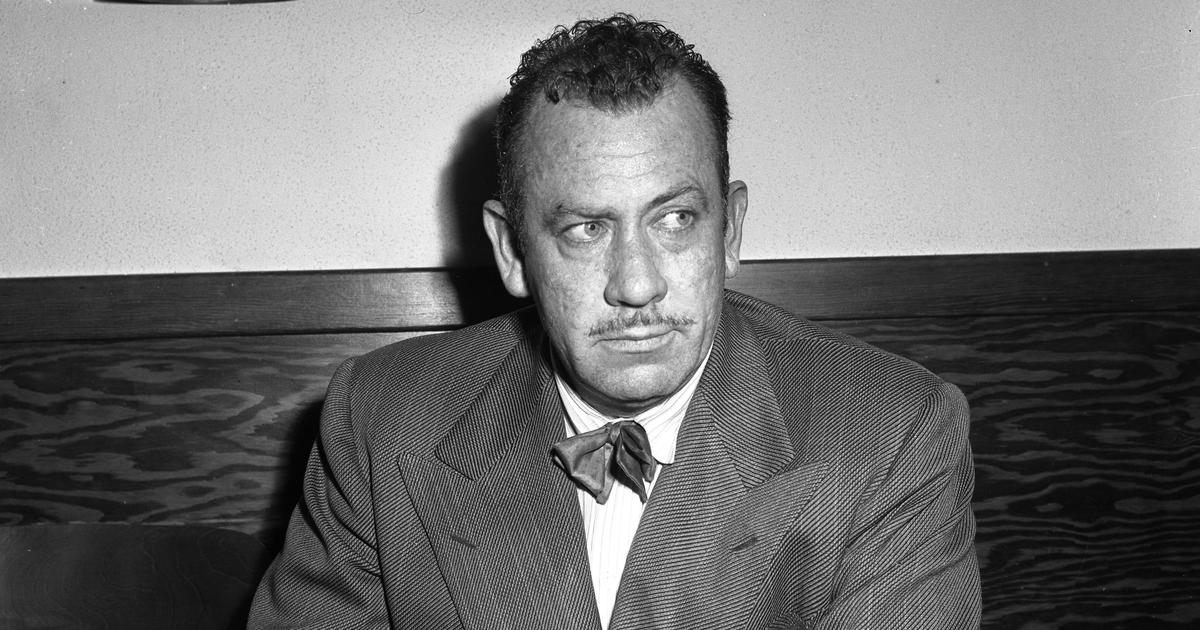
The United States of America turned 250 this year amidst political upheaval, economic anxiety, and declining trust in institutions. This has left many Americans questioning the meaning of national-level experiments. At such a moment, I pondered over the writings of John Steinbeck, which felt surprisingly contemporary. More than half a century after his death, the author’s works still reflect upon the moral choices that confront the nation today.
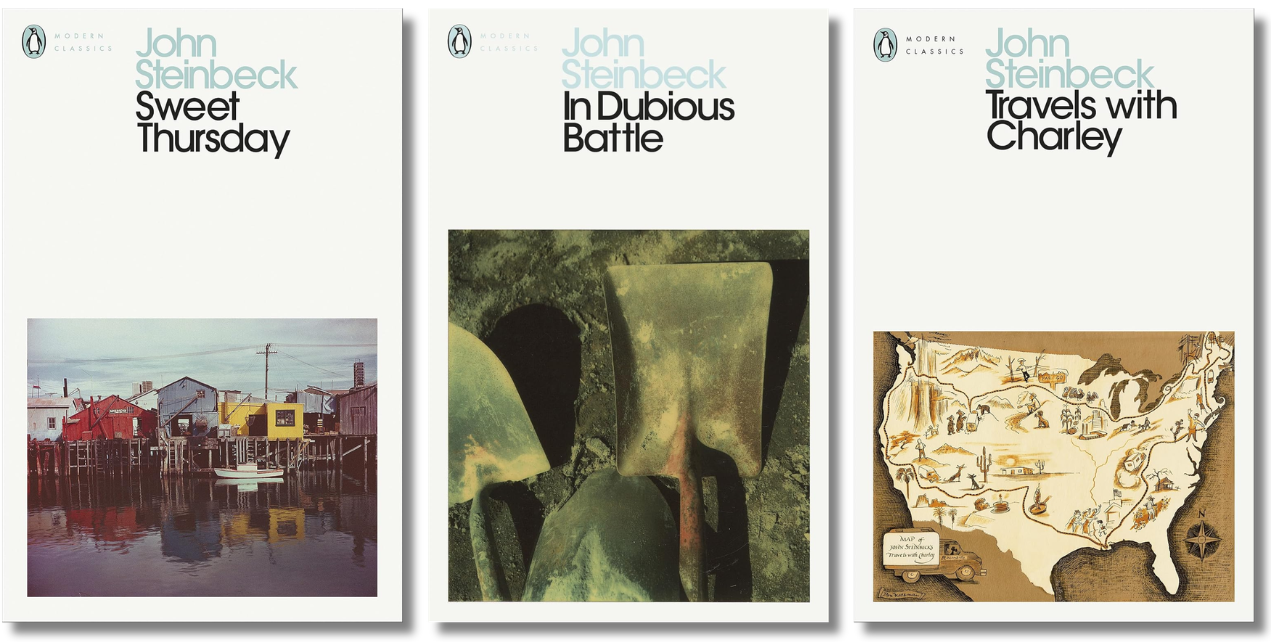
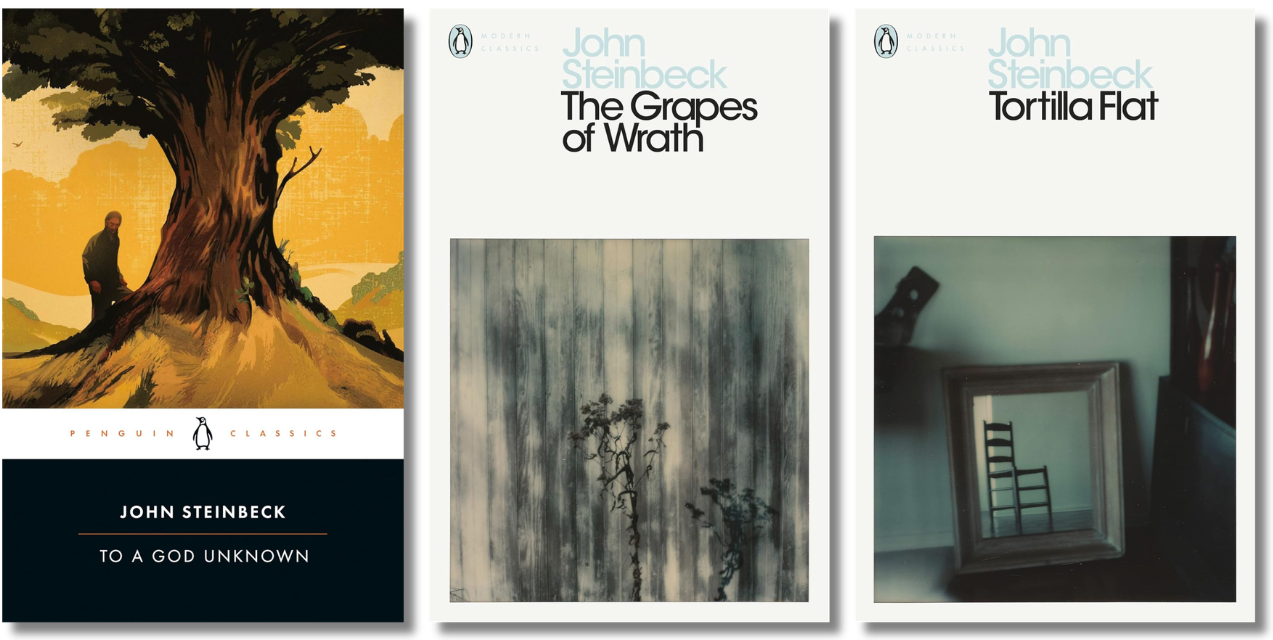
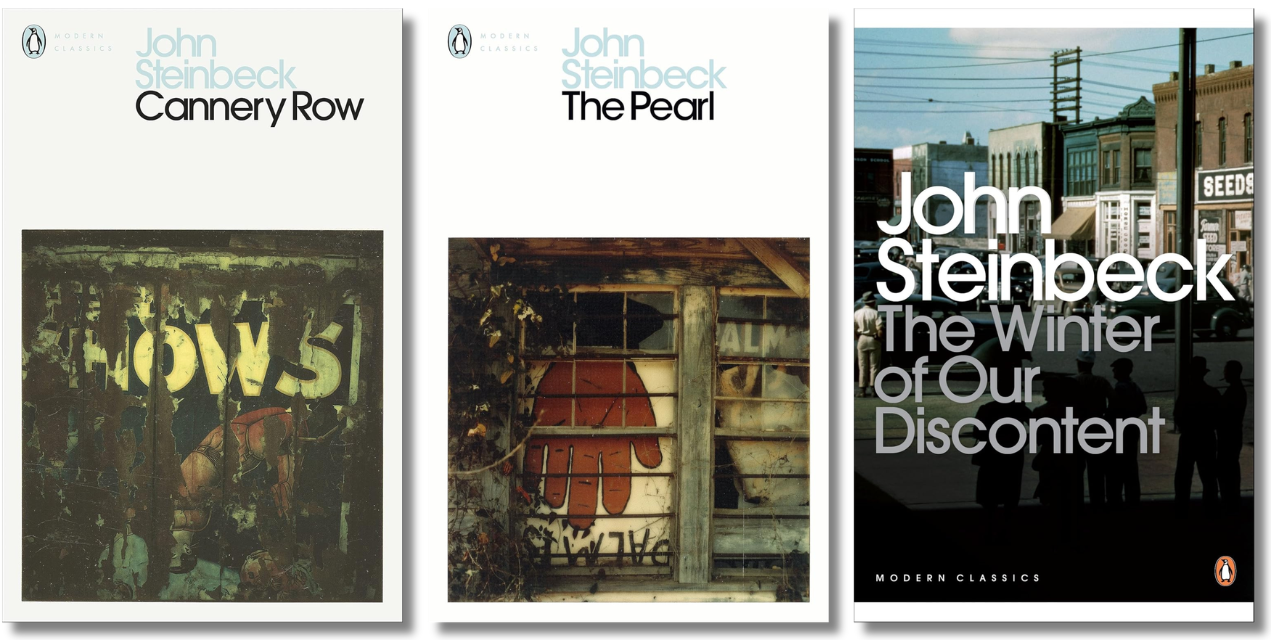
In the words of his biographer, Jay Parini, “Steinbeck is one of the great writer-didacts, which means he was a perpetual student of humanity’s ways and means. Like Emerson, the founder of what critic Harold Bloom has called ‘the American religion’, Steinbeck ransacked the natural world for signs of immortality…He was, in Emerson’s great phrase, an instance of a Man thinking, a person whose thought was ongoing, exploratory, and always contingent, situated both temporally and spatially.” Steinbeck’s later writings, such as East of Eden, The Winter of Our Discontent, America and Americans, Travels with Charley: In Search of America, seem relevant, and this relevance prods the capacity to see his land as of promise and peril. He understood his nation as a moral process constantly negotiating between the American Dream and reality.
Before you scroll further…
Get the best of Scroll directly in your inbox for free.
The spirit of America
In one of his letters to Pascal Covici, his publisher, as found in Steinbeck: A Life in Letters (1976), he expressed what he thought when he had undertaken a trip across America that was to become a book titled Travels with Charley: In Search of America (1962):
“In all my travels I saw very little poverty, I mean the grinding terrifying poorness of the Thirties. That at least was real and tangible. No, it was sickness, a kind of wasting disease. There were wishes but no wants. And underneath all building energy like gases in a corpse. When that explodes, I tremble to think what will be the result. Over and over, I thought we lack the pressures that make men strong and the anguish that makes men great. The pressures are debts, the desires are for material toys, and the anguish is boredom.”
Steinbeck dreamt of an America that was not defined by ruthless power or an expansionist’s triumph, but as a nation that stood for empathy, justice, dignity, freedom to be, and the provision of moral courage to its citizens, especially marginalised communities. The spirit of America lay in communal responsibility, the suspension of unchecked tyranny, the upliftment of the democratic soul, and the ideal of an ideal nation. For the author, America has always been a land of “shared humanity”; in The Grapes of Wrath he writes, “I’m learnin’ one thing good, learning it all the time, ever’ day. If you’re in trouble or hurt or need-go to poor people. They’re the only ones that’ll help-the only ones.”
His writings are rife with individuals and communities caught between self-interest and responsibility, guilt and redemption, and isolation and belonging. Steinbeck travelled from coast to coast across America to reacquaint himself with the country of his birth, with his dog Charley and Rocinante, a specially converted pick-up truck. The ten-thousand-mile tour of rediscovery, observation, and attempts to learn about the local people of each province became an eye-opener for the author. In New Hampshire, in the White Mountains, he met a farmer and attempted to find out what he thought of Khrushchev being at the United Nations. The conversation over coffee and dollops of a 21-year-old applejack went thus:
When asked about the elections, the farmer was of the opinion, “I wish I knew, people aren’t talking. I think this must be the secretest election we ever had. People just won’t put out an opinion.”
Advertisement
Steinbeck further prods him on, “Could it be they haven’t got one?”
“Maybe, or maybe they just don’t want to tell. I remember other elections when there would be pretty peppery arguments. I haven’t heard even one.”
Then Steinbeck writes, “And that’s what I found all over the country – no arguments, no discussions.” People were afraid to express their political views openly. On reflection, Steinbeck would be saddened to witness the present political scenario. His mindset, which vociferously holds that democracy is a habit of empathy rather than just a system of governance, challenges contemporary Americans to measure their nation by how it treats its most vulnerable.
‘Timshel’ and moral choice
Steinbeck’s moral ideology can be distilled into a solitary word and concept – the Hebrew word “timshel” that translates to “thou mayest” – as written about in East of Eden. This idea interprets the biblical story of Cain and Abel from a tale of preordination to a story of moral agency and free will. Rather than suggesting that humans are destined to repeat their sins, Steinbeck holds that they always retain the freedom to choose good over evil. This is the ethical core of the novel and, by extension, a basis for understanding America itself.
Advertisement
East of Eden weaves the fable of Cain and Abel into its plot. The novel is based on the stories of two families, the Trasks and the Hamiltons. Charles and Adam Trask embody the destructive consequences of jealousy and rejection, while Cal and Aron represent the struggle between light and darkness within their soul. It’s through Lee, the Chinese servant, that Steinbeck articulates the essence of the expression “timshel”. “But ‘Thou mayest’! Why, that makes a man great, that gives him stature with the god, for in his weakness and his filth and his murder of his brother he has still the great choice. He can choose his course and fight it through and win.”
It is heartening to see how Steinbeck made a Chinese immigrant the voice of stability in East of Eden. Lee is well-read and a strong, sturdy force in the Trask family, and the one who keeps Adam Trask and his children alive. When Adam, his master, wonders how Lee could cook, raise his boys, take care of Adam and still read books, Lee replies, “But I take my two pipes in the afternoon, no more no less, like the elders. And I feel that I am a man. And I feel that a man is a very important thing-maybe more important than a star. This is not theology. I have no bent toward gods. But I have a new love for the glittering instrument, the human soul. It is a lovely and a unique thing in the universe. It is always attacked and never destroyed – because ‘Thou mayest’.” The translation is not “thou shalt” or “thou must”, but “thou mayest”; humans are not enslaved to faith. The author rejects ‘deterministic philosophies’ that justify sins as inevitable or predestined; moral responsibility always stays with the individual. The book is not just a family saga but a national allegory. America, like Cal, carries the weight of the past – slavery and exploitation – yet it still has the capacity to redeem itself if it so wishes.
Migrants, margins, and moral visibility
The character of Lee in East of Eden is significant. As a Chinese immigrant in early 20th-century America, he stood in the margins, yet he became the novel’s most morally insightful sketch. He has been endowed with intellectual authority and spiritual depth. He spoke pidgin as, “Pidgin they expect, and pidgin they’ll listen to. But English from me they don’t listen to, and so they don’t understand it.”
When Sam Hamilton enquires, “If you cut your queue, dressed and talked like other people?”
Advertisement
Lee replies, “No. I tried it. To the so-called whites I was still a Chinese, but an untrustworthy one; and at the same time my Chinese friends steered clear of me. I had to give up.”
He felt more foreign in his own country than in America: “You can believe it or not – I’m less foreign here than I was in China.” The author understood the plight of immigrants in America and it resonates deeply in today’s political climate. Steinbeck portrays Lee as learned and trustworthy, thus directly challenging America’s growing suspicions towards its immigrant populations.
In Travels with Charley: In Search of America, Steinbeck writes about his meeting with many immigrants: “I’ve seen many migrant crop-picking people about the country: Hindus, Filipinos, Mexicans, Okies away from their states. Here in Maine a great many were French Canadians who came over the border for the harvest season. It occurs to me that, just as the Carthaginians hired mercenaries to do their fighting for them, we Americans bring in mercenaries to do our hard and humble work. I hope we may not be overwhelmed one day by peoples not too proud or too lazy or too soft to bend to the earth and pick up the things we eat.”
As he interacted with them, he came to know quite a bit about them; they came over the border every year for the potato harvest. With everyone working, it made a nice little pool against the winter. “Did they have any trouble with the immigration people at the border? Well, no. The rules seemed to relax during the harvest season, and besides, the way was smoothed by a contractor to whom they paid a small percentage of their pay. But they didn’t really pay him. He collected directly from the farmers.”
Advertisement
There was a time, as per the author, when farmers tried to get more labour than they actually needed to keep the wages low. However, when Steinbeck was on his tour of America, he was told that this seems to be no longer true because government agencies channel only as many labourers as are required and fix a minimum wage. In other cases, the migrants have been driven to movement and seasonal work by poverty and terrible need.
As Steinbeck treated them to beer and pop, he wrote, “Surely my guests for the evening were neither mistreated nor driven. This clan, having put their own small farm to bed for the winter in the Province of Quebec, came over the line to make a small egg nest…these were a hardy and self-sufficient people, quite capable of taking care of themselves.”
Profit, power and populism
Steinbeck further wrote, “The big towns are getting bigger and the villages smaller. The hamlet store, where grocery, general, hardware, clothing cannot compete with the supermarket and the chain organisation. Our treasured and nostalgic picture of the village general store, the cracker-barrel store where an informed yeomanry gathers to express opinions and formulate the national character, is really disappearing. People who once held family fortresses against wind and weather, against scourges of frost and drought and insect enemies, now cluster against the busy breast of the big town.” Here he expresses his disappointment about the vanishing warmth of the homely, neighbourhood shops, symbolic of the disappearance of a collective existence as the nation gallops on to fulfil the American dream of excess. Would this resonate with today’s Americans, one cannot tell, but it is undeniable how individualistic the US often feels, especially to outsiders.
He then goes on to say, “The new American finds his challenge and his love in traffic-choked streets, skies nested in smog, choking with the acids of industry, the screech of rubber and houses leashed in against one another while the townlets wither a time and die. And this, as I found, is as true in Texas as in Maine. Clarendon yields to Amarillo just as surely as Stacyville, Maine, bleeds its substance into Millinocket, where the logs are ground up, the air smells of chemicals, the rivers are choked and poisoned and the streets swarm with this happy, hurrying breed. This is not offered in criticism but only as an observation.”
Advertisement
The US is as resilient as Steinbeck’s characters. Ma Joad in The Grapes of Wrath strongly reiterates the spirit of the America that is sturdy and remains unbroken even when faced with challenges, “We’re the people that live.” The American soul reverberates with an uncanny ability to persist and survive even in the face of the most unfortunate tragedies. In East of Eden, Steinbeck writes this as if it were a message for his countrymen in present America:
“A child may ask, ‘What is the world’s story about?’
And a grown man or woman may wonder, ‘What way will the world go? How does it end, and, while we’re at it, what’s the story about?’
I believe that there is one story in the world, and only one, that has frightened and inspired us, so that we live in a Pearl White serial of continuing thought and wonder. Humans are caught in their lives, in their thoughts, in their hungers and ambitions, in their avarice and cruelty, and in their kindness and generosity too- in a net of good and evil. I think this is the only story we have, and that it occurs at all levels of feeling and intelligence.
Virtue and vice were warp and woof of our first consciousness, and they will be the fabric of our last, and this despite any changes we may impose on field and river and mountain, on economy and manners. There is no other story.”
Today, as the nation stands at a crossroads, it can choose to rule its people with fear and ruthless profiteering or with empathy and gainful purpose. The concept of “timshel” is more urgent than ever. And in the words of Steinbeck, it is time for America to just “be” – not perfect but good.
Navanita Varadpande is presently pursuing a PhD in English Literature and her research focuses on the works of John Steinbeck.


Leave a comment