

K A Shaji
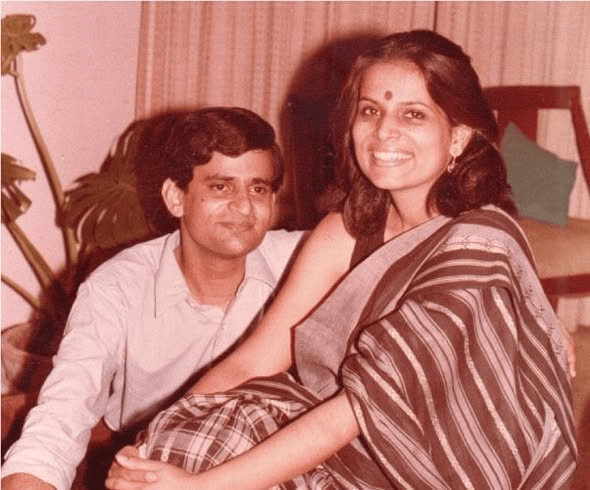
Some deaths take time to become real. Comrade Sonya Gill is one of them.
She had been unwell for some time, but there was no indication that the end was so near. Sonya was on an evening walk in Mumbai yesterday when she suddenly fainted. Shortly afterwards, she passed away.
For more than two decades, Sonya was a quiet and immensely strong presence in my life. We never met in person. Yet, whenever life became difficult, she would call. She would listen, console me, and somehow make things a little easier.
Those occasional calls became a precious thread of friendship stretched across the years. I never imagined that one day I would wait for a call that would never come.
I had invited Sonya and P. Sainath to Kerala many times. Sainath came often, on journalistic assignments and drives, and I accompanied him on many of them.
Every time I would tell him, “Bring Sonya next time.” He would smile and say she had her own hectic commitments. Then he would reassure me: “She will come soon.”
I believed him. I thought there would always be another time.
Two years ago, that time finally seemed to have arrived. My family and I were in Mumbai, and Sonya and Sainath had invited us home. Sonya waited for several hours to meet us.
But that was the day the Mundakkai-Chooralmala landslides devastated Wayanad. I was elsewhere in Mumbai, compelled by the unfolding disaster to write, report, and participate in television discussions.
I had to postpone the visit. By the time I could go, Sonya had left for a scheduled meeting outside Mumbai.
Later that evening, Sainath told me: “Sonya was waiting all these hours to meet you.”
We never met.
Those words have become unbearably painful.
But Sonya’s life deserves to be remembered for far more than an unfinished personal meeting. She was a committed political and social worker whose life was rooted in the struggles of women, workers, the poor and the marginalised.
She was not merely P. Sainath’s wife. To describe her only in those terms would diminish a remarkable life of her own.
For more than three decades, Sonya worked with the All India Democratic Women’s Association, beginning with grassroots organising in Mumbai and later taking on responsibilities at the Maharashtra and national levels.
She worked among women in working-class communities, organised and trained activists, and fought on issues ranging from violence against women and food security to healthcare, dignity and democratic rights.
Her politics was patient, disciplined and deeply rooted in people’s lives. She was not drawn to public recognition. Her contribution lay in organising, building political consciousness and strengthening women’s collective voice.
Those who worked closely with her remember precisely this quality. Mariam Dhawale, who worked with Sonya for 32 years, has spoken of her meticulous attention to the political and organisational training of women activists and of the determination with which she helped expand the movement across Maharashtra, even overcoming the linguistic difficulties she faced when she became state secretary.
That was Sonya’s politics: serious, committed and without the need for applause. She continued that work with extraordinary courage even while battling illness, remaining involved in AIDWA activities almost until the end.
And then there was her relationship with Sainath. They were an extraordinary couple, bound not simply by marriage but by a shared political commitment to people who are routinely ignored by power. Their lives often took them in different directions. He travelled for journalism; she travelled and worked for the women’s movement. Yet they understood and strengthened each other’s work.
I heard from Sainath over the years how deeply Sonya supported his journalism, including during the making of Everybody Loves a Good Drought. She understood the world he was documenting and the struggles behind the statistics and stories. Behind much of his public work stood a companion who shared its moral purpose.
History often remembers the name on the book, the article or the stage. It does not always remember those who quietly strengthen the work and make it possible. Sonya was one of those people.
But for me, she will remain something more personal: the unseen friend at the other end of the telephone. The friend who called when life became difficult. The voice that offered affection and reassurance without asking anything in return. The woman who waited for me in Mumbai. The person I kept asking Sainath to bring to Kerala.
Now there will be no next visit. No postponed meeting to reschedule. No sudden phone call.
There is a particular sadness in losing someone with whom a friendship remains unfinished. We keep saying “next time”, believing that time belongs to us.
Until suddenly it doesn’t.
Sonya gave me friendship without ever meeting me. She touched my life without ever sitting across from me. And I will carry the memory of that unfinished meeting for the rest of my life.
I am sorry we never met, Sonya.
I am sorry that when you waited for me that day, I could not come.
But I will remember you not for the meeting we missed, but for the life you lived — for women, for the poor and marginalised, for dignity, equality and democratic rights, and for the belief that politics must ultimately belong to those whose voices are too often unheard.
You lived for causes larger than yourself. You strengthened a movement and touched the lives of countless people.
For me, though, you will always be the friend I never met.
The voice I will never hear again. The meeting that never happened. We never met.
And that is the one sentence I wish I did not have to write.
Comrade Sonya Gill Amar Rahe.
May be an image of smiling. May be an image of text that says ‘Sonya Gill PARI Co Founder and Trustee passed away on August 25, 2026 ΜΑΔΑΛΔΑ uO ( RAXIS Sonya worked for decades Sonyaworked.fordecadesonwomen on women’s rights issues and had been Secretary of AIDWA, Maharashtra.’. May be an image of one or more people
Shared post
·
·
 Author
For those in Mumbai, her final journey will begin at 12:30 pm from Lilavati Hospital to her residence at 27, Sagar Sangam Building, Bandra Reclamation. At 1 pm, the body will be taken to the CPI(M) Janshakti Party Office in Worli, where it will remain until 2:30 pm for public viewing. The funeral procession will then proceed to the Dadar Electric Crematorium, where the cremation will take place at 3:30 pm.
Reply
·
·
by Author
K A Shaji A poignant tribute to a person whose life is now touching mine through your words that give life to the inner radiance of a beautiful soul
Reply
·
A heartfelt tribute to a great humanitarian leader
Reply
·
·
by Author
Thank you for sharing Sonya’s and your remarkable story  . May her soul Rest in Peace. Some frienships are so poignant. May you find peace and closure in the knowledge that she was an unconditional soul. Only a few are blessed with such friends.
Reply
·
Sad to hear of her passing. Knew Soniya and Sainath from JNU days in the late 1970s.
Reply
·
·
·
by Author
Remember meeting PSainath and Sonia in my years in Pune and Maharashtra. Heartfelt condolence. She made a difference to the marginalized people and women with her life and work. Salute to a great human being and activist. Rest in power.

K A Shaji
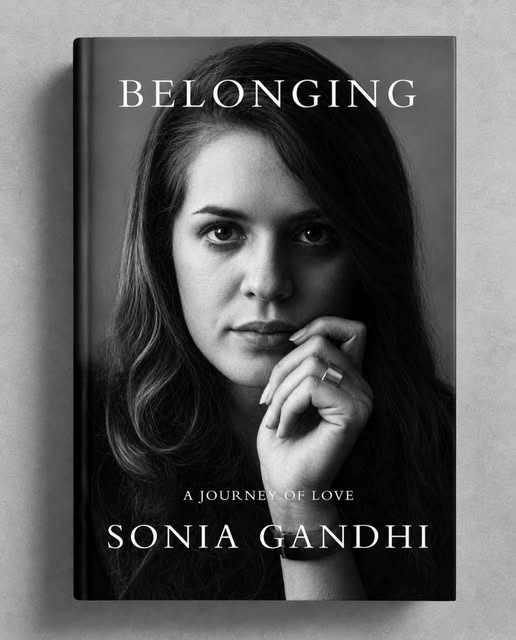
I am waiting for Sonia Gandhi’s ‘Belonging: A Journey of Love’ with an anticipation I find difficult to explain.
Perhaps because, for me, Sonia Gandhi is not merely a political figure. She is also a reminder of how political prejudice can shape our perceptions, and how time, history and experience can force us to look again at someone we thought we had understood.
I grew up in Kerala as a left-leaning Malayali. And like many of my generation, I inherited a certain hostility towards the Nehru-Gandhi family. The CPI(M) and the BJP, despite being ideological opposites, often found a strange common language when it came to ridiculing the Gandhis. Sonia was an especially easy target.
Her Italian origin was mocked. Her relationship with Rajiv Gandhi was reduced to gossip and insinuation. Her years in Cambridge were twisted into caricatures.
The Bofors controversy was repeatedly thrown at her by association. She was described as politically immature, intellectually inadequate and incapable of understanding India.
After Rajiv Gandhi’s assassination, she was portrayed as an ambitious power centre who had hijacked the Congress and was manipulating Indian politics from behind the curtain.
At one point, even those who otherwise spoke endlessly about political morality found reasons to defend P. V. Narasimha Rao against her, as if Sonia Gandhi was somehow the greater threat to Indian democracy.
I believed much of it. Or at least I absorbed enough of it to dislike her without ever having seriously tried to understand her. Then something changed. It was not one speech or one political event. It was watching her over the years.
I began seeing a woman who had entered Indian public life not out of hunger for office, but almost against the grain of her own life.
She had married into one of the most powerful political families in the world. She lost her mother-in-law, Indira Gandhi, to assassination. Then she lost her husband, Rajiv Gandhi, also to an assassin. She lived through the destruction of an intensely private family life by the violence of Indian politics.
And yet she did not turn bitter. That, increasingly, became the Sonia Gandhi I came to respect.
She entered politics late. She learned. She listened. She evolved.
And perhaps most importantly, she did not behave like someone who believed that political inheritance automatically entitled her to the country’s highest office.
In 2004, after the Congress-led alliance won the election and she was chosen as its prime ministerial candidate, she refused to become Prime Minister. Her own explanation was that power and position were never her aim and that she wanted to defend India’s secular foundations and the interests of the poor.
History may debate her reasons. It should. But I cannot forget the symbolism of that moment. In a country where politicians have repeatedly bent institutions, parties and principles to acquire power, Sonia Gandhi walked away from the most powerful political office in the land.
And she did something else that I found even more remarkable. She chose Manmohan Singh. An economist. A scholar. A former civil servant. A man without a mass political base. A man who did not belong to the family.
The relationship between Sonia Gandhi and Manmohan Singh remains one of the most fascinating political partnerships of modern India. Their correspondence and accounts of the UPA years reveal a relationship built on trust, respect and a deliberate accommodation between Sonia’s social-democratic instincts and Singh’s economic outlook. For me, that was a lesson in power.
Sonia Gandhi did not have to occupy the Prime Minister’s chair to exercise political influence. She understood that political authority could also mean creating space for another person to lead.
Through the UPA years, institutions and laws emerged that mattered enormously to ordinary Indians: MGNREGA, which created a statutory guarantee of rural employment; the Forest Rights Act; and the 2013 land acquisition law, with its emphasis on compensation, rehabilitation, social impact assessment and consultation.
I have spent much of my journalistic life among farmers, Adivasis, displaced people, workers and communities fighting for land, forests and dignity.
So I cannot look at these things merely as political slogans. I have seen what a wage guarantee can mean to a poor rural family.
I have seen what land means to a tribal family. I have seen what displacement does to people who have nowhere else to go. That is why, over time, my understanding of Sonia Gandhi became less about the Congress and more about the kind of India she represented at her best: secular, plural, compassionate and suspicious of unrestrained power.
She also demonstrated something rare in Indian politics: respect for knowledge. I remember watching her engage with people whose intellectual stature she clearly respected, including leaders from the Left such as Sitaram Yechury. Political disagreements did not necessarily become personal hatred. That quality matters to me.
Because democracy is not merely about defeating the other side. It is also about recognising the humanity and intelligence of people with whom you disagree. And then there is the woman behind all this politics.
The mother. The widow. The daughter-in-law who became the custodian of an extraordinary political inheritance. The mother of Rahul and Priyanka.
Whatever one thinks of the Gandhi family politically, I have always been struck by the dignity with which Sonia has tried to protect her children from the uglier dimensions of politics. She did not make motherhood a political spectacle. She carried enormous personal grief without converting it into a permanent political grievance.
That is another reason I admire her. She could have lived forever as the grieving widow of Rajiv Gandhi. She could have remained permanently angry with India.
She could have used the assassinations, the abuse, the political attacks and the humiliation as reasons to retreat into bitterness. She did not. She stayed. She worked. She endured. She hoped.
And perhaps that is why the word Belonging moves me even before I have read a single page. Here was a woman born in Italy who spent decades being told that she did not belong in India.
Yet she ultimately became, in the eyes of millions, part of India’s own political and emotional landscape. She was never really allowed to be simply Sonia.
She was always Sonia Gandhi. The foreigner. The widow. The daughter-in-law. The Congress president. The supposed power centre. The supposed puppet master. The alleged queen.
But I don’t think she was ever a queen. She was something more complicated and, in many ways, more interesting. A woman who inherited extraordinary power but never became intoxicated by it.
A woman who was repeatedly told that she did not belong, yet chose to belong. A woman who lost almost everything personally and still refused to become cynical.
A woman who could have claimed the Prime Minister’s office and instead put Manmohan Singh in it. A woman who, through the National Advisory Council and the UPA political process, helped push ideas that became some of the most consequential rights-based laws of contemporary India.
And now, at 79, she is finally telling her own story.
That is what makes Belonging so important to me. I don’t expect a hagiography. I don’t want one. I want the uncomfortable truths. I want to know what really happened inside that family.
What did Indira Gandhi mean to her? What did Rajiv’s death do to her? What did she really think when she was abused for being Italian? What did she feel when Congressmen wanted her to become Prime Minister?
Why did she refuse? What was her real relationship with Manmohan Singh? What did she think of the Left? What did she think of Yechury and others who could disagree with her without dehumanising her?
What did power look like from inside 10 Janpath? And what does it mean for a woman to spend six decades watching India change while carrying the burden of one of its most consequential political families?
The publisher says the book is, among other things, a homage to the humanity and failings of the people whose lives have been repeatedly mythologised. That is precisely the book I want to read. Because perhaps the greatest irony of Sonia Gandhi’s life is this:
The woman who was accused of being an outsider may have spent more of her adult life trying to understand India than many of those who claimed to speak for it.
I began by disliking Sonia Gandhi because I inherited a political narrative about her. I ended up admiring her because I watched the woman beyond that narrative. That journey from prejudice to respect is mine.
And perhaps that is why I am waiting for Belonging not merely as a political memoir, but as a deeply personal reckoning with a woman who, after all the violence, accusations, ridicule, grief and power surrounding her, chose neither bitterness nor escape.
She chose to belong. And I want to hear, in her own voice, what that choice cost her.
Shared post


Leave a Reply