

https://ullatchi.in/article/puliyanthope

Story byAswathy Sreedhar and Akshara Sanal
Keep scrolling
Chennai’s Puliyanthope slaughterhouse labourers who work amid civic neglect for generations.
What was supposed to be a two-month stay in a temporary, congested facility has extended to almost a year for the labourers at Chennai’s Puliyanthope slaughterhouse.
“The GCC began renovation work in 2025 to modernise the facility. As part of the project, around eight months back, the cattle slaughter section was shifted to a smaller, temporary space within the premises,” said M. Saravanan, Councillor of Ward 72, where the slaughterhouse is located.
Established in 1903 by the British to slaughter bullocks, the Puliyanthope slaughterhouse is the oldest in Chennai and has remained the city’s primary meat supplier for over a century. It is also the only facility in Chennai to slaughter both goats and cattle.
Ullatchi visited the slaughterhouse as it runs at present, only to find lapses of a scale that brings into question whether a renovation alone would fix the way the facility has operated for decades.
A century of neglect
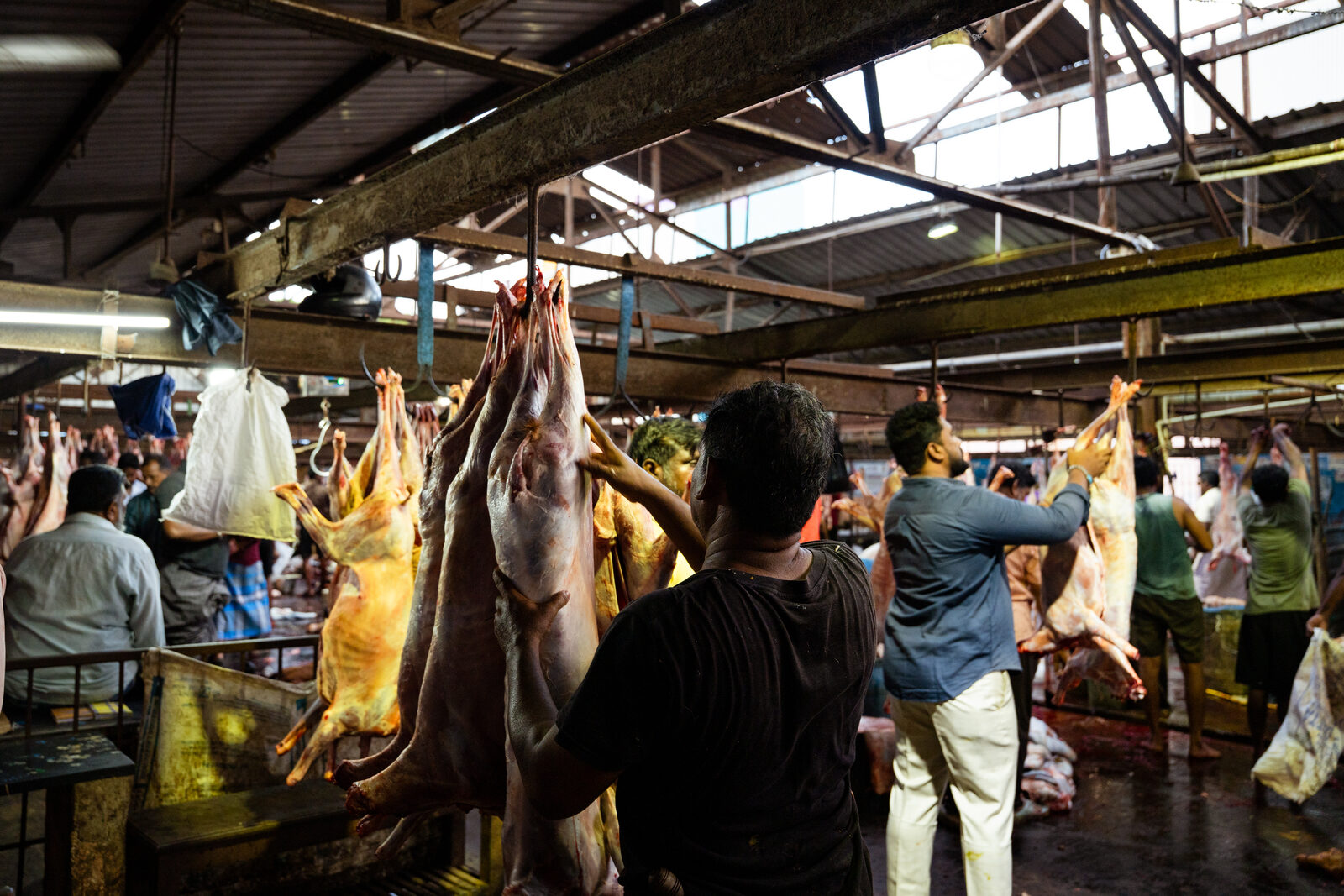
Govindan has been skinning goats at the slaughterhouse since he was 20. Now 67, he has spent nearly five decades doing this work. “Every day, we start work at 4 am and continue until 12 pm. On Sundays, we begin even earlier, at 12 am. This has been my routine for years,” he said.
There are workers in their 20s, as well as 70s, at the facility. They perform physically demanding tasks throughout the day, from unloading and tending to animals to slaughtering, hoisting carcasses onto hooks, skinning, sorting and loading the meat. For many, this work has been passed down through generations.
More than 300 labourers are each involved in goat and cattle slaughter at the Puliyanthope facility. Additionally, there are more than 100 regular traders and vendors each. At present, goats are sourced mainly from Uttar Pradesh, Rajasthan and Madhya Pradesh, and cattle are brought from Andhra Pradesh.
An owner in the cattle slaughter section told Ullatchi, “We no longer get enough goats in Tamil Nadu. There is a scarcity, and every district has only enough for its own needs. So, we are forced to bring goats from faraway states at a higher cost.”
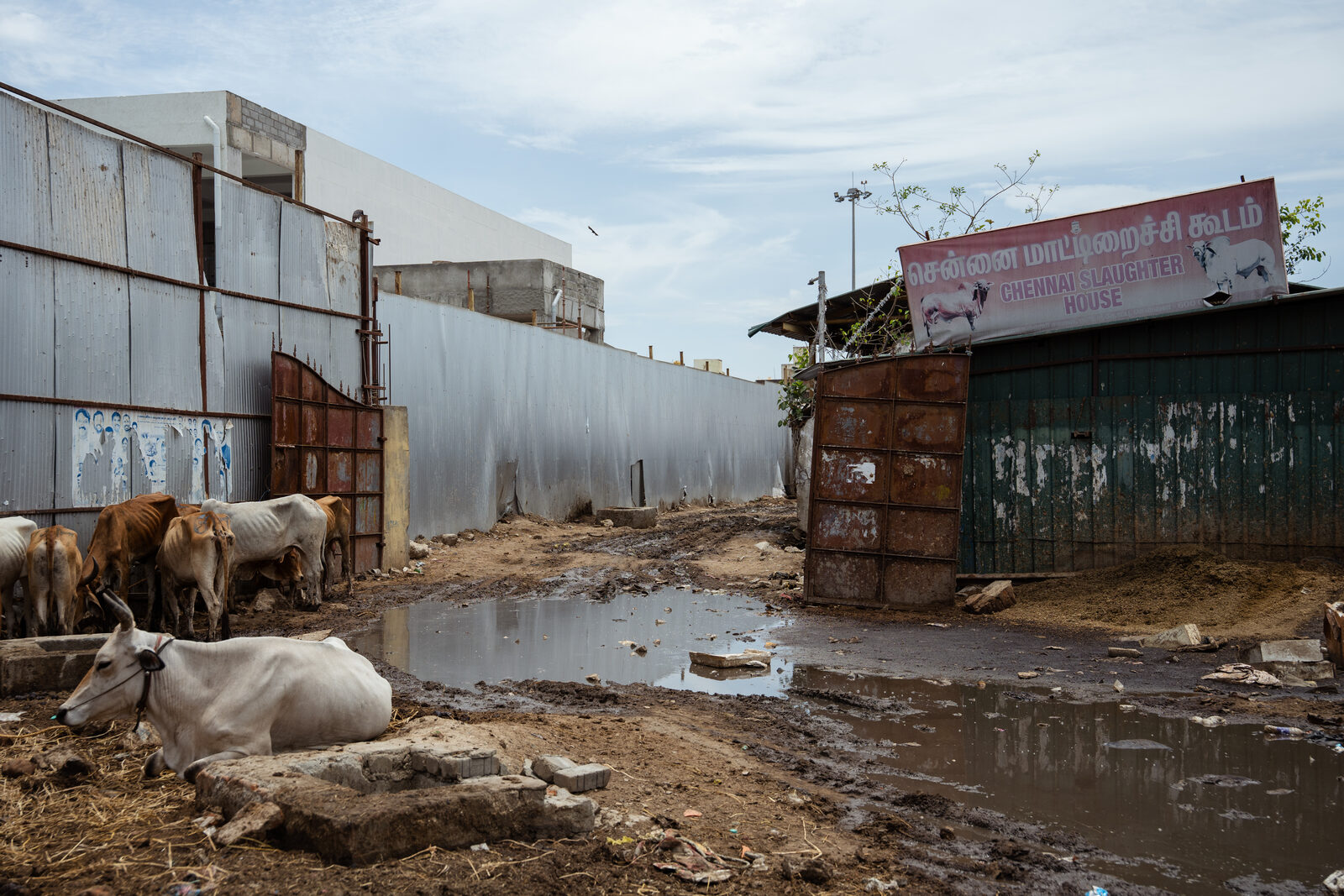
“Ninety percent of the slaughterhouse workers are from Puliyanthope and surrounding areas. Our grandfathers worked here, then our fathers, and now us. But we don’t want our children to follow us into the thotti [the slaughter unit]. They go to school, we want them to pursue the work they choose,” said Johnraj, the Secretary of the Perambur Meat Labourers Association, one among the unions organised within the slaughterhouse.
The Chennai Beef Merchants Association and the Chennai Sheep & Goat Association are the other unions that function in Puliyanthope.
While the facility is entirely run by its workers, the GCC is responsible for monitoring compliance with the Prevention of Cruelty to Animals (Slaughter House) Rules, 2001, and for clearing the waste produced on a daily basis.
For the same, the GCC has assigned four veterinary doctors and two workers to stamp carcasses with the GCC logo. A team of conservancy workers are engaged through the Ramky Enviro Engineers contract.
Stagnant wages despite worker demands
The butchers who work at the slaughterhouse told Ullatchi that on weekdays, they slaughter approximately 1,500–2,000 goats and 100 cattle per day, while weekends demand more than 3,000 goats and 400 cattle. The mullah, who performs the halal slaughter, told us that on festival days like Ramzan and Diwali more than 25,000 goats are slaughtered.
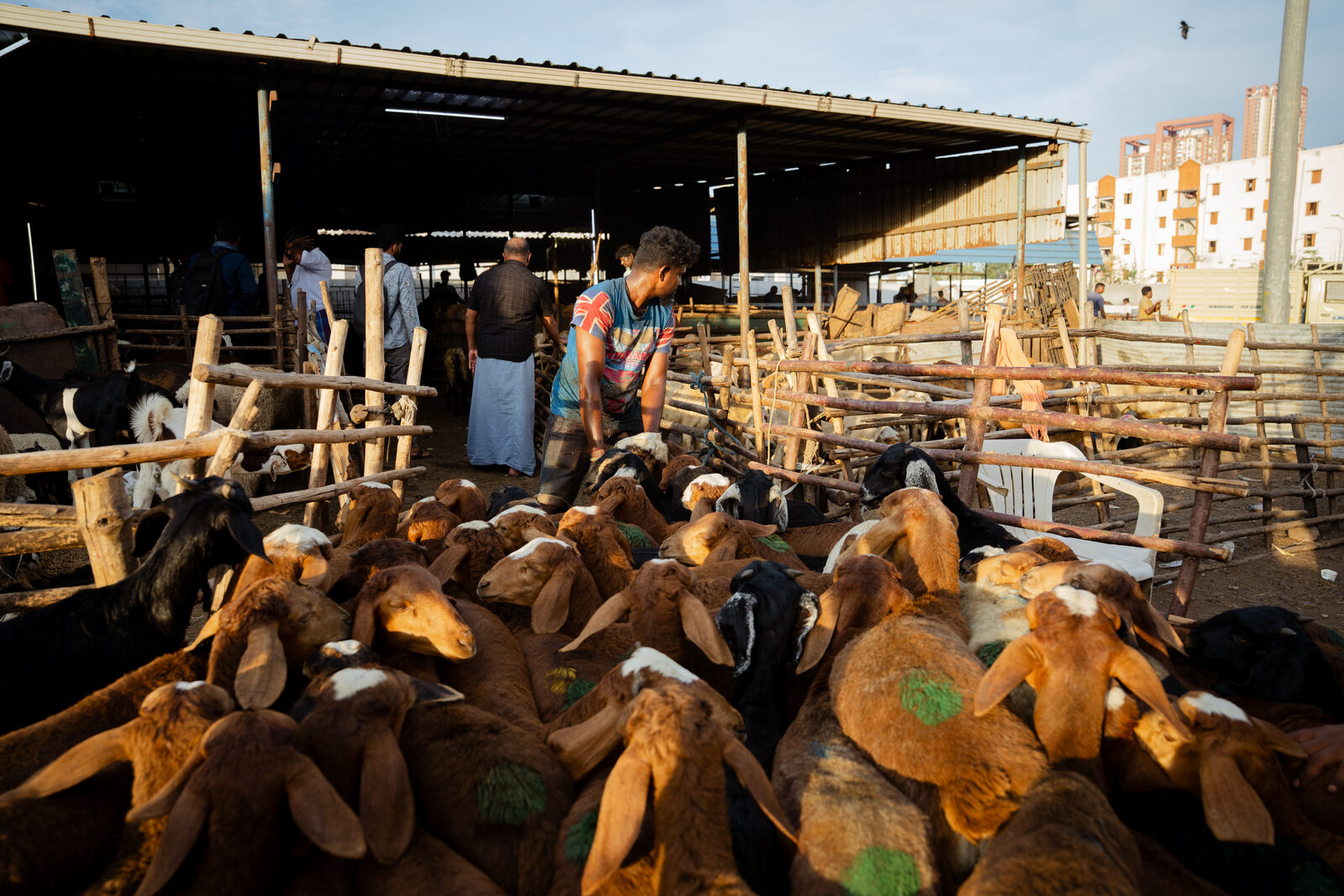
Sathyamoorthy, the labour union’s treasurer said, “Since 2023, the owners have been paying the labourers ₹85 per goat. It was revised from ₹70. But we had demanded ₹100 per goat.”
Rate per goat
Three years of bargaining
₹70
₹85
₹100
₹15 short
until 2023since 2023demanded
The rate rose from ₹70 to ₹85 in 2023 — ₹15 in three years. The union had asked for ₹100. It is still ₹15 short of that, and ₹15 is also what one man is paid to dress a goat.
| Rate | When | Granted |
|---|---|---|
| ₹70 | until 2023 | yes |
| ₹85 | since 2023 | yes |
| ₹100 | demanded | no — demanded, never granted |
The ₹85, however, does not go to a single worker. It is shared among the maistry (the middleman who mediates between the labourers and livestock owners) and three to four labourers working under the owners.
The maistry receives around ₹20–₹23 per goat, while workers involved in dressing the meat are paid ₹15 each. The mullah receives ₹3.50 per goat. Labourers said an additional daily payment of ₹3.50 per goat to be paid by the owner to the GCC is deducted from the payment made to them.
Per goat, since 2023
What amount do you get per goat?
The owners pay ₹85 for each animal. This is every claim against it that the reporting names, laid end to end.
0₹85 paid
- Maistrythe middleman between the labourers and the livestock owners₹20–23
- Dressing workers₹15 each — three or four of them under every owner₹15 each
- Mullahperforms the halal slaughter₹3.50
- Deducted for the corporation₹3.50 per goat per day, owed by the owner to the GCC — taken out of what reaches the labourers.−₹3.50
Between ₹72.00 and ₹90.00 is claimed, depending on whether three or four men dress the meat. The ₹85 sits inside that range, not above it.
So one man who dresses the meat is paid
₹15
per goat. Three or four of them dress each animal.
| Claim | Amount | Note |
|---|---|---|
| Maistry | ₹20–23 | the middleman between the labourers and the livestock owners |
| Dressing workers | ₹15 each | ₹15 each — three or four of them under every owner |
| Mullah | ₹3.50 | performs the halal slaughter |
| Deducted for the corporation | ₹3.50 | ₹3.50 per goat per day, owed by the owner to the GCC — taken out of what reaches the labourers. |
For cattle slaughter, four to five labourers work under each owner, and ₹300 is paid per cattle. The amount is divided between those involved in slaughtering, skinning and sorting the meat, and the three workers who manually erect the carcass, which weigh an average of 500 kgs, onto the hook. Leaving each worker with only ₹50-₹60 per cattle.
“Our wages vary every day. On Sunday, I made around ₹2,500, but today, being Monday, I barely have ₹900 in my pocket. The pay might sound reasonable to the outsiders, but the physical labour this job demands is more extreme than what we are paid for,” said a labourer at the cattle slaughter unit.
Working through neglect
In addition to stagnant and poor wages, the workers deal with abysmal working conditions that compound their woes. There was no drinking water anywhere within the premises. Only six toilets served the entire market that spans 9.8 acres. The facility also has no designated parking area, making it extremely congested.
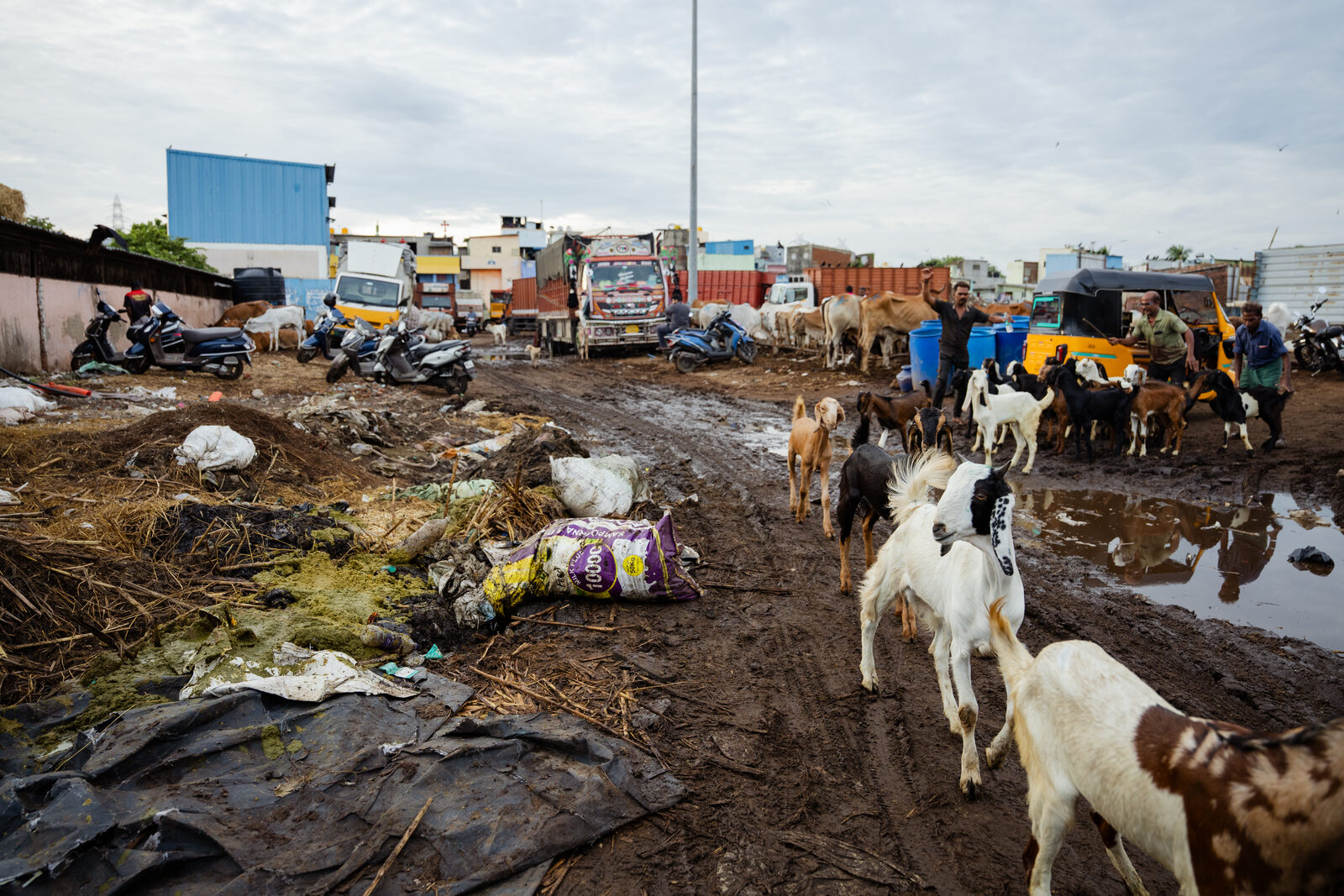
Ravindar, General Secretary of the Perambur Meat Labourers Association said, “There are frequent repairs, water shortages, power fluctuations at the slaughterhouse. We repeatedly inform GCC officials when they visit, but there are always delays in getting them fixed.”
“We cannot afford to pause work for a week or two, while waiting for the repairs. So we pool in money and get them fixed ourselves. The last time the motor stopped working, we had to pay out of our own pockets,” he added.
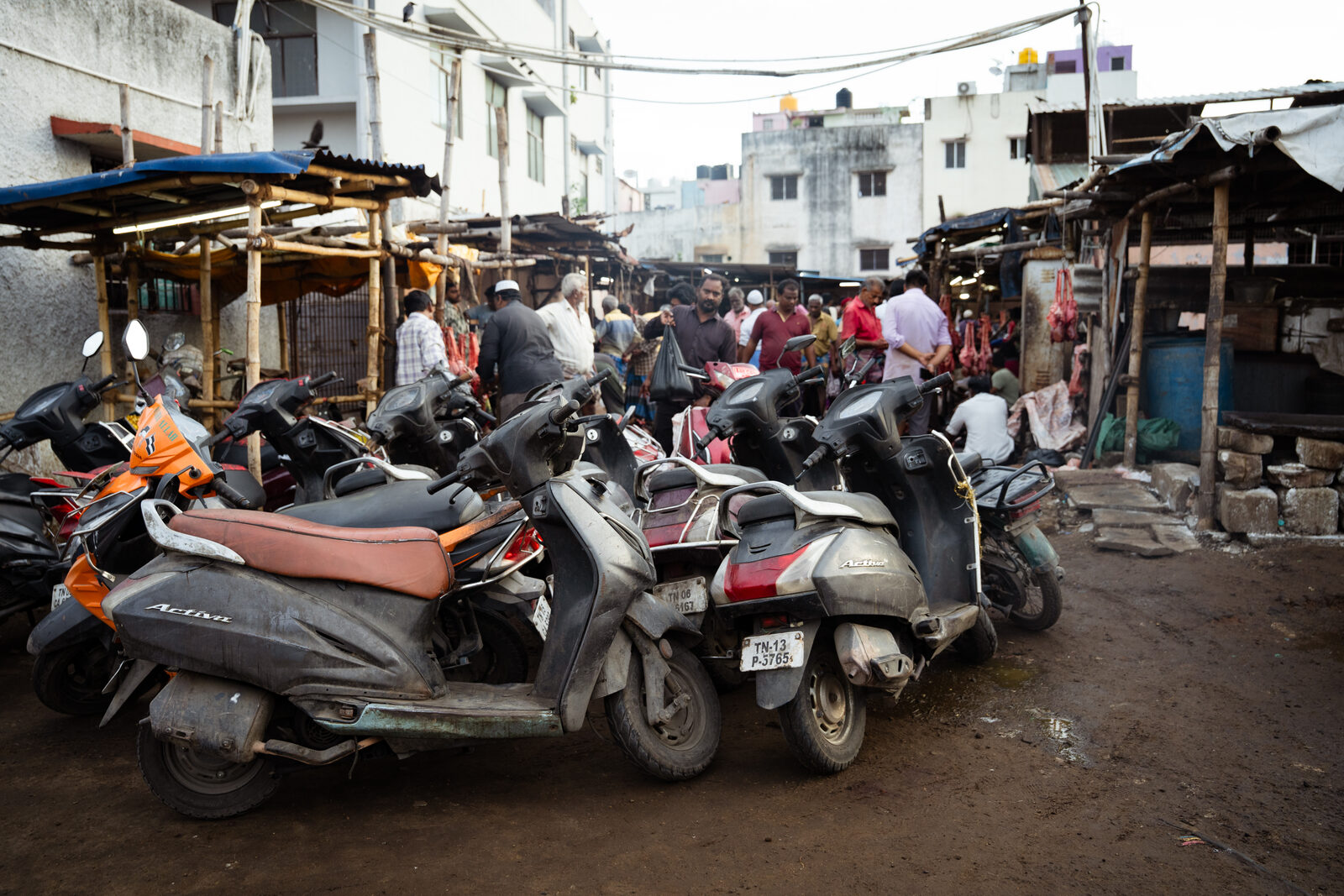
Another major concern is the lack of adequate lairages or holding areas. With not enough space to house animals before slaughter, workers have erected temporary sheds as the renovation progressed with many delays.
During the visit by Ullatchi, we noticed that the roof of the goat slaughter section was almost entirely damaged. As a result, during rains, water enters the area and stagnates, making it difficult for workers to carry out their job. In summers, they work under direct heat with little to no protection from the blazing Chennai heat.
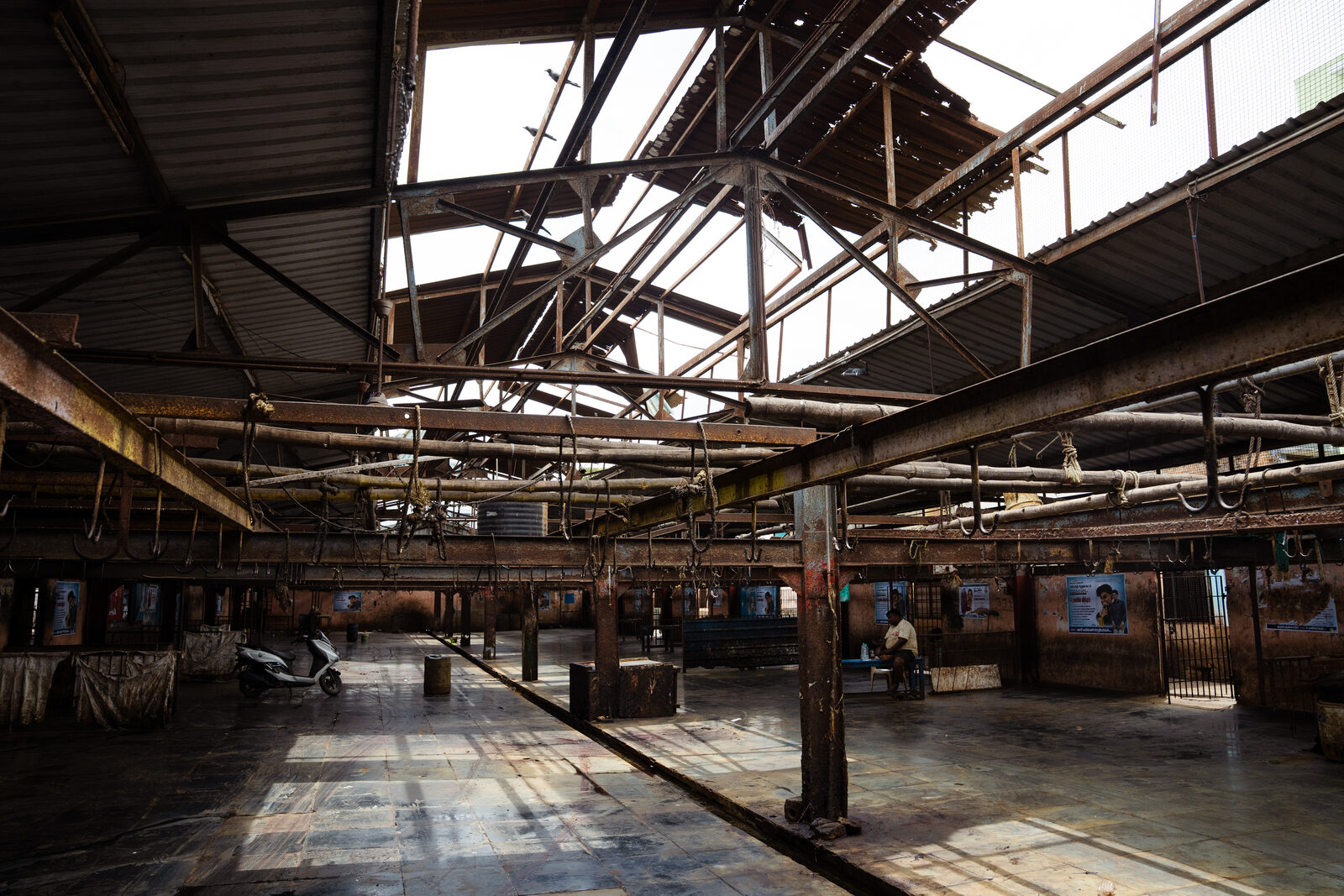
“The roof was damaged in the 2016 Cyclone Vardah. Every time GCC officials visit, they make a note of it, but they remain broken for a decade now,” said a labourer.
“We work in such filthy conditions, but we are scared to complain. We fear they might blame the conditions on us or, worse, shut down the thotti altogether,” he added, reflecting a fear shared by the majority of the labourers at the facility.
The temporary cattle slaughter structure in which the workers have been placed for the past eight months is also run-down and over-crowded. The labourers complained of not enough meat hooks in the station. The flooring was badly chipped and uneven, often injuring workers, many of whom work barefoot.
No safety gear or medical support for the workers
Sekar, a labourer at the facility for the past 20 years, said, “Our work involves several risks. The knives we use are very sharp and even a small cut can require 10 to 12 stitches.”
“We don’t use gloves or boots because we find it difficult to work in them. But the Corporation should provide us with proper protective gear and train us on how to use it,” he added.
Sekar and several other workers stressed the need for a medical facility and resting space in the new facility currently under construction.
GCC’s neglect of sanitation and hygiene
While the GCC is responsible for maintaining cleanliness at the slaughterhouse and clearing waste after each day’s operations, Ullatchi found waste accumulated that workers said had remained uncleared for months. Councillor M. Saravanan also confirmed the same.
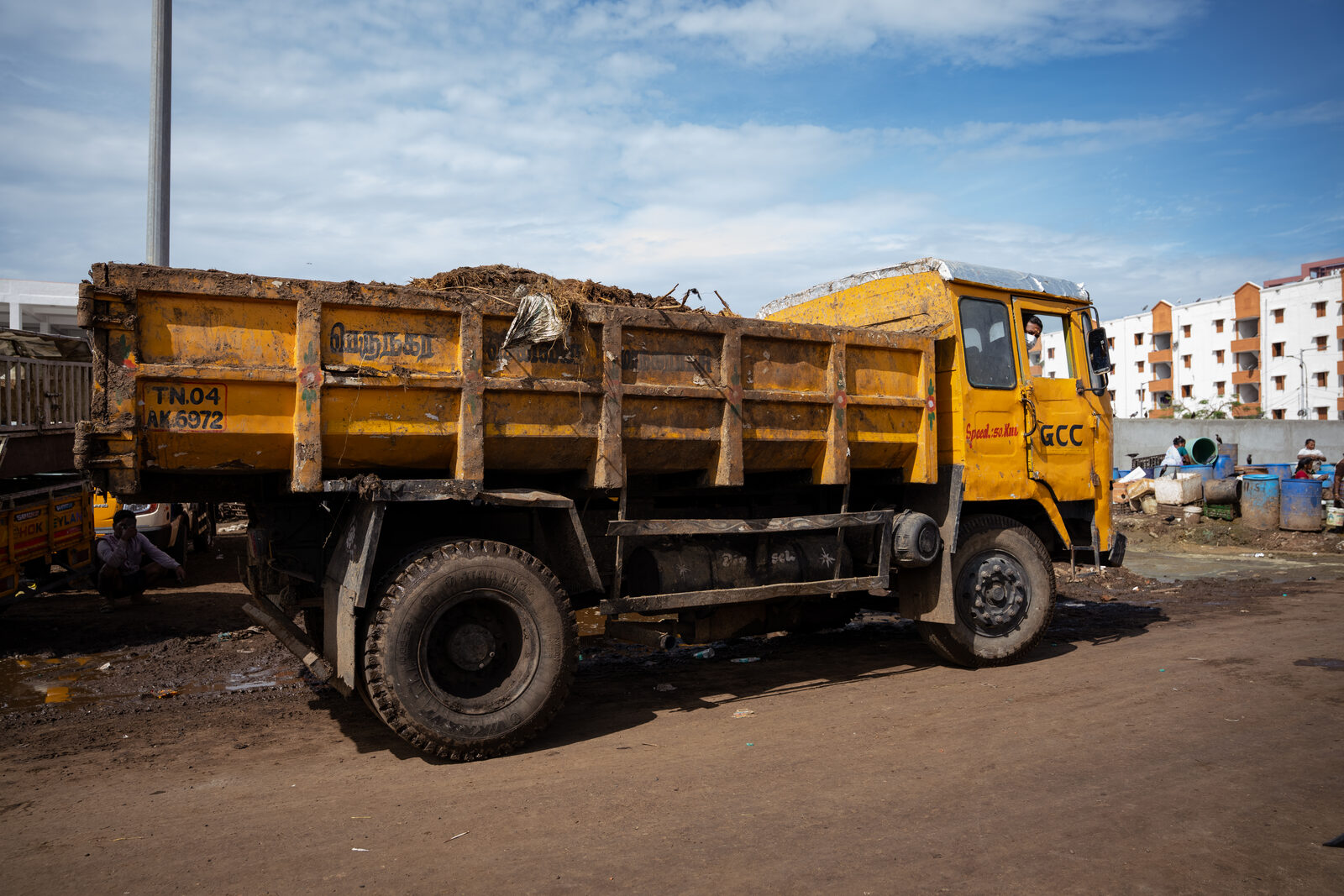
A GCC lorry driver working at the facility said, “Every day, we transport only two loads of waste to the Kodungaiyur dump yard, one each from the aaduthotti [goat slaughter area] and maaduthotti [cattle slaughter area]. This is hardly enough for the amount of waste generated here. But the GCC provides us with only two lorries, despite our repeated requests to the Assistant Engineers for more.”
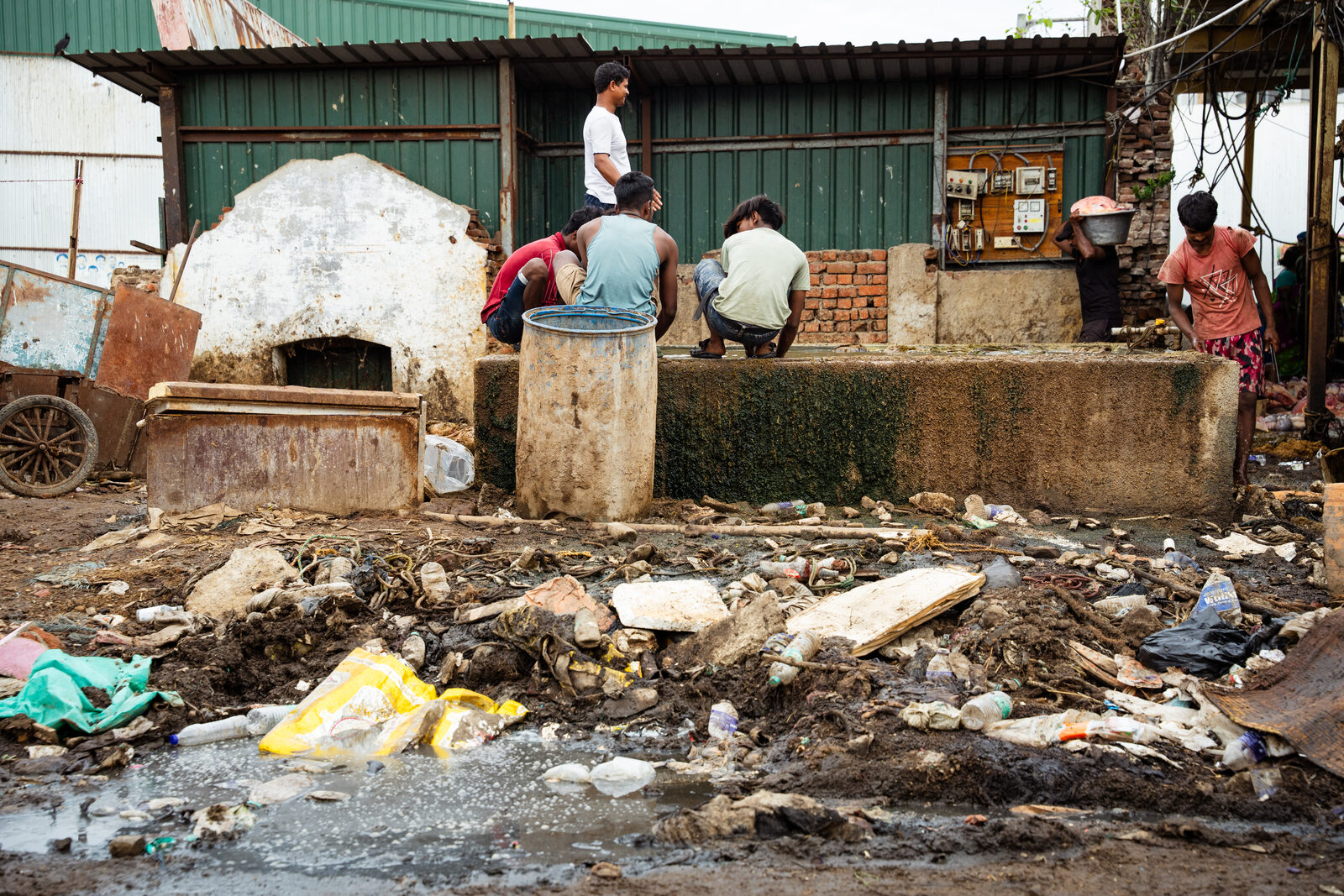
Further, piles of animal bones, left to dry for months within the facility, emit a foul odour. With no designated space for drying or storing bones, workers are forced to pile them in the open. They said they had requested a separate storage area in the renovated abattoir, but with the new facility nearing inauguration, Ullatchi found the GCC had not constructed one yet.
Mohan and Chellappa, both middlemen at the facility, take up additional shifts as contractual conservancy workers with Ramky Enviro Engineers to supplement their income. They said it takes nearly eight hours to clean the entire facility, even after which the floors remain dirty as animal waste gets lodged in the cracks of the damaged flooring.
When we asked why they cleaned without gloves or boots, they said, “We have only been given cloth gloves, which are not suitable for this work. Rubber gloves will be comfortable to clean with.”
Lack of waste water treatment
Ullatchi spoke with the residents of Puliyanthope, several of whom complained about waste water from the slaughterhouse being discharged directly into the road’s drainage.
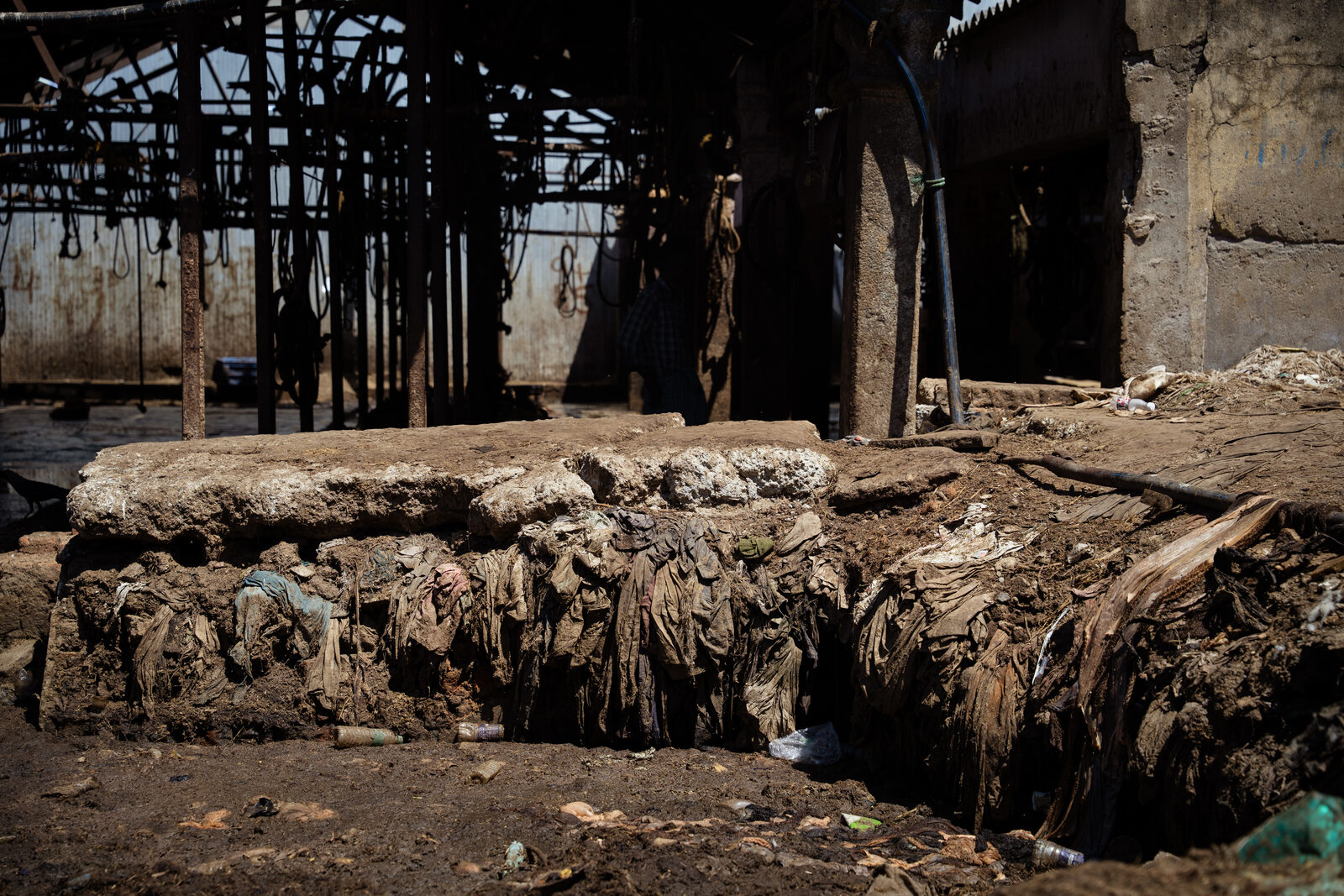
A resident said, “The animal waste is released into the public drainage and it stagnates. That is the foul odour you smell in our area. During rains the drainage overflows and the waste gushes out. We have been living with this for decades now.”
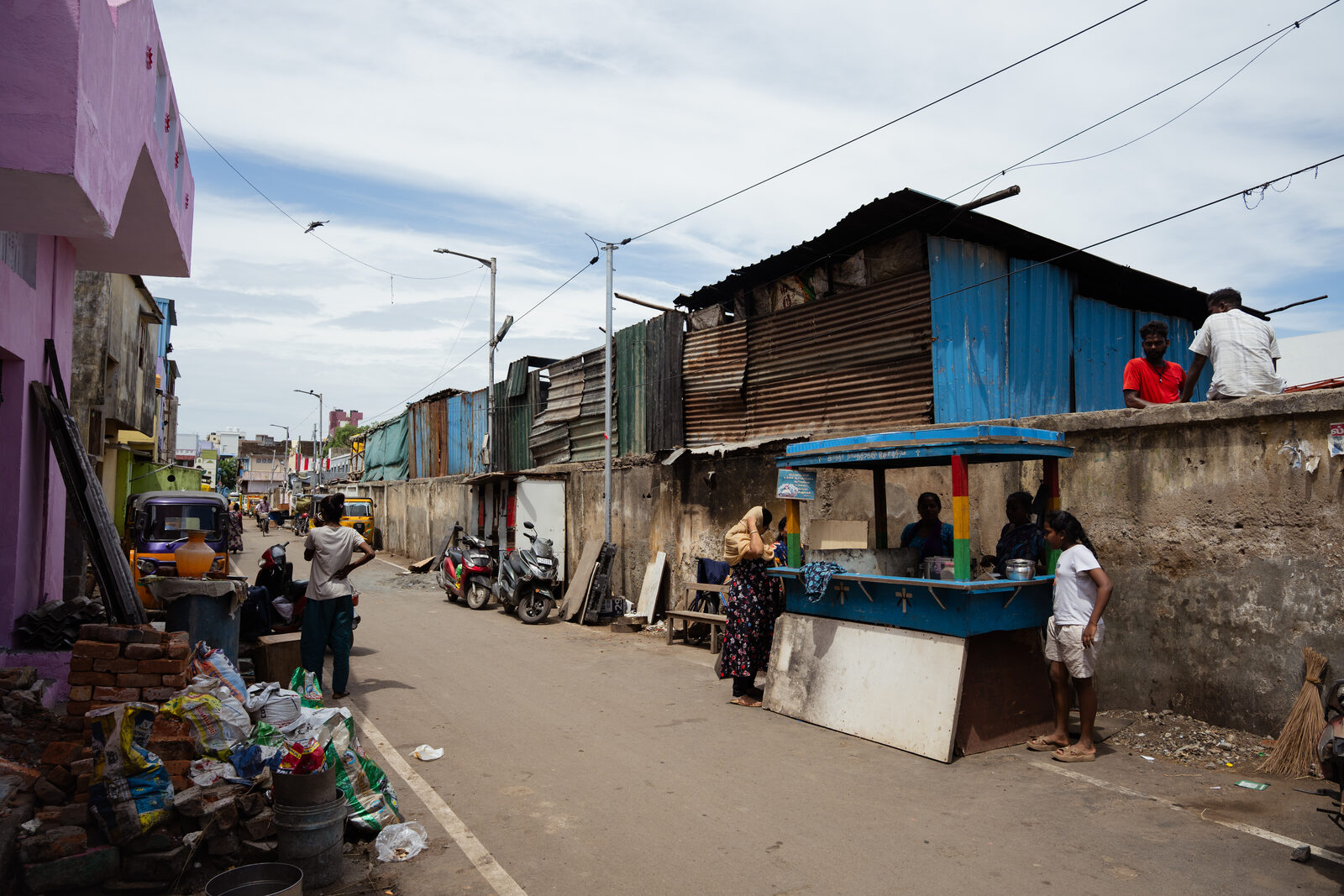
GCC-appointed veterinarian Dr Neelakandan also confirmed to us that both the Effluent Treatment Plant (ETP) and the biogas plant at the existing facility were non-functional.
Councillor M. Saravanan said the existing plant had remained defunct for decades. “The ETP has been under repair for nearly 20 years, and wastewater from the slaughterhouse has been discharged untreated into the drainage system. The biogas plant is also faulty and stopped processing dung. This has caused severe inconvenience to the local residents,” he said.
Inconsistent administrative supervision and monitoring
The GCC has appointed four veterinarians, Dr Neelakandan, Dr Arivumani, Dr Swaminathan and Dr Magesh for regular monitoring of the slaughterhouse operations as per the Prevention of Cruelty to Animals (Slaughter House) Rules, 2001. However, on the days of Ullatchi’s visit, the antemortem and postmortem examination were not conducted as required by the Slaughter House Rules, 2001.
When asked about this, Dr Neelakandan replied, “The workers themselves dispose of the dead and injured animals. We can only monitor randomly.”
Highlighting the shortage of veterinarians in the facility, he added, “To check each and every animal, we need at least 17 to 20 veterinarians. There are just four of us here.”
In addition, as confirmed by the GCC’s CVO, Dr J. Kamal Hussain, the facility has been functioning without an FSSAI license (Food Safety and Standards Authority of India). The veterinarians said that the food safety officers inspected the facility multiple times, but the certificate has not been issued yet.
No end to renovation work
A Rs 36 crore renovation, a joint initiative of the Greater Chennai Corporation (GCC) and the Chennai Metropolitan Development Authority (CMDA), under the Vada Chennai Valarchi Thittam, has been the plan touted to modernise the slaughterhouse. As part of the effort, the GCC has constructed a new block for cattle and goat slaughtering units in 6.8 acres within the existing Puliyanthope slaughterhouse. The current structures will be converted into lairages as per the plan in place.
The workers and traders have expressed many reservations about the renovation work, with talks ongoing with the civic body regarding meeting their demands for improvements to the slaughterhouse.
Johnraj told Ullatchi, “The previous facility occupied 9.8 acres which used to get overcrowded on most days. The new block is smaller, so we are not sure how comfortable it will be.”
“The lairage, storage space and shops for small-scale vendors that we requested have not been constructed yet. We’ll readily move once the facilities promised to us are completed,” he added.
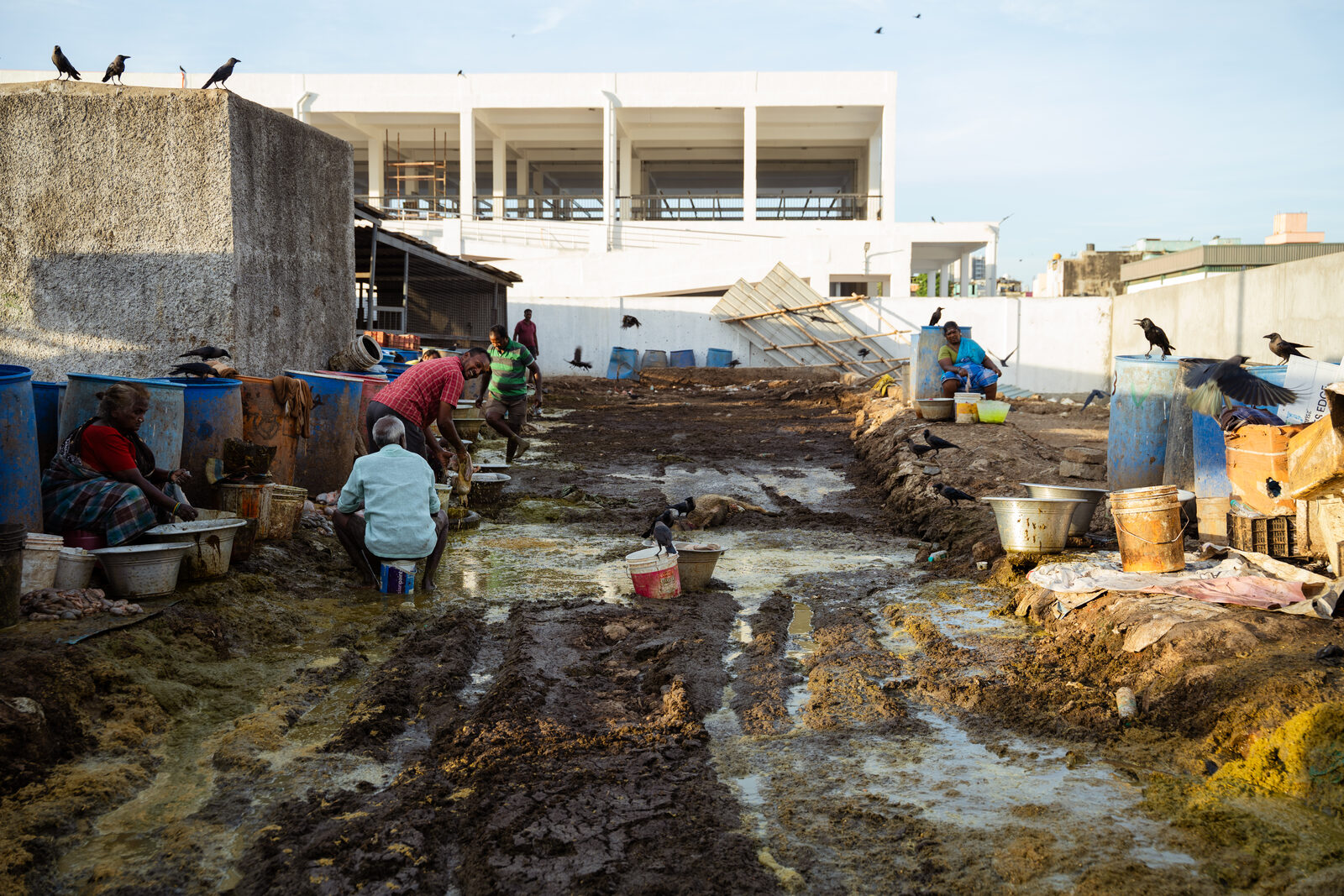
Labourers also raised concerns about the newly constructed two-storey goat slaughtering unit, pointing out that carrying meat down the stairs would be difficult. While the GCC had consulted the workers during the planning stage, they said the final construction did not fully incorporate their suggestions.
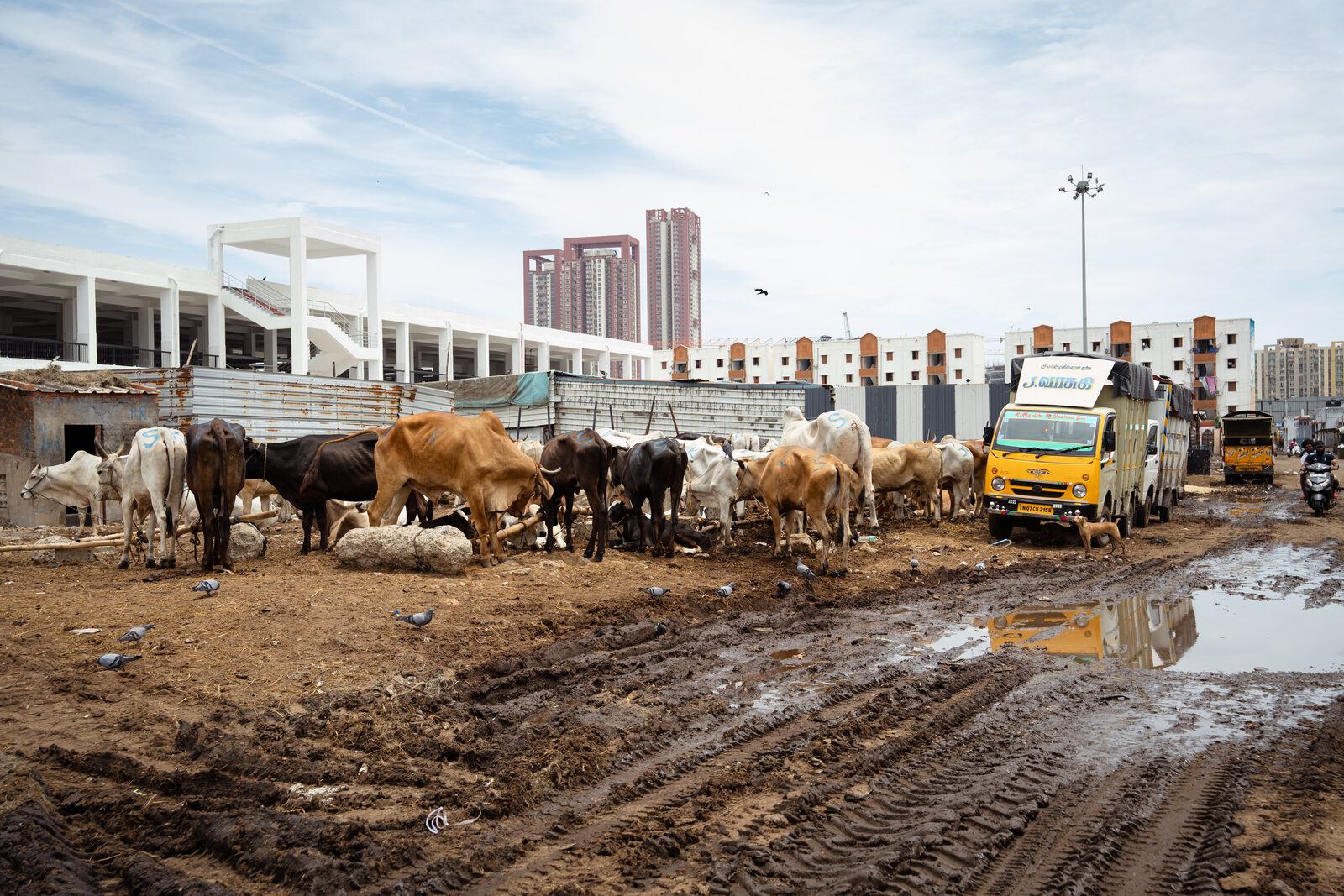
What has not been done
No end to renovation work
| What | How long |
|---|---|
| An FSSAI licenceinspected repeatedly | never issued |
| A bone drying and storage areabones pile in the open, homes immediately behind | never built |
| The lairage and vendor shops promised in the new block | not constructed |
| Drinking water anywhere on the premises | none |
| The Effluent Treatment Plantwastewater discharged untreated throughout | under repair ~20 years |
| The biogas plantfaulty; no longer processes dung | stopped |
| The roof over the goat slaughter areadamaged in Cyclone Vardah | broken since 2016 |
| The “two-month” temporary cattle shedand counting | ~10 months |
| The rise in wages₹70 to ₹85, against a demand of ₹100 | ₹15 in three years |
| Veterinariansthe vet on record says 17–20 are needed | 4 |
| Waste lorriesfor 9.8 acres | 2 per day |
| Toiletsfor the entire market | 6 |
| The facility itself122 years | established 1903 |
Responding to the workers’ concerns, Councillor M. Saravanan said the remaining facilities can be constructed only after the shift to the new block. “The lairage and shops have to be constructed in the space currently occupied by the labourers. They will have to move into the new building before we can construct these facilities.”
Explaining the delay in completing the renovation, he added, “The construction has to be carried out without disturbing even a single day of the labourers’ work, and the slaughterhouse operates throughout the week. This is why the renovation has taken longer.”
Ullatchi spoke to GCC Commissioner Dr. G.S. Sameeran, IAS, regarding the inadequate safety measures for workers. He said, “Yes, GCC can provide safety gear in collaboration with the owners’ associations. We should also sensitise the labourers on gear use and ensure safety.”
“A free first aid facility can also be set up, where basic treatment like TT injections can be provided free of cost,” he said, on the demand for medical support.
On being asked when the facility can be expected to operate in full compliance with the Slaughter House Rules, 2001, he said, “The Slaughter House Rules, 2001 are stringent, considering the extensive meat consumption in the city. But our goal is to reach those standards, and we will take steps accordingly.”
Story byAswathy Sreedhar and Akshara Sanal Return to Ullatchi


Leave a Reply