

A short history of student movements, from the swadeshi agitation in Bengal to the Cockroach Janta Party-led protests.
22 hours agoShare

In early July, as the students’ protests in Jantar Mantar were taking shape, the Trinamool Congress MP, Mahua Moitra, was one of the first politicians to show up in person and offer solidarity. Three weeks later, when the Union education minister, Dharmendra Pradhan, resigned, Moitra thanked the younger generation “for saving Indian democracy” by bringing “this fascist, arrogant government to its knees”.
This, as she pointed out, was something the Opposition parties had not been able to do in the past 12 years.
Before you scroll further…
Get the best of Scroll directly in your inbox for free.
Mahua Moitra’s praise was well merited. The resignation of the education minister, the home minister’s prolonged absence from Parliament, the sacking of several senior BJP office-bearers, and – not least – the clumsy, late-night videos of the prime minister, all testified to a regime whose customary air of hubristic arrogance had (at least temporarily) given way to weakness and confusion
It is too early to say whether the momentum that the student “cockroaches” have thus far generated can be sustained, leading to a fuller renewal of the constitutional promises of liberty, equality and fraternity. Historians are not astrologers, so, instead of projecting forward, I shall here look backwards, exploring other times in the past when Indian students have sought to leave their impress on politics and public life.
The first such occasion was 120 years ago, during the swadeshi movement in Bengal. As Sumit Sarkar observed in his book on that particular upsurge, “Students of every district came to study in Calcutta, and no doubt it was through them above all that the movement initially spread into the mofussil.” While the more prominent leaders came from the established professional and landed classes, writes Sarkar, “the volunteers themselves of course came largely from the student community, many of them of extremely tender years”.
In subsequent years, students energetically participated in the movements against British colonial rule led by Mahatma Gandhi and the Indian National Congress. Male students joined the Non-co-operation and Civil Disobedience movements in large numbers, organising demonstrations and courting arrest. Students were even more active in the Quit India movement, filling the jails in their thousands.
Advertisement
A feature of Quit India was the dynamic role played by young women. The stirring story of Usha Mehta, the Bombay University student who helped organise the underground “Congress radio”, has been documented in an excellent book by Usha Thakkar.
But there were other notable (if now less known) examples too. A file I found in the archives, titled “Karnatak in Revolt”, narrates how the “most phenomenal feature” of the movement in this part of India was the response of the student community, which organised boycotts and hartals in Belgaum, Gadag, Bangalore, Mysore, Mangalore, Bijapur, Bellari, Sirsi and other places.
On October 23, 1942, two students from Dharwad, a Miss Shenolikar and a Miss Gulawadi, entered the district court, hoisted the national flag, told the district judge (who was present) that he was dismissed from his office, distributed leaflets, and disappeared. (There the archival trail runs out – one would love to know what happened to Miss Shenolikar and Miss Gulawadi in later life.)
In the decades leading up to Independence, students were active in social and political movements. What of the years after India rid itself of colonial rule? In 1968, the American scholar, Philip G. Altbach, edited a book titled Turmoil and Transition: Higher Education and Student Politics in India. In his introduction, Altbach remarked that while “students played a key role in the struggle of Independence”, since 1947 “most student agitation has not been directly political, but has concerned non-ideological issues”.
Advertisement
The book’s case studies examined the “non-ideological issues” raised by students in the 1960s which included not only high fees and poor hostel facilities but also cultural activities such as music and theatre.
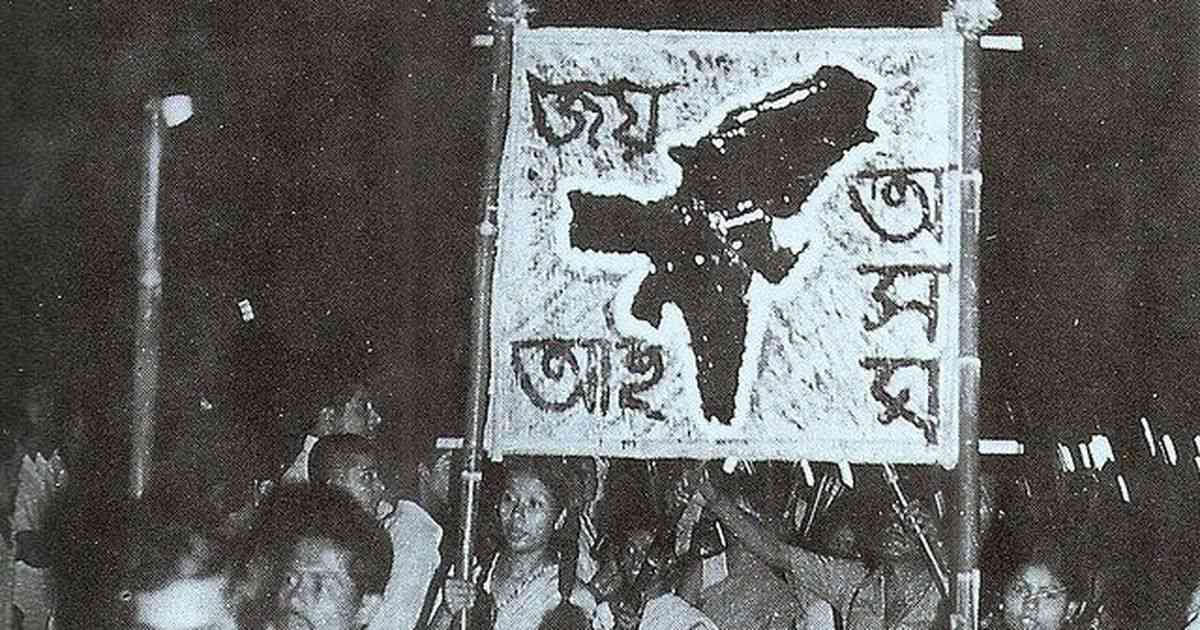
Within a year of this book’s publication, students had re-entered politics, playing a major role in the movement for a separate state of Telangana which started in 1969, although it bore final fruition long afterwards. This was one of three regional movements in post-Independence India that have strongly featured students. The others were the Assam movement of the late 1970s/early 1980s and the Uttarakhand movement of the 2000s.
Of the Assam agitation, the historian, Arupjyoti Saikia, writes that “the movement was largely in the hands of student leaders”, whose “idealism inspired large numbers; when they delivered their fiery speeches, crowds of both women and men listened in rapt attention”. The All Assam Students’ Union gave birth to the Asom Gana Parishad, which won an assembly election in 1985. Three decades later, students also helped propel the Telangana Rashtra Samithi to power in that state.
All these struggles form the unacknowledged prehistory of the movement currently underway. However, the most obvious precursor from the past is the “JP movement” of the mid 1970s in which students played such a prominent part. In his book, Protest Movements in Two Indian States, Ghanshyam Shah carefully documents the course of the protests in Gujarat and Bihar.
Advertisement
In both states, students played a leading role. In Gujarat, the Congress chief minister, Chimanbhai Patel, was widely seen as corrupt, becoming a prime target of youth anger. Students attacked the then prime minister, Indira Gandhi, for protecting Chimanbhai and for not being able to stem price rise. The protests were by no means non-violent, featuring attacks on government property and the looting of shops.
Shah writes that, as in Gujarat, “students were the vanguard of the Bihar movement” of the 1970s. However, unlike in Gujarat, in Bihar one elderly individual played a key leadership role. This was Jayaprakash Narayan. As Shah observes, “his concern for the poor, his moral stance, his simplicity and humility”, all contributed to the veteran freedom-fighter’s charisma. JP appealed to the students to give up studies for a year to “save democracy”.
The students who flocked to his call included members of the right-wing Akhil Bharatiya Vidyarthi Parishad and also many young socialist activists.
The present student upsurge resembles the JP movement in one significant manner. The principal targets of both have been authoritarianism and the cult of personality, as represented in the 1970s by Indira Gandhi and her party and by Narendra Modi and his party now. Yet there are also major differences. The ABVP was then against the ruling regime; now it is firmly on the side of the ruling regime. It does also seem that, compared to the JP movement, women students are more visible in the current protests, their idealism and courage reminiscent of the female satyagrahis of 1942.
Advertisement
The upsurge of the 1970s presented itself as a second freedom struggle, working to finally fulfil the failed promises of the first. In so far as it helped end one-party rule and brought about a fresh wind of democracy, the movement succeeded. On the other hand, the JP movement also gave legitimacy to the forces of Hindutva, which have steadily gathered power and influence in the years that followed.
To their credit, the student leaders of the present resolutely oppose both authoritarianism and religious bigotry.
The invocation by them of Ambedkar, Gandhi and Nehru – all together – suggests that they see their movement as a third freedom struggle, working to finally fulfil the failed promises of the first and the second. How far these ideals will be realised in the years ahead shall depend on the actions of countless individuals and organisations, many of whom who were not themselves present in Jantar Mantar during those heady days of June and July.
This article first appeared in The Telegraph.We welcome your comments at letters@scroll.in.


Leave a Reply