

In Maharashtra, lakhs of workers spend half the year cutting and lifting the heavy stalks of cane. The long hours of arduous physical labour is causing a range of debilitating muscular and skeletal disorders
Author
Parth M.N.
Editor
Priti David
Photo Editor
Binaifer BharuchaSee all credits
Sita Sasane’s lunch break turned into a nightmare when she glanced at her husband.
Right before her eyes, her husband Keshav’s face had twisted in one direction. She rushed towards him and realised he had wet himself.
“I shouted his name but he still didn’t respond,” Sita recalls, years later. We are sitting in her one-room hut in the village of Aherwahegaon in Maharashtra’s Beed district.
The couple had spent the entire morning chopping sugarcane and loading it onto a tractor for a sugar factory in Kolhapur. Their two sons also worked in tandem in the same fields of western Maharashtra.
The backbreaking labour that started at the crack of dawn didn’t end until sunset – except for a half hour lunch break at noon. Sita, 45, would spread out a sheet in the fields to unpack the food she had cooked in the morning, working quickly in their makeshift hut. She fixed four plates and handed over the first one to her husband, Keshav, 55, who seemed lost in his world. And then his face crumpled.
“I panicked and took him to the nearest dispensary,” says Sita, remembering the terrifying afternoon of October 2023.
The doctor’s diagnosis was quick: a paralytic stroke. Keshav had to be immediately admitted to a hospital.
However, they couldn’t just leave. Like every other destitute migrant worker, the family had taken an advance of Rs. 1.5 lakh to be adjusted against the kilos of cane they chopped during the six-month season.
“The contractor who employed us wouldn’t let us go,” Sita, who belongs to a Dalit household, says. She argued, or rather begged, with the contractor for some mercy but he didn’t budge. Her two sons, Saurabh, 23, and Sooraj, 21, were forced to continue to work along with her, while Keshav lay incapacitated in the makeshift tent in the fields.

Parth M.N.
Sita with her son Sooraj
Migrant sugarcane workers are engaged in one of the most dehumanising forms of bonded labour. Largely from oppressed communities, they have very little agency to push for better working and living conditions. Basic human rights are ignored, and even a disabled person isn’t an exception.
The hours turned to days, and Keshav’s family despaired seeing his helpless condition. Three days later they arrived at a compromise: “I stayed back in the field,” Sooraj says, “While my brother and mother carried my father back home.”
Essentially, Sooraj was the mortgage, making sure the rest of the family would return, and not run away with the advance.
“At times like these, you wish you weren’t poor,” Sooraj says. “We are at the mercy of contractors.”
*****
India is the world’s second largest producer of sugar – behind Brazil. Maharashtra accounts for about 35 per cent of it. The state has more than 200 operational sugar factories, mostly run by the political class across party affiliations.
The industry runs on the beleaguered backs of migrant workers who are forced into it due to lack of work opportunities and intensifying agrarian distress in their villages.
Sugar factories extend a sizable advance to contractors, who then hire labourers to chop cane for that factory.
About 10 lakh workers from Maharashtra toil in sugarcane fields for six months beginning November. Their day lasts anywhere between 14 to 16 hours in appalling working conditions; their homes are makeshift tents on the same fields. They have little to no access to toilets, bathing areas, electricity and, in some cases, potable drinking water.
But beyond daily amenities, a sugarcane worker’s challenge is how to stay injury-free given the long hours of arduous physical labour. Musculoskeletal disorders (MSD) – injuries that impact joints, muscles, nerves and bones develop gradually from repetitive strain – are increasingly common as they do heavy lifting, bending, cutting and twisting all day.

Parth M.N.
Image from ‘Cutting cane for 2,000 hours.’ With falling farm returns, many of Marathwada’s farmers are working as labourers in sugarcane fields – for long hours over five months, despite health risks, low wages, and the loss of their children’s education
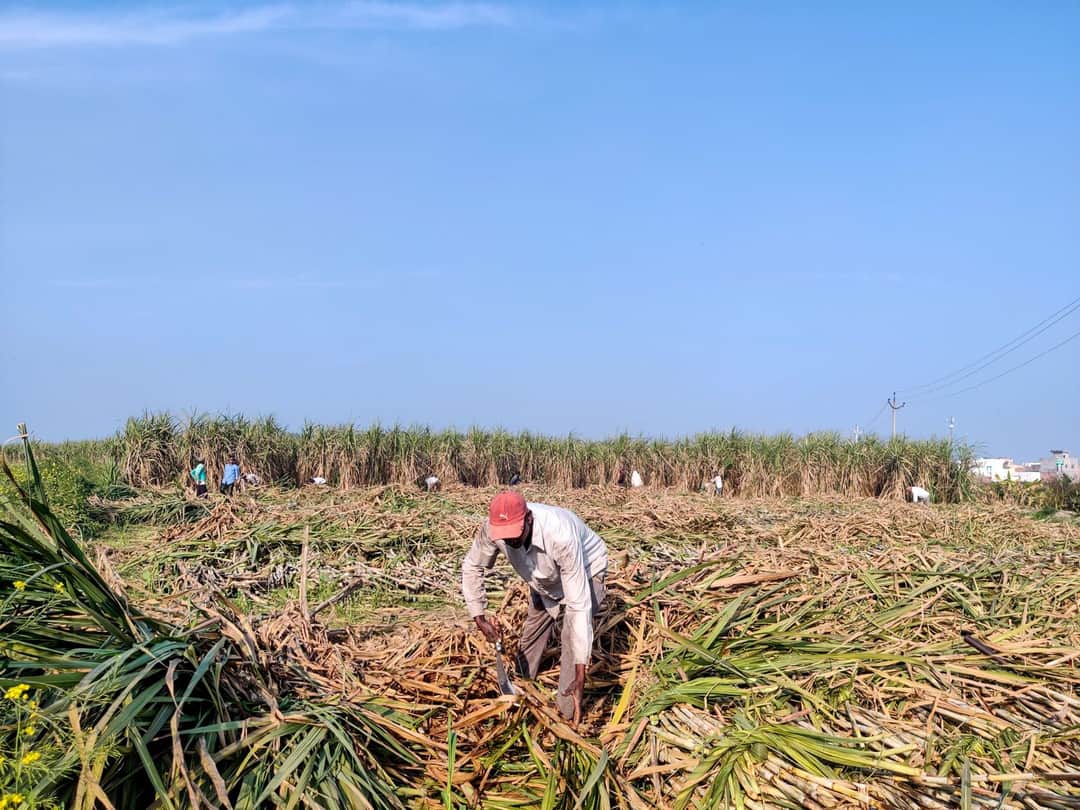
Parth M.N.
Image from ‘Farming in Araria, cutting cane in Karnal.’ Ramesh Sharma makes more money as a farm labourer in Haryana than he does cultivating his land in Bihar’s Shoirgaon village
When MSDs are long-lasting and restrict a person’s movement, work, or daily self-care tasks, they are classified as a musculoskeletal disability – sugarcane workers are extremely vulnerable to this.
According to a 2016 study, about 50 per cent of the surveyed sugarcane workers in Ahilyanagar (formerly Ahmednagar) struggle with low back pain, which is the single leading cause of MSDs, affecting 1.7 billion people worldwide.
“Sugarcane workers are consistently hunched over while cutting cane,” points out Shankar Waghmare, 42, a sugarcane worker from the village of Kathoda in Beed district. “We regularly bend to pick up heavy bundles of sugarcane rods, putting immense pressure on our lower backs.”
Outside of cutting, other tasks on the job aggravate his lower back pain too. Lifting heavy household items onto the tractor when migrating, and even getting on and off tractors when exhausted is fraught with danger. “Traveling for two days and two nights cramped on a tractor moving from one place to another, stiffens my back further,” adds Waghmare. “Setting up the tent, unloading the belongings at the site and camping in the makeshift tent at the sugarcane fields makes it even worse.”
Many don’t have to wait for MSD. Operating a sharp sickle for 12-14 hours a day, and a slight lapse in judgement could lead to a permanent injury and end in a permanent handicap.
The children of sugarcane workers are especially vulnerable to injuries like that, says Paresh Jayashree Manohar, a social activist, who helmed the ASHAA Project by Tata Trust on the minors in sugarcane fields.
“Several parents bring their children along to the sugarcane plantation because there is nobody back home to look after them,” he says. “The kids end up helping out in the fields, but they are not adept at using the sickle, severely injuring themselves. Many of them also operate without footwear so they sustain serious injuries to their feet.” Not to mention snake and scorpion bites.
More than two out of three workers had an injury caused by a sugarcane dagger or a stump of cane, says this 2013 study in rural Maharashtra.
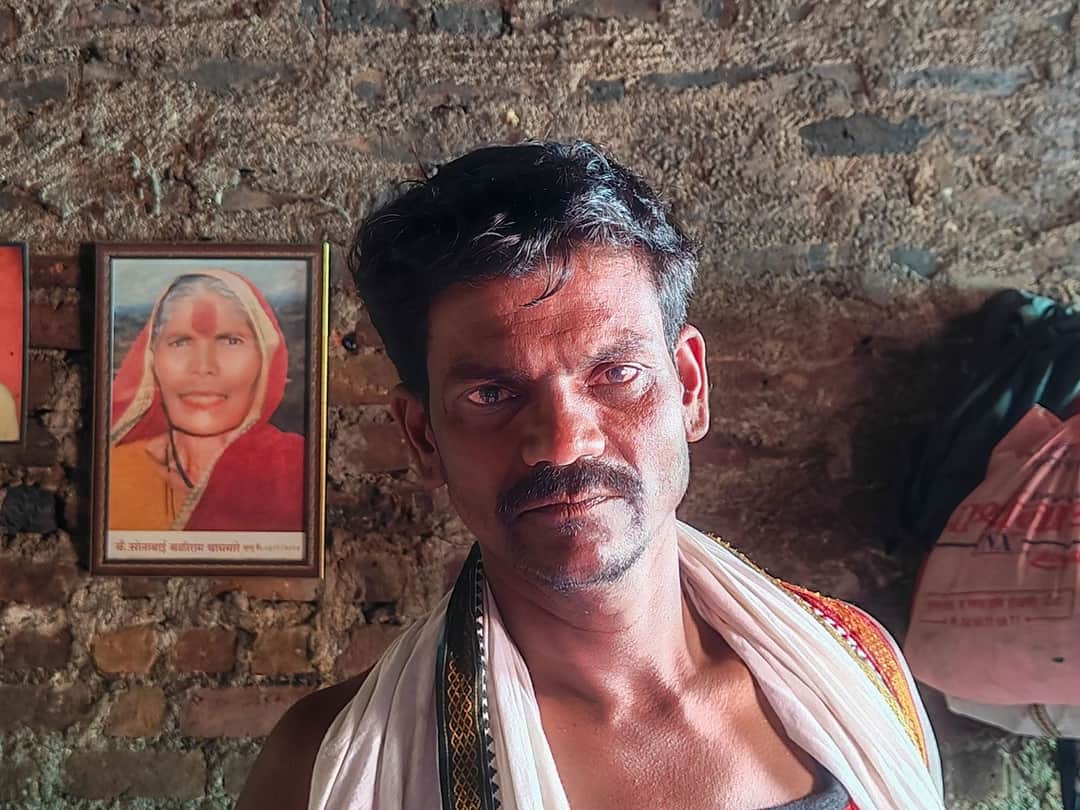
Parth M.N.
In 2022, Shankar Waghmare slipped from a tractor while unloading his belongings and landed directly on his tail bone, injuring his spinal cord
Besides these obvious physical challenges, there are underlying socio-cultural norms which have long-term impacts. Since chopping cane and loading it onto the tractor is a two-person job, contractors tend to hire couples who operate as one unit, less likely to fight about wage sharing.
But such an arrangement incentivises child marriage. For the groom’s family, it opens up an extra source of income. For the bride’s family, there is one less stomach to feed. Early marriages are a huge public health concern, leading to early pregnancies, which run the risk of intellectual disability among newborns.
*****
The boom in the state’s sugar industry has attracted cane cutters across Maharashtra for the past 70 years. It has always been an injury-prone profession. Activists and trade unions have consistently raised the issue of workers’ safety, but protection remains largely on paper.
In October 2024, the state government of Maharashtra implemented a welfare scheme specifically aimed at providing compensation to sugarcane cutters who meet on-site accidents leading to disability and death.
Between 2024 and 2026, official records show that 186 sugarcane cutters died of an accident, 112 sustained serious injuries and six suffered a disability. The state government has disbursed over Rs. 10 crore in compensation to them and their families.
That’s 304 serious accidents in merely two years – 12 a month.
However, that is a gross underestimate according to activists who have worked with migrant sugarcane cutters because the documents required to access the compensation are terribly difficult to procure.
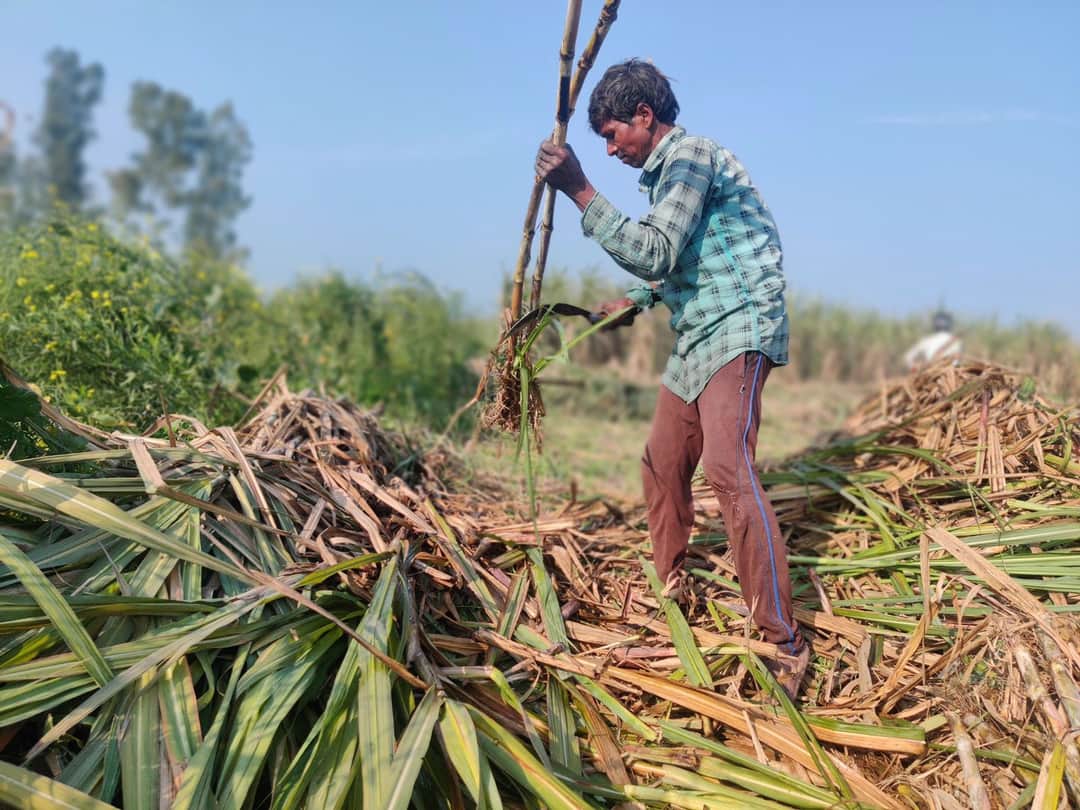
Parth M.N.
Image from ‘Farming in Araria, cutting cane in Karnal’. Farmer Rajmahal Mandal from Bihar’s Barhuwa village cuts sugarcane in Gagisna village, Haryana, to earn more and take care of his family
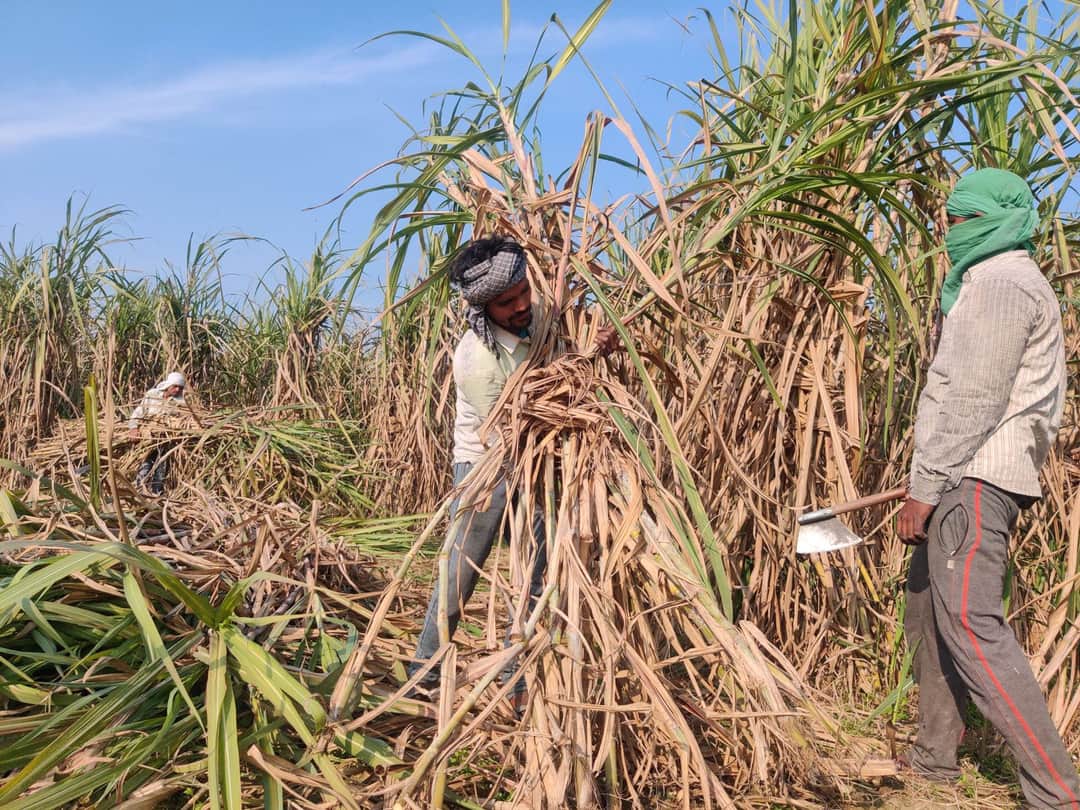
Parth M.N.
Image from ‘Farming in Araria, cutting cane in Karnal’. After months of backbreaking work cutting sugarcane, Kamaljit Paswan’s body (right) aches for days when he returns home to Bihar
Falling under the Social Justice and Special Assistance Department, The sugarcane workers’ welfare corporation named after the late BJP leader Gopinath Mundhe, furnished the compensation details but didn’t provide the number of sugarcane cutters registered with the state, nor the number of compensation applications rejected during this period.
The problems are rooted in the fact that it is a verbal contract, says Manohar. “Ironically, the agreement between the sugar factory and the contractor is on paper,” he adds. “But the agreement between the contractor and the workers is not. That means the workers have no protection.”
*****
Back in Kolhapur, Sita and Saurabh picked up Keshav and took him all the way to Beed in a state transport bus, a journey of over 400 kilometres. He couldn’t move or speak; his left side was completely paralysed.
“I didn’t know anybody in Kolhapur,” Sita says. “I thought if I admitted him to a hospital in Beed, he’d be closer to home.”
The doctor treated him for 15-20 days. Keshav was brought too late after his stroke – thanks to the creditor who wouldn’t let him go for three days – and he lost a critical window of recovery. He suffered irreversible brain damage which could have been prevented had he come in earlier.
The actions of the contractor who held him captive despite being incapacitated would go on to change his life from that of an independent working man to someone in need of fulltime care.
Sita brought him home but before she could process their new reality, she received a call from Kolhapur.
“The contractor reminded me that I still had to cut sugarcane worth the advance I had taken,” she says. Her other son Sooraj continued to be tied to the work there.

Parth M.N.
Workers like Sita are helpless because the state has registered only a fraction of the workers in its database
The family had never owned farmland, and didn’t have the liquidity to return the money. Sugarcane cutting work has been their only source of income for more than two decades. Sita couldn’t leave her husband behind in Beed as there was no other caregiver.
After crossing out all the options, Sita and Saurabh picked up Keshav – she grabbed his feet while Saurabh hauled him up by the shoulder. He was taken back to Kolhapur in a state transport bus.
“My husband would spend the day lying down while the three of us worked in the sugarcane fields,” Sita recalls. “I had to feed him during lunch breaks. He even relieved himself where he slept. I cleaned up after him after a long day of backbreaking labour.”
*****
Workers like Sita are helpless because the state has registered only a fraction of the workers in its database. “That excludes most of them from accessing the compensation,” explains Beed-based activist Manisha Tokle, who has spent years advocating for the rights of sugarcane cutters. The mandatory documents needed for the compensation include a registration card or a certificate issued by the sugar factory or the contractor. The workers also have to submit the police complaint they filed along with the medical certificate and spot panchanama (record.
“Contractors never look out for labourers,” Tokle says. “They are only keen on exploiting them as much as possible. Why would they issue a certificate? Moreover, the labourers are far away from their village when the accident happens. The local police or the village council don’t cooperate with them.”
The biggest problem, Tokle adds, is that the sugar factory doesn’t deal with its labourers at all. “It all goes through the contractor, which absolves factories from being accountable for human rights violations,” she explains. “Their insurance papers are also submitted by the contractor. If he doesn’t raise a claim, labourers don’t get anything. Ideally, the sugar factory should appoint someone from their labour unit to handle the migrant workers’ issues. But that would mean extending more human rights. Nobody wants to do that.”
Shekhar Deshmukh, former sugar commissioner of Maharashtra, says the registered workers are relatively better off. More often than not, they belong to the privileged caste. “The social welfare department is paying their insurance premium,” he said. “But the compensation scheme is still at a nascent stage. It needs to be streamlined more so it reaches more and more migrant workers. The sugar factories haven’t shown enough initiative to register workers because technically the workers aren’t their responsibility.”
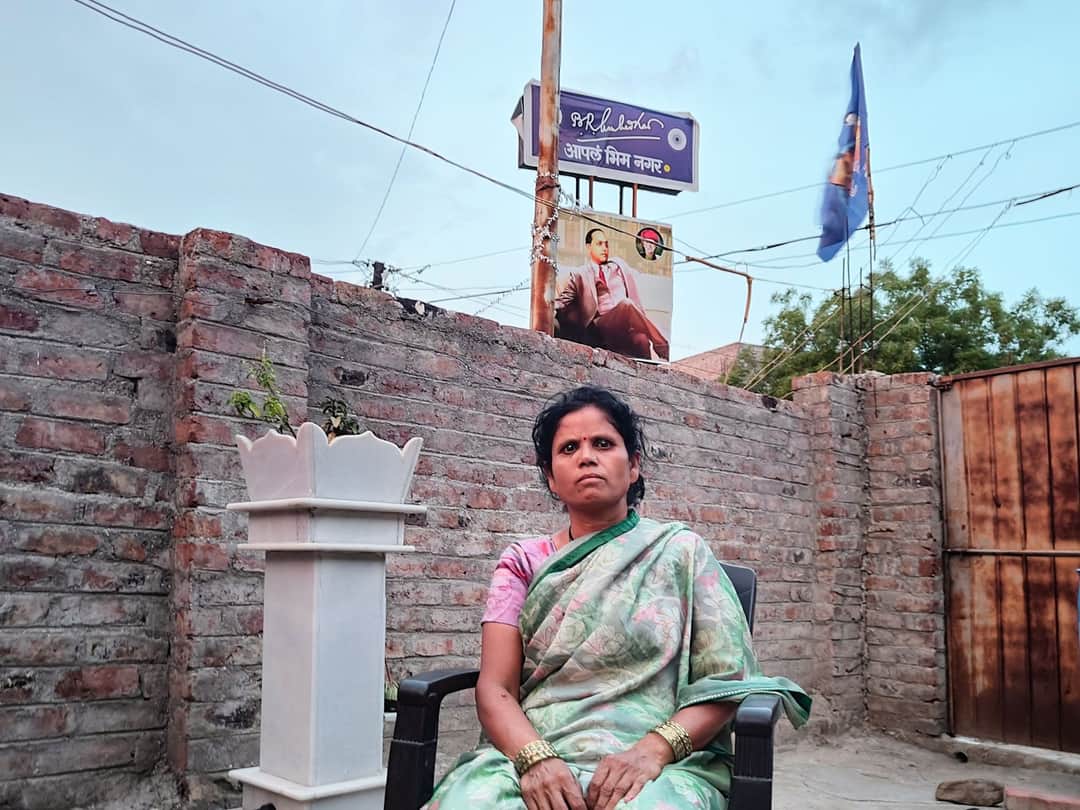
Parth M.N.
After her husband suffered a paralytic stroke, Sita and her two sons had to work instead of taking him to the hospital
In 2020, Makaam, a coalition of women’s organizations and health advocates, released a report of Maharashtra’s sugarcane workers. Of the 1,000 women workers covered by the study, 8 per cent reported an accident in their family during cane cutting.
At that rate, if there are about 10 lakh workers in the state, the number of sugarcane cutters with an injury should be around 80,000 – not a measly 304 that the state has provided compensation to.
*****
“Ever since the accident, I walk with a limp,” Shankar Waghmare says, lying in his tin-roofed, brick walled home in Beed’s Kathoda village. “I can’t bend without hurting my back.”
Four years ago, the 42-year-old worker slipped from a tractor while unloading his belongings and landed directly on his tail bone, injuring his spinal cord. Under the state government’s welfare scheme, sugarcane workers who meet with an injury while migrating to and from their village are also eligible for compensation.
But Waghmare is unaware that the state has started a compensation scheme for sugarcane workers. From a Dalit family, he owns little farmland largely for sustenance. The cash in hand comes from labour work.
The year after his accident, Waghmare sent his son to work in the fields with his wife. The past two years, he started migrating again.
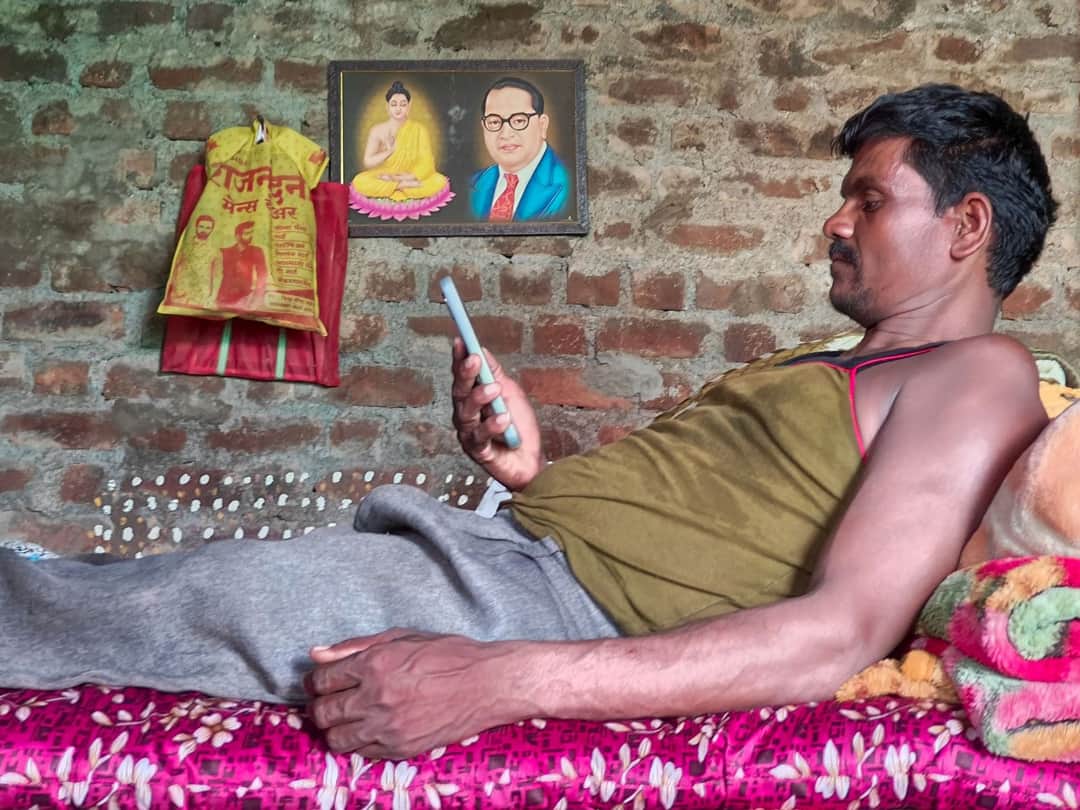
Parth M.N.
Shankar Waghmare resting in his hut
“My wife has to take up more laborious tasks and I help her out,” he says. “But with each season, my injury gets worse, and I find it harder to walk without a limp.”
In the absence of a proper mattress and a roof over his head, even relatively low intensity work means Waghmare is surging towards an MSD-induced disability sooner rather than later. He is well aware of it. But, he says, “I have no choice.”
Deshmukh says the state should have taken an initiative to build housing colonies exclusively for sugarcane cutters near the factories that would have provided proper rest, “but that never happened.”
*****
Residents of a village located along the border of Maharashtra and Karnataka were mystified. Someone had been painting a beautiful rangoli (decorative floor art), with colored chalk outside the village temple, early in the mornings.
After the mystery persisted for a week or so, a couple of people decided to get to the bottom of it and found Sita Sasane meticulously and skillfully using that traditional Indian art form to light up the local temple.
Two months after returning from Kolhapur, Keshav died at home in May 2024. The family changed their contractor after the horrifying experience that turned their lives upside down. The new contractor found them labour work at a sugarcane field in Karnataka, where the three of them do the same gruelling task.
“Before heading into the sugarcane fields, I used to draw a rangoli,” she tells PARI. “I taught myself to do it as a child. It made me feel at peace.”
The locals were so impressed with her skill that they felicitated her at the end of the cane cutting season. A melancholic smile on her face, she describes the heartwarming moment. It is apparent that something else is gnawing at the back of her mind while recalling the fleeting moment of happiness.
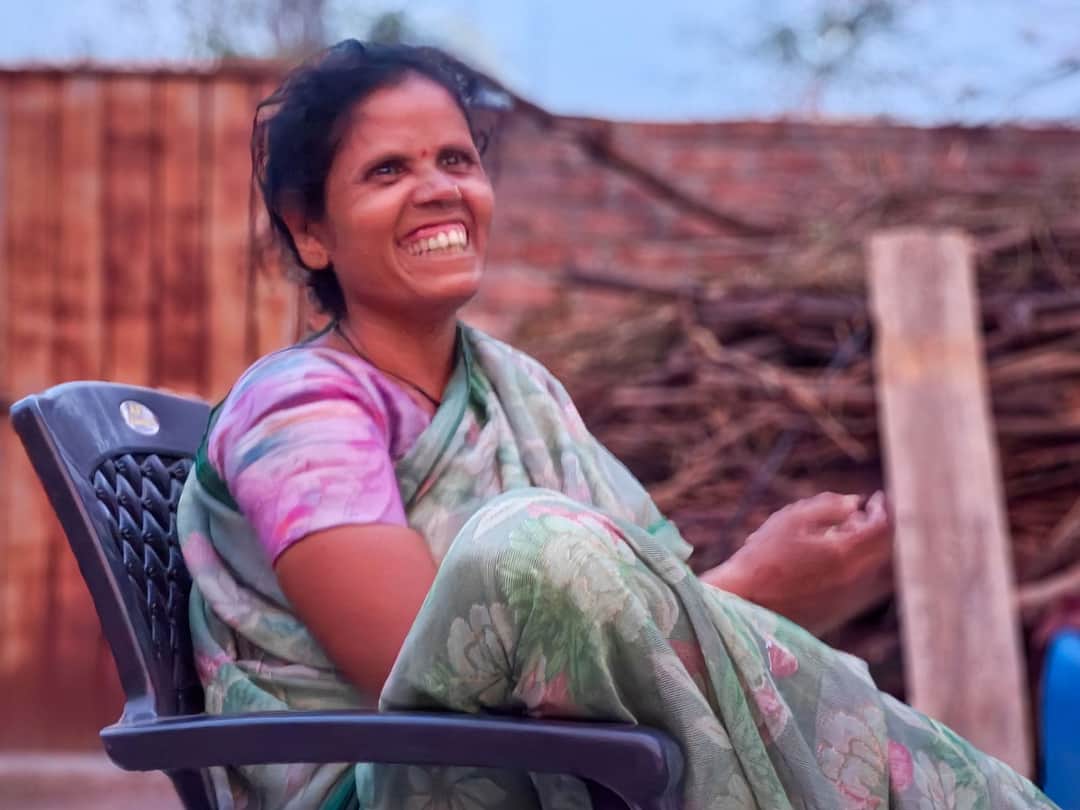
Parth M.N.
‘Before heading into the sugarcane fields, I used to draw a rangoli,’ Sita tells PARI. ‘It made me feel at peace.’
“I need to repay my relatives,” she says.
Just before Keshav suffered the paralysis stroke, the family had turned their dilapidated home into a brick-walled structure. That expense wasn’t much until the medical bills started piling up. To add to it, the contractor in Kolhapur cut Sasane’s wages for 20 days when she was away tending to her husband’s disability. All of that has now come up to a debt of Rs. 3 lakh. The relatives she owes haven’t pressured her yet for money.
“But it is still a humiliating feeling to live with,” Sooraj says. “It keeps reminding you of your poverty.”
This story is supported by the International Foundation for Disability Inclusion’s (IFDI) Journalism Fellowship on Disability Inclusion.
Want to republish this article? Please write to zahra@ruralindiaonline.org with a cc to namita@ruralindiaonline.org
Donate to PARI
All donors will be entitled to tax exemptions under Section-80G of the Income Tax Act. Please double check your email address before submitting.Donate to PARI


Leave a Reply