

An agreement in 1954 allowed passport-free travel for Indian pilgrims to Tibet, while extending the same privileges to Tibetans to visit Sarnath and Gaya.
Yesterday · 11:30 amShare
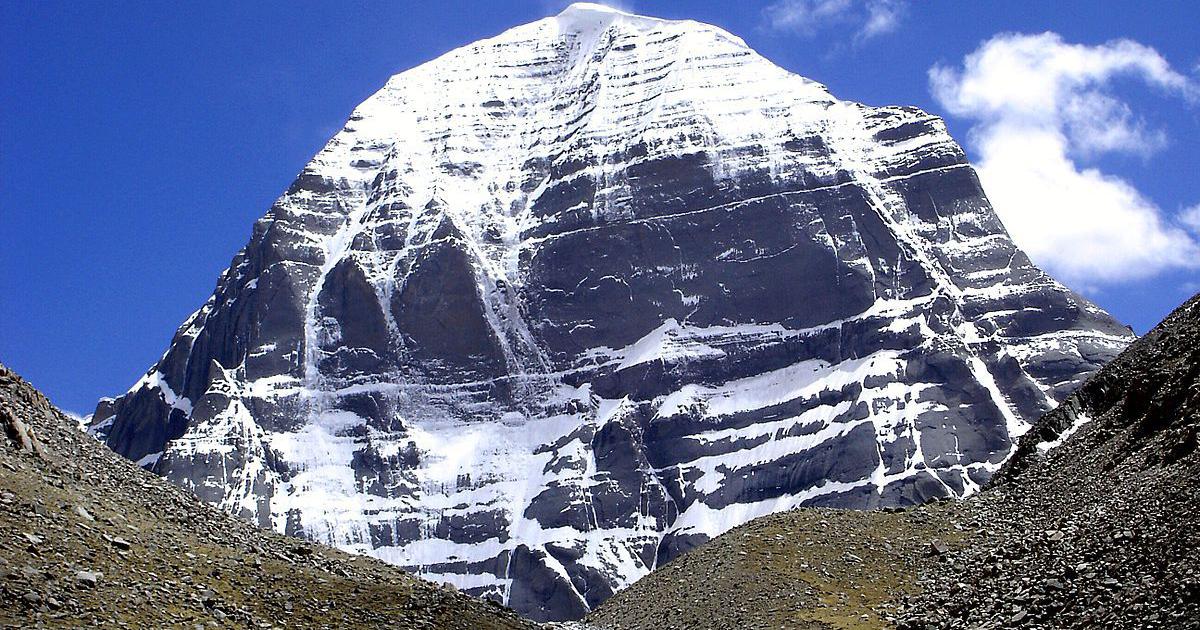
Two years after the Chinese army returned to Tibet in 1950, reports in the Indian media triggered alarm in parts of the country. In September 1952, both The Tribune and The Pioneer published articles claiming that Tibetans had planted their flag at Gumgum Nala in Tehri Garhwal region. Other Indian newspapers reported that “Tibetans” were claiming the Badrinath and Gangotri temples.
Disturbed by the reports, Raghubir Sinh, a prince of the state of Sitamau in Madhya Pradesh, wrote to Parliament seeking to know whether they were accurate.
Before you scroll further…
Get the best of Scroll directly in your inbox for free.
His five questions to Prime Minister Jawaharlal Nehru were taken up in Parliament in December 1952. The prince wanted to know whether the Tibetans had imposed new regulations on pilgrims visiting Mount Kailash and Lake Manasarovar. He also asked the prime minister what steps had been taken to “prevent the violation of Indian territories and the harassment of Indian pilgrims to the holy places by Tibetans in the future”.
Anil Kumar Chanda, the Deputy Minister of External Affairs, responded on behalf of the government. He said that the government was not aware of any Tibetan claims on the sacred Hindu shrines, but had asked the authorities in Uttar Pradesh to investigate reports that the Tibetan flag had been hoisted at Gumgum Nala.
The parliamentary responses made one thing clear: India was dealing with China, rather than Tibet, on these matters.
“Reports have been received that the Chinese authorities have introduced some sort of a permit system for pilgrims and traders proceeding to Western Tibet,” Chanda said, adding that there had been reports of “inconvenience and delay”. Trade had not been affected, he said, and the Indian Trade Agent in Gartok was in touch with the Chinese authorities over reports of harassment of Indian pilgrims. “Generally speaking, satisfaction is secured,” he stated.
Advertisement
A supplementary note said reports about Chinese claims on Badrinath were “without foundation”. It added, “The official explanation given to our trade agent at Gartok for the introduction of the permit system in Western Tibet was that the local authorities wanted to keep a proper count of the number of Indians visiting Tibet.”
Until 1951, Indian traders and pilgrims had travelled relatively freely across Tibet. Apart from unpredictable weather, the greatest danger on the plateau was its notorious bandits.
Documents in the National Archives of India show foreign travellers seeking permission from the colonial authorities to enter Tibet through India. Prominent Indians too wrote to the British bureaucracy for their journeys, but for seeking courtesies and assistance. Among them was the Maharaja of Mysore, Nalwadi Krishnaraja Wadiyar IV, who undertook the pilgrimage to Kailash-Manasarovar in the 1930s.
New dynamic
The ease of travel between India and Tibet changed dramatically after the Tibetan government and the Chinese authorities signed the Seventeen Point Agreement. Under this accord, Tibet accepted the principle of returning to the “big family of the People’s Republic of China”. The 14th Dalai Lama has said that the agreement was signed under duress, a claim Beijing strongly rejects.
Advertisement
The Chinese government subsequently introduced a permit system for pilgrims and traders as well as for residents of border villages travelling to visit family members. There were reported cases of belongings being searched and authorities confiscating cameras, maps, and firearms, the last of which Indians carried solely to defend themselves against Tibetan bandits. Intervention by the Indian Trade Agent in Gartok helped people recover confiscated cameras and maps.
With reports mounting of harassment by Chinese authorities at border checkpoints, the Indian Embassy in Peking, now Beijing, began raising the issue with the Chinese foreign ministry. At the time, India and China enjoyed warm and cordial diplomatic relations, and India’s humanitarian role to act as a neutral mediator during the Korean War was appreciated in China.
After extensive negotiations, India and China signed the “Agreement on Trade and Intercourse with Tibet Region” in April 1954. Better known as the Panchsheel Agreement, it was valid for eight years and established arrangements intended to facilitate the movement of Indian and Tibetan pilgrims and traders across the border.

Under Article III, Hindu, Buddhist and Lamaist pilgrims from India were permitted to visit Kailash (known to Tibetans as Kang Rinpoche) and Manasarovar (or Mavern Tso in Tibetan) as well as Lhasa, without passports or identity certificates. They were required to obtain permits after crossing into Tibet. Similar privileges were extended to Tibetan Lamaists and Buddhists wishing to visit Varanasi, Sarnath, Gaya and Sanchi. The two countries agreed on six designated crossing points for pilgrims.
Advertisement
Residents of the border regions were allowed to travel between the countries to visit friends and relatives and conduct petty trade without passports or permits. Traders and their families, however, were required to carry certificates issued by local governments to cross the border, a requirement also applied to porters and mule-team drivers.
The agreement also allowed China to establish trade agencies in New Delhi, Calcutta and Kalimpong, while India was given a similar privilege in Yatung, Gyantse and Gartok.
For the next few years, pilgrims and traders continued to move between India and Tibet, but complaints about excessive baggage checks and delays in processing permits continued to reach the Indian government.
In April 1958, the secretary to the Jagadguru Shankaracharya of Sharada Peeth, Dwarka, approached the Ministry of External Affairs for assistance with a planned pilgrimage to Tibet. The secretary requested that the spiritual leader be permitted to carry a camera and a licensed revolver. He asked that Chinese border guards not touch the Jagadguru’s personal belongings, warning that the leader would refuse to eat if they did.
Advertisement
The request was taken up at the highest level, and the Chinese government agreed to make special arrangements for the leader.
In a secret telegram to the Ministry of External Affairs in July, the Indian Trade Agent in Gartok reported that he had personally spoken to the chief of the foreign bureau about the arrangements. “He assured me that there would be no trouble to him and he had also received instructions about it from their Foreign Ministry, but he added that according to international custom, Jagadguru is not immune from inspection of property,” the Trade Agent wrote.
The Trade Agent told the Chinese official that if the authorities insisted on inspecting the spiritual leader’s belongings, he would recommend that the visit be cancelled. Wang then “repeated his assurance that there would be no trouble to Jagadguru if he does not behave awkwardly”.
The Chinese official maintained that special arrangements had been made for the leader. In the end, the Jagadguru travelled to Tibet with 20 people and did not face any reported hassles from the Chinese authorities.
Advertisement
Another recurring complaint received by the Indian government involved attempted robberies by bandits. In July 1955, the Hindustan Times published a report under the headline “Tibetan Bandits Attack Indians”,” detailing two attempted armed robberies: one near the Surla Pass on the border and another near Lake Manasarovar. The matter was raised in parliament by Bhakt Darshan, an MP from Garhwal.
Following an inquiry, the Criminal Investigation Department in Uttar Pradesh reported that a pilgrim from Calcutta named Bimal Kumar Das “was deprived of a suitcase with its contents including 200 Indian Rupees and 28 Chinese Dollars”. The incident was described as theft.
The report noted that these pilgrims had heard of no encounters between Indian pilgrims and Tibetan bandits near Gurla while in Tibet, but were told that “some Tibetan bandits” had been “shot down by the Chinese in that vicinity”. It added that another group encountered bandits in a Tibetan village without being deprived of property or suffering any injuries.
Shifting horizons
Indian Trade Agents typically stayed in Tibet from July to November, accompanied by a medical officer and assistants who primarily attended to Indian pilgrims and traders before the mountain passes closed for the winter. Writing in a dispatch from Sikkim in December 1959, medical officer Dr DP Roy noted that during his stay and journey through the border areas, he had “treated almost 2,000 patients, composed of Indians, mostly traders and a few pilgrims, Tibetans and Nepali traders”.
Advertisement
He added that many Tibetans came to the dispensary because of their faith in Indian doctors. The March 1959 Tibetan Uprising and the 14th Dalai Lama’s escape to India, where he was granted asylum, strained Sino-Indian ties. Roy noted that the Chinese Foreign Bureau initially denied permission for Tibetan patients to seek treatment from him, but relented after patients threatened to visit the Indian doctor regardless. “Ultimately the Chinese sent them to us and with the blessing of God, we had been able to cure and improve all of them,” Roy wrote.
As the political situation worsened in Tibet, Chinese authorities advised Indians to avoid the pilgrimage in 1959. Those who insisted on going were issued pilgrim identity cards at Indian checkpoints to distinguish returning pilgrims from Tibetan refugees. When a Ladakhi monk in Kalimpong requested an identity card to visit Lhasa in 1961 to bring back an idol, the Ministry of External Affairs noted in a memo that China had not explicitly barred Indian pilgrims from Lhasa at that time. “The fact remains, however, that in the context of existing relations between India and China, the Indian nationals may be looked with doubt and suspicion and may have to face severe restrictions even if any pilgrim manages to get the Pilgrim Permit from the Chinese checkposts,” the memo said. The monk was warned of the potential dangers but not denied permission.
The Panchsheel Agreement was not renewed when it expired in 1962. A few months later, the two Asian giants fought a brief border war, and the pilgrimage to Kailash and Manasarovar from India was suspended until 1981, eventually resuming under far more stringent conditions, including the requirement of passports.
Ajay Kamalakaran is a writer, primarily based in Mumbai. His latest book, Colombo: Port of Call, has been published by Penguin Random House.We welcome your comments at letters@scroll.in.


Leave a comment