

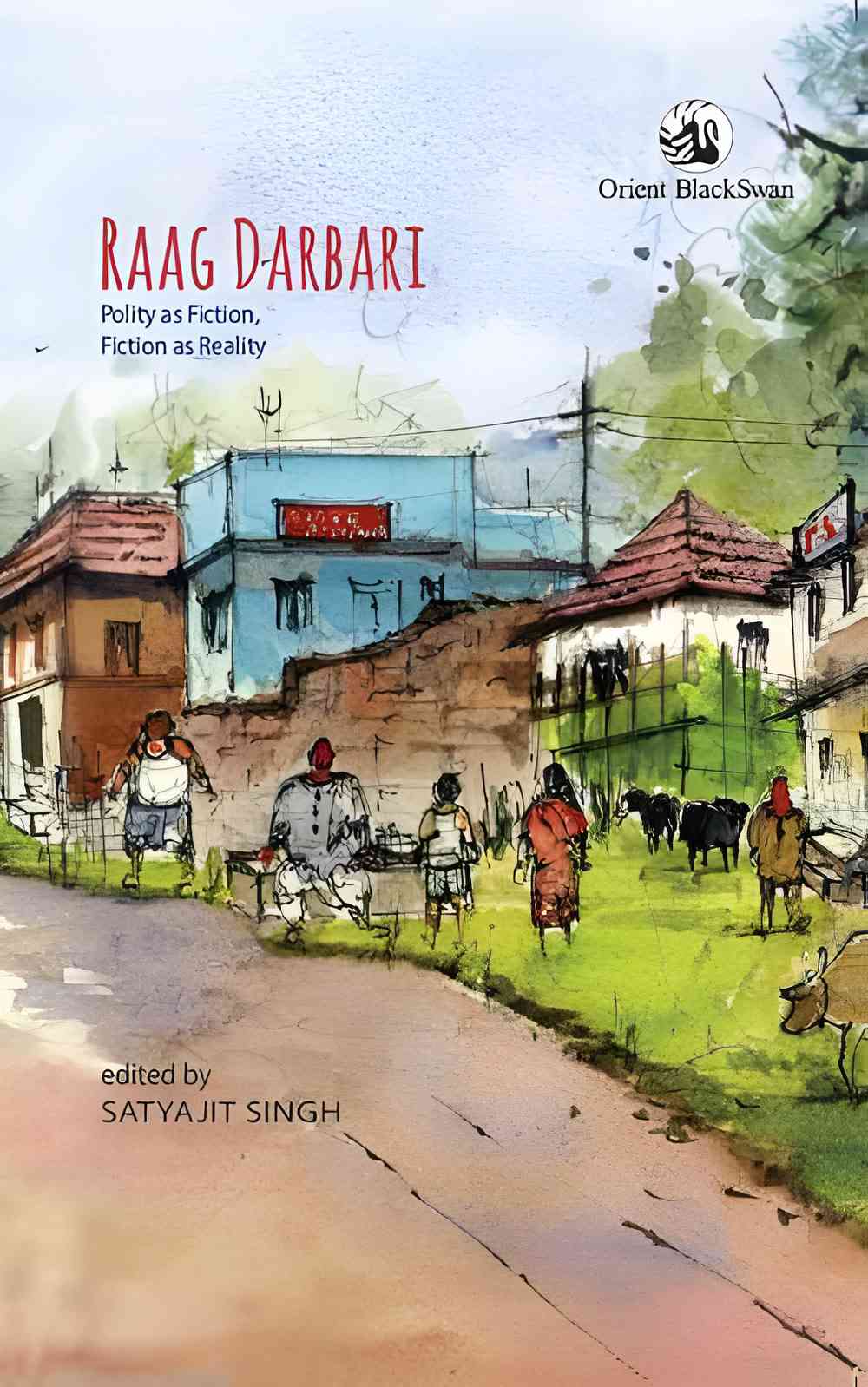
An excerpt from the Introduction to ‘Raag Darbari: Polity as Fiction, Fiction as Reality’, edited by Satyajit Singh.
Yesterday · 08:30 amShare
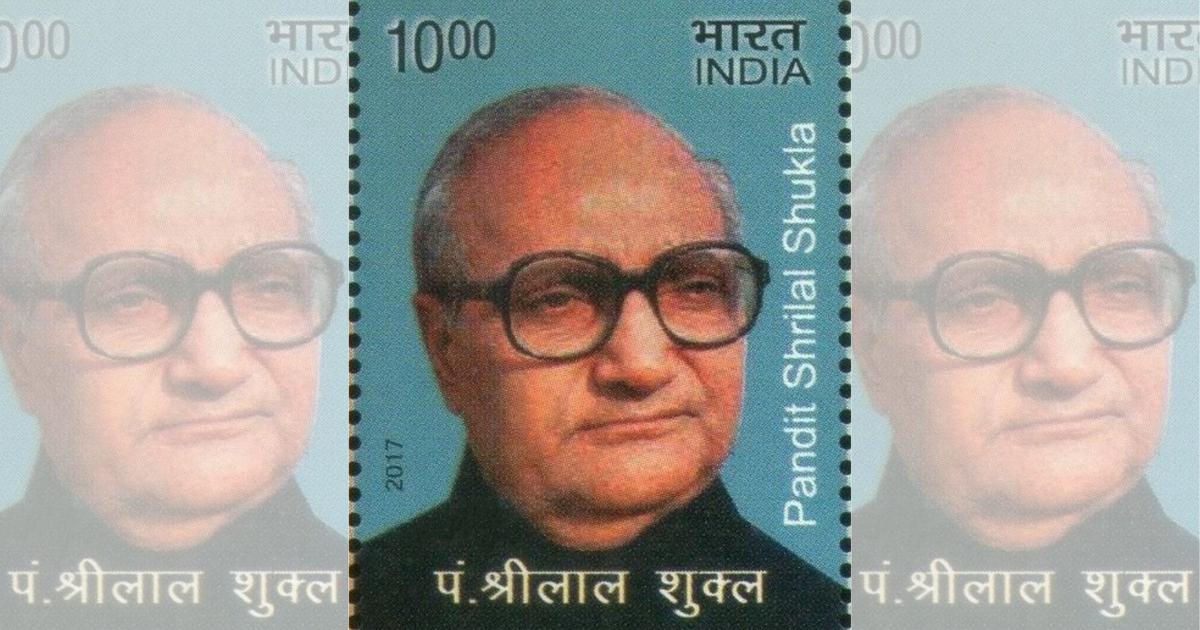
Raag Darbari, a work of Hindi fiction, creates an imaginary village of Shivpalganj in Uttar Pradesh, telling an important story of rural India, local politics and administration. The author Shrilal Shukla, who won the Sahitya Akademi Award for this novel, insisted in the early years after it was published that this was a work of fiction with scarce resemblance to reality. That his fiction mimics a village in rural India and its important local institutions – the college, the panchayat (village council), the cooperative – as well as statutory institutions such as the judiciary and police, among others, and the politics of the local elite that manages to not only subvert the developmental state and administration but make it a hub of clientelism, parochialism and corruption, is to say a truism.
The present image of the variegated Indian village and its local politics, administration and welfare is the drama whose multiple performances – past, putative and potential – point to the continued importance of Shukla’s Raag Darbari. We, a few scholars who wished to reflect on this novelistic exposition of the making of “modern” India, started this collective effort by asking a few questions. Today, more than five decades after Raag Darbari was first published in 1968, where are the citizens of India in our understanding of administration and politics? Have we managed to get local institutions to deliver welfare? Do we know how to handle corruption? Have we done away with the darbar and the pahalwan (the court and the wrestler/goon) or are there new darbars and pahalwans that continue to mock the might of the state and, more pertinently, the will of the people?
Before you scroll further…
Get the best of Scroll directly in your inbox for free.
In the pursuit of these questions, it has been repeatedly asked why the discipline of political science should be interested in fiction to better understand rural reality? All perspectives, including sociological, anthropological and economic, are limited by their disciplinary constraints. We need to work within our method and craft to build theories that give better expression to our understanding of society and politics.
If fiction is rooted in a reality that people can relate to and continues to live beyond the time when its author imagined it, its contribution to the study of politics cannot be ignored. Neither theoretical work nor fiction can replace the other in the understanding of reality, but together they can project a more nuanced picture of the complex and often baffling circumstances of our quotidian existence. I see this volume as a constructive jugalbandi (a duet, offering a glimpse of rural India’s lived reality) between the insights that literature provides and the work that political theory does.
Most discussions on Raag Darbari have been from scholars of literature. However, my submission is that the novel offers multiple insights to a student of public administration, development and politics. Penned in 1968, a mere two decades after Independence, this novel was perhaps the first critique on the developmental state, its bureaucracy and the democratic institutions of the country, served with black humour and irony. It provides details about how a government college, a democratically elected panchayat (village council), cooperatives and other institutions of the state become pawns of a political entrepreneur belonging to an upper caste in the village. Shukla’s fictive village offers an administrative perspective that is not enshrined in Weberian rule-based rationality, nor formulated on the Wilsonian separation of policy and administration. In 1968, Shukla hints at a rethink of administrative theory that Western scholars were to appreciate decades later. It questioned the values on which the new nation was built, and provided a mirror to the reality of everyday rangdari (colourful bullying). A cast of dominant male characters – Vaidyaji (a bhang [cannabis drink] preparer and an Ayurveda practitioner), Ruppan babu (Vaidyaji’s son) and Badri Pahalwan (Vaidyaji’s son, the wrestler) – ensured that Langad (lame, literally without a leg, representing the common man) was always at the receiving end of the machinations of the state.
Only characters like Shanichar (a Dalit, an erstwhile outcaste/untouchable, literally under the influence of planet Saturn, which does not bestow happiness), who was willing to be a chamcha (sycophant) of Vaidyaji, could prosper and be elected as sarpanch (village head) due to the political manipulations and blessings of his mentor. The idealist Rangnath (a recent graduate and a product of post-Independence Indian aspirations), Vaidyaji’s nephew, was presented as perpetually bewildered with the state of the nascent nation and its institutions already mired in corruption. Shivpalganj was not just a village in Uttar Pradesh, but representative of the rural reality of India.
At the time of Independence, the Indian state inherited from its colonial predecessor a Weberian bureaucracy. India was meant to be a state based on rationality, centralisation and rule-based authority; a model of government that institutionalised separation of powers between the executive, the legislature and the judiciary; and a Wilsonian concept of public administration that underlined a separation of policy from the administration. The polity was meant to be a replica of the centralised Westminster model with the addition of federal-state legislatures and the local institution of panchayats. Much of the political engagement, as envisaged by the framers of the Indian Constitution, was to be at the Centre where the laws were framed and policies drawn. A centralised and professional administration was to implement these through a deconcentrated state. The ideals and rights espoused in the written Constitution and the political economy of state power determined institutions and outcomes at the local level. State and political action were to be in the rajdhani (capital) of the country or the state, and politics ultimately a play in the hands of the members of the state Legislative Assembly (MLAs) and members of Parliament (MPs).
Advertisement
The political and administrative narrative of Shivpalganj, as crafted by Shukla, brought out the limitations of these apparently sound theories. Shukla showed that it was local politics and its interplay with local institutions at the centre of local statecraft, disbursing dystopian vikas (development) and elite-patronised nyaya (justice) to the people. To put it another way, it was not just the formal administrative and political structures devised by the state, but also informal institutions designed by Vaidyaji which determined the nature of state-directed development.
Raag Darbari presciently pitted the idealism of the educated youth against the opportunism of the local elite. The play of the local power struggle in Shivpalganj questioned the notion of an independent ideal type of bureaucracy and administration, even as it tested the false dichotomy of the separation of politics and administration. It underlined evocatively that state institutions were little more than a source of rent for local power brokers. In two short decades after Independence, the unfolding politics of Shivpalganj underlined that even though governance was imagined as centralised, the specifics of the local shaped everyday administrative reality. It may be pointed out that 1968 was also a time of the great awakening against the bourgeois state, with the Naxalite (Maoist) movement4 in some parts of the country highlighting the inadequacy of Independence in empowering its rural and poor peoples.
Shukla must have been disappointed that political scientists had not been receptive to the message in his novel of the Indian elite’s subversion of the state’s institutions, even though his readers understood this plainly. He writes, “Upanyas ko jantantrik vidya mante hai” (a novel is considered to be democratic knowledge) and that a novel has no value unless it is appreciated by its readers, as his fictional Shivpalganj in fact was. His novel had a life because it was accepted, criticised, analysed and debated in the democratic space inhabited by its readers. The continuing popularity of his narrative, according to Shukla, was given imprimatur by generations of his readers. It thus effectively portrayed a reality that people could relate to, an atmosphere of “gaban, dhokadhari, bhrashtachar, vanshvad – ye sab apni jade mazboot karte ja rahe hai” (embezzlement, deceit, corruption, hereditary rule – have made their roots stronger in society). Importantly, this novel has not just lived for 50 years within the Hindi heartland, but its depiction of politics has been replicated and endorsed by translations in more than nineteen languages, including English. It is thus a meaningful and useful text for social scientists and administrators as they grapple with multiple interests that queer the pitch of local politics.
Unlike RK Narayan’s Malgudi Days, another classic that was also made into a television serial, the imagination of rural India in Shukla’s Raag Darbari shifts dramatically from a leisurely village with innocent characters to a provincial patriarchal, masculinist north Indian village set theatrically in a Kautilyan (Machiavellian) play. It opens by giving us details of a roadside tea stall infested with flies and dust, with trucks on broken roads rolling by. The author underscores the maleness of this mofussil India by suggesting that the trucks are not driven; rather, they bulldoze their way with the intention to rape (balatkar) the roads! Shukla does not portray a romantic, idyllic, clean village, but a village teetering on unhygienic and insanitary masculinity. It was the norm of its men to defecate and urinate on the streets of Shivpalganj, considered by Shukla as an inherent characteristic of their Indianness. Shukla connects with his readers through the vernacular, a simple and colloquial Hindi, and simultaneously makes use of English words such as metaphor, symbolic modernisation, public health, design, private sector and lecture to show the appropriation of select language of the state by ordinary people. He injects English words, for example, as used in anti-malaria campaigns, to create ironic humour as malaria runs amok, or highlights the incongruent Hindi translations of English terms and their incorporation in the everyday life of the village. The use of foul and colourful language is thus deliberately deployed by the author to transport his readers into the midst of the wrangle of village life.
Shukla underlines the ironic and strategic use of nationalistic symbols like Gandhi by the village elite to further its parochial interests, and the liberal use of Sanskrit shlokas (verses) to provide cultural and religious justification for their immoral actions. Far from the idyllic, if poor, Malgudi, Shivpalganj was a village where disorder, deceit and embezzlement ruled as the norm. Shukla brought out the debilitating weaknesses of the new nation, its institutions, procedures, officers and society in his stark depiction. He demonstrated that corruption had already, within twenty years of India’s Independence, taken deep roots in society, and the old elite had found the means to remain relevant by subverting state institutions. They found ways to perpetuate societal inequalities and adopted the tokenist language that paid lip service to social transformation as envisioned in the Constitutional ideals without conceding any substantive change.
Advertisement
For anyone who works on local politics, institutions and administration in rural India, Shrilal Shukla’s Raag Darbari provides a frame to understand individual and collective interests, diverse forms of local agency and how rules, as well as institutions, can be subverted. Akhil Gupta calls the novel a quasi-formal ethnographical work. He suggests that it is one of the finest novels on the Indian developmental state whose insights on politics are without comparison. Pratap Bhanu Mehta goes further to say that this vernacular novel is one of the finest books on Indian democracy. Literary scholars like Rupert Snell, Francesca Orsini, and Ulka Anjaria are among the scholars who have written about Shukla’s literary craft in Raag Darbari. This volume includes social scientists like Sudha Pai, Vibodh Parthasarthi, Ashutosh Kumar, Shailaja Fennell, Philip Oldenberg, Paroma Ray, and Gunjal Kir Munda, who dwell on various facets of the novel, providing this fiction relevance in understanding rural social reality.


Leave a comment