

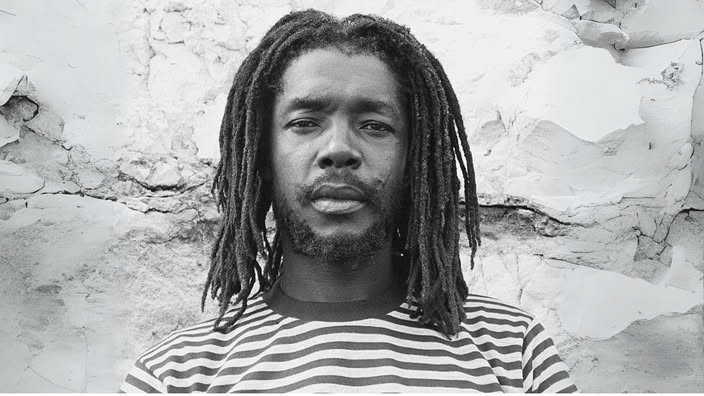
On 11 September 1987, Peter Tosh, born Winston Hubert McIntosh in Grange Hill, Westmoreland, Jamaica, on 19 October 1944, was murdered in his home in Kingston. He was forty two years old. Gunmen entered the house, and in the ensuing violence Tosh, his partner Marlene Brown, and two other men, Jeff “Free I” Dixon and Michael “Doc” Robinson, were killed. The killing was not a random act of street crime. It was bound up with poverty, armed gangs, and the political patronage networks that have long disfigured Jamaica’s public life, just as so much violence in the country has been.
To remember Tosh simply as a reggae musician is to diminish him. He was a founding member of The Wailers alongside Bob Marley and Bunny Wailer. He was also, and more importantly, one of the most uncompromising political artists the Caribbean has produced. His music was not ambivalent. It named injustice, and it named the people responsible for it.
Tosh’s early work with The Wailers helped shape the sound of Jamaican music, but his departure from the group in the mid 1970s marked the beginning of a solo career defined by an unyielding radicalism. Where some musicians often sought reconciliation and broad appeal, Tosh sharpened his analysis. His albums, Legalize It (1976), Equal Rights (1977), Bush Doctor (1978), Mystic Man (1979), Wanted Dread and Alive (1981), Mama Africa (1983) and No Nuclear War (1987), form a body of work that consistently attacked colonial legacies, racial oppression, capitalist exploitation, and state violence.
His lyrics were not slogans for their own sake. “Equal Rights” and “Downpressor Man” articulated a demand for dignity that resonated across Global Africa. “Legalize It” was both a practical argument about the prohibition of cannabis and a broader critique of the criminalisation of poor and Black communities. “Apartheid” was an explicit condemnation of the South African regime at a time when Western governments, including that of Margaret Thatcher in Britain and Ronald Reagan in the United States, continued to treat the apartheid state as a strategic ally. His 1981 album Wanted Dread & Alive and his other works were steeped in the same militancy.
To understand Tosh’s murder, we must look at the Jamaica of the 1970s and 1980s. The island had been shaped by decades of British colonial rule, and after independence in 1962 it remained economically dependent and socially stratified. The two dominant parties, the Jamaica Labour Party (JLP) and the People’s National Party (PNP), built rival patronage networks in the poorest districts of Kingston. Guns flowed in, often with the complicity of figures on both sides of the political divide, and the consequences were borne by working class Jamaicans.
The 1970s saw a period of democratic socialist experiment under Michael Manley’s People’s National Party government, which pursued policies of nationalisation, land reform, and alignment with the Non Aligned Movement and Cuba. That experiment was met with hostility from Washington, from sections of the Jamaican bourgeoisie, and from local reactionary forces. The 1980 election campaign was among the most violent in the island’s history, and the victory of Edward Seaga’s Jamaica Labour Party ushered in an era of neoliberal restructuring, austerity, and closer alignment with the United States. By 1987, the social fabric of Kingston’s poor communities had been torn by gang warfare, and the state’s response was frequently repressive rather than remedial.
Tosh had returned to Jamaica after years abroad and had been working on new material. His home was attacked at a time when public figures who spoke too plainly faced real danger. The men convicted of the murders, Dennis “Leppo” Lobban, Steve Russell, and Andrew Henry, were tried and imprisoned, but the wider question of who ultimately benefited from Tosh’s silencing, and how far the violence was connected to the political and criminal networks of the day, has never been satisfactorily answered. That ambiguity is itself a political fact. In Jamaica, as elsewhere, the powerful have rarely been held to account for the violence that sustains them.
Tosh’s death was a profound loss to Jamaican music and to international movements for liberation. He had been a vocal supporter of African liberation struggles, of the anti apartheid movement, and of reparatory justice for slavery and colonialism. He insisted that the struggle was both racial and economic, and in doing so he anticipated much of the language we now use to describe structural oppression.
His influence persists. Musicians across reggae, dancehall, hip hop, and rock have cited him as a formative figure. His songs such as Fight On remain staples of protest movements. In Jamaica, his memory is invoked in debates about gun violence, political corruption, and the unfinished business of social justice. Internationally, he stands alongside figures such as Walter Rodney, the Guyanese historian and revolutionary murdered in 1980, as a reminder of the cost exacted from those who challenge entrenched power in the Caribbean.
For socialists and anti imperialists, Peter Tosh’s life and death illustrate several enduring truths.
First, culture is a terrain of struggle. Tosh used music not simply to express feeling but to organise consciousness. He understood that art could be a weapon, and he wielded it accordingly.
Second, the violence that killed him was not incidental. It was produced by a system in which poverty is policed, dissent is punished, and the poor are set against one another. The gangs of Kingston were not born of innate criminality. They were cultivated by political elites and sustained by an economy that offered young working class men few alternatives.
Third, the ruling order does not mourn its critics. It absorbs them. Tosh’s image is now commodified, his face printed on merchandise, his radicalism softened into lifestyle branding. To remember him honestly is to resist that process, to insist on the political content of his work and to connect it to the struggles of the present: for racial justice, for economic equality, for the decolonisation of the Caribbean, and for peace.
Thirty nine years after his murder, Peter Tosh remains a figure of remarkable clarity. He did not ask for permission to speak. He did not moderate his demands for equality and reparation. He did not accept that poverty was natural or that the imperialist empire was benevolent. On this anniversary, the appropriate tribute is not nostalgia but continuation: to take up the questions he posed and to refuse the silence that was imposed upon him.
Equal rights and justice was not, for Tosh, a slogan. It was a programme! It remains one!
Shared post


Leave a Reply