

14/Sep/2026
An inaccurate and unreliable technology cannot meet the requirements of a democracy like India.
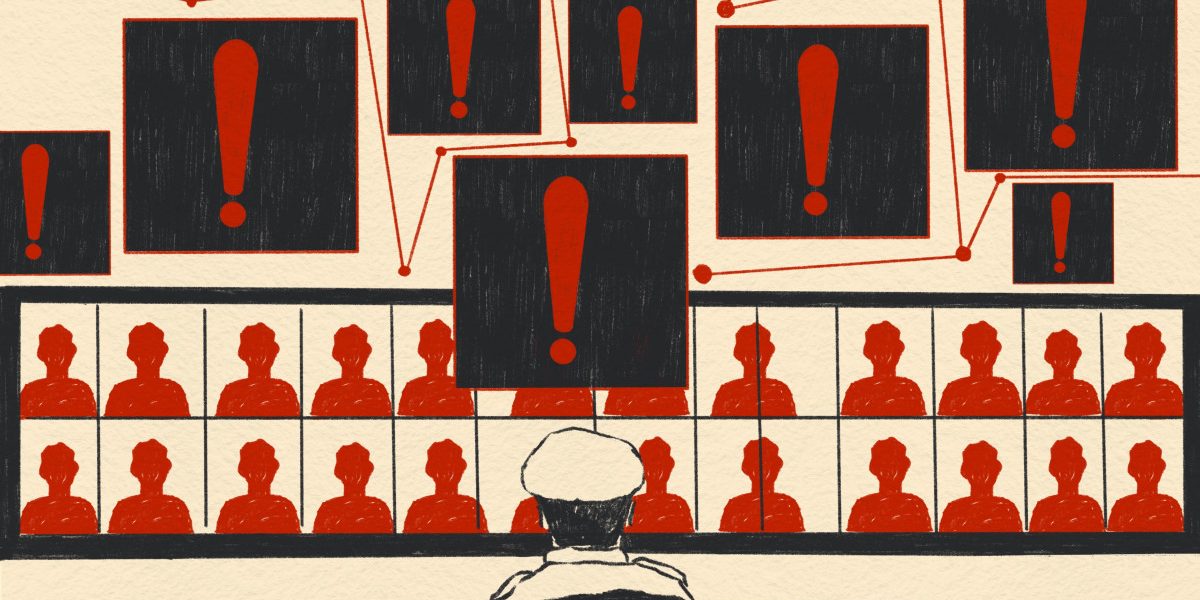
Illustration: Pariplab Chakraborty
Recently, the Supreme Court, in exercise of its extraordinary powers under article 142 of the constitution, quashed all first information reports (FIRs) registered by the police across India against those who participated in protests between July 20 and 25. It is undoubtedly an unprecedented step. Such an extraordinary step was perhaps called for in the overall view of the matter. The court, however, made an exception for protesters having criminal antecedents. In its order passed on September 1, in the Shailendra Mani Tripathi case, it allowed the Delhi Police to investigate and pursue cases against 2,873 individuals, who were identified as having criminal antecedents and allegedly present at the protest site, if they had involved in violence or damaging or destroying any property during the protest.
In India, the right to protest peacefully is a fundamental right. It is a form of expression guaranteed under article 19(1)(a) of the Constitution. It is recognised as such in a number of cases by the Supreme Court including, recently, in Shaheen Bagh case. One of the pertinent questions that arise, in the context, is the following: Does the constitution of India denude individuals with criminal antecedents of the right to protest peacefully? This question has not been squarely answered by any court in India so far.
Advertisement
It is, however, a settled law that having criminal antecedents per se does not disentitle any person from claiming their fundamental rights. Even a person in prison, either as convict or as accused, is also entitled to all the fundamental rights except the ones that had to be necessarily curtailed as an incident of physical confinement in prisons. There is nothing in law to prevent an individual with criminal antecedents, when not in prison, from participating in any peaceful protest except perhaps the duly imposed bail conditions, if any, on a person on bail. In case of others, one thing that is not in doubt is that their participation in peaceful protests by or in itself does not amount to any criminal offence merely because of a criminal past.
It is also not in doubt that nobody, whether having criminal antecedents or not, has a right to indulge in violence or destroy or damage any property during protests.
In this scenario, whether a classification between persons having criminal antecedents and others for the purpose of quashing FIRs is reasonable or not is a question that would prompt the students of constitutional law to ponder over. If the question is answered in the negative, then it is clear case of violation of right to equality guaranteed under Article 14 of the constitution.
Also read: As AI Took Over Policing in Delhi, Who Bore the Brunt?
Advertisement
An intrusion
An even more important question, in the current scenario, is how those 2,873 individuals were identified in the first place as persons having criminal antecedents by the Delhi Police. Admittedly they were identified by using Facial Recognition Technology (FRT).
FRT is a privacy intrusive technology. It captures, stores, analyses and matches biometric data of individuals mostly without their knowledge and/or their free, specific and informed consent. When the police or other law enforcement agencies deploy FRT, it is ordinarily for the purpose of matching the faceprints of the individuals it is capturing with the faceprints of criminals they have in their database.
It is not that the law enforcement agencies cannot use the FRT under any circumstances. Since right to privacy is recognised as an implicit fundamental right in India having its roots in Articles 19 and 21 among other provisions of the constitution, such privacy intrusive technology cannot be used without clear and specific authorisation by law in force in the country.
Legality, necessity, proportionality, and procedural safeguards
Advertisement
In Justice K. S. Puttaswamy case itself, in which the nine-judge bench recognised the right to privacy as a fundamental right, the Supreme Court had laid down fourfold tests against which the validity of every privacy intrusive measure adopted by the state needs to be examined. They are, legality, necessity, proportionality, and procedural safeguards.
The test of legality requires that no privacy intrusive measure be adopted by the state without prior and explicit legal sanction. It is a mandatory requirement irrespective of the purpose (like maintenance of ‘public order’ or protection of ‘national security’, etc.) for which such a measure is proposed to be adopted. If there is no prior legal sanction, the measure in question is unconstitutional on the face of it.
This leads to the most important question – is there a law in India that authorises deployment of FRT for real-time face scanning of protesters or bystanders for the purpose of collecting, analysing and/or matching their face-prints against those in the database maintained by the police?
India lacks a clear legal framework to govern deployment of FRT. None of the existing laws specify who can authorise deployment of FRT, when and how its deployment can be authorised, and subject to what safeguards it can be deployed and data it gathers be processed. Delhi Police, which has identified 2,873 persons as having criminal antecedents by using FRT, cites general and broad provisions relating to maintenance of public order contained in the Delhi Police Act, 1978 and the Bharatiya Nagarik Suraksha Sanhita (BNSS), 2023, as sources of their power to deploy FRT on protesters or civilian assemblies. It is not in dispute that neither of them expressly authorises the police to use FRT. Even the Criminal Procedure (Identification) Act, 2022, which allows ‘measurements’ of arrested or convicted persons to be taken, does not confer any such powers on the police.
Advertisement
Also read: Facial Recognition Technology Has Come to India But a Law to Regulate It Has Not
Technology is not error free
Extensive use of FRT on protestors and bystanders amounts to mass surveillance, which is generally considered to be a disproportionate measure. In a country, where the right to privacy has been accorded the sacrosanct status of fundamental right, mass surveillance of citizens cannot be permitted. Furthermore, deployment of FRT would also have chilling effects on fundamental right to peaceful assembly and protest. It is, thus, constitutionally impermissible to resort to such a measure without clear and specific authorisation by law. Vague and broad provisions contained in any of the extant laws like the Delhi Police Act, 1978 or the BNSS, 2023 cannot pass the test of legality, which is the first condition for validly curtailing right to privacy in the interest of any of the legitimate state aims.
Further, having a dedicated legislation authorising use of FRT alone is not sufficient to justify its use. Even the validity of such legislation and also the specific instances of deployment of FRT under such legislation are subject to judicial review on the grounds of necessity, proportionality, and also adequacy of procedural safeguards. Authorisation of mass surveillance by using FRT can hardly pass these tests.
In addition, it is also important to understand that relying solely on FRT to identify individuals with criminal past is highly improper and risky as the technology is not error-free. FRT does not yield cent percent definitive match. Ordinarily, if there is 80% similarity score, match is considered “positive”. Even if the score is lower, the match is considered “false positive”, which means a person whose faceprint matches by 60% or so with the faceprint of a criminal in the database, the police would still pursue such a person for further confirmation.
The Delhi Police has confirmed this to the Internet Freedom Foundation (IFF) in its RTI response in 2022. An investigation by the Indian Express explicates the problem very well. It cast serious doubts on the claims made by the Delhi Police that 2,873 individuals with criminal antecedents were present at the protest site in Delhi. Its investigation focused only on 205 individuals (out of 2,873), who were accused of serious offences, and found that 25 of them were actually locked up in different prisons in Delhi at the time of protest. This is alarming and also raises serious questions regarding the reliability and accuracy of FRT. These factors cannot be overlooked while examining the constitutional validity of deployment of FRT on protesters or on civilian assemblies.
In a democracy, right to privacy, freedom of assembly, and right to protest are too precious to be dealt with casually. Their curtailment to any extent for achieving any legitimate state aim must confirm to the constitutional requirements of legality, necessity, proportionality, and procedural safeguards. An inaccurate and unreliable technology cannot meet these requirements.
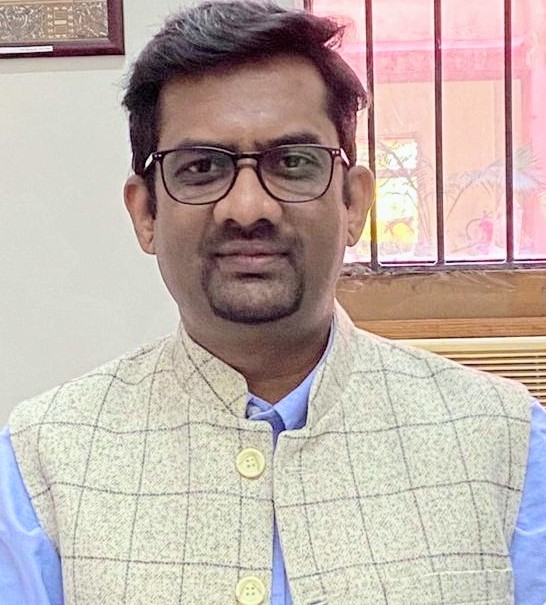
P. Puneeth is a Professor of Law at the Centre for the Study of Law and Governance, Jawaharlal Nehru University, New Delhi, India.
Advertisement
This article went live on September fourteenth, two thousand twenty six, at twenty-four minutes past three in the afternoon.
The Wire is now on WhatsApp. Follow our channel for sharp analysis and opinions on the latest developments.


Leave a Reply