

An interview with the author of ‘The Sage Who Reimagined Hinduism’.
14 hours agoShare
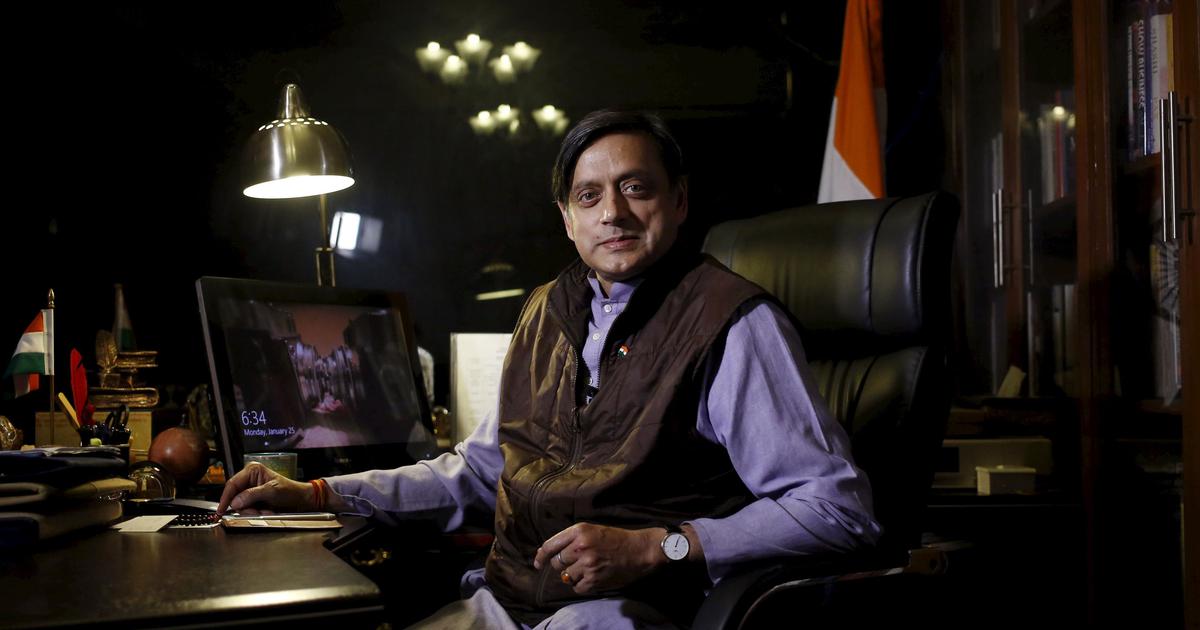
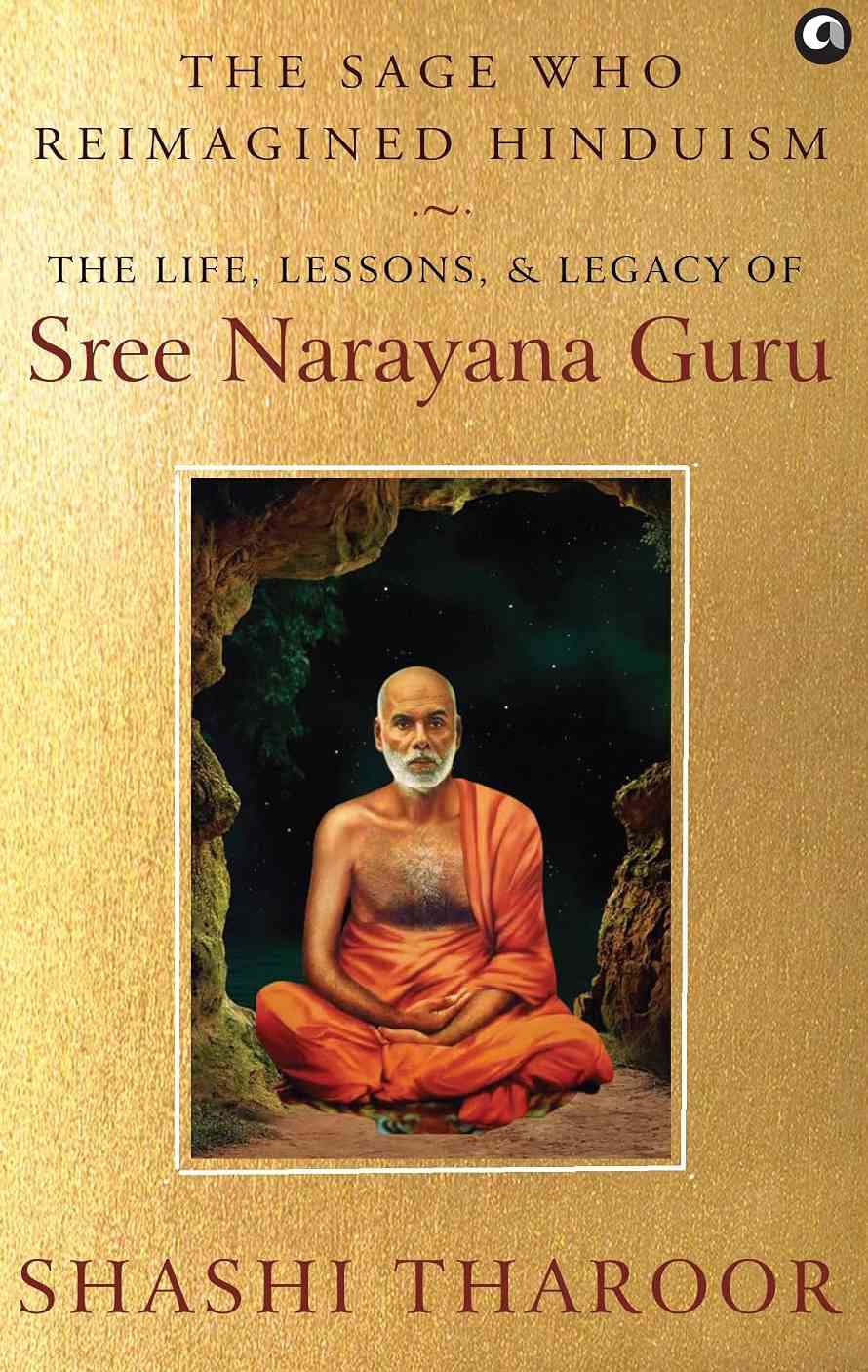
The Sage Who Reimagined Hinduism is Shashi Tharoor’s account of one of the most intriguing spiritual leaders and social reformers of modern India, Sree Narayana Guru. However, he is not very well-known outside of his home state, Keralam, and this book is, among other things, an attempt to remedy that neglect.
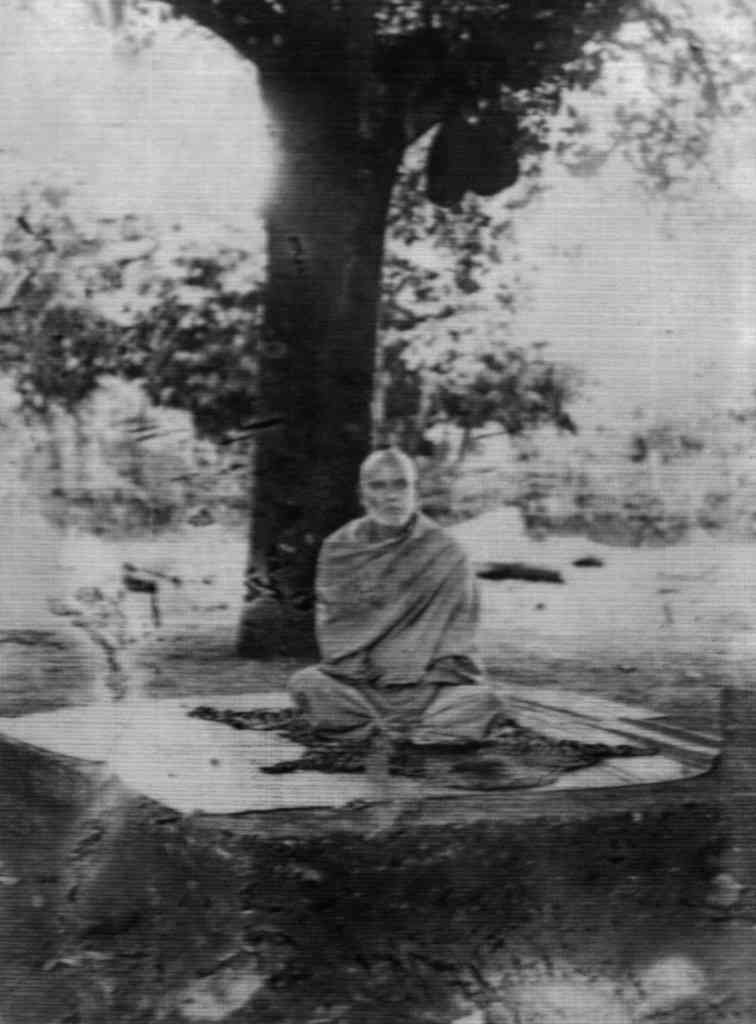
Born in 1855 into a modest, middle-class family in Travancore, Narayana belonged to the Ezhava caste, which was considered untouchable at the time. The story of how a boy from a socially disadvantaged caste rose to become a charismatic sage with millions of followers is a remarkable one. Yet, the Guru was not just an inspiring spiritual leader. He was also a social reformer who was determined to reshape the oppressive caste system that held millions in its grip. He fought to make the society he was part of more equal, establishing and consecrating temples that were open to all castes, founding schools and other educational institutions, and doing everything he could to empower the lower castes and break the malign influence of the upper castes.
Before you scroll further…
Get the best of Scroll directly in your inbox for free.
In a conversation with Scroll, Tharoor spoke about how he discovered the Guru, his own understanding of faith, and why the Guru continues to intrigue us. Excerpts from the conversation:
How did you decide to write a biography of the sage and social reformer, Sree Narayana Guru?
To begin with, two or three things intersected. One was the fact that I had written two short biographies. One on Nehru more than 23 years ago, in 2003, which did very well and then got a reprint in 2017. It’s still doing well as one of the best short biographies of Nehru because there are very good biographies, but they are very long. That is something that worked.
Then I tried the same formula with Ambedkar. It has done modestly well and has a steady continued readership across the country. So, the format of a short biography was definitely appealing.
And when it came to Sree Narayana Guru, he was somebody who I thought deserved to be better known outside Keralam. When I came to Keralam, even though I was aware of the gentleman, it was still astonishing for me to realise how deeply revered he is in every corner. In my part of Keralam, where I’m the representative for Thiruvananthapuram, literally every neighbourhood has a bust, a shrine, something dedicated to him, the way in which you might see Mahatma Gandhi or Ambedkar in some places. He is highly revered.
Advertisement
But what is equally shocking is that, unlike Mahatma Gandhi or Ambedkar, no one outside Keralam seems to know him. I happened to mention him in conversation to a few friends in North India, and of about 20 people I mentioned Sree Narayana Guru to, 19 had no idea who he was. The 20th thought he knew him, but he was actually mixing him up with Ramana Maharshi or somebody else.
So, I realised there was a genuine need. If you found this gentleman interesting and original, which I did, then it was important to get him better known outside Keralam.
That was the purpose. All these things came together, and I decided that the time to do it was right then. I also felt that we were seeing a sort of political takeover of Sree Narayana Guru by certain quarters who were trying to appropriate him. I felt it was important to set the record straight about what he achieved, how he achieved it, why he did it, and what he actually did.
But what would be the reason that he is not very well known in other parts of the country?
One reason certainly was that, unlike many others, he didn’t travel outside Keralam very much, other than to Sri Lanka three times. Otherwise, he remained essentially within Keralam and the adjoining regions of what used to be the Mysore State and the Madras State.
Advertisement
Tagore invited him to Santiniketan, but he never went. So, when people haven’t had any personal exposure to someone, whether through direct contact, legend, photographs, or anecdotes, that also becomes a factor.
Partly, perhaps, it was because of the languages he spoke – Sanskrit, Tamil, and Malayalam. Nobody in the north knew any of those languages. When Gandhiji came to see him, Gandhiji didn’t speak any of those three languages, and Sree Narayana Guru didn’t speak any of Gandhiji’s languages. So, they had an interpreter for part of the conversation, but much of their discussion passed in silence.
These are all contributing factors. But at the end of the day, why does one person capture the imagination of a people while another does not? It is very difficult to say.
The book says that he had the stature of Swami Vivekananda but he could not find similar national recognition.
He deserved to be as well known as Vivekananda, but he was not. His message was as universal as Vivekananda’s. However, Vivekananda travelled the length and breadth of the country. You can read his speeches delivered in Lahore and in what is today Bangladesh. You can read his speeches in Chicago. That kind of impact Sree Narayana Guru never sought to have.
I myself began as a Vivekananda bhakta. I discovered his speeches in English when I was a college student, and from there I read everything by Vivekananda, again in English, because most of his preaching was in English. So I had a complete immersion.
Advertisement
But with Sree Narayana Guru, I had to make a real effort to find good translations and learn more. Whatever is available is either extremely spiritual or extremely esoteric.
As you say, you are not an authority on spirituality or religion. But, of course, you are a politician. A politician is writing a biography of a sage. I wanted to know what kind of relationship you find, in the Indian context, between spirituality, religion, and politics.
It is extensive. But in my case, I didn’t quite approach this as a politician. Let me explain why.
Sree Narayana Guru preached, first of all, a universalism against caste. Caste is something my father, who came of age during the peak of the freedom movement under Gandhiji, was also against, though from a totally different perspective. I had friends of every religion without even realising it. That was how that generation was.
Secondly, Sree Narayana Guru did more than just preach against and destroy the edifices of caste. He linked his teachings to some very practical things. He wanted, for example, to emphasise education as a means of transformation and upliftment for society. Similarly, he had a very strong message about free enterprise and handicrafts. The first-ever handicraft exhibition in India, a trade and craft exhibition, was held under his auspices.
Advertisement
He also believed in interfaith harmony. He held the very first All Religions Conference in India in the 1920s in Keralam.
So, you are looking at somebody who was not just a spiritual or religious reformer but somebody who had practical solutions for society and the economy. These are solutions which, frankly, to this day remain valid. I am also a believer in education, in free enterprise, and in hard work. So, for me, these messages and lessons had to be taught and imparted once again.
At the same time, in Keralam, what has unfortunately happened is that he has become identified overwhelmingly with a particular caste. This is a caste which, during his lifetime, was deemed untouchable and is now treated largely as an OBC caste because, thanks to his teachings, they became well educated, more prosperous, and more active in trade. They are no longer treated the way they were in his lifetime.
He said, “Officially, I have no religion.” In fact, when the census officials came to him during the 1921 Census and asked him to state his religion and caste, he replied, “Write human.” They said, “Sorry, sir, these are the options we have been given. Please tell us your caste.” He simply repeated, “Human.” To this day, he remains the only person in the Indian Census listed as “Human.”

As you said, he declared that he had no religion because he was simply human. But on the other hand, he is known for his famous declaration: “One caste, one religion, one God for humanity.” What is your take on this?
Some people might interpret it in a very parochial manner. What he was really trying to say was that we are all the same. In fact, he goes back to the Advaitic Vedantic tradition, which basically says all of us are fragments of the same Atman, the same soul. That is the idea – that we are all the same. It doesn’t matter what your caste is or what your religion is.
Advertisement
In Sri Lanka, there was a Muslim who was deeply attracted to his teachings. He told Sree Narayana Guru that he wanted to convert to Hinduism.
Sree Narayana Guru said, “Absolutely not necessary. Stay who you are. Be who you are. But follow these precepts.”
The next time Sree Narayana Guru came to Sri Lanka, the same man appeared before him wearing a big saffron robe and said, “I have become your devotee.”
Sree Narayana Guru was not happy. He was very angry. He asked, “Why? You are a Muslim. You have no reason to abandon the religion into which you were born. The values you believe in and cherish are values we share across religions. Be who you are and still be with me.”
At such a time, to take the stand that conversion was not necessary because we are all the same was, in my view, a very courageous and broad-minded position. That also was worth talking about.
Advertisement
So, when he said “one caste,” he meant “no caste.” When he said “one religion,” he meant “no religion.” When he said “one God,” he meant that we are all worshipping the same divine. It doesn’t matter how you worship or through what means you worship. We are all one.
I think this statement could draw some political complications. Do you believe so?
So far, he has been able to stay out of it. Though, as I said, sadly, on the caste front, his teachings are still identified more with his own community. But on the religious front, I think it’s fair to say that he broadened and reformed Hinduism as it was practised.
He was asked, “Why do you only consecrate temples?” The first anecdote in the book is about how he consecrates a Shivalingam in a rudimentary temple, and the Brahmins say, “You have no right to do this.” The Brahmins were very unhappy.
From there, he went on to consecrate 30 or 40 temples across Keralam. In some, he simply installed a mirror. You worship the mirror; you worship the God within yourself. In others, he installed symbols. In one place, he simply placed the word “Om.” He wanted people to worship that. He did not want everything to be confined to one form.
Advertisement
People then asked him, “Why do you only create temples? Are you not simply being a Hindu revivalist?”
He would say, “If tomorrow the Muslims, the Sikhs, or the Christians ask me to inaugurate a place of worship for them, I will happily do it.”
But I would argue that, if you look at him objectively, there was not one iota of intolerance or any sense of religious superiority in him. He was open to all ideas, all faiths, very willing to listen, very willing to talk. There was a robust streak of common sense in him.
Do you think that these spaces of temples have been shrinking for lower castes or even for people of other religions in our time?
It varies. In Keralam, fortunately, we haven’t got that bad yet. For example, all of us, frequently, in public life, also go to temples to show our devotion. Now, in some areas of my constituency, the local Congress president is a Muslim. In some cases, a Christian. They usually come along as well. They have no problem entering the temples, and the temple authorities have no problem with them coming in.
Advertisement
There are a few temples in Keralam where non-Hindus are strictly not permitted to enter. For example, the Guruvayur Temple and the Padmanabhaswamy Temple in my constituency are not open to non-Hindus. I think it is an unfortunate practice, but that is the policy.
After a certain point of time, he discouraged the establishment of more temples because he wanted existing temples to be used positively – for promoting education, healthcare, and social reform. Do you believe we are no longer following that approach?
Yes. I think we are going through a period of acute religious revivalism for its own sake. I am myself a believer, and I am not embarrassed by that. I have written a book called Why I Am a Hindu. I have tried to argue that my understanding of my faith is of a very inclusive, all-encompassing tradition that accepts differences, as Sree Narayana Guru did, embraces harmony, and leaves much to the individual’s own interpretation of faith.
For my kind of worship, I don’t need collective mass hysteria promoted by politicians. I find peace praying quietly in my own home. I can pray in a temple. I can go to a festival if necessary. But I still think of my relationship with the divine as something intensely personal, not something subject to collective frenzy.
Now, that is not the kind of thing that is happening in many parts of our country today. I can see that.
Advertisement
But I would challenge your assumption that we have completely lost one approach and gone entirely to the other. India, fortunately, is still diverse enough that all these different ways of approaching religion continue to flourish, and they flourish across all faiths.
Just as it is wrong to demonise Islam because of a few radicals or fundamentalists, we should also recognise that while there are Hindus behaving in an intolerant way, there are also a large number of Hindus who do not behave that way. Both realities exist in our country, and we should encourage more cooperation, more understanding, and more harmony between communities and religions.
While reading your book, I noticed that you said: “If you want to speak of politics in India, you must speak through the language of religion”. What exactly do you mean by that?
One reason Indian liberalism faltered may well have been that it lost the idiom of religion. In the 19th century, Indian liberals understood that religion was important because, in our country, religion was often used to uphold oppressive traditions in society and also to justify colonial rule. So they tried to respond by universalising Hinduism through movements like the Brahmo Samaj and by incorporating Christian and other influences into Hindu thought in an effort to reform and purify it.
When the Indian National Congress emerged as the leader of the nationalist movement, it preferred to stay away from taking positions on religion. The approach was that everyone should practise their own religion while politics remained separate. Sadly, one can argue that this may have eventually opened the floodgates to fundamentalism, separatism, and ultimately Partition.
Advertisement
So the question becomes: can we communicate liberal values through the idiom of the majority religion, so that people understand that liberal values are compatible with their faith? I believe they are. I am a liberal. I make no bones about it. To my mind, dharma is a valid concept that means a great deal to the majority of people in this country. But can dharma be infused with an appreciation of liberal values?
Dharma basically means doing the right thing and doing the thing right. Let us interpret it in a way that includes everyone. That is my message.
I believe that is a more credible liberal message than saying, “We are secular. God is not our concern. Religion is not our concern. We simply believe in these rights.”
The reality is that, for the vast majority of Indians, religion matters deeply. People are immersed in their faith. They need reassurance that the values you advocate are actually compatible with their religion.
Advertisement
Do you really think that India needs a spiritual renaissance?
A spiritual renaissance will come by itself, organically. Whether it is something we “need” is very difficult to say because, honestly, we have never really left spirituality, even while we have changed in so many ways as a society and an economy.
You know what has happened with consumerism here. Can you imagine the India I grew up in? I grew up in the 1960s and 1970s. I can tell you that the India of the 1990s and the 2000s – the India of mass consumerism, the open flaunting of wealth, the celebration of prosperity, capital, billionaires, all of that – would have been unthinkable in the 1960s.
I grew up in an India where the word “profit” was considered a bad word. If somebody was a businessman, he almost had to be slightly ashamed.
India has changed dramatically. But have we become less spiritual in the process? I don’t see that. I find that different forms of spirituality continue to thrive anyway.
Advertisement
You have written about a philosopher, a saint, and a social reformer. What were the challenges in writing the biography of such a figure?
I think one challenge for me definitely was that this is the first figure I have written about where the bulk of the primary source material was not in English.
So, I was working with translations while writing a book in English. Whereas, with Nehru and Ambedkar, so much of what they wrote and said was in English – and often only in English – that I had no difficulty. I was dealing with the original sources through my own understanding. That, I would say, was the biggest challenge.
Otherwise, frankly, the other aspects were not really challenges. There is certainly a great deal of myth-making around him, which is fascinating. When you talk to people, some regard him almost as God, some as a saint, some as a champion of a particular caste, and so on.
Would you like to tell us something about your upcoming book?
It’s still a work in progress. It is much more substantial and scholarly than this one. It will not be 200 pages but about 400 pages. It’s going to be a fairly hefty book. It traces the history of Indian liberalism from the ancient days of Indic thought right up to the present and possibly the future. It defines and makes a case for liberalism. It traces the rise of it in the 19th century, the eclipse of it in the 20th century, when it got supplanted by socialism on one side and by cultural nationalism on the other side, and liberalism is nowhere in the picture.
Advertisement
The brief heyday of the Swatantra Party, which was the only liberal party in the political space; the case for my own party, the Congress, to become more of a liberal party; and the case, in any case, for liberal values to continue to infuse our political discourse. This is broadly the theme of my book.
Mohd Farhan is an Assistant Professor of English at the Center for Distance and Online Education Jamia Millia Islamia, New Delhi.
We welcome your comments at letters@scroll.in.


Leave a Reply