

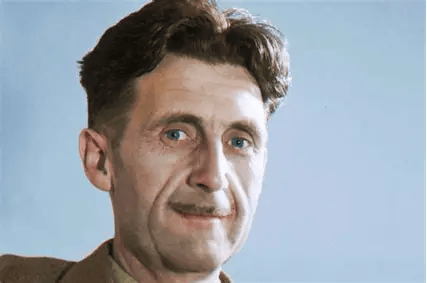
“Political language is designed to make lies sound truthful and murder respectable.” – George Orwell (1946) George Orwell’s personal experiences gave him firsthand insight into the political structures he would later examine in his writing. Born Eric Arthur Blair in 1903, he served in the British colonial police in Burma, experienced poverty among working-class communities in Paris and London, and traveled to Spain during the Spanish Civil War. These encounters shaped his commitment to democratic socialism while strengthening his opposition to imperialism, authoritarianism, and unquestioning political obedience. In his 1946 essay Politics and the English Language, Orwell examined how political language can distort reality rather than clarify it. He argued that governments and political organizations often rely on vague expressions, complicated terminology, and euphemisms to disguise uncomfortable truths. By replacing straightforward descriptions with abstract language, serious events can be made to appear routine or impersonal. Orwell believed that imprecise writing was more than a stylistic weakness; it could encourage equally imprecise thinking. His proposed remedy was straightforward: choose familiar words, eliminate unnecessary language, and describe reality with as much clarity as possible. He criticized overused metaphors and elaborate jargon designed to sound sophisticated without conveying genuine meaning, while acknowledging that his writing principles were flexible guidelines rather than absolute rules. These concerns also appeared in his novel Nineteen Eighty-Four, where the fictional language of Newspeak demonstrates how controlling vocabulary can restrict independent thought. By systematically reducing the words available to people, the ruling Party seeks to make certain ideas increasingly difficult to formulate or communicate. Through both his essays and fiction, Orwell explored the relationship between language, political power, and the freedom to think independently.


Leave a Reply