


13 hours ago
5 min read


Among the sources of Ranjan Ghosh’s ‘Adamya (The Irrepressible)’ is the poem ‘A Matchstick’ by the revolutionary poet Sukanta Bhattacharya.
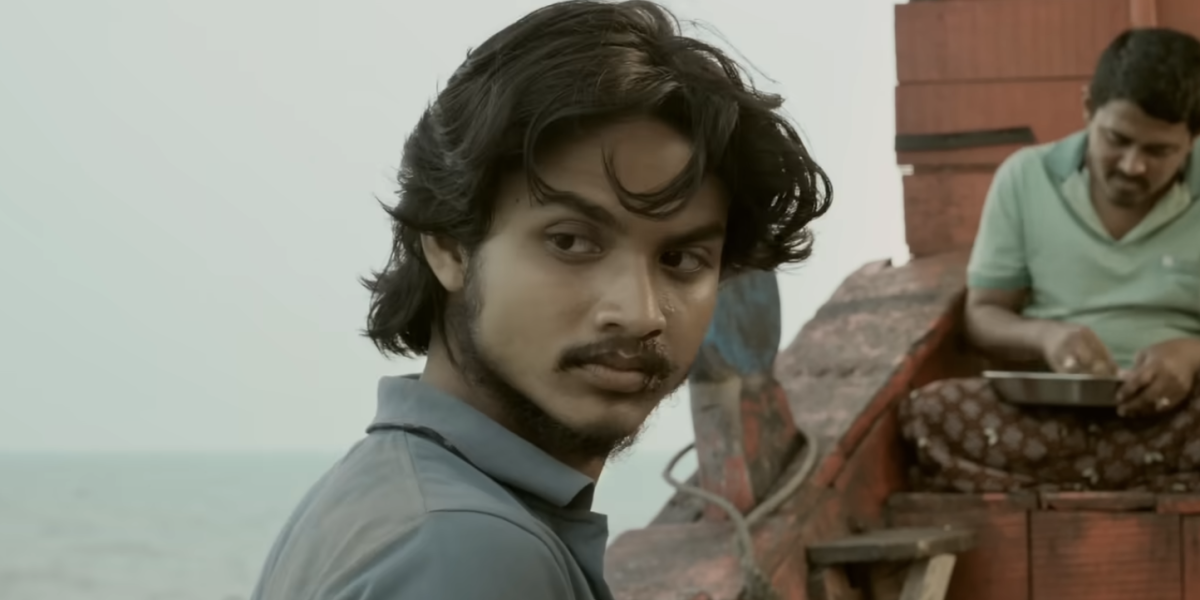
A still from ‘Adamya’.
I was at the ‘Arthshila’ cultural centre in Patna, looking at the exhibition March Towards Freedom. My young friend Amrit Raj told me that a Bengali film was to be screened in the evening. I had never heard of the director. The fault was entirely mine. Over the past few decades, I have lost touch with Bengali cinema.
There was a time when new Bengali films were screened as morning shows in Patna’s cinema halls. The Cine Society too used to screen Bengali films. Gradually, all of this disappeared. Patna has a significant Bengali-speaking population. But it seems that they have been thoroughly Hindi-ised. There used to be a vibrant Bengali theatre in Patna. Not any more. The character of the cinema halls has also changed. And after moving from Patna to Delhi, apart from film festivals, I have rarely had an opportunity to watch a Bengali film.Backward Skip 10sPlay VideoForward Skip 10s
Advertisement
During the exhibition, I met the director, Ranjan Ghosh. He looked so young that it was difficult to believe he was a film director. I also met the actor Aryun Ghosh, who was even younger. He invited me to watch his film Adamya (The Irrepressible). He also told me that one of the sources of the film was the poem ‘A Matchstick’ by the poet Sukanta Bhattacharya.
Sukanta was the first poet in my life. I had once translated this poem into Hindi. This year also happens to be his birth centenary. How, I wondered, could a single poem like this be woven into a film?
The film was to be screened in a small room on the top floor of Arthshila. There must have been around forty viewers. The number was a little disappointing. After all, Patna has quite a substantial Bengali-speaking population. But never mind. I had come to watch the film.
Advertisement
The story is very simple. A young revolutionary, Palash, tries to shoot a corrupt politician while he is addressing a public meeting. He misses his target. The search for the assassin begins. Palash runs to save himself. Following the instructions of his party leader, he reaches a hideout.
The rest of the film is largely the story of Palash hiding and trying to remain alive. Eventually, he is discovered. Surrounded by the police, he commits suicide. The film ends with the sound of a gunshot. This time, the bullet does not miss its target. Another ‘revolutionary’ young woman has killed the politician who escaped Palash’s bullet.
Early in the film, Sukanta’s poem is recited in the background. The young revolutionary Palash is that matchstick which flares up for an instant. He is young, just as the matchstick is small to look at, but there is a fire hidden inside his chest.
The film is made almost entirely of images. There is very little dialogue. The camera remains fixed on Palash. There are few moments of dramatic excitement. There are no major events in the film.
There is the hut in which Palash spends his days in hiding; the pond in which he bathes and swims; the forest in which there is a temple and, beside it, his secret shelter. There are scenes from his ordinary routine, without any romance or embellishment.
Advertisement
From time to time, he receives instructions or information from his party leader on a very basic mobile phone.
At one point, we see other people when Palash goes to a tea stall for a cup of tea. Some goons arrive and begin bullying the child working there. Palash watches silently. The goons notice him. He is new to the area. Suspicion begins to grow. They learn about his hut.
The goons attack the hut and try to kill him. Palash manages to escape. The rest of the film is the story of his second struggle to stay alive.
We move from the forest to the water. Palash loses contact with his party. Indeed, there are indications that the party no longer wants to remain in contact with him.
Advertisement
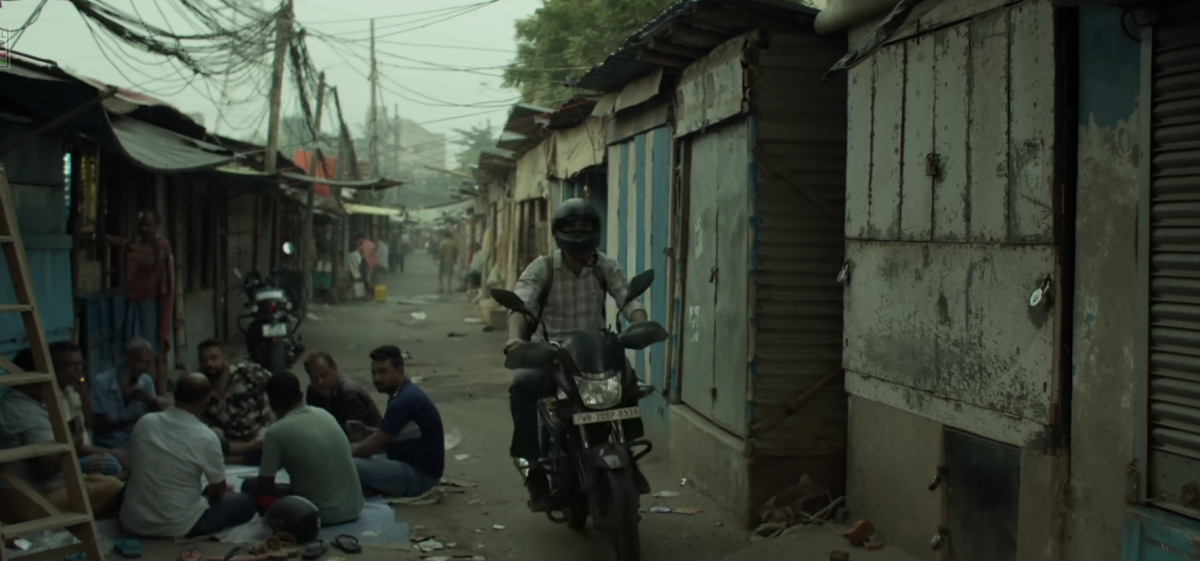
A still from ‘Adamya’.
Running from one place to another, he hides in a boat. The boat moves out into the river. The fishermen have gone out to fish and will remain on the water for weeks. Though they do not know him, they agree to let him stay with them on the boat. They tell him that when the boat returns, they will put him on another boat that will take him to his destination. But Palash does not trust them. He takes the first opportunity to deceive them and jumps into the river.
Somehow, he reaches the shore, only to discover that he is surrounded by the police. This time there is no way out. Shouting ‘Long live the revolution’, he cuts his own vein with a knife and dies.
Thus, the matchstick is extinguished.
Is the film telling us a story of Palash’s heroism? Or of the futility of that heroism? What is the meaning of the short life of a revolutionary? For whom does his fire burn? What does it light?
What is the relationship between the revolutionary and the people he wants to liberate? For whom does he give his life? Is it the fault of the people that they fail to recognise his sacrifice?
All his labour, energy and intelligence are devoted simply to hiding, to staying alive, to surviving, to dodging the police. This becomes his entire existence.
The very people for whom he has undertaken this act of extraordinary courage know him only as a murderer. He must also hide from them because they could recognise him from the sketch circulated by the police and get him arrested.
He is hiding not merely from the state but from the people as well.
When the goons assault the child working at the tea stall, Palash can do nothing but watch silently. To intervene would risk exposing his identity.
His party too reduces contact with him because if he is caught, the police could use him to reach the others. Palash becomes utterly alone.
But can he complain about this to his comrades? Had he himself not abandoned a revolutionary friend when they were trapped during another mission, and the police caught that friend? Had he not left him behind and run away?
That dead friend does not leave him. He keeps asking: Why did you run away and leave me behind? Was that heroism, or cowardice?
This debate about heroism continues in the background throughout the film. What, after all, is the life of an underground revolutionary? What is his relationship with the people for whose liberation he has placed his life at stake?
At the end of the film, is it the satisfaction of revenge with which the audience leaves the hall? Or do we begin to think about the life of another ‘revolutionary’ like Palash, who, after this heroic act, will have nothing to do but struggle to remain alive, to survive?
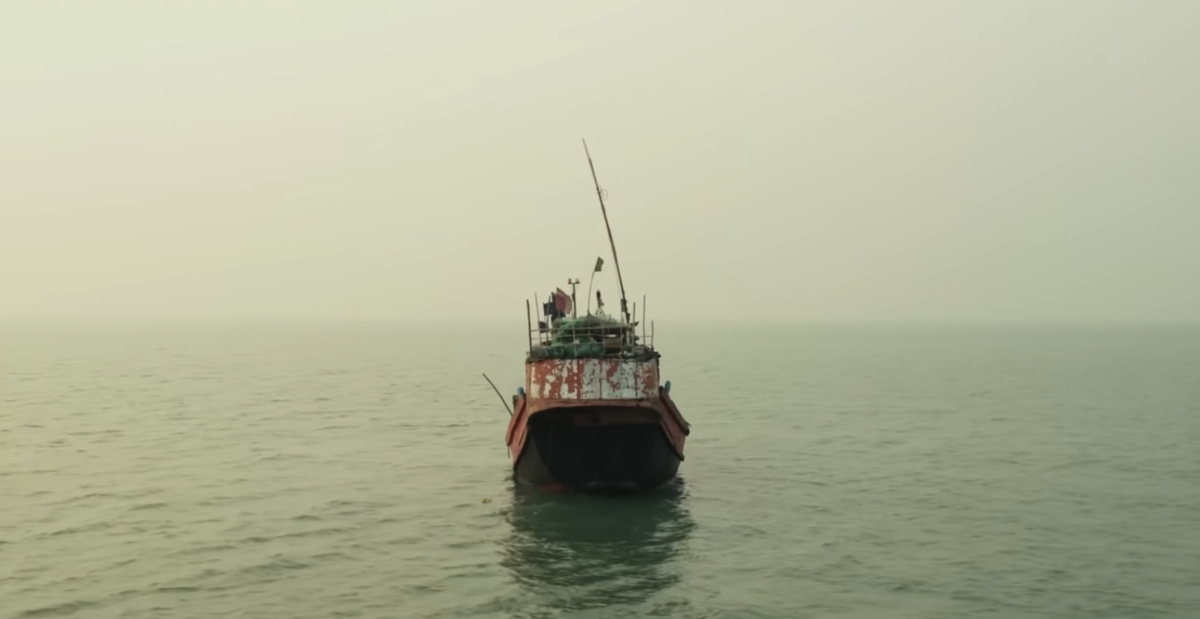
A still from ‘Adamya’.
The film’s silence brings these questions into view in all their complexity.
There is something both ruthless and simple in the way it films the expanse of water, the endless marshy landscape of the delta, and Palash’s struggle to cross it and yet find a way out. The vastness of the delta brings out the loneliness of a fugitive revolutionary in sharp relief.
The film’s extended silence is expressed by actor Aryun Ghosh with remarkable restraint. He conveys Palash’s vulnerability, his determination to survive, and the conflict within him with considerable skill. He holds the audience’s attention almost single-handedly through a film of nearly two hours in which, for the most part, very little happens outwardly.
There is an irony in the film’s title. The human impulse to rebel against injustice is adomyo – indomitable. But where should that rebellion lead? How should it find expression?
For the people who know nothing of Palash’s solitary tale of courage, does his death even become news? Can they understand that they have lost something of their own? Or is he merely an absence, a void, for his mother?
The film saves itself from the danger of verbal excess and rhetoric. It also avoids the sentimentality that so easily accompanies the story of the life and death of a revolutionary.
It ends with the sound of a gunshot and a woman’s voice repeating the slogan we have already heard from Palash. The spectator is left imagining the story of Palash’s revolutionary comrade, the woman who has now killed the class enemy.
Would the audience leave the hall satisfied with this revenge? Or would they leave troubled by the question: is it the beginning of the end of another life?
Violence, martyrdom, cowardice and heroism – how deeply entangled they can become within a single life! Does it have to be the fate of a revolutionary?
Apoorvanand teaches at Delhi University.
Advertisement
This article went live on September twenty-third, two thousand twenty six, at twelve minutes past six in the evening.
The Wire is now on WhatsApp. Follow our channel for sharp analysis and opinions on the latest developments.


Leave a Reply