
26/09/2026

“In an age of brutal philosophies, shrieking media, cold arts, lying politicians, and devouring institutions, Wendell Berry was a hero of an entirely human way of being. He was willing to make art which let the soul peek out from hiding in a culture of sarcasm, ensouled art as quiet and fragile as a small bird, seeing and loving. He became a light because he was willing to accept the responsibilities of love.”
—Tara Thieke, https://tinyurl.com/On-wendell
With the coming of summer a dread materializes: will there be more and increasingly intense catastrophes around the world, characterized by wars, wildfires, floods, searing heatwaves, wildlife annihilation and human suffering—all created by humans?
On September 10, Québec newspaper, Le Devoir, devoted a page to the rapidly disappearing bird populations in Québec. Titled “More and more bird species disappear from the sky: the decline of many groups lies directly with the destruction of natural habitats” (especially in southern Québec), it is a damning indictment of human activity, ranging from those who profess a love of birds but support the expansion of factory farming through their consumption of chickens and other animals to the destruction of wetlands near Montréal for the construction of a Northvolt battery factory (fortunately now cancelled). The worldwide massive decline in insects and accompanying desecration of wetlands further exacerbates the precipitous drop in bird populations. It is not only insects and birds who are being decimated: a recent report shows that almost 50 percent of the world’s farmers have been made ill from pesticides. Pesticides considered too unsafe to be used in North America are often sold to the poorest regions of the world. I have witnessed this first-hand.
The huge tragedy still unfolding in Nepal alone underlines the ongoing refusal to accept what is fuelling the already volatile predicament of the natural world. The cataclysmic flooding high in the Himalayas that caused the deaths of so many people is directly linked to climate breakdown, scientists say. It has been widely documented that the Nepalese people themselves are responsible for an infinitesimally small percentage of greenhouse gas emissions.
The water level in the longest river in the European Union, the Danube, continues to drop because of drought, and all of Europe is suffering. Farming, river transportation and even nuclear power plants that produce electricity are severely impacted. Meanwhile, the green spaces of England have turned brown while trees drop leaves through lack of water, and many ancient oaks are dying because of the record-breaking extreme heat.
Coral reefs are also being affected by the ninth consecutive year of increased ocean heat. This July the world’s seas were the warmest on record. Let’s not forget that coral reefs are home to 25% of all marine life and support the lives of hundreds of millions of people.
It doesn’t help that one of the most insightful people on the planet died recently. Wendell Berry particularly embodied what is meaningful for humans. If we take his writings to heart, I have no doubt that humanity will flourish more intensely. I believe that if every young person’s required reading list included his works, the world would find itself on the path to being healed.
Renowned climate writer Bill McKibben has called Berry “the prophet of responsibility” for his eloquent decades-long quest to create communities that are attuned to keeping humanity happily entwined with the rest of Nature. Contemporary society, including farming—Berry was above all else a traditional farmer in Kentucky—has lost its way. His essay “The Unsettling of America: culture and agriculture” is regarded as a powerful critique of corporate farming.
The best way for me to introduce Wendell Berry or to reacquaint those who have read his essays and poems with his wonderful writing is to share some of his words:
“You can best serve civilization by being against what usually passes for it.”
“The soil is the great connector of lives, the source and destination of all. It is the healer and restorer and resurrector, by which disease passes into health, age into youth, death into life. Without proper care for it we can have no community, because without proper care for it we can have no life.”
“There are no unsacred places;
there are only sacred places
and desecrated places.”
“Let us have the candour to acknowledge that what we call ‘the economy’ or ‘the free market’ is less and less distinguishable from warfare.”
“The care of the Earth is our most ancient and most worthy and, after all, our most pleasing responsibility. To cherish what remains of it, and to foster its renewal, is our only legitimate hope.
“It is easy for me to imagine that the next great division of the world will be between people who wish to live as creatures and people who wish to live as machines.”
“I can think of no better form of personal involvement in the cure of the environment than that of gardening. A person who is growing a garden, if he is growing it organically, is improving a piece of the world.
An interview with Wendell Berry:
https://tinyurl.com/Wendell-interview
Need some positive news on how we can turn around what sometimes appears to be an unrelenting negative trajectory? You may wish to read Tim Lenton’s Positive Tipping Points: How to Fix the Climate Crisis https://tinyurl.com/positive-points-lenton
I’d like to end this article with one of Wendell Berry’s best-loved poems:
The Peace of Wild Things
When despair for the world grows in me
and I wake in the night at the least sound
in fear of what my life and my children’s lives may be,
I go and lie down where the wood drake
rests in his beauty on the water, and the great heron feeds.
I come into the peace of wild things
who do not tax their lives with forethought
of grief. I come into the presence of still water.
And I feel above me the day-blind stars
waiting with their light. For a time
I rest in the grace of the world, and am free.
Subscribe to Our Newsletter
Get the latest CounterCurrents updates delivered straight to your inbox.Join Our Newsletter
Douglas Nadler has been writing on biodiversity, climate change and community involvement for 25 years. He is a Québec, Canada based journalist. www.georgianbayearthdays.org douglasnadler62@gmail.com

Wendell Berry, US author, farmer and environmentalist, dies aged 92
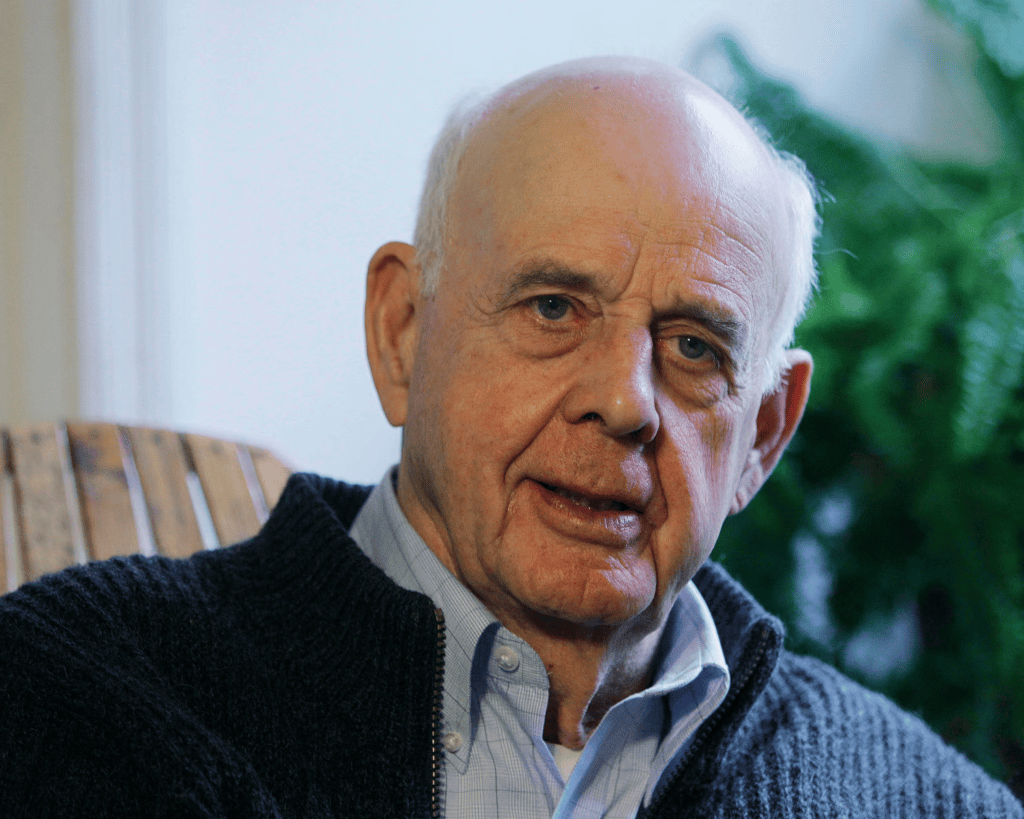
Author and Kentucky native, who celebrated the farming world of his home state and warned of the excesses of industrial society, died at home
Wendell Berry, the Kentucky-born author and agrarian whose poems, stories, novels and essays celebrated the farming communities of his native state and warned of the excesses and misjudgments of an industrial, commercialized society, has died aged 92.
His daughter, Mary Berry, confirmed on Monday that he died in his home in Port Royal, Kentucky.
“There’s not enough I could say about him to do him justice,” she told the Associated Press.
Stand By Me by Wendell Berry review – the soul of KentuckyRead more
Berry was a prolific writer who published more than 40 books, including the novels Nathan Coulter and A Place on Earth, the short story collection Stand By Me and the anthology A Timbered Choir: The Sabbath Poems 1979-1997.
His legacy extended well beyond Kentucky: Michael Pollan, author of such bestsellers as The Omnivore’s Dilemma, would say his life was changed by Berry’s declaration that “Eating is an agricultural act.” The chef and food activist Alice Waters cited him as a favorite author and wrote an introduction to Berry’s 1989 essay The Pleasures of Eating.
Few authors were more tied to their home than Berry, an intellectual and spiritual heir to Henry David Thoreau and such southern agrarians as Robert Penn Warren and John Crowe Ransom. In prose and poetry that mirrored the uncluttered and deeply felt life he advocated, Berry challenged modern assumptions about prosperity and happiness and renewed the mysteries of birth, love, work and death. He had learned from his own history: Berry was born and raised in a farming town during the Great Depression and watched its seemingly immortal ties unravel by his teens.
“Increasingly over the last maybe 40 years, the thought has come to me that the old world in which our people lived by the work of their hands, close to weather and earth, plants and animals, was the true world,” he wrote in his 2006 novel Andy Catlett: Early Travels, “and that the new world of cheap energy and ever cheaper money, honored greed, and dreams of liberation from every restraint, is mostly theater.”
“The world I knew as a boy was flawed, surely, but it was substantial and authentic. The households of my grandparents seemed to breathe forth a sense of the real cost and worth of things. Whatever came, came by somebody’s work.”
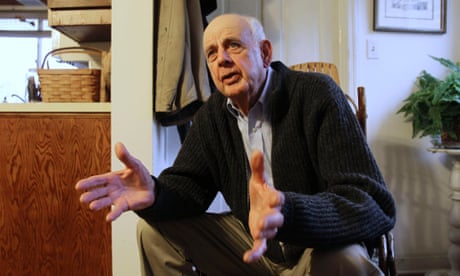
Berry was born in Henry County in 1934, and he moved with his family soon after to New Castle, where his father practised law and all worked on his grandfather’s farm. As a teenager he graduated from the Millersburg Military Institute and entered the University of Kentucky.
By his early 20s, he was publishing poems and stories. He received a Wallace Stegner Fellowship from Stanford University in 1958 and stayed on another year as a visiting lecturer. He also lived in New York in the early 1960s, but soon bought Lanes Landing in Kentucky and settled there.
Berry and his wife lived without computers, television or phones, but did install solar units in 2005, an act of defiance and of commitment to clean energy in a state powered by coal. He cut ties with the University of Kentucky, his alma mater, after the school accepted $7m for a new basketball dormitory from a group of donors organized by a coal company president. In 2011, he joined a sit-in at the governor’s office in protest of strip-mining.
He was among the most prominent authors never to receive a Pulitzer prize or National Book Award, although his honors included a National Humanities Medal and membership in the American Academy of Arts and Letters. In 2016, he was presented a lifetime achievement award from the National Book Critics Circle.
“And so I go into the woods. As I go in under the trees, dependably, almost at once, and by nothing I do, things fall into place,” he once wrote. “I enter an order that does not exist outside, in the human spaces. I feel my life take its place among the lives – the trees, the annual plants, the animals and birds, the living of all these and the dead – that go and have gone to make the life of the earth.”
You’ve read 8 articles in the last year
Article counton
At this dangerous time
We hope you appreciated this article. Before you close this tab, can we ask you to support the Guardian at this critical time for journalism in the US? For a few days only, our most impactful monthly support option is just $7.50 a month for six months.
According to a leading global watchdog, US democracy is now more imperiled than at any point since the 1960s. Press freedom is under threat on many fronts – from criminal investigations to politicized regulation, frivolous lawsuits and catastrophic funding cuts to public media.
With the midterm elections approaching, these attacks are accelerating. Most recently, Donald Trump banned CNN, MS Now and Politico from the White House, in retaliation for “negative” coverage. A federal judge restored access, saying the ban was likely unconstitutional.
In August, Trump suggested that the host of Meet the Press should be “punished” by the FCC for making a factual statement he disliked. Trump is using the agency – which is supposed to be an independent regulator – to settle political scores: The FCC targeted ABC after Jimmy Kimmel made a joke about Melania Trump.
The Pentagon fired the editor of Stars and Stripes newspaper for “insubordination” shortly after they reported on a suicide attempt aboard the USS Lincoln.
Together these efforts make it more difficult to get fact-based reporting to US voters ahead of critical elections that will determine control of Congress and the future of Trump’s agenda.
Making matters worse, many of the US’s largest news organizations are now owned by billionaires whose personal and business interests may be at odds with safeguarding editorial independence. Media critics have observed how CBS News, now owned by a Trump ally, has softened its coverage; CNN could be taken over by the same billionaire; and Jeff Bezos has imposed extreme staff cuts and editorial interventions at the Washington Post.
When freedom is under attack, it falls to a determined few news organizations to ensure the full truth still reaches the public. The Guardian is owned neither by a billionaire nor a corporation and remains dedicated to keeping trustworthy journalism paywall-free for the world.
Despite the risks of maintaining our fierce independence, what sustains us – and fills us with deep gratitude – is the unwavering support we’ve seen from readers. It is no exaggeration to say that we are here because of you: a majority of our funding comes directly from people like you responding to messages like this. Your support not only powers our work, but more importantly, it safeguards the financial independence that underpins our editorial freedom and courage.
If you can, please support us today. All gifts are gratefully received, but for the next several days only, our most impactful monthly support option is $7.50 a month for the first six months. (Among the great benefits: you’ll see far fewer annoying fundraising messages like this.) It takes just 37 seconds to set up. Thank you for considering.


Leave a Reply