

Edmund Cox’s tales of detectives and dacoits, which drew onthree decades of policing, revealed the prejudices and hierarchies of the colonial state.
Oct 03, 2026 · 11:30 amShare
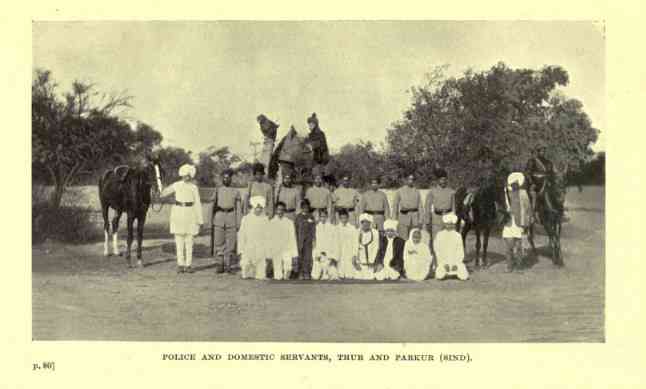
As his 30-year career in the British Indian police drew to a close, Edmund Cox found himself confounded by a wave of burglaries rippling through the Bombay suburb of Bandora, now Bandra. The houses being broken into belonged to wealthy families who had abandoned them during the plague of 1896-’97. For some time, the police had no idea who was responsible. Then, two thieves were caught in the act.
Their confession, Cox recalled, stunned the police. They were Waghris, members of what the colonial government called a “criminal tribe”. Scattered across the suburbs, they used the “Baroda railway” to slip in and out of the city at will, committing crimes with impunity.
Before you scroll further…
Get the best of Scroll directly in your inbox for free.
It was precisely the sort of episode that stayed with Cox: a crime, a chase, a community already marked out by the police, and finally the satisfying moment when the mystery was solved. Years later, these experiences would become the raw material of his books.
Cox had spent much of his working life moving through the Bombay Presidency and beyond. In My Thirty Years in India (1905), he looked back on assignments at Poona, Dharwad and Ahmednagar, moving between western and southern India, before going to Sindh and finally Thana. In Police and Crime in India (1911), he went further back, tracing the history of policing from the ancient period through the village watch system that survived into pre-British India and the institution of the kotwal in medieval and Mughal times.
But Cox was not interested in policing merely as an administrative history.
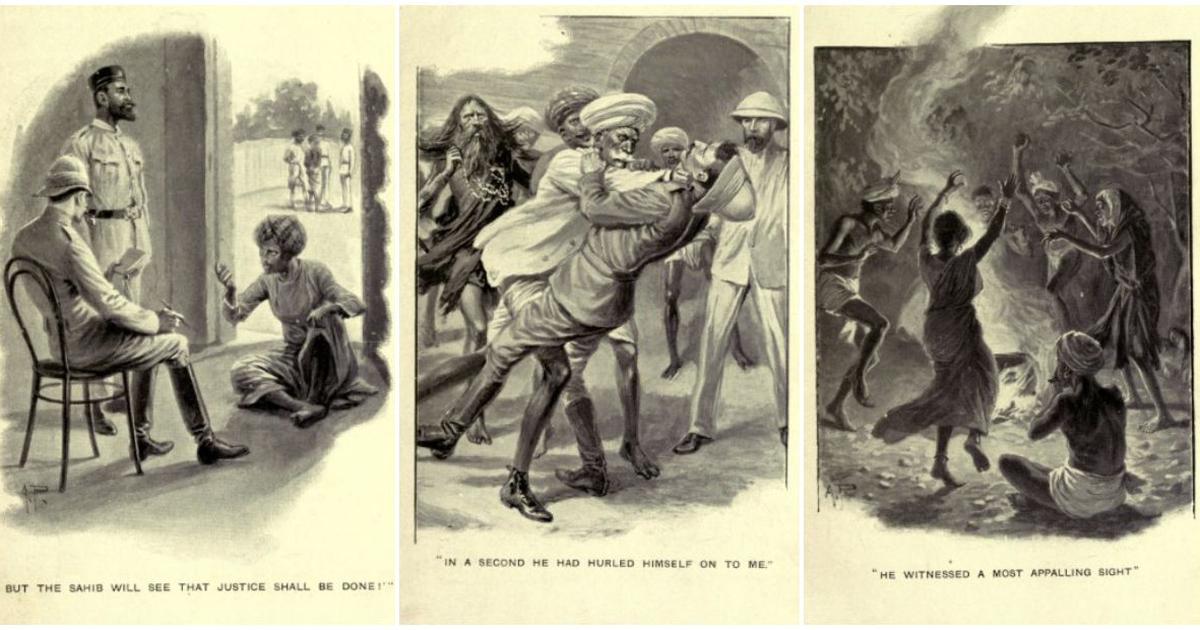
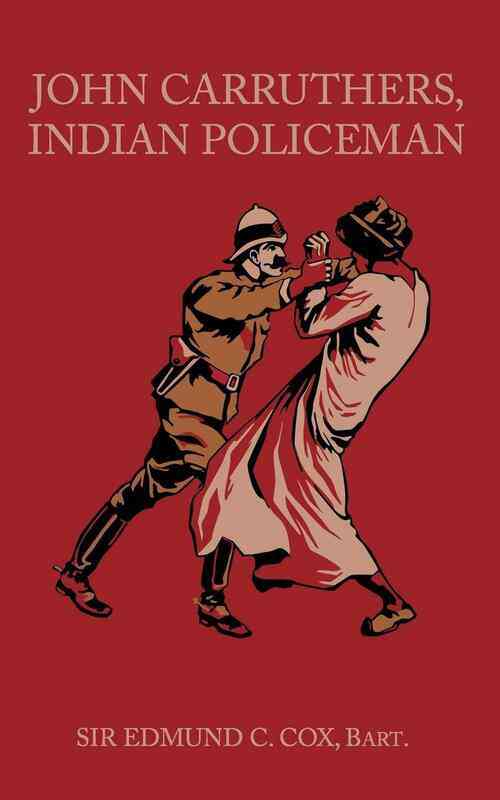
Police and detective work provided the material for three other collections. Two featured John Carruthers, a police officer endowed with astute deductive skills. The Exploits of Kesho Naik, Dacoit (1912), meanwhile, offered the story of a Robin Hood-like outlaw who was almost a hero. The poor revere him. Landlords and moneylenders fear him.
Advertisement
Most of these books appeared between 1905 and 1912, after Cox had retired and returned to England. His literary career, however, had begun much earlier, with A Short History of the Bombay Presidency and Tales of Ancient India in 1887, followed by John Carruthers, Indian Policeman in 1895.
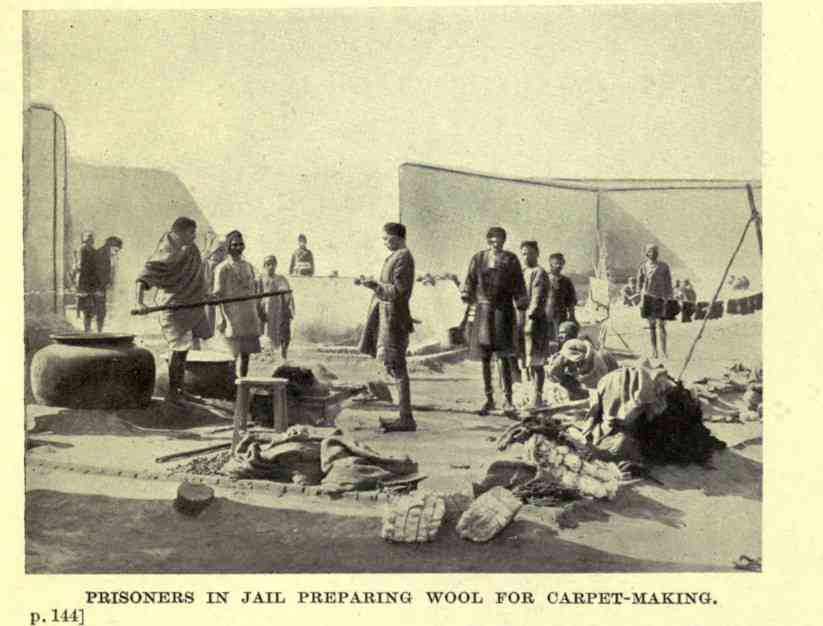
Read together, the books reveal what Cox thought policing was for. His police were not simply solving crimes. They were part of a larger colonial project of ordering Indian society: eradicating practices such as “suttee”, combating the “thuggee menace”, and, through legislation such as the Criminal Tribes Act of 1871, identifying, categorising and regulating whole communities.
Yet there was another India in Cox’s books, one that had little to do with crime. He could spend paragraphs describing the Western Ghats, the view from Mahabaleshwar or the desolate expanses of Sindh.
The landscape he remembered was immense and varied, but the people he encountered in his police career were more often reduced to categories. Swindlers, forgers and dacoits recur in his writing, although he reserved particular suspicion for the Waghris, Pardhis and Bhamptas (the last described as a special category of railway thieves).
Advertisement
The classification was not merely Cox’s eccentricity. The Criminal Tribes Act of 1871, repealed finally in 1952, brought numerous itinerant communities under colonial surveillance. Herders, pastoralists, peddlers and performers who lived mobile lives could be treated as inherently suspect because they did not fit the settled social order the colonial state wished to impose.
Cox accepted that order. He believed in British superiority and in the necessity of British rule in India. “Our rule in India,” he wrote, “is one of the greatest achievements in the world’s history.” His description of Indian society makes the assumptions behind his policing still clearer:
“India is a country whose soil has always been a happy hunting-ground for plunderers, marauders, robbers, and cheats. The timidity and credulity of the people have encouraged and stimulated the passions of such as consider society to exist merely that they may prey upon it. There have always been gradations amongst these evildoers, each class in turn despising the next beneath it in the criminal scale. The ordinary thief was of little account in this list of dignities. The stealthy burglar was an object of contempt to the more enterprising robber, as was the robber to the still more daring dacoit. The dacoit was looked down upon by the freebooter, who scoured the countryside; and all of these were regarded by the Thug as the carrion crow might be by the vulture.”
For Cox, crime was part of a social hierarchy, not a series of individual acts.
Advertisement
Colonial adventures
Cox had not originally planned to become a policeman. His ambition was to be a tea planter, but the uncertainties of the crop and the weather persuaded him otherwise. He became a teacher, first in Darjeeling and then, for a while, a tutor at Nizamat College in Murshidabad.
Then came another change of direction.
In 1879, Cox moved to Kolhapur as assistant political agent to Shivaji IV, the adopted successor of Rajaram I, who had died in 1873. The appointment placed him close to a young ruler whose short life would eventually become the centre of one of the most bitter controversies of Cox’s career.
Shivaji IV (1863-1883) was at the centre of what came to be known as the “Kolhapur Affair”. The government and the Anglo-Indian press, including The Times of India and Bombay Gazette, published accounts portraying the maharaja as mentally unstable. Reformers such as Bal Gangadhar Tilak and Gopal Ganesh Agarkar, along with regional newspapers including Kesari, Mahratta and Induprakash, accused the men responsible for Shivaji’s care – chiefly “Messrs. Barve [Kolhapur’s diwan], Cox and Green” – of isolating and abusing him.

The dispute eventually ended up in court. Tilak and the others lost the defamation case brought against them and received short prison sentences.
Advertisement
But the controversy did not end there. Shivaji IV died in 1883 at the hands of his English bodyguard, Thomas Green, after Cox had already left Kolhapur. The official explanation given at the time was an “enlarged spleen”.
Writing his memoirs two decades later, Cox offered his own recollections of the maharaja. He had often found Shivaji erratic and “melancholy”. The young ruler had attempted to escape from the palace several times. On one occasion he blackened his face and tried to disguise himself as a vendor. At times, he claimed to have fought in the Afghan war.
Cox had clearly not forgotten the controversy. Nor had he forgiven Tilak.
He wrote that he burned with “wrath, anger and indignation” against Tilak for the “abominable lies” he had printed about Cox.
Years later, when Tilak was appointed an “additional member of the Legislative Council for making laws and regulations” Cox was astonished. To him, the appointment was an absurdity: “Tilak’s only idea of laws was to break them, and of regulations to defy them… To allow Tilak to have a seat on the Legislative Council was equivalent to selecting a highwayman to draw up a Police Code.”
Despite everything, Cox remembered parts of Kolhapur fondly. His time there had not been, he confessed, all “unmitigated disgust”. The fort at Panhala remained a particular pleasure: “The massive bastions, and the succession of three great gateways, known as the Teen Durwaza, were very impressive, and the temperature in the hot weather was a great relief after Kolhapur.”
Advertisement
Empire’s stories
Cox formally joined the police in February 1883 and was deputed first to Belgaum, a journey he found “delightful”.
From there, police work supplied him with material for years to come. Some of his experiences found their way into the stories of John Carruthers, the fictional policeman whose cases are narrated variously by William Trench, a junior officer, and by Krishna and Ghulam Rasul, both constables and loyal subordinates.
Carruthers belongs to the world of colonial detective fiction, where a policeman’s greatest weapon is often not force but knowledge. In Cow Row, several “Mahometan” butchers are murdered across the country, including in Chinchgaum, Carruthers’ own district. The killings threaten to provoke communal riots. Carruthers solves the case by decoding a letter written in heliographic code, rounding up the gang and preventing the violence.
In Fate of Abdulla, the clue is stranger. Carruthers comes upon the body of a murdered boy and recalls the superstition surrounding sacrifices before the construction of a railway bridge. Once again, something that might appear to belong to a supposedly irrational India becomes useful to the modern detective.
If Carruthers represents Cox’s policeman, Kesho Naik represents his fascination with the man on the other side of the law.
Advertisement
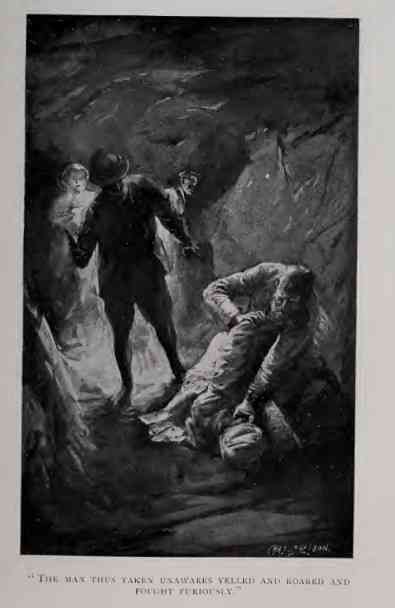
The Exploits of Kesho Naik, Dacoit (1912) is narrated by Krishna, the loyal subordinate who, being local, is repeatedly sent to track down Kesho, a dacoit with a sense of honour. Kesho robs moneylenders to help indebted peasants. He refuses to kill an unarmed English soldier. And after every successful escape, he sends the police a letter of apology.
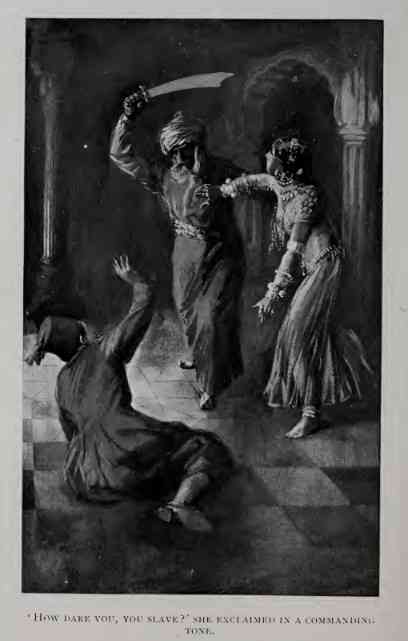
Eventually Kesho, who calls himself the “second Shivaji”, stages an elaborate coronation ceremony at Shivaji’s fort of Torna. The English respond with a machine worthy of a colonial adventure story: a “flying ship” designed at the Mahalakshmi Racecourse. This, Cox suggests, should not surprise anyone. The British have already produced “fire-wagons and lightning wires, and bicycles that men may ride at speed on two wheels, and motor-gharies which fly along the road as the black buck courses over the desert”. A flying machine is hardly beyond their capabilities.
It lands on the roof of the fort while Kesho, newly crowned, is watching a nautch performance. At the very end of the book, he forges his release note and escapes once more. Cox may have intended a sequel, but there was to be none. The Exploits of Kesho Naik, Dacoit was his last book.
Manohar Malgonkar, a writer of historical fiction, called Cox, with good reason, jingoistic in the “worst Kipling tradition”. Cox clearly did not like the “natives”, even though he formed attachments to loyal associates and could not stop looking at the country with fascination.
On one journey up the “noble river” Ganga, he wrote: “The sacred Ganges was covered with native boats, propelled by the most picturesque sails; and occasional white temples under the banyan trees that lined the shores gleamed in the sparkling sunshine.”
Some months later, riding up towards tea plantations, he looked down over Darjeeling. Before him was the Himalayas, with Kanchenjunga at the centre: “It was a sight never to be forgotten, the perfect purity of the snows, perhaps fifty miles away, and yet clear as if one could touch them, standing out against a sky of azure blue and bathed in a flood of light from the setting sun. It was all inimitable, indescribable.”We welcome your comments at letters@scroll.in.


Leave a Reply