

1. A Solitary Dissent When members voted on the final draft in November 1949, Mohani was the only one shouting “no” amid the ayes. Two months later, he was one of just three sitting members who declined to sign. He was also a founding leader of the Social Democratic Party, the first formal opposition inside the Assembly.
2. The Question of Legitimacy His most basic objection was about who had the right to write the Constitution. He argued that the Assembly had been elected by a limited, communal electorate representing only about 15% of the population. On 4 November 1948, he told the House that unless it was elected on a non-communal basis, “you have no right to get a constitution passed by this Constituent Assembly.” Rohit De and Ornit Shani’s 2025 study notes that he believed the Constitution should come from genuine representatives of the masses, not an elite minority.
3. Federalism over Centralisation Mohani’s commitment to a decentralised India went back decades. In 1928, he opposed the Nehru Report and called for a genuinely federal structure. When he joined the Assembly’s proceedings in July 1947, he became a prominent critic of the reports on provincial constitutions, arguing that the form of the Union government had to be settled before the powers of the provinces were defined. In his view, sequence mattered: a strong Centre designed first would leave the provinces with only the leftovers. His vision also reached below the provinces. He argued that village panchayats should be the basic units of government, so that power would flow upward from the people rather than downward from Delhi. He also championed linguistic states, an idea the Assembly at first declined to endorse but which India later adopted in 1956. Critically, he insisted that his support for provincial autonomy came from socialist principle rather than communal interest. For Mohani, a centralised Constitution, however well-intentioned, concentrated power in too few hands and kept ordinary citizens far from the decisions that shaped their lives.
4. Civil Liberties and Minorities Mohani was deeply concerned about the relationship between the state and the citizen. Having been jailed repeatedly by the British for his writings, he knew from experience how easily a government could silence dissent. He therefore pressed the Assembly to limit preventive detention and to protect the right of habeas corpus, warning that unchecked power could be turned against political opponents and minorities alike. To him, a free India that kept colonial-style detention laws would only have changed the hands holding the key. The violence of Partition sharpened these fears. He believed it had left Indian Muslims “friendless and helpless,” and he worried about their security in the new republic. Yet he lived out his convictions: during the Delhi riots, he stayed in a small mosque near the Assembly hall without armed protection. What makes his position striking is that he did not seek special privileges for his community. He argued against reserved seats for Muslims and against political parties organised on communal lines. When the Assembly eventually dropped reservations for religious minorities, it effectively endorsed his view. For Mohani, minorities would be safest not behind separate electoral walls, but in a democracy where every citizen’s liberties were firmly guaranteed against the state. Mohani’s refusal was not a rejection of India but a demand for a more democratic, federal and rights-protecting republic. His concerns about centralisation, emergency powers and minority security remain live questions in Indian constitutional debate. References Constituent Assembly Debates, Vol. VII, 4 November 1948 (Mohani on the Assembly’s competence). Lok Sabha Secretariat. Constituent Assembly Debates, Vol. VII, 15 November 1948 (amendment on the Preamble). Constituent Assembly Debates, Vol. X, 17 October 1949 (debate on draft Article 306A, now Article 370). De, Rohit & Shani, Ornit (2025). Assembling India’s Constitution: A New Democratic History. Qadiri, Khalid Hasan (1971). Hasrat Mohani: A Study of His Life and Poetry. PhD thesis, SOAS, University of London. Umar, Mohammed (2009). Maulana Hasrat Mohani: A Political Study. Arshad, Mohammad (2009). Hasrat Mohani: A Critical Appraisal of His Political Career and Ideology. Faisal C.K. (13 May 2026). “Hasrat Mohani’s Words Echo in the Constituent Assembly.” The Wire.

Hasrat Mohani’s Words Echo in the Constituent Assembly
13/May/2026
5 min read


The anxieties Hasrat Mohani expressed regarding federalism, minority rights, and the centralisation of power continue to reverberate through the history of the Indian republic.
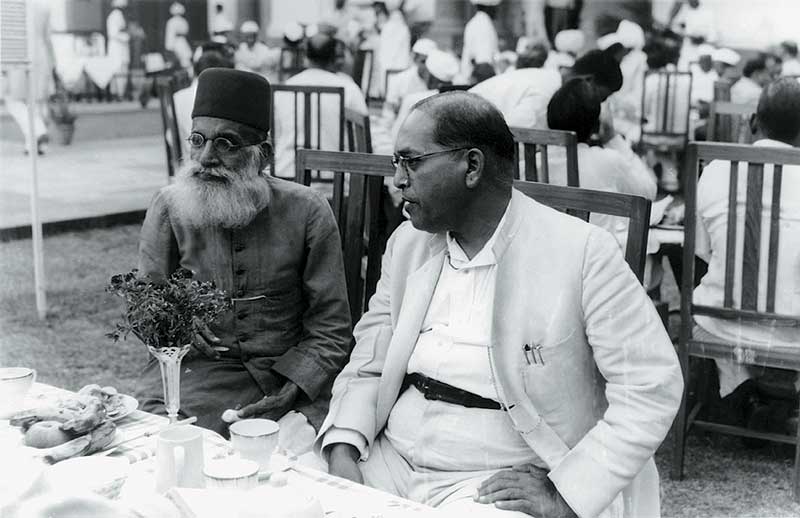
Maulana Hasrat Mohani (L) with Dr B.R. Ambedkar. Photo: Wikimedia Commons. Public domain.
Hasrat Mohani passed away on this day, May 13, 76 years ago.
On his 75th death anniversary, it is time to revisit the prescient interventions of Hasrat Mohani within the Constituent Assembly. His warnings regarding federalism, the decentralisation of power, minority protection, and the potential for the abuse of governmental authority remain remarkably relevant today.PlayNextMute
Current Time 0:12
/
Duration 2:04Fullscreen
Advertisement
Hasrat Mohani was a rare intellectual polymath whose life harmonised seemingly disparate identities. He was a founding father of the Indian Communist movement, president of the Muslim League, and a soulful Krishna Bhakt who composed verses in praise of “Hazrat Krishna.” His spiritual life saw him make pilgrimages to both Mecca and Vrindavan. This versatility extended to his literary contributions, where he pivoted effortlessly from the rigours of revolutionary prose to the delicate romanticism of his famous ghazal, Chupke Chupke Raat Din. As a communist, he was a staunch advocate for an indigenous form of communism, distinct from the internationalist models of the era.
In the Constituent Assembly, Mohani remained a fierce and principled dissenter who ultimately refused to sign the final draft of the Constitution. He viewed the document as excessively centralised and criticised its lingering links to the British Commonwealth. Instead, he argued for a truly socialist federal republic that empowered the marginalised. His legacy is that of a “skylark” of freedom – a man who refused to be caged by party lines or narrow dogmas, prioritising a vision of total sovereignty and syncretic spiritualism.
Despite his radical interventions, history has often relegated him to the footnotes of Indian constitutional history, sometimes even branding him an “eccentric.” Consequently, many of his visionary ideals failed to find a place in the final text.
The loned dissenter
In their work Assembling India’s Constitution: A New Democratic History (2025), Rohit De and Ornit Shani write:
“In November 1949, as the members of the Assembly cast their votes on the final draft of the constitution amid a burst of ‘lusty ayes’, Maulana Hasrat Mohani was the sole voice shouting ‘no’. Two months later, as the members lined up to sign the constitution, Mohani was one of only three sitting members who refused to sign the document. Yet as the files of assembly papers that littered his study evidence, he was not simply objecting for the sake of being obstructionist. For over three years, he actively and conscientiously engaged with constitution making, made numerous and heated interventions in the debates amid heckling.”
Mohani firmly believed that the Constitution should have been drafted by genuine representatives of the Indian masses, rather than an elite minority.
Born Syed Fazal ul Hasan in the village of Mohan, Uttar Pradesh, he was educated at MAO College in Aligarh. Initiated into politics by Bal Gangadhar Tilak, he made his mark through his firebrand weekly, Urdu-e-Moalla. Remarkably, he simultaneously served the Indian National Congress, the All India Muslim League, and the Communist Party. He was also a founding leader of the Social Democratic Party, the first formal opposition within the Constituent Assembly.
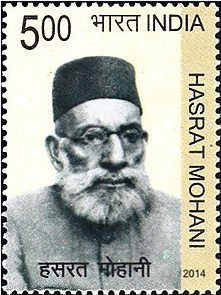
Maulana Hasrat Mohani. Photo: Wikimedia Commons
Mohani was consistently ahead of his time: he pushed for the boycott of British goods at the Khilafat Conference of 1917 and demanded “complete independence” (Azadi-e-Kaamil) at the AICC of 1921. Deeply influenced by the Constitution of the USSR, he even brought the Soviet model to Mahatma Gandhi’s attention while they were co-prisoners in the 1920s.
By 1928, Mohani opposed the Nehru Report, demanding a truly federal structure. While he supported the 1940 Pakistan Resolution, his concept of “Pakistan” was that of a confederating unit within India, akin to the republics of the USSR. He proposed a three-tier confederation consisting of five regional federations, each with equal representation regardless of population, and executive leaders elected through universal franchise. He also championed the idea of linguistic states—a concept the Constituent Assembly initially failed to endorse.
Challenges in the Assembly
Mohani was elected to the UP provincial assembly from the Kanpur Urban (Muslim) constituency in May 1946. He subsequently became one of 82 Muslim representatives in the Constituent Assembly. Initially, he doubted the assembly’s legitimacy, arguing it was elected by a limited, communal electorate representing only 15% of the population.
Joining the proceedings in July 1947, Mohani became a conspicuous challenger of the reports on provincial constitutions. He argued that the form of the Union government must be settled before defining provincial powers. He vehemently opposed a powerful centre with residuary powers, standing instead for provincial autonomy and decentralised authority. He criticised the office of the Governor as a colonial relic and insisted that Governors be elected by the people rather than nominated by the Union. While he agreed with K.T. Shah that village panchayats should be the basic units of government, Mohani’s inspiration was the Soviet village rather than the Gandhian republic.
Mohani frequently clarified that his concern for provincial autonomy was born of socialist principle, not communalism. De and Shani observe: “As a committed Socialist and a syncretic cleric-poet with a frugal lifestyle, Mohani stood out among the Muslim League delegation, which consisted mostly of wealthy landed gentry, prosperous provincial lawyers and conservative Ulama. He was the only Muslim League member of the Assembly who had experienced multiple periods of imprisonment during the struggle for freedom.”
He often clashed with League leaders like Jinnah and Khaliquzzaman. When the All India Muslim League was dissolved in 1948, he joined the Indian Union Muslim League but maintained that Muslims should not organise communally, suggesting they instead ally with the Forward Bloc and Socialists. Despite the riots in Delhi, Mohani lived in a small mosque near the Assembly hall without armed security, a testament to his lived values.
The minority identity
Deeply saddened by the violence of Partition, Mohani feared for the future of minorities. He believed Partition had left Indian Muslims “friendless and helpless.” To combat this, he preferred a framework of universal civil rights over specific communal protections. He specifically demanded restrictions on preventive detention and the preservation of habeas corpus, fearing the abuse of governmental power against political opposition and minorities alike.
The anxieties Hasrat Mohani expressed regarding federalism, minority rights, and the centralisation of power continue to reverberate through the history of the Indian republic. As Salman Khurshid observes in Visible Muslim, Invisible Citizen: Understanding Islam in Indian Democracy: “Imagination and identity are the primary motivations in the postmodern world… If this equation goes wrong, the noblest of dreams can turn into nightmares.”
The undervalued status of the Muslim citizen today highlights the tragedy Mohani sought to prevent. His multifaceted genius and radical dissent mark him not as an “eccentric” footnote, but as an ever-living Constitutional Oracle whose warnings we ignore at our own peril.
Faisal C.K. is a Deputy Law Secretary to the Government of Kerala. Views are personal.


Leave a Reply